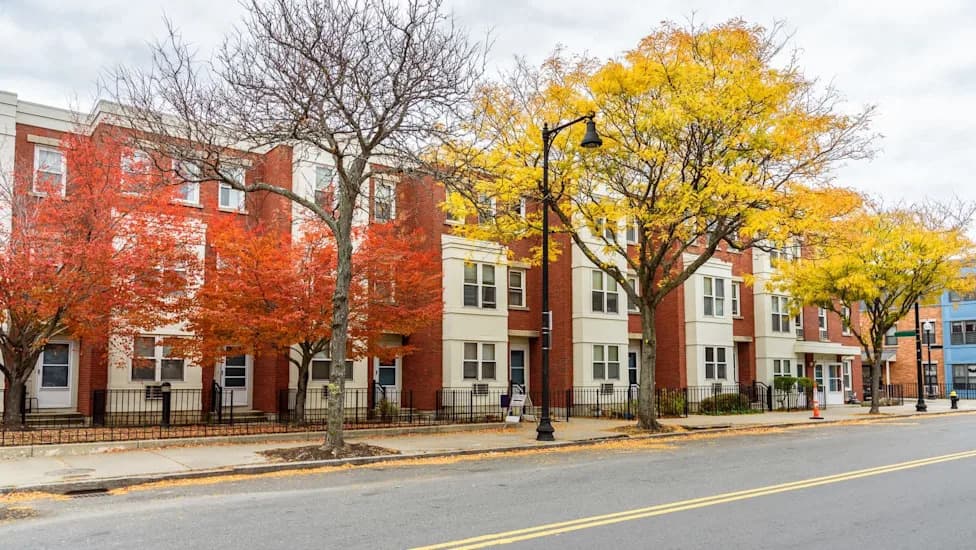
Developers and municipal leaders in Greater Boston are clashing over inclusionary zoning, the requirement that a portion of new housing be priced below market. Boston, Cambridge and Somerville maintain high set-aside rates (Boston: 17% plus 3% for Section 8; Cambridge and Somerville: 20%), while some suburbs have relaxed targets to spur construction. Builders blame higher interest rates and construction costs and have pursued legal challenges; Boston is using tax abatements to restart stalled projects without lowering affordability rules.
Boston Holds Firm on Inclusionary Zoning as Developers Warn Rules Stall Projects

Photo Credit: iStock
Developers and municipal leaders across Greater Boston are locked in a heated debate over inclusionary zoning — city rules that require a portion of new housing to be priced below market. Builders say the mandates, combined with higher interest rates and rising construction costs, are rendering some projects financially unworkable. City officials counter that these requirements are one of the most effective levers to preserve affordable housing in high-cost communities.
What the Rules Require
Boston, Cambridge and Somerville have among the strongest inclusionary policies in the country. In 2023 Boston increased its set-aside to 17% of units for low- and middle-income residents, plus an additional 3% reserved for low-income households using federal Section 8 vouchers. Cambridge and Somerville each require 20% of units to be affordable.
Why Developers Are Pushing Back
Builders argue that project budgets have been squeezed by rising interest rates and construction costs, and that mandatory below-market units can be the tipping point that makes development infeasible. In some cases developers have sought legal relief: in September Old North Development sued Cambridge over a proposed 71-unit project, saying the inclusionary formula would force 14 units to be rented below market and imperil the project.
"What drives me crazy is that the city talks constantly about how badly it wants to build enough to ease housing costs. Yet in this instance, they have all of these developers showing them the numbers, telling them this policy is killing housing development, and they won't budge," said Cambridge attorney and developer Patrick Barrett.
City Officials Stand Their Ground
Boston officials have resisted calls to lower affordability targets. Planning director Kairos Shen warned against weakening inclusionary standards while also retreating on energy performance and climate-resilient building requirements. Instead, Mayor Michelle Wu's administration has leaned on tax abatements and other incentives to revive stalled projects without changing the inclusionary policy.
Advocates for tenants underscore the stakes. "We fought for this long and hard. Look at the need for affordable housing in Boston. This policy is the only reason some people can stay in Boston at all," said Kathy Brown, executive director of the Boston Tenants Coalition.
Data And The Local Context
The timing has been difficult: 2023 and 2024 were Boston's weakest years for new housing construction since 2011, with only a modest improvement in 2025. Affordability mandates also create notable rent gaps in practice — Apartment List estimates that an average two-bedroom inclusionary unit in Boston rents for about $1,740, versus roughly $2,550 for a comparable market-rate unit.
Broader Statewide Debate
The Boston dispute echoes a wider debate across Massachusetts about how zoning and building rules shape housing supply and equity. Some communities, like Waltham and Chelsea, have lowered affordable-housing targets to try to accelerate construction. At the state level, lawmakers passed a new accessory dwelling unit (ADU) law aimed at adding smaller homes, while local actions in Lexington and Northampton have prompted separate fights over density, electrification and equity.
The tension between preserving affordability and unleashing more housing supply is likely to persist as cities weigh near-term market realities against long-term housing equity goals. Cambridge is preparing to publish a long-awaited feasibility study of its inclusionary rule, which officials say will inform future policy choices.
Help us improve.