Los Angeles was ranked the least affordable major U.S. metro in Realtor.com's 2026 report, scoring 12/100 overall. Mayor Karen Bass defended her record, citing streamlined approvals for nearly 47,000 affordable units, large-scale rezoning and permit reforms aimed at speeding construction. Despite those moves, L.A. remains far short of the state goal of about 57,000 new units per year — production is under half that pace — and a median earner would need roughly 84.4% of income to afford the median $1.12M home. Analysts say major permitting and production gains are required before supply eases price pressure.
L.A. Ranked Least Affordable Major U.S. Metro — Mayor Bass Vows to Cut Red Tape to Boost Housing

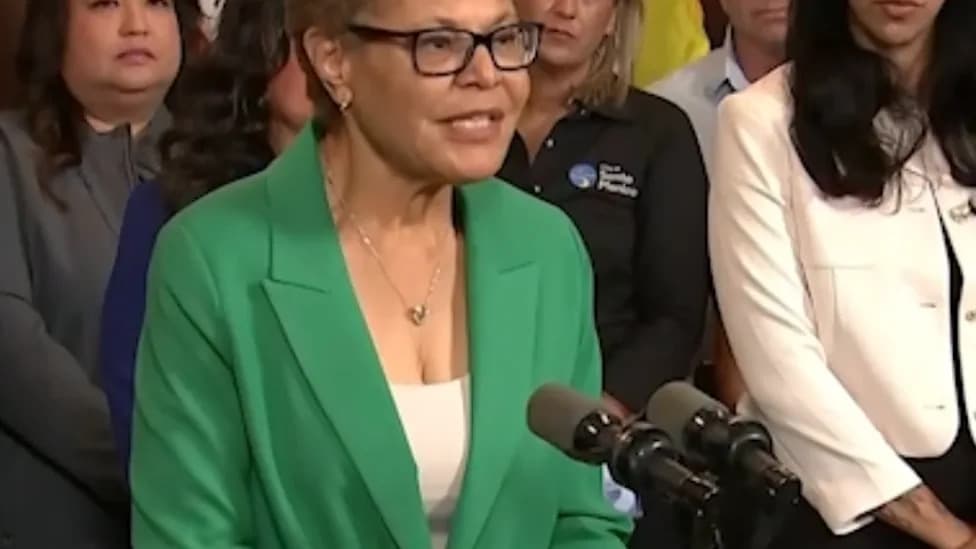
L.A. Mayor Karen Bass is defending her administration's housing record in the face of an affordability crisis. (Amy Sussman/Getty Images)
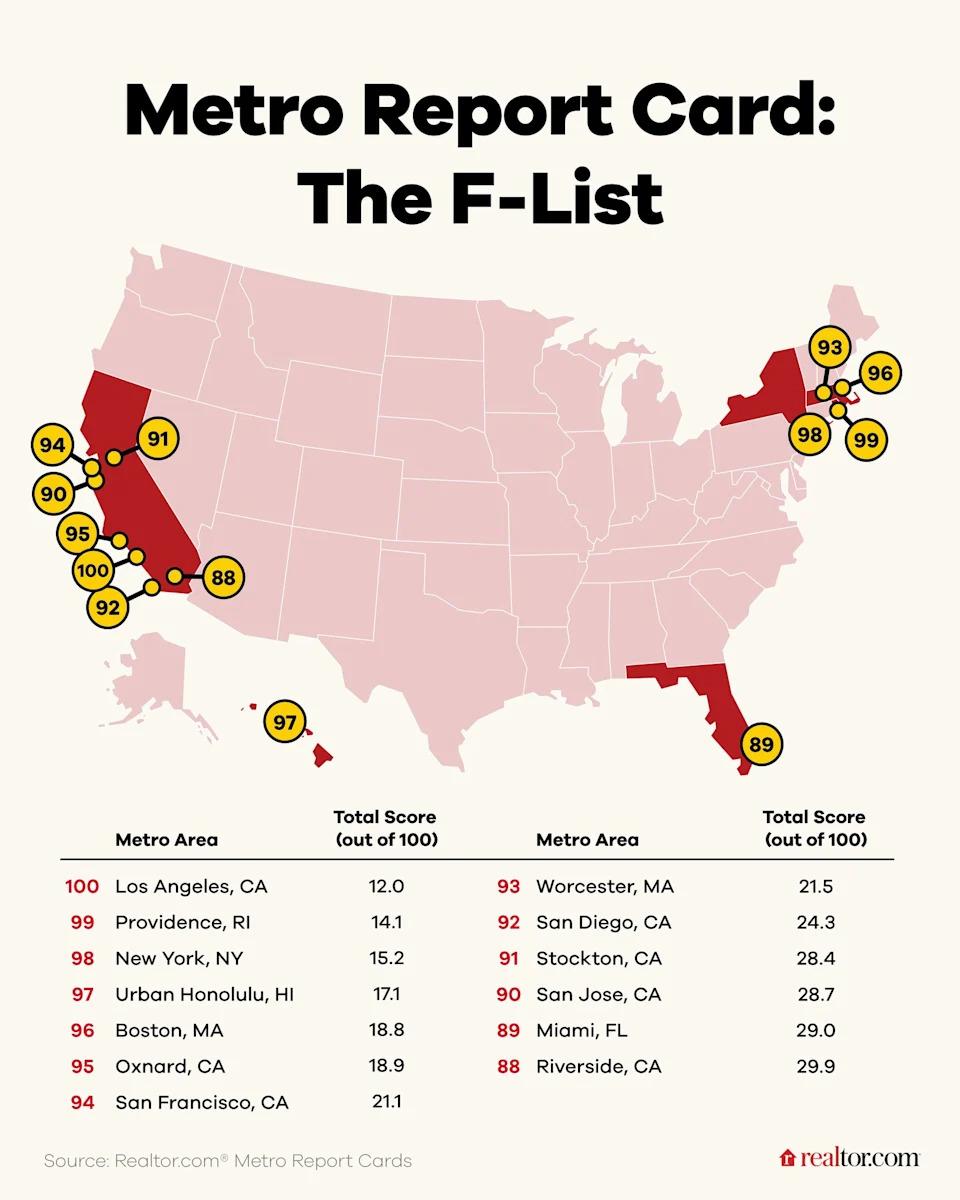
Los Angeles was ranked the least affordable major U.S. metro in Realtor.com's 2026 Metro Report Cards, earning a total score of just 12 out of 100. Mayor Karen Bass is defending her administration's record, saying the city is "laser-focused" on cutting bureaucratic delays and accelerating housing production after decades of inaction.
Mayor's Response
In a statement responding to the report, Bass — who is seeking re-election in November — highlighted several policy measures her office says are designed to speed construction and expand affordable housing supply. Her team cites Executive Directive 1, which it says streamlined approvals for nearly 47,000 units of 100% affordable housing (roughly 6,000 of those are under construction), and a city rezoning effort it calls the largest local rezoning program in modern history, which the city says creates capacity for about 500,000 new homes.
Policy Steps Cited
- Updates to the Rent Stabilization Ordinance for the first time in 40 years.
- Citywide expansion of the Adaptive Reuse Ordinance to convert vacant offices and parking lots into housing.
- Executive Directive 19 to simplify and speed building-permit processing, based on feedback from applicants, developers, and contractors.
What the Report Shows

L.A. City Councilmember Nithya Raman is running to unseat Bass in November. (Los Angeles Times via Getty Images)
Despite these steps, Realtor.com's ranking places L.A. at the bottom of 100 large U.S. metros. The city's affordability score was a near-zero 0.9, and its homebuilding component scored 23.1. Realtor.com senior economist Joel Berner said the key problem is that homeownership has become out of reach for nearly all but the wealthiest buyers.
"A median earner in Los Angeles would need to spend about 84.4% of their income to cover a mortgage on the median-priced $1.12 million home," the report states, assuming a 10% down payment and a 6.5% 30‑year fixed mortgage.
Put differently, the typical homebuyer could only afford the median-priced home with an improbable 68% down payment (about $768,000).
Production And Permitting Shortfalls
Under California's Regional Housing Needs Assessment, Los Angeles must plan for more than 456,000 new homes between 2021 and 2029 — roughly 57,000 units per year. In 2025, only about 18,000 units were permitted. By May 2026 the city's pipeline had expanded to an annualized 28,500 units, but that pace remains less than half what's required.
The metro's permit-to-population ratio is 0.47, meaning L.A. is building fewer than half the homes per resident compared with the national average — a key factor behind its low homebuilding score.
(Realtor.com)
Political Context
The housing crisis and homelessness have become central issues in the mayoral race. Bass faces a challenge from City Councilmember Nithya Raman, who has campaigned for faster construction and earlier this year proposed a ballot measure to exempt new multifamily, commercial, and mixed-use projects from Measure ULA (the so-called "mansion tax") for 15 years to spur production. Realtor.com reached out to Raman for comment and awaited a response.
Broader Trends
L.A. is one of 13 large metros that received an F for both affordability and homebuilding; seven of those are in California. Realtor.com's methodology weights affordability and homebuilding equally, with the homebuilding half relying 80% on the permit-to-population ratio and 20% on the new-construction premium (the price gap between new and existing homes).
What's Next
City officials point to recent policy changes and permit reforms as progress, but analysts warn that unless permitting and production accelerate dramatically, supply-driven relief for home prices is unlikely in the near term. Stakeholders say additional reforms — from faster permitting to incentives for new construction and conversion of underused commercial space — will be needed to narrow the gap between current output and state housing targets.
Help us improve.