The Justice Department says Article II allows the president and attorney general to remove line prosecutors without cause and has referenced a familial "nexus" in defending the sudden July firing of Maurene Comey. Comey — a career prosecutor with several high-profile convictions — sued the DOJ on 15 September 2025, alleging her dismissal violated her First Amendment rights. Critics and legal experts warn the department's arguments risk politicizing federal prosecutions and undermining prosecutorial independence.
DOJ Defends Firing Of Maurene Comey, Citing Article II And A Contested "Familial Nexus"
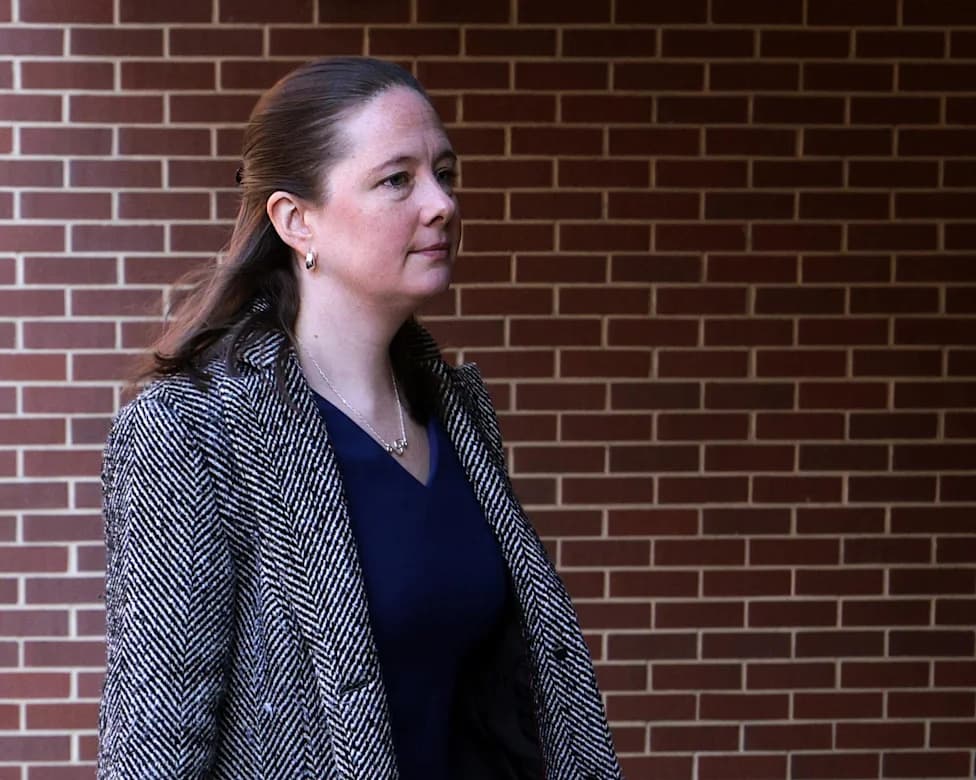
Maurene Comey leaves the federal courthouse in Alexandria, Virginia, on 13 November 2025.Photograph: Alex Wong/Getty Images
Two weeks after Maurene Comey secured a guilty verdict in the Sean "Diddy" Combs case, the Manhattan federal prosecutor received a terse, three-paragraph dismissal from senior Justice Department officials.
"Your employment with the Department of Justice is hereby terminated, and you are removed from federal service effective immediately," read the 16 July letter from Francey Hakes, director of the DOJ's Executive Office for United States Attorneys.
The abrupt removal of Maurene Comey — whose record includes high-profile prosecutions tied to Jeffrey Epstein, Ghislaine Maxwell and Robert Hadden — prompted immediate questions about whether her firing was politically motivated. Observers also noted that her father is former FBI director James Comey, a frequent target of former president Donald Trump.
DOJ's Defense: Article II And A "Familial Nexus"
At an 18 September hearing and in written filings, Justice Department lawyers argued that Article II of the U.S. Constitution vests the president (and, by extension, the attorney general) with authority over prosecutorial decisions, including the removal of line prosecutors who are career civil servants.
Department filings further referenced a supposed familial "nexus" between Comey's family ties and her ability to perform prosecutorial duties. The filings also said former Trump attorney Pam Bondi directed the termination.
"All the executive power is vested in a democratically elected president, and the accountability for serious prosecutorial decisions must not go to people who — or to bureaucrats in the government — who are not accountable to the people," DOJ lawyer Tyler Becker told the court.
Court Exchange And Questions About Motive
During the hearing, Manhattan federal Judge Jesse Furman repeatedly pressed the DOJ over what it meant by a "nexus" between Comey's family and her job performance. Defense counsel acknowledged the department had not asserted any formal cause for Comey's termination, a concession that led Comey's lawyers to ask: if not performance, then why?
"It is far more plausible that she was fired for reasons that violate the First Amendment than anything else," attorney Nicole Gueron told the court. "By admitting there was no cause to fire her, they raise the immediate question … why was she fired?"
Becker suggested the government could consider the speech or conduct of a family member when assessing whether there is an "appropriate nexus," and at one point said the government might have "trust issues" related to certain familial relationships that could affect granting prosecutorial authority. Yet he also insisted the DOJ had not asserted any nexus as the reason for the termination.
Legal And Ethical Concerns
Comey sued the DOJ on 15 September 2025. Her attorneys — Ellen Blain, Nicole Gueron and Deepa Vanamali — argue she was terminated "solely or substantially because her father is former FBI director James B. Comey, or because of her perceived political affiliation and beliefs, or both," and that such action violates her First Amendment rights.
Critics and legal observers say the department's arguments reveal a Justice Department reshaped under the Trump administration to pursue political aims and to target perceived adversaries — and, potentially, their relatives. "It's no secret that the Department of Justice is highly politicized," said Neama Rahmani, a former federal prosecutor.
Former Manhattan prosecutor Jackie Kelly and other observers noted that U.S. attorneys' offices operate within a clear chain of command. Line prosecutors typically work under multiple layers of supervision, and removals for cause historically require documented performance issues. Arbitrary or unexplained removals, they warned, risk chilling prosecutorial independence.
Implications
Legal scholars say the case raises fundamental questions about the limits of presidential removal power and the protections that career prosecutors should enjoy. Judge Furman's pointed questioning suggested skepticism about the DOJ's position, and the litigation will test whether Article II alone authorizes the removal of civil-service prosecutors without cause, especially where the alleged motivation implicates family ties and political speech.
At stake is more than one prosecutor's job: the outcome could influence how much discretion future administrations have to remove career prosecutors and whether prosecutors can pursue politically sensitive cases without fearing reprisal.
What’s next: The case will continue through the courts, where judges will weigh competing views of constitutional power, civil-service protections and the boundaries of legitimate oversight of federal prosecutors.
Help us improve.