4th U.S. Circuit Appears Skeptical. The appeals court questioned whether Lindsey Halligan lawfully obtained indictments against James Comey and Letitia James while serving as interim U.S. attorney. Lower Court Found Appointment Invalid. A district judge concluded Halligan's appointment violated Section 546 and the Constitution's Appointments Clause. High Stakes. The ruling raises concerns about indefinite interim appointments and may affect the ability to refile charges, including Comey's case where the statute of limitations recently expired.
4th Circuit Expresses Doubt Over DOJ Bid To Revive Charges Against James Comey And Letitia James
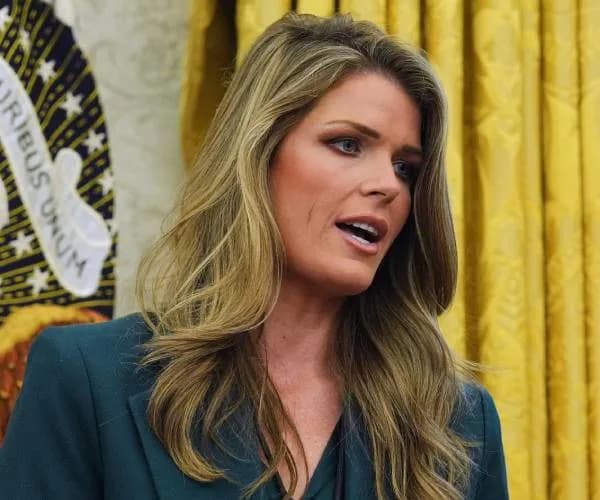
Lindsey Halligan, former interim U.S. attorney for the Eastern District of Virginia (AP)
The 4th U.S. Circuit Court of Appeals on Tuesday signaled skepticism about the Justice Department's request to reinstate dismissed criminal cases against former FBI Director James Comey and New York Attorney General Letitia James. At issue is whether Lindsey Halligan, a former personal lawyer to President Donald Trump who had no prior prosecutorial experience, lawfully obtained the indictments while serving as interim U.S. attorney for the Eastern District of Virginia.
What the Court Is Considering
Two of the three judges on the appeals panel pressed the government with pointed questions during argument, according to Reuters. Chief Judge Albert Diaz warned that the Justice Department's reading of the federal appointments statute could permit a "limitless" series of interim U.S. attorney appointments, allowing administrations to bypass Senate confirmation entirely.
"That interpretation would let the DOJ make a limitless number of interim appointments and evade Senate confirmation," Chief Judge Albert Diaz said.
Judge Henry Floyd also probed the government's position, asking what would distinguish an improperly appointed prosecutor who acts alone from an ordinary private citizen, noting that Halligan personally presented both indictments to grand juries within days of taking the post.
Arguments From Both Sides
Justice Department attorney Henry Whitaker urged the appeals court to overturn the lower-court ruling, arguing that sustaining it would hinder the attorney general's ability to fill vacancies across the nation's 94 U.S. attorney offices. Whitaker conceded, however, that depending indefinitely on successive temporary officials would be impractical.
Representing Comey, attorney Ephraim McDowell warned that the government's approach could allow presidents to install political allies indefinitely as chief federal prosecutors. The dispute traces to September 2025, when then-Attorney General Pam Bondi appointed Halligan after President Trump publicly urged charges against Comey and Letitia James and after former interim U.S. Attorney Erik Siebert resigned amid pressure for resisting those prosecutions.
Lower-Court Ruling
Senior U.S. District Judge Cameron McGowan Currie, who was designated to resolve disqualification motions, ruled in November that Halligan's appointment violated Section 546 of the federal vacancy statute and the Constitution's Appointments Clause. Because the statute's 120-day interim period had already elapsed during Siebert's tenure, Currie concluded that the authority to make further interim appointments had shifted to the district court, not the attorney general.
The appeals are consolidated as Nos. 25-4673 and 25-4674.
Case Status And Key Practical Issues
Comey was indicted in September 2025 on counts including allegedly lying to Congress and obstruction tied to his 2020 Senate testimony. The five-year statute of limitations expired days after Halligan took the interim post, a fact that could complicate any effort to refile those charges if the appeals court sides with the lower court. Letitia James faces bank fraud allegations related to a Virginia residence; both she and Comey have pleaded not guilty and deny wrongdoing.
Separately, Comey faces federal charges in North Carolina connected to a social media post that showed seashells arranged to read "86-47." The appeals court's decision will determine whether the DOJ can seek to revive the dismissed prosecutions and could clarify how Section 546 and the Appointments Clause apply to interim U.S. attorney appointments going forward.
© 2026 Newsmax. All rights reserved.
Help us improve.