Australian politicians and industry leaders say much of the surge in local opposition to AI datacentres stems from US debates amplified by social media, rather than from identical Australian conditions. Officials argue Australia’s sector is smaller, more regulated and operates under different energy and water dynamics, though several multi-gigawatt projects have raised genuine local concerns. The federal government is considering rules to block gas power for new centres and to require matched renewable generation; inquiries and calls for temporary moratoriums continue while legislation is prepared.
Australian Officials Say Datacentre Backlash Is Largely a US Import: “We Are Not The United States”
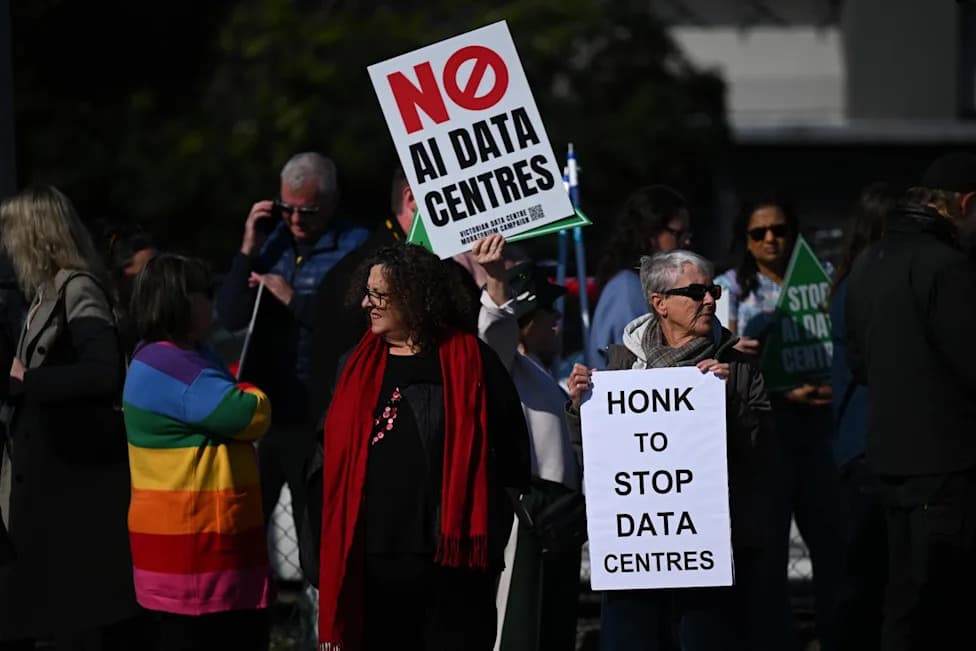
Protesters outside the Senate inquiry into datacentre regulatory frameworks in Melbourne, Australia, on 23 September.Photograph: James Ross/AAP
Australian politicians and industry leaders are pushing back against a rising wave of public concern about large AI datacentres, arguing that much of the anger has been imported from US debates circulating on social media rather than arising from identical Australian conditions.
Why The Debate Has Intensified
Like the United States, Australia has seen unease grow as plans for large AI datacentres multiply. In 2026 the topic surged into national conversation, sparking calls for moratoriums, public protests, three government inquiries, the drafting of state-level frameworks and federal moves to set national rules on how datacentres are built and how they use energy and water.
Officials Argue Context Matters
State governments, keen to attract investment and jobs, have generally welcomed datacentre projects; some have even overridden local planning processes because of the size and economic contribution of proposed facilities. Ministers and industry figures say the scale and regulatory context in Australia are very different from those in the US and that social media has amplified American stories into local debates.
“We are not the United States. Our planning, energy and water systems are much more carefully monitored, managed and regulated,” said Victoria’s then-minister for economic growth, Steve Dimopoulos.
Industry Response
Belinda Dennett, chief executive of Data Centres Australia, said the debate in Australia is "being fought on America's facts," arguing that many alarming headlines about "energy vampires, water hogs and job killers" originate in a very different US market and are being transplanted into Australia without sufficient context.
She contrasted rough capacity figures: the US has roughly 5,400 datacentres and about 53.7 gigawatts (GW) of capacity, while Australia has about 252 datacentres with roughly 1.4 GW of capacity (estimates vary by source).
Numbers And Local Projects
Per capita the difference narrows: Australia (population ~28 million) has just under one datacentre per 100,000 people, while the US (population ~342.7 million) has about 1.5 per 100,000. At the same time, the pace of construction in Australia is rising: multiple projects of 1 GW or greater capacity are now in planning.
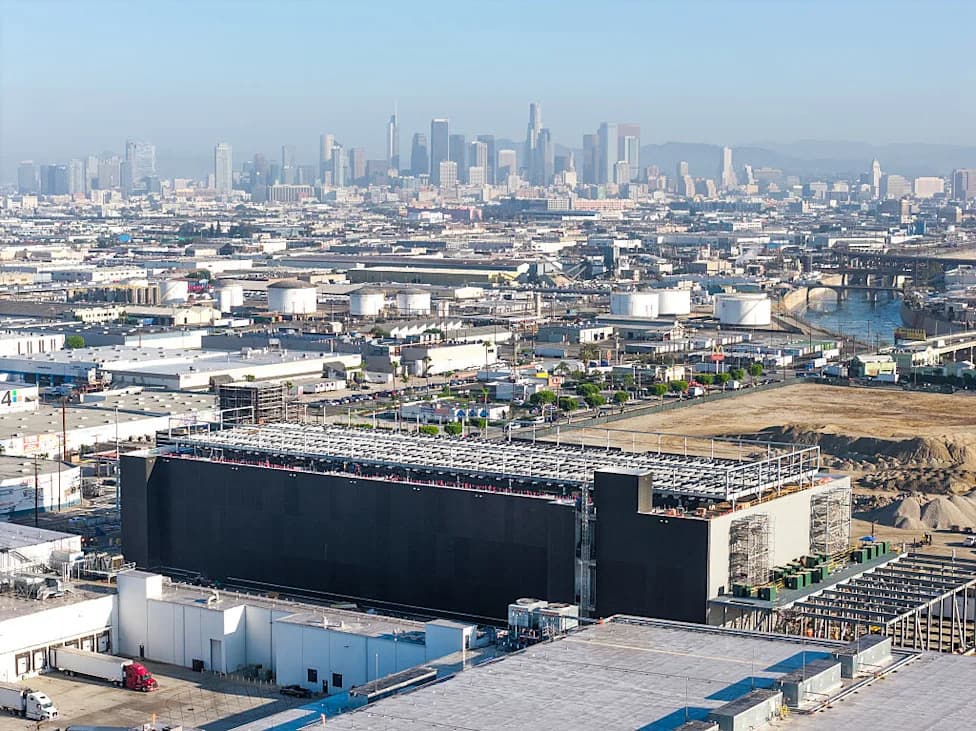
Viral social-media clips have focused attention on high-profile proposals, including a planned 2.4 GW project near outer Melbourne and a proposed 2 GW gas-powered centre in the Northern Territory. University of Sydney researcher Rob Nicholls observed that a multi-gigawatt facility represents an enormous draw on electricity—equivalent, he said, to the annual consumption of roughly two million households—underscoring why these projects prompt local concern, especially in regions with small populations like the Northern Territory (~265,000 people).
Federal Response And Local Benefits
The federal government, mindful of a US-style gas-driven datacentre boom, has signalled plans to restrict gas use for new centres and to require operators to bring equivalent new renewable generation into the grid to match the energy their facilities consume. Legislation to establish a national framework is not expected before next year, and some have called for a temporary moratorium while rules are finalised.
There are currently two state inquiries and one federal inquiry into the sector, alongside ongoing development applications and community pushback.
Ownership, Value Capture And Local Access
Many Australian datacentres are owned or operated by US companies. Assistant Minister for Technology Andrew Charlton warned that simply hosting datacentres in Australia does not guarantee the country captures the economic value of AI: land, power and hardware can be supplied locally while a large share of economic rents and AI value flow offshore.
Charlton urged providers to offer access to compute for Australian start-ups, researchers and not-for-profits on favourable terms and suggested Australia could build local AI capacity using open-weight models to avoid dependency on imported intelligence.
Where The Debate Goes From Here
The central challenge for policymakers is to explain clearly how Australian grid, water and planning systems differ from those in the US while responding to genuine local concerns about energy, water, community impacts and economic benefit-sharing. The outcome will shape whether Australia’s growing datacentre footprint is viewed primarily as an economic opportunity or a local cost.
Help us improve.