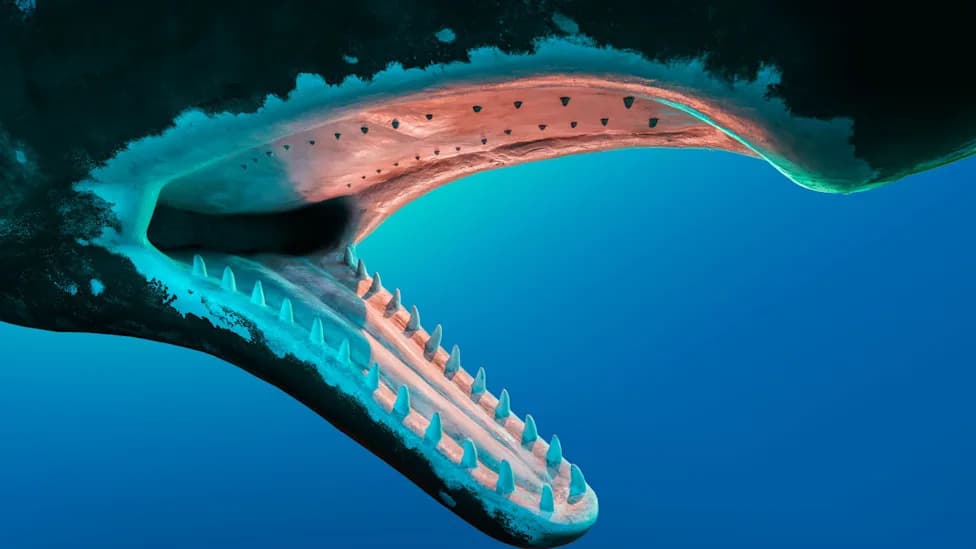
The 1820 wreck of the whaleship Essex — a real event that helped inspire Moby-Dick — sheds light on how sperm whales can devastate vessels. Researchers revive Owen Chase's 200-year-old idea that the spermaceti organ in the whale's massive forehead can act as a battering ram. Field footage shows juveniles delivering impacts near 460 kN, with adults potentially generating ~1,200 kN, forces capable of wrecking wooden ships. The organ also contributes to sound production and sexual signalling, and much about its roles remains uncertain.
Sperm Whale Superpower: How the Spermaceti-Filled Head Can Ram and Sink Ships
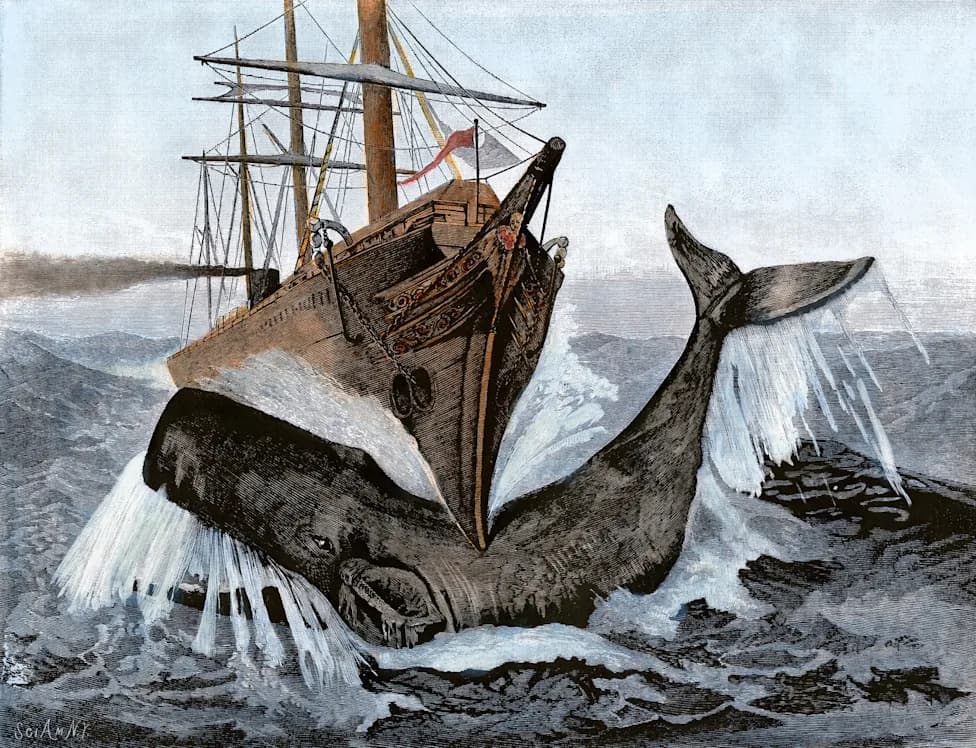
(Credit: Alamy)
On the morning of 20 November 1820, a 15-year-old crewman named Thomas Nickerson watched in horror as a sperm whale struck the whaleship Essex. After a first blow tore a hole in a small whaleboat, a second, much larger whale returned and smashed the bow of the main ship, sending the Essex to the bottom of the Pacific. That dramatic wreck later helped inspire Herman Melville's Moby-Dick.
More than two centuries after the Essex sank, researchers say the answer to how a whale could devastate a wooden ship may lie in the animal's forehead — and in an idea first proposed by the Essex's first mate, Owen Chase.
What Is the Spermaceti Organ?
Sperm whales have proportionally enormous heads — roughly one-third of their body length — and the largest brains of any animal (up to about 9 kg / 20 lb). Filling much of the forehead is the spermaceti organ, a fatty chamber that contains a waxy, oily fluid (historically prized by whalers). Individual organs can hold hundreds of gallons: estimates commonly cited include about 418 gallons (≈1,900 litres).
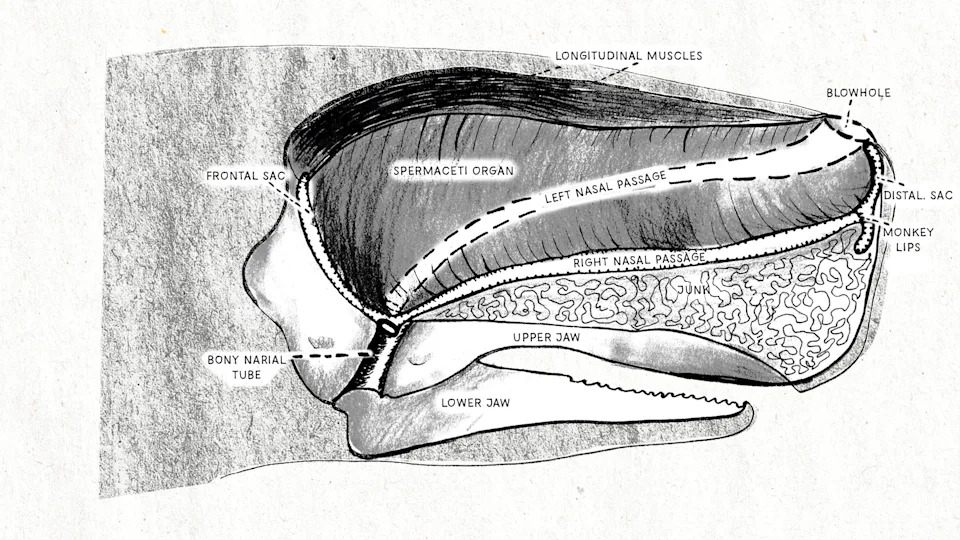
The spermaceti organ contains up to 418 gallons (1,900 litres) of a fatty and waxy liquid called "spermaceti", highly prized by 19th-Century whalers (Credit: BBC/ Serenity Strull)
The Old Hypothesis, Revisited
Owen Chase suggested more than 200 years ago that the whale's forehead could be used as a weapon. Retired evolutionary biologist Dave Carrier later tested that intuition, proposing that the enlarged melon (the fatty forehead structure shared by toothed whales) could function like a battering ram. Carrier compared it to ramming behaviour in other mammals such as deer or rams, where males use head strikes in competitive encounters.
Field Evidence: Whales Head-Butting One Another
Recent footage from ecophysiologist Alec Burslem captured sperm whales head-butting around the Balearic Islands and the Azores. Burslem recorded multiple collisions among young males; the strongest measured impact came from a juvenile moving at about 15 ft/s (4.5 m/s) and delivering roughly 460 kN of force. Scaling that estimate to a large adult at similar speed suggests an impact on the order of 1,200 kN — energy comparable to being struck by a heavy vehicle at road speeds and enough to catastrophically damage a wooden vessel.
"This wasn't originally our hypothesis, it was Owen Chase's," said Dave Carrier. "The whaler's intuition and experience were probably correct."
Historical Context: Shipwrecks and Whalers
Whaling logbooks show that, although whales often attacked small open boats lowered from mother ships, documented rams against the primary vessel are rare. In historical records, only three well-known incidents involved whales wrecking their mother ships — the Essex (1820), the Ann Alexander (1851), and the Kathleen (1902) — and in each case the assailant was a sperm whale.
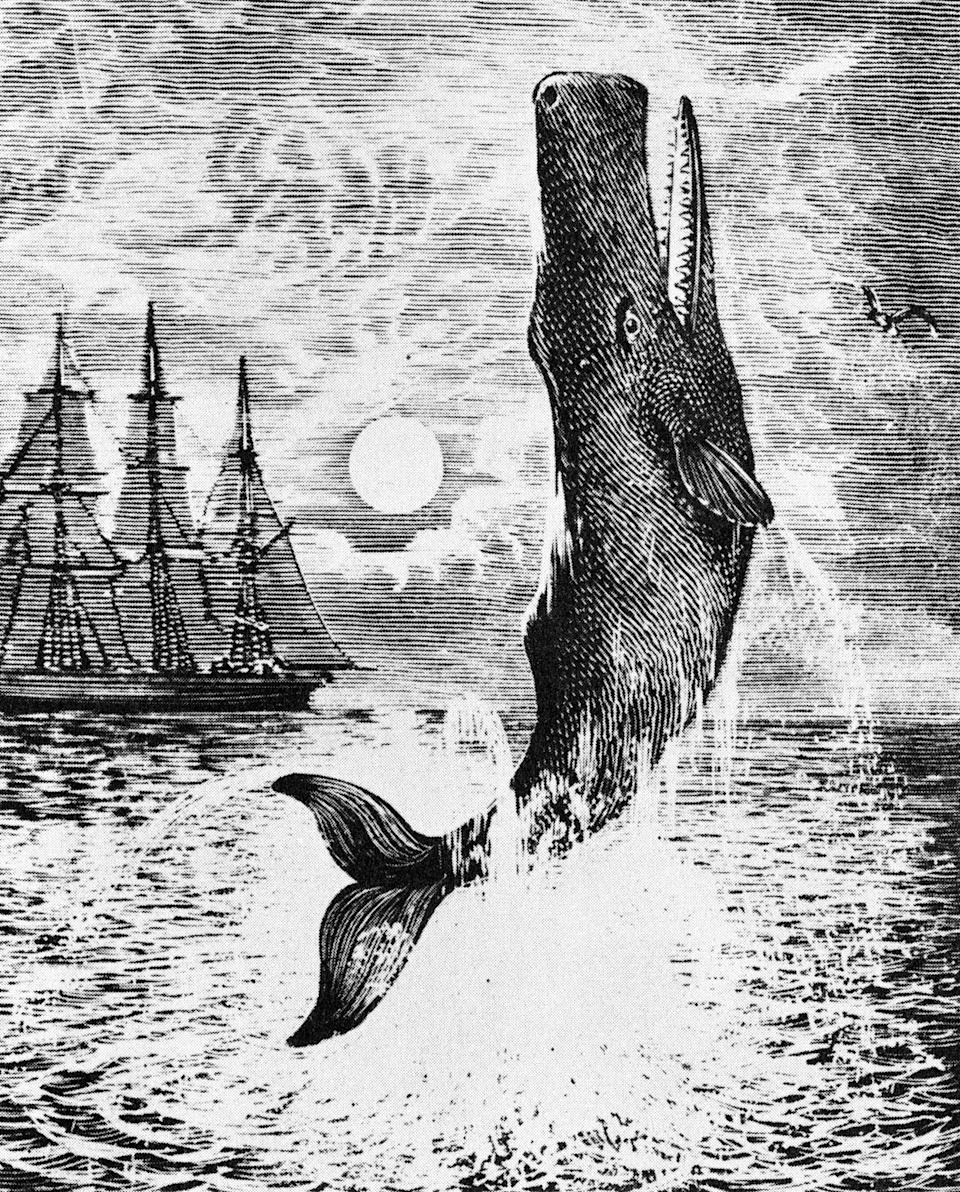
The tragic true story of the whaleship Essex inspired Herman Melville's Moby Dick (Credit: Getty Images)
Multiple Functions and Remaining Questions
The spermaceti organ probably serves more than one purpose. Sperm whales produce sound with specialized "phonic lips" near the front of their nasal complex; those sounds may reflect within the spermaceti chamber. Some researchers suggest females could use the combined sounds to assess a male's size or condition, making the organ important in sexual signalling as well as in combat or buoyancy regulation. Biomechanical studies also indicate the fatty tissues around the spermaceti provide cushioning that helps prevent self-injury during ramming.
Despite these advances, many questions remain: how often do whales use head-ramming in the wild, under what social contexts, and what trade-offs led to the evolution of such a massive forehead? Scientists emphasize that protecting sperm whales remains crucial: we are still discovering basic aspects of their biology.
Further reading: accounts of the Essex, recent field footage analyses, Carrier's biomechanical work, and conservation assessments of sperm whale populations.
Help us improve.