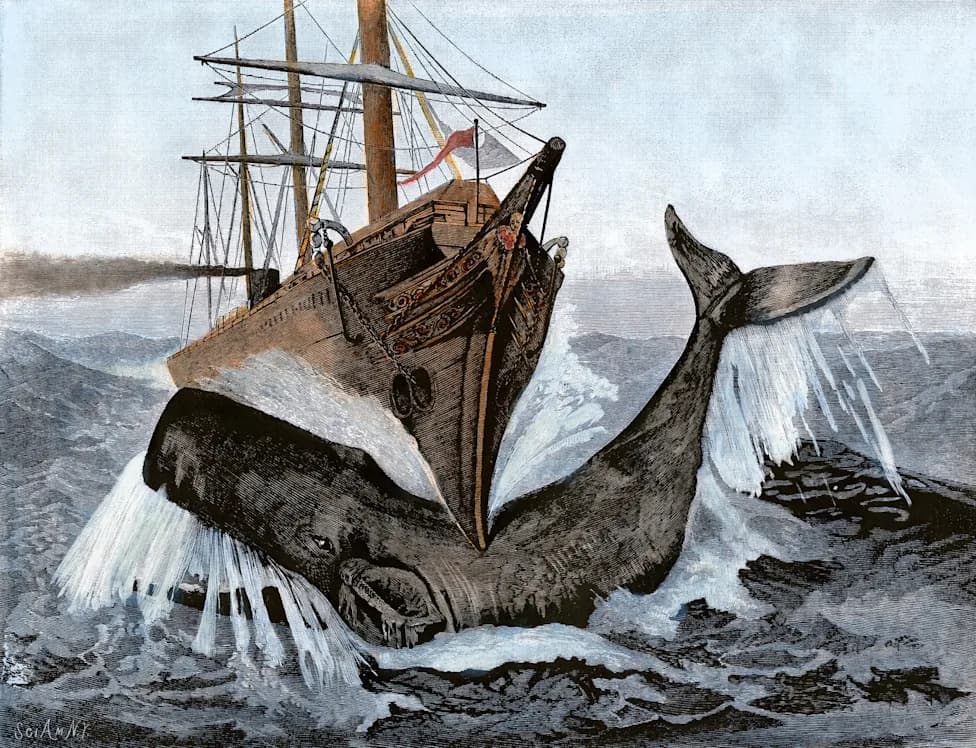
Could a human be swallowed whole by a sperm whale? Experts say it is extremely unlikely. Sperm whales feed at great depths, use echolocation, and have anatomy and feeding behaviors that make accidental ingestion improbable. Even if a person entered a whale's mouth, drowning, crushing, choking, and exposure to digestive conditions make survival unlikely. Other predators, such as reticulated pythons, have been documented swallowing humans under specific circumstances.
Could a Sperm Whale Really Swallow a Human? A Biologist Separates Fact From Fiction
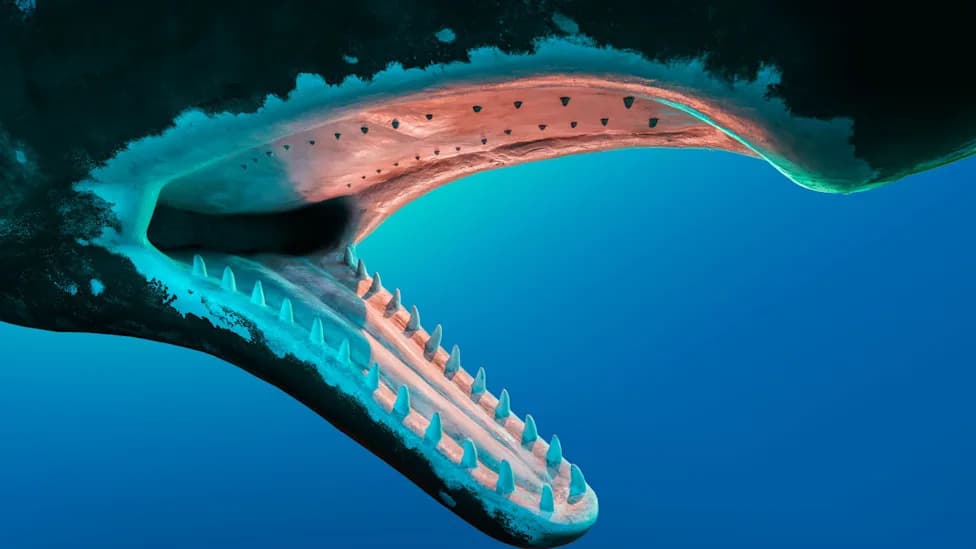
Colorized sperm whale teeth on a model. Sperm whales are the largest of all toothed whales.
Picture this: a giant sperm whale (Physeter macrocephalus) has swallowed you whole. It is an image that recurs in myth and film — from the Bible's Book of Jonah to Disney's Pinocchio — and it resurfaces in the new movie Whalefall, adapted from Daniel Kraus's novel, in which a scuba diver is gulped by a sperm whale and must escape before his air runs out.
Could It Happen?
Short answer: extremely unlikely. There are no verified cases of a person being eaten by a sperm whale. Reported close calls with whales have involved other species, such as humpbacks, which are anatomically incapable of swallowing an adult human and typically expel the person quickly. Shane Gero, Lead Biologist at Project CETI, puts it bluntly: 'I wouldn't call that swallowed. I would call that a mistake by both the mammals involved.'
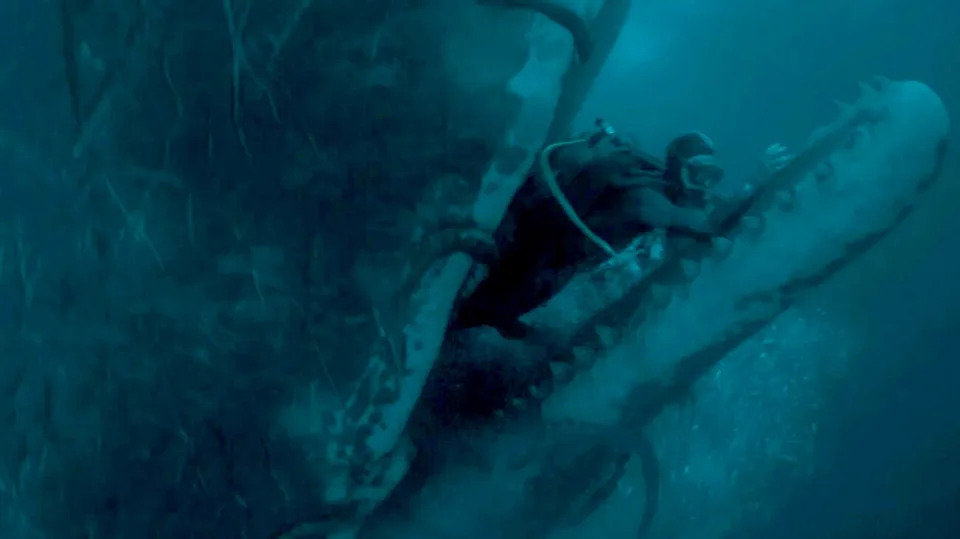
Austin Abrams as Jay Gardiner in 20th Century Studios' WHALEFALL.Image: © 2026 20th Century Studios. All Rights Reserved.
Sperm whales usually hunt at depths around 3,000 feet, a zone where recreational divers do not go. Even if a whale surfaced near a diver, sperm whales use echolocation and generally would recognize a human as atypical prey. Gero concedes a narrow hypothetical that an extremely large male sperm whale might be physically able to draw a slender, unencumbered human partway into its throat, but he adds: 'Would it happen? Very unlikely. Certainly not with scuba gear and a scuba tank making the human that much bigger.'
What Would the Inside Be Like?
Comparative anatomist Dr. Joy Reidenberg explains that the sperm whale's stomach has four chambers, an evolutionary holdover from herbivorous ancestors. The first chamber is muscular and grinds food because the whale's teeth are conical and unsuited to chewing. The internal surface a human would encounter would be 'wet, slimy, squishy walls' with no handholds, according to Reidenberg. The only relatively rigid structure is the larynx, which projects like a narrow pipe; if someone could get an arm around it, escape might be possible, but survival is far from guaranteed.
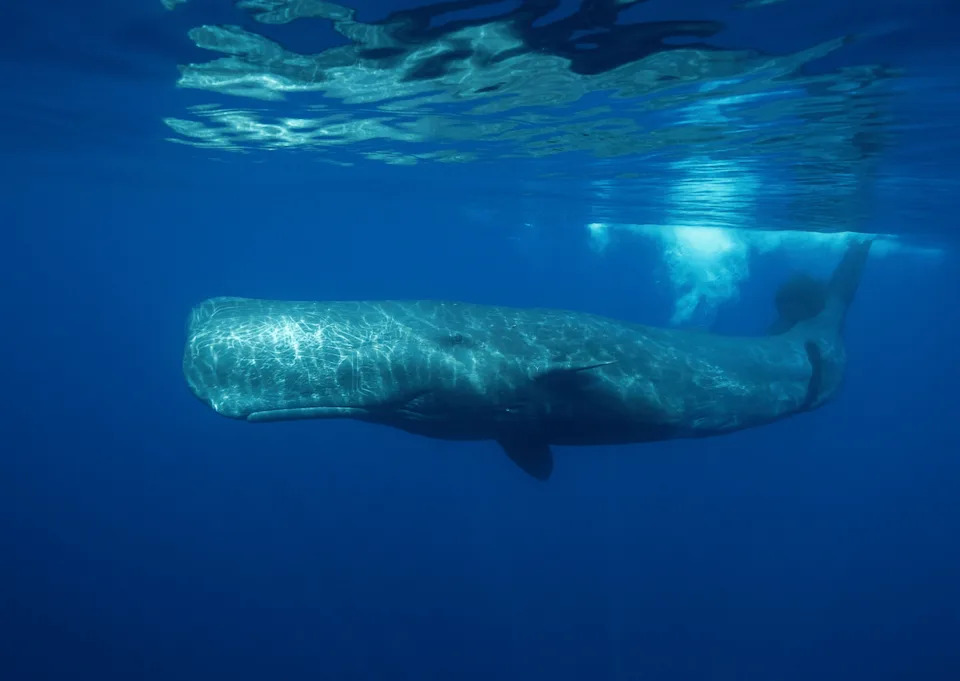
Male sperm whale swimming at the surface, Pelagos Sanctuary, Mediterranean Sea, Italy.Image: by wildestanimal via Getty Images.
Even before digestion becomes a factor, immediate physical threats are severe. Gero and other experts point out several likely causes of death:
- Drowning from seawater forced into the mouth and airways during ingestion.
- Severe blunt trauma or crushing when a human is slammed against the mouth or throat as the whale reacts.
- Choking or obstruction, especially if scuba gear or other rigid equipment is present.
- Exposure to digestive acids, gases, and bacteria in the stomach, which are hostile to life.
'When I swallow something that I shouldn't have, it's like a non-controllable response — your body just starts moving its mouth and coughing,' Gero says. A whale's panic or convulsive response could inflict catastrophic physical damage on anything inside its mouth.
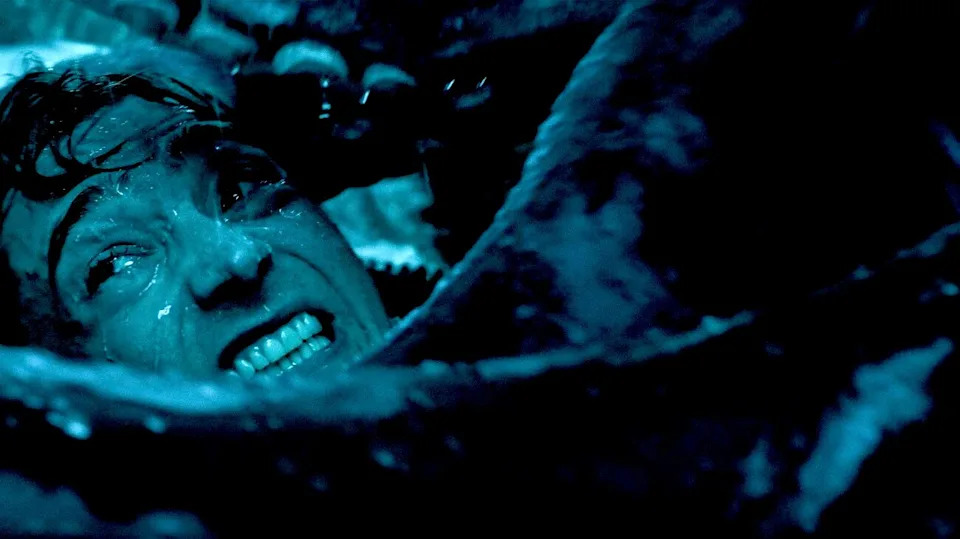
Austin Abrams as Jay Gardiner in 20th Century Studios' WHALEFALL.Image: © 2026 20th Century Studios. All Rights Reserved.
Could Any Animal Swallow a Human?
Yes, some species are capable of swallowing humans under particular conditions. Reticulated pythons (Malayopython reticulatus), which can reach lengths of about 26 feet, have been documented to consume whole humans. A 2025 review of cases in Indonesia recorded 17 python-related deaths between 1927 and 2025; four victims survived. Green anacondas (Eunectes murinus) can also take very large prey, but they typically constrict and kill before ingestion, so the prey is already limp when swallowed.
Why the Myth Persists
Part of the reason these stories endure is cultural: whales have loomed large in human imagination for centuries, shaped by whaling history, literature, and cinema. But experts stress that sperm whales show no appetite for humans. Gero calls them 'gentle giants of the deep' and hopes films like Whalefall spark curiosity about their intelligence and behavior rather than fear.
Researchers at Project CETI are working to decode sperm whale communication. If you want to participate in a public outreach project, visit https://listen.projectceti.org to record a message you would send to a sperm whale.
'Eating a human by accident seems very unlikely, but it makes for a really exciting story,' Gero says.
Bottom line: The cinematic idea of living inside a whale is a powerful storytelling device, but real-world biology, whale behavior, and the physics of feeding make the scenario extremely improbable and usually fatal.
Help us improve.