The Japan Trench is a mountain‑scale subduction zone offshore northeastern Japan that produced the magnitude‑9.1 Tōhoku earthquake and a tsunami with run‑ups up to nearly 38 meters (about 124 feet) in 2011. A 2025 Science study found a thin, slippery clay layer at the plate boundary that may promote shallow rupture and amplify tsunami risk. Japan’s committee says another M9 is unlikely in the next 30 years, but M7.4 and M7.9 events offshore Miyagi, Aomori, and northern Iwate carry substantial probabilities — a continuing concern for coastal safety.
Japan’s ‘Underwater Mount Everest’ Spawned a 124‑Foot Tsunami — And It Could Happen Again
Japan’s ‘Underwater Mount Everest’ Unleashed a 124-Foot Tsunami and It Could Happen Again
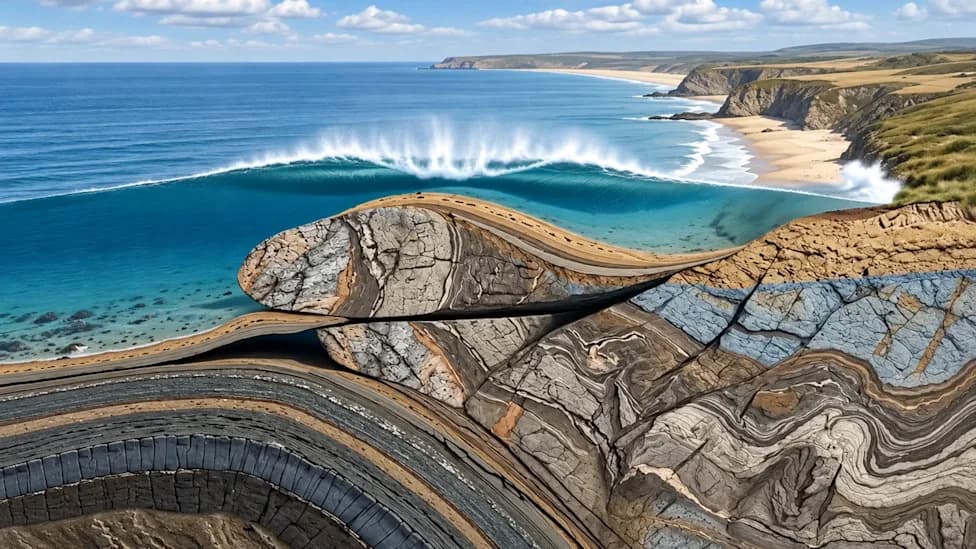
The Japan Trench, a deep subduction zone off northeastern Japan, is essentially Mount Everest flipped upside down: a narrow, mountain‑scale scar in the seafloor that reaches depths exceeding 8,000 meters (roughly 26,000 feet).
Running offshore of northeastern Honshu, the trench marks the boundary where the Pacific Plate plunges beneath the plate that carries Japan. Scientific drilling and mapping have shown the trench approaches the scale of the world’s tallest peaks — a useful visual for understanding the immense forces at work beneath the ocean.
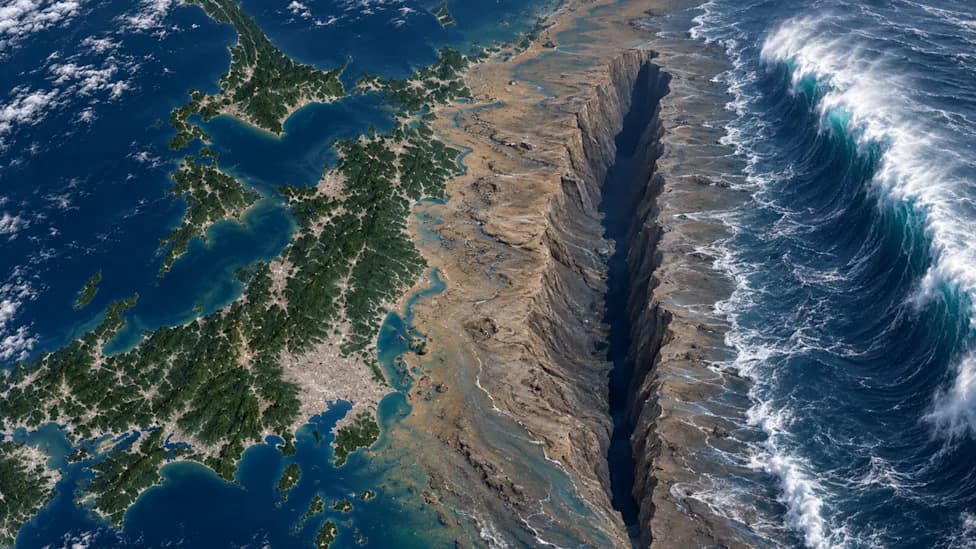
A widely shared animation online dramatizes this scale, carving an enormous fault beside Japan and showing the ocean drawing back as a tsunami builds. The video amplifies some visuals for effect, but the hazard the clip evokes is real and scientifically grounded.
At subduction zones like the Japan Trench, tectonic plates can lock together for decades or centuries while strain accumulates. When the megathrust fault finally ruptures, the seafloor can move abruptly, displacing massive volumes of seawater and generating tsunamis.
“This was a massive earthquake,” USGS geophysicist Bill Ellsworth said after the 2011 event, calling it “one of the largest earthquakes that we have ever recorded.”
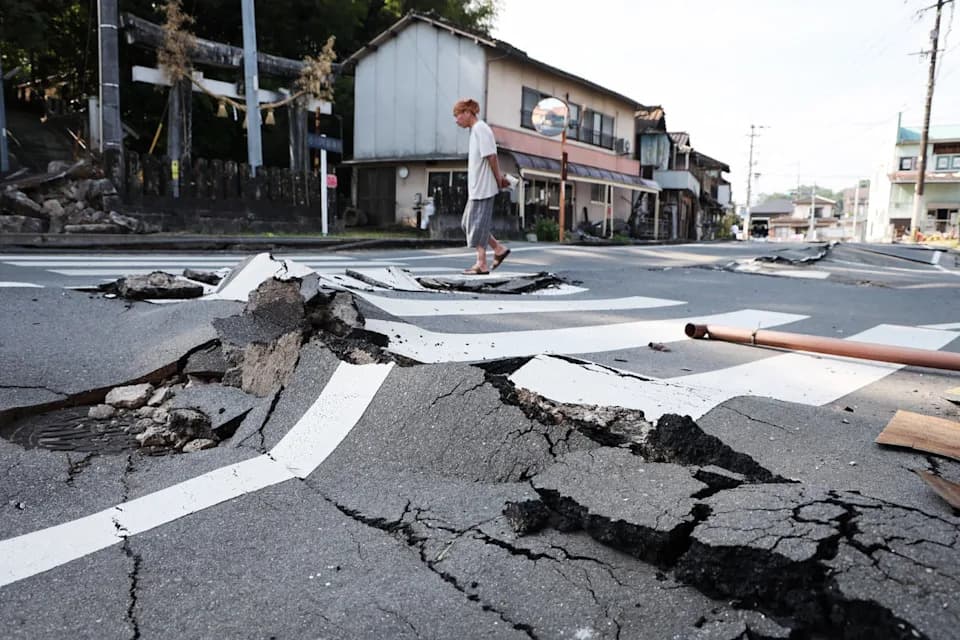
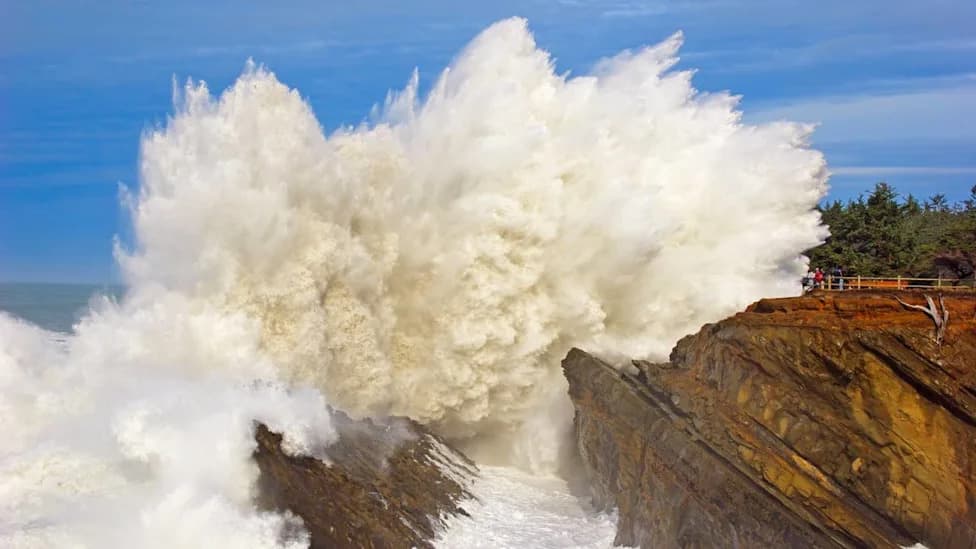
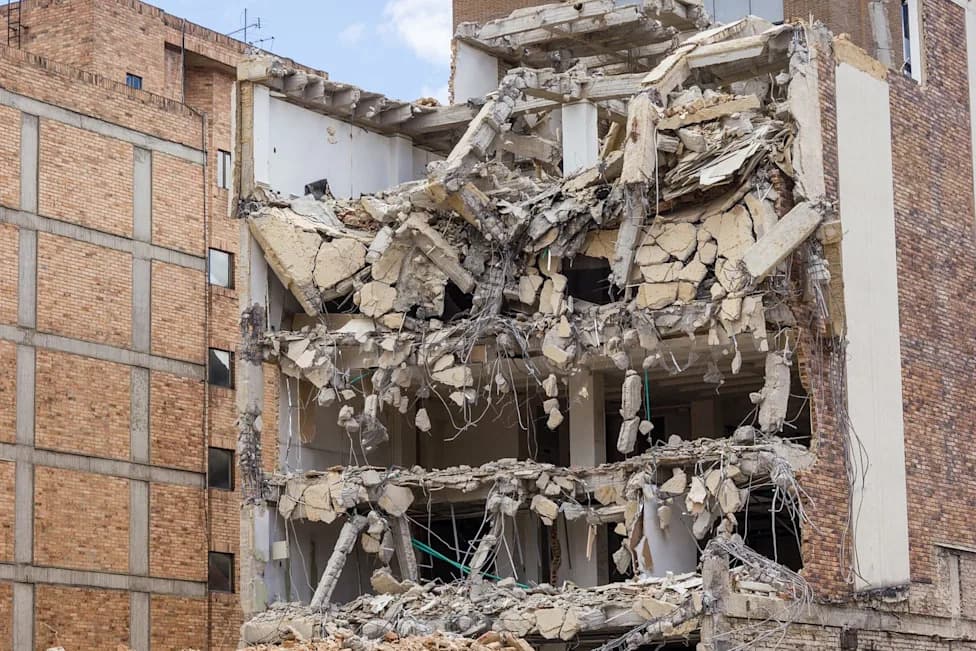
That is exactly what happened on March 11, 2011: a magnitude‑9.1 earthquake on the Japan Trench megathrust produced violent shallow slip estimated at roughly 50–70 meters. The resulting tsunami produced maximum run‑ups of nearly 38 meters (about 124 feet) along parts of Japan’s coast, causing catastrophic damage and loss of life.
Recent seismological research has sharpened concern about the trench. A 2025 study published in Science identified a thin, slippery clay layer along the plate boundary that can allow rupture to propagate rapidly toward the seafloor. Cornell geophysicist Patrick Fulton described the boundary as an “extremely focused, extremely weak surface,” a condition that makes large shallow slip — the kind that most strongly amplifies tsunamis — easier to occur.
That finding does not mean another 2011‑scale quake is imminent. Japan’s Earthquake Research Committee currently places the 30‑year probability of a repeat M9‑class Japan Trench earthquake near zero, largely because the region released an enormous amount of strain in 2011.
However, somewhat smaller but still destructive events remain likely in the coming decades. The committee estimates an approximately M7.4 earthquake offshore of Miyagi carries an 80–90% probability within 30 years, while an M7.9 event off Aomori and northern Iwate is assigned a roughly 20–40% chance over the same period. Such earthquakes can still produce strong shaking and locally dangerous tsunamis.
Why This Matters
The trench is hidden beneath miles of Pacific water, but its potential power is not: even if another M9 is unlikely on short timescales, geologic conditions and credible probabilities for M7–8 events mean coastal communities and emergency planners must remain vigilant.
Originally published by Surfer on Sep 24, 2026, where it first appeared in the News section.
Help us improve.