MIT engineers have built a bioresorbable "edible" battery that can be swallowed to power short-term medical devices inside the gastrointestinal tract and then safely dissolve. Published in Nature Chemical Engineering, the prototype produced about 1.84 volts and powered devices for up to three days in pig tests, while surviving simulated stomach acid for about two weeks. Clinical trials in humans are planned within two years to assess safety and effectiveness.
MIT Engineers Create Bioresorbable “Edible” Battery to Power Temporary Medical Devices
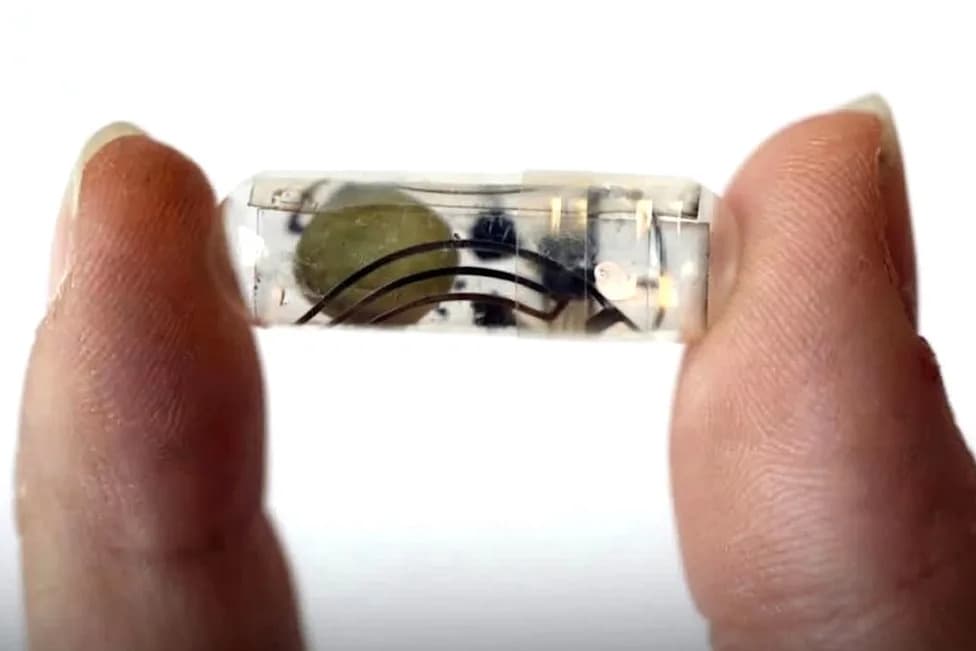
Edible BatteryCredit: Nature Chemical Engineering
Researchers at the Massachusetts Institute of Technology have developed a bioresorbable, or “edible,” battery designed to power short-term medical devices inside the gastrointestinal tract and then safely dissolve without leaving harmful residues.
Development and Laboratory Results
The prototype, reported in Nature Chemical Engineering on Sept. 21, was engineered to operate in acidic conditions similar to those in the stomach. In laboratory simulations the battery withstood a simulated pig stomach acid environment for roughly two weeks while retaining function.
In Vivo Testing
In tests conducted in pigs, the device produced about 1.84 volts and powered medical hardware for up to three days. Researchers say the battery then gradually degraded and was resorbed without leaving toxic fragments or measurable harmful byproducts in the body.
Giovanni Traverso, senior author and professor of mechanical engineering at MIT, said in a press release: "Could we develop a battery that was bioresorbable, and then apply that across a range of application areas?"
Mehmet Girayhan Say, lead author, added: "What makes this work exciting is that we were able to show that a bioresorbable battery is not just a concept. It can actually power clinically relevant functions inside the gastrointestinal tract and then simply dissolve."
Potential Benefits and Next Steps
Investigators highlight two main advantages: improved patient safety by eliminating the need to retrieve temporary devices and a reduced environmental footprint because the materials can degrade in the environment. The team plans to begin human clinical trials within roughly two years to evaluate safety and effectiveness in people.
Caveats
Results are preliminary. So far testing has been limited to laboratory simulations and animal models (pigs). Human physiology and regulatory review may bring additional challenges; clinical trials will determine whether performance and safety translate to patients.
If successful, bioresorbable batteries could become a safer power source for ingestible sensors, short-term implants and other temporary medical technologies, reducing the need for retrieval procedures and long-term device waste.
Help us improve.