Overview: U.S. Senator Marco Rubio met India's External Affairs Minister S. Jaishankar to discuss the implications of the newly signed "Lindsey O. Graham Sanctioning Russia and Iran Act of 2026." The law could force the U.S. to impose tariffs of up to 100% within 30 days on major buyers of Russian oil. India warned such measures could strain ties and said its imports help stabilise supplies and domestic fuel prices.
U.S. Senator Marco Rubio and India's S. Jaishankar Discuss New Russia-Iran Sanctions Law
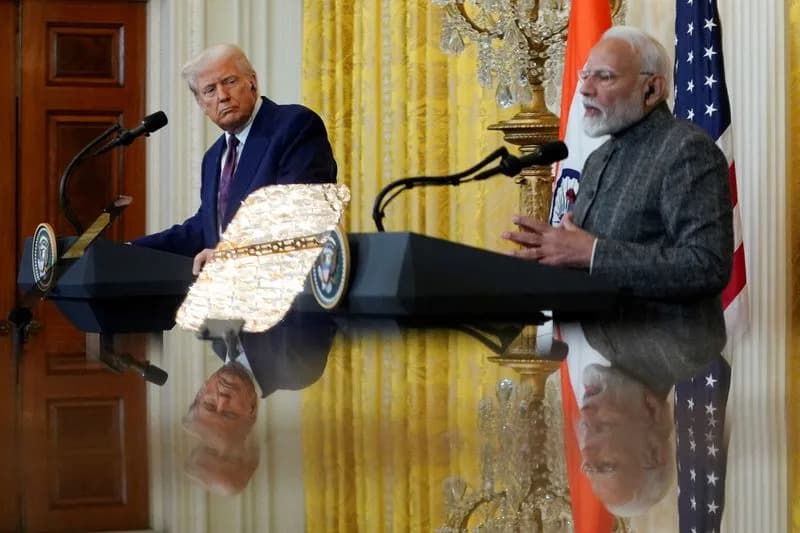
FILE PHOTO: U.S. President Donald Trump and Indian Prime Minister Narendra Modi are pictured in a mirror as they attend a joint press conference at the White House in Washington, D.C., U.S., February 13, 2025. REUTERS/Nathan Howard/File Photo
WASHINGTON, Sept 23 — U.S. Senator Marco Rubio met with Indian External Affairs Minister S. Jaishankar in New York to discuss possible U.S. measures targeting countries that maintain economic ties with Russia and Iran. New Delhi reiterated concerns about a recently signed sanctions law that could affect major oil importers.
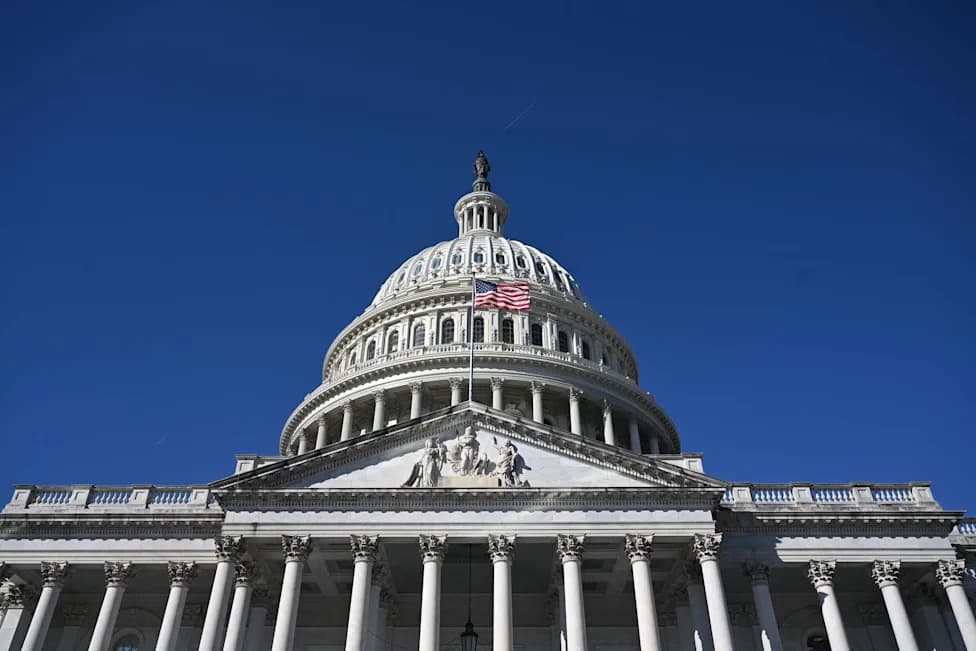
Legislation at the center: Last week, President Donald Trump signed the "Lindsey O. Graham Sanctioning Russia and Iran Act of 2026," named for U.S. Senator Lindsey O. Graham. The law, approved by Congress, is designed to increase economic pressure on Russia over its invasion of Ukraine that began in early 2022.
The State Department said Rubio and Jaishankar "discussed sanctions that could be leveled against states that engage economically with Russia and Iran." Jaishankar later posted on X that he had "reiterated India's interests and concerns with regard to SRIA," referring to the new legislation.
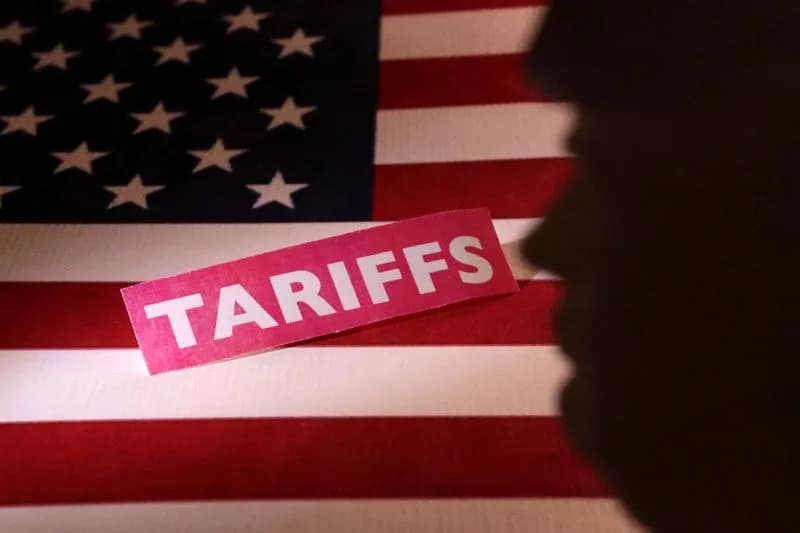
Tariff provisions and implications: The bill requires the president to impose tariffs of up to 100% within 30 days on goods imported into the United States from the five largest importers of Russian crude oil or gas, and on any country that knowingly made new purchases of Russian oil or gas within 30 days after enactment or was among the top five countries helping Russia evade sanctions.
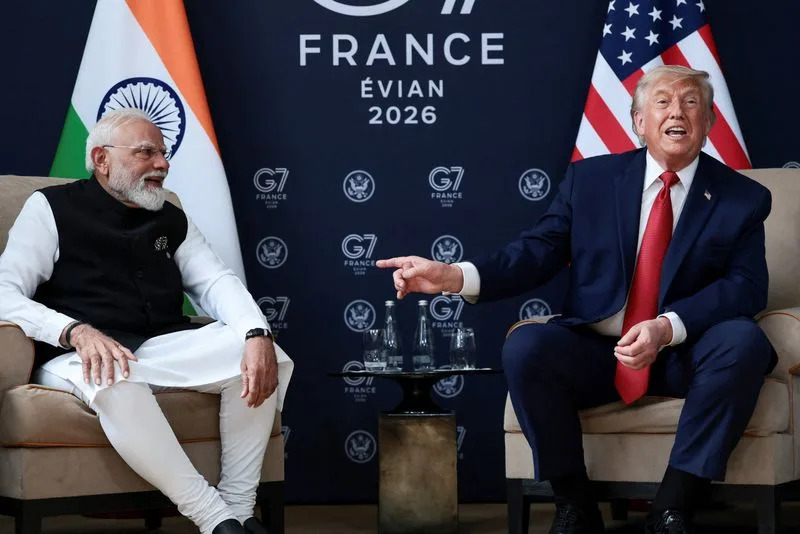
FILE PHOTO: U.S. President Donald Trump attends a bilateral meeting with Indian Prime Minister Narendra Modi during the G7 Summit in Evian-les-Bains, France, June 17, 2026. REUTERS/Evelyn Hockstein/File Photo
India is one of the world's largest buyers of Russian crude. New Delhi sharply increased purchases of discounted Russian oil after Moscow's 2022 invasion of Ukraine. Those purchases were a factor behind tariffs of up to 50% on Indian goods imposed by the U.S. in August 2025; Trump rescinded those duties in February 2026 after India pledged to curb purchases.
New Delhi briefly reduced its Russian oil imports in early 2026 but purchases rose again later in the year, particularly after supply disruptions tied to broader regional tensions in the Middle East. Indian officials say affordable energy is critical for a large and growing population and economy, and Indian analysts add that purchasing discounted Russian crude helped stabilise global supplies and domestic prices rather than financing Russia's war in Ukraine.
Diplomatic context: India has warned Washington that new tariff measures tied to Russian oil purchases could strain bilateral relations. The discussion between Rubio and Jaishankar reflects ongoing friction between U.S. efforts to deter support for Russia and India's pragmatic energy needs.
(Reporting by Kanishka Singh, Daphne Psaledakis and Ryan Patrick Jones; Editing by Caitlin Webber and Lincoln Feast.)
Help us improve.