A viral TikTok from @thesnakeaholic shows a female Burmese python in Florida coiled over a large clutch of eggs hidden in ferns. Crews removed the snake and eggs to prevent a new generation of invasive predators. Prior Everglades operations recovered clutches of 60 and 431 eggs, demonstrating the scale of the threat. Researchers are using improved tracking and data methods to locate nests faster and reduce risks to handlers.
Viral TikTok Shows Female Burmese Python Brooding Over Massive Clutch — Crews Remove Nest to Stop New Wave of Predators
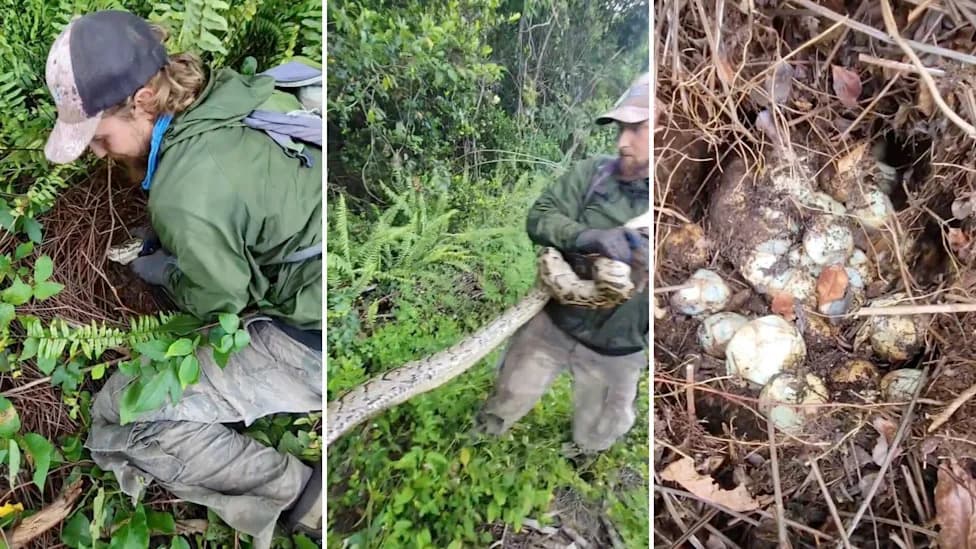
Photo Credit: TikTok
A viral TikTok clip from Florida captured a large invasive female Burmese python coiled over a substantial clutch of eggs hidden in dense ferns. Crews removed the adult snake and its nest to prevent an entire new generation of invasive predators from entering an already stressed ecosystem.
The video was posted by TikTok user @thesnakeaholic, who documented wildlife crews discovering the brooding female and carefully extracting her and the eggs. The footage underscored how nest removals strike at the root of population growth for this destructive species.
This big female python was coiled up in the ferns sitting on a huge pile of eggs!
Removing invasive pythons saves native wildlife, but it is especially important to remove nests like this because it stops an entire generation of invasive apex predators from being born into the ecosystem. We saved A LOT of wildlife with this removal!
Experts say nest removal matters because it interrupts reproduction at the source rather than forcing managers to remove adult snakes one by one. Past operations in the Everglades illustrate the stakes: in one case crews recovered a clutch of 60 eggs, and in another operation hunters removed 431 eggs before they hatched, effectively preventing hundreds of potential hatchlings.
Biologists also warn that female Burmese pythons can become highly protective around nests, increasing the risk to handlers during removals. To reduce those risks and improve effectiveness, researchers and wildlife managers are deploying new tracking techniques and data-driven search methods to find nests faster and suppress the invasive population more efficiently across Florida.
Why it matters: Burmese pythons are an invasive apex predator in South Florida whose growing numbers have caused significant declines in native mammal and bird populations. Removing nests is one of the most direct ways to blunt future population growth and protect fragile ecosystems such as the Everglades.
Help us improve.