AI’s invisible backend has a visible cost. Data centers that power AI use large quantities of water and electricity, with a single 100-word AI prompt estimated to require about 519 milliliters of water when server cooling is included. Large campuses can consume millions of gallons per day, and U.S. facilities together use nearly half a billion gallons daily. Communities near heavy compute sites report air-quality and health problems tied to generator emissions; experts recommend more water recycling, cleaner backup power and greater battery storage to reduce impacts.
Water and Power: How AI’s Physical Footprint Stresses Communities and Resources
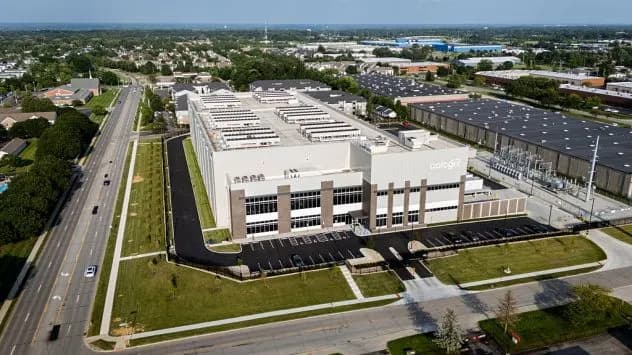
The COL4 AI-ready data center is located on a seven-acre campus at the convergence point of long-haul fiber and regional carrier fiber networks on July 24, 2025 in Columbus, Ohio. COL4 spans 256,000 square feet with 50 MW of power across three data halls. (Photo by Eli Hiller/For The Washington Post via Getty Images)
Artificial intelligence may seem weightless, but the systems that run it depend on large, energy- and water-intensive physical infrastructure. As data centers proliferate to meet surging AI demand, their appetite for electricity and freshwater is creating tensions over shared resources, local pollution and public health.
How Water Powers AI
Researchers at the University of California, Riverside estimate that a single 100-word AI prompt consumes roughly one bottle of water — about 519 milliliters — when accounting for the water used to cool the servers that process the request. Multiplied across hundreds of millions of users who interact with AI services daily, that small per-request cost becomes substantial.
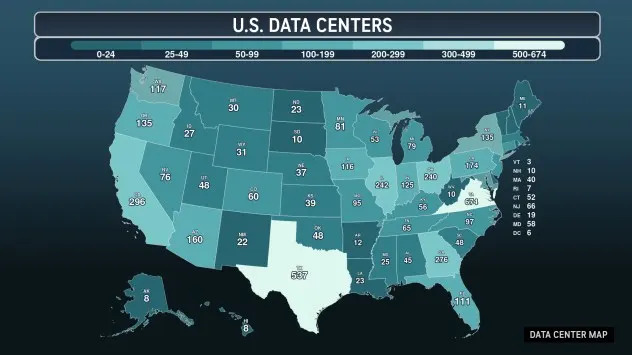
U.S. data centers as of September 2026.
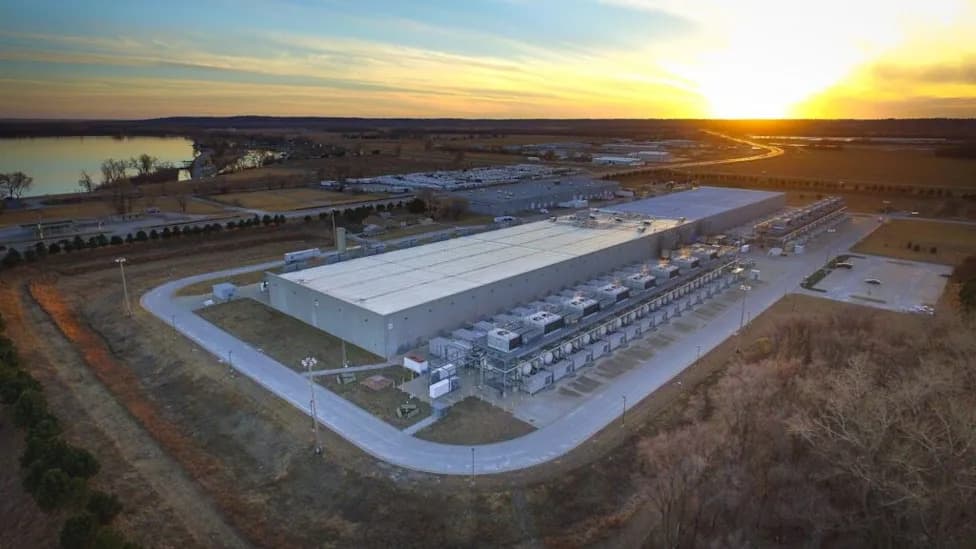
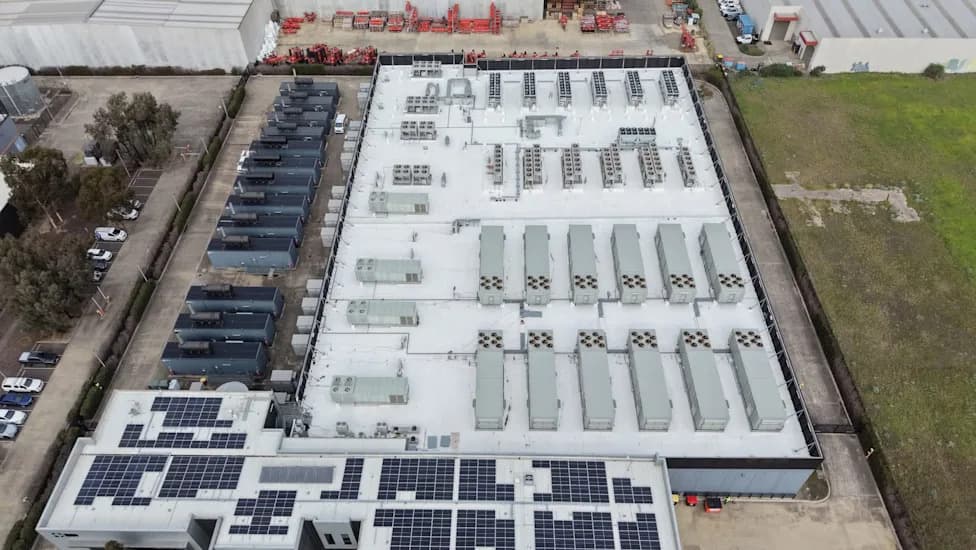
Cooling needs vary by facility. A medium-sized site — for example, the 36,554-square-foot Equinix campus in Irving, Texas — is reported to use about 110 million gallons of water annually for cooling, roughly the yearly consumption of 1,000 households. Larger installations can be far more voracious: reporting around xAI’s Memphis campus indicates the roughly 785,000-square-foot site may use up to 5 million gallons per day (about 1.8 billion gallons per year), comparable to the annual usage of a town of 10,000 residents. Across the United States, roughly 5,000 data centers collectively consume nearly half a billion gallons of water every day — a figure expected to grow as facilities expand and AI workloads increase.
At the global level, the United Nations has warned of a state of “global water bankruptcy,” urging urgent action. “For much of the world, ‘normal’ is gone,” said Kaveh Madani, Director of the UN University Institute for Water, Environment and Health, emphasizing that Indigenous peoples, low-income urban residents and smallholder farmers often shoulder the greatest burdens from resource overuse.
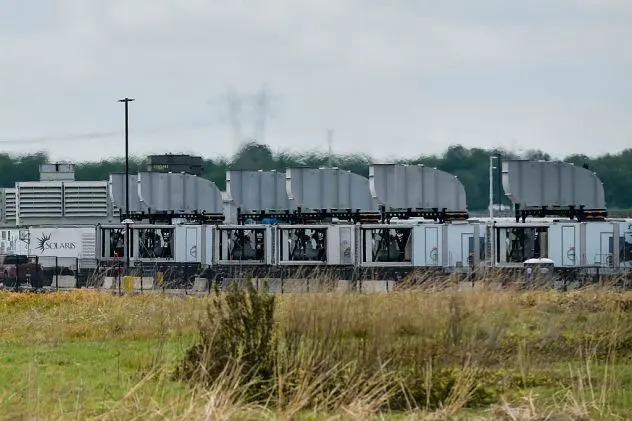
Gas turbines are visible at an xAI data center on Riverport Rd in Memphis, TN on April 25, 2025. (Photo by Brandon Dill for The Washington Post via Getty Images)
Power, Pollution and Local Impacts
Powering massive compute clusters also creates pollution challenges. Reporting around xAI’s Gigafactory of Compute in southwestern Memphis — a project promoted as a very large AI compute campus — described the use of numerous mobile gas turbines to meet immediate power needs. Residents reported seeing and hearing turbines near the site, and interviews captured community concerns about air quality and noise.
Local estimates put the facility’s annual emissions of nitrogen oxides (NOx) in the range of 1,000–2,000 tons, making it among the region’s larger single sources of that pollutant. Shelby County received an “F” grade from the American Lung Association for ozone pollution in 2025. Mobile gas turbines and similar generators commonly emit NOx, formaldehyde and fine particulate matter; these pollutants can react in the atmosphere to form ground-level ozone, worsen asthma and COPD, increase cancer risk, and contribute to heart disease.
Resident perspective: “I like to open my windows early in the morning to breathe the fresh air, God's given air,” said Easter Knox, who lives about a mile from the Memphis campus. “You can't hardly breathe, it's like your whole world is collapsing down on you.”
Pathways to Reduce Harm
Experts emphasize that the environmental and health impacts of data centers can be reduced through a combination of technology, planning and policy. Practical approaches include:
- Greater water recycling and closed-loop cooling: Reuse reduces freshwater withdrawals and eases stress on local supplies, though some makeup water is often still required.
- Energy storage and cleaner grid supply: Wider use of battery storage can reduce reliance on diesel or gas generators during peak loads and enable use of lower-carbon electricity.
- Cleaner backup generation and emissions controls: Deploying low-emissions generators, effective filtration and stricter permitting can cut harmful air pollution near communities.
- Smarter siting and community engagement: Locating facilities where water and power supplies are abundant, and involving local communities in planning, can reduce disproportionate impacts on vulnerable groups.
- Efficiency improvements: Advances in cooling technology, chip efficiency and AI model optimization can lower both energy and water per computation.
Balancing the societal benefits of AI with the environmental and public-health costs requires transparency from operators, stronger planning and smarter technology choices. Without proactive measures, the growth of compute infrastructure risks deepening existing inequalities and intensifying local resource strains.
Help us improve.