UNFPA warns that the Israel–Hamas war, mass displacement and constraints on aid have raised gender-based violence risks for Palestinian women in Gaza. Based on group discussions with 230 displaced women, the report links rising rape, assault, survival sex and forced marriage to overcrowded camps, destroyed services, legal gaps and economic desperation. UNFPA also notes survivors are unlikely to report violence by armed actors, and it calls for urgent protection, services and stronger humanitarian safeguards.
UNFPA: Gaza War, Displacement and Aid Disruptions Heighten Sexual Violence Risks for Palestinian Women
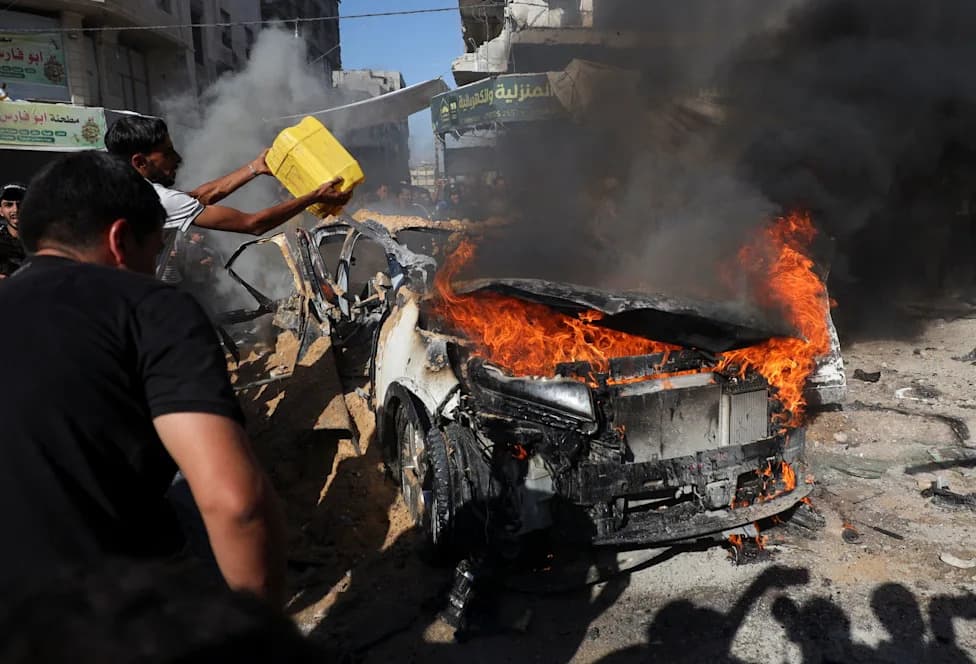
Palestinians attempt to extinguish a fire following an Israeli air strike that hit a vehicle in Gaza City, September 19, 2026. (photo credit: REUTERS/STRINGER)
The United Nations Population Fund (UNFPA) says Israel's military response to Hamas after October 7, mass displacement, tightened security measures and constraints on humanitarian aid have increased both the frequency and severity of gender-based violence (GBV) experienced by Palestinian women in Gaza.
UNFPA based its conclusions on group discussions with 230 displaced adult women convened by the Women’s Affairs Center between December 2025 and January 2026. The agency reports that violence has occurred within families and communities and has also been attributed to individuals involved in security operations and aid distribution.
Key Findings
Displacement and Overcrowding: Overcrowded, unsafe and undignified living conditions in displacement sites and camps have eroded community protections and increased exposure to rape, assault, sexual harassment and domestic violence.
Service Disruption: Widespread destruction of Gaza’s infrastructure has disrupted legal, health and education systems that previously provided protection and support for women and girls, limiting survivors’ access to timely medical, psychosocial and justice services.
Economic Pressures: Severe shortages of food and essential goods—exacerbated by restrictions on aid and reported blocking of some aid groups—have heightened economic desperation and contributed to increased reports of sexual exploitation, survival sex, forced and early marriage, economic abuse and exploitation of vulnerable groups such as widows and families of detainees.
Accountability and Methodological Caveats
UNFPA notes important limitations: survivors participating in group discussions are often unlikely to disclose violence committed by armed actors, and the report therefore does not indicate the prevalence or absence of GBV by Palestinian armed groups. Independent media outlets have reported allegations that some Hamas members and some individuals working for certain aid providers engaged in sexual exploitation in Gaza; UNFPA’s community-based discussions did not produce disclosures that could be attributed directly to armed groups.
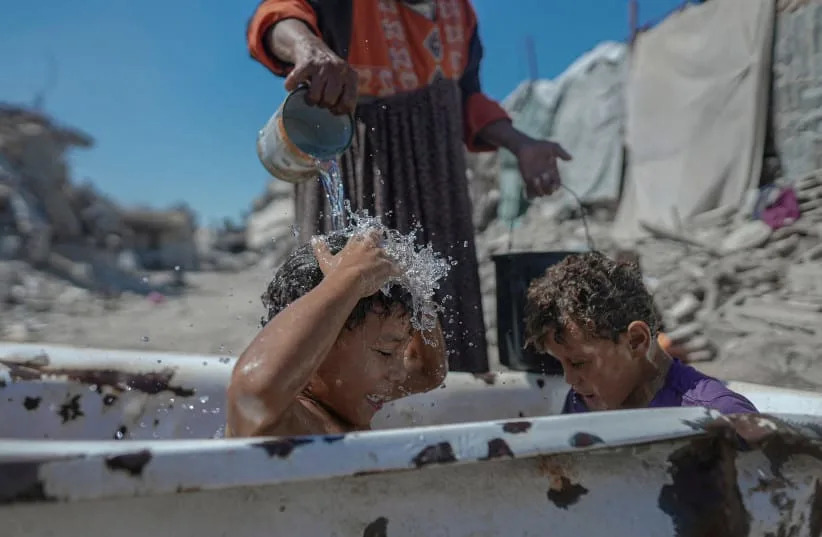
A Palestinian woman washes children in a bathtub amid rubble in the Al-Zarqa neighborhood of Gaza City, Gaza Strip, on September 21, 2026. (credit: Faiz Qreqa / Middle East Images / AFP via Getty Images)
The report also flags gaps in safeguards: UN agencies have themselves faced allegations of sexual exploitation and abuse, with UN-published figures showing 758 allegations involving UN staff, related personnel and partners in 2024. UNFPA further criticizes actions that it says weakened humanitarian safeguards, including restrictions on established agencies and the barring of some organizations from operating in Gaza.
Protection Risks and Personal Accounts
UNFPA documented repeated accounts of practical protection failures. Poorly designed shelters and sanitation facilities often lack doors, roofs, lighting or single-sex arrangements, creating physical environments conducive to harassment and assault. One participant described restrooms as a common site for harassment; another recounted a woman who discovered a man watching her through a roofless bathroom but was too afraid to report the incident because of stigma.
“I’m really confused about this society. I’m forced to keep quiet,” a woman told researchers after being told she had "exposed" herself when she reported harassment to camp authorities.
The report also includes testimonies relayed to participants about alleged misconduct at checkpoints and during evacuations. While these are reported secondhand in the UNFPA account rather than as direct eyewitness testimony from the group-discussion participants, they nevertheless illustrate the range of protection concerns raised by women in displacement.
Legal and Social Context
UNFPA places the current surge in risk within longer-standing legal and social constraints. Previous UN documentation has noted outdated laws and the absence of specific legislation criminalizing domestic violence in the Palestinian territories, and a 2019 UNFPA survey found high rates of domestic violence among married women in Gaza. Those structural gaps, UNFPA says, have left many women with limited avenues for redress even before the current crisis.
Conclusions and Calls for Action
UNFPA concludes that the combined effects of war, displacement, economic deprivation, damaged services, weakened safeguards and entrenched gender norms have heightened GBV risk and left many survivors with few options for protection or justice. The agency’s findings underscore the need for improved humanitarian safeguards, prompt access to medical and psychosocial care, safe shelter and targeted protection services, as well as strengthened accountability mechanisms for all alleged perpetrators.
Note: This article summarizes UNFPA’s report and related media coverage. Where allegations were reported by independent outlets, this piece uses cautious language to reflect the sources and the UNFPA report’s methodological limitations.
Help us improve.