Community colleges enroll over 40% of U.S. undergraduates but often receive less funding per student than four-year colleges. Many lack the equipment, instructors, and industry partnerships needed to prepare students for AI-driven jobs. Programs like the NSF-funded National Applied AI Consortium (NAAIC) demonstrate how federal support plus private partnerships can scale faculty training and K–12 outreach. Congress can strengthen capacity by expanding targeted programs such as NSF’s Advanced Technological Education and the Labor Department’s community college grants.
As AI Transforms Work, Congress Must Invest in Community Colleges to Prepare the Workforce
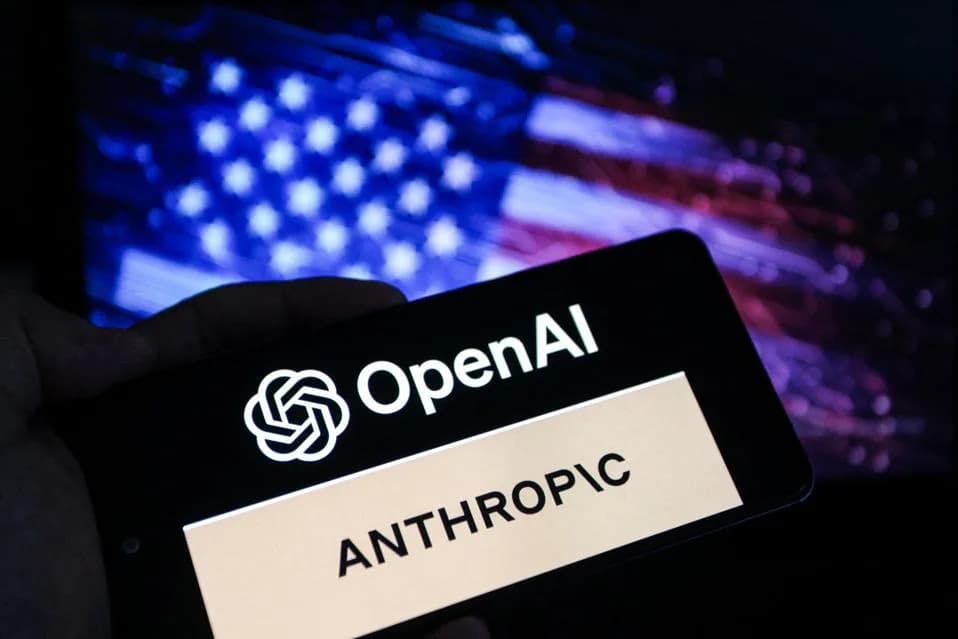
Public and private investments in community colleges are expanding AI education, literacy, and workforce development.Hans Lucas/AFP via Getty Images
Public and private investments are helping community colleges expand AI education, boost AI literacy, and strengthen local workforce development.
In 2022—just as ChatGPT changed the public conversation about artificial intelligence—Jazmin Evan Dora paused outside the AI Center on Miami Dade College’s downtown campus. Staff welcomed her and explained the college’s new offerings in the emerging field. Within a few years, Dora became one of the earliest graduates of Miami Dade’s associate degree in applied artificial intelligence, among the first programs of its kind in the United States.
Today Dora works as a lab technician at the same center, helping students and faculty integrate advanced robotics into classroom projects, maintaining state-of-the-art computing equipment, and organizing hands-on learning experiences for middle and high school students. She is also pursuing a bachelor’s degree in applied artificial intelligence from Miami Dade—one of the relatively rare four-year offerings available at U.S. community colleges.
Why Community Colleges Matter for an AI Economy
With billions in public and private funding flowing into AI and the possibility of artificial general intelligence on the horizon, the U.S. faces a major social, economic, and political shift. While national AI policy debates continue, Congress has a practical lever that can deliver near-term results: strengthening more than 1,000 community colleges across the country.
Community colleges enroll more than 40 percent of all undergraduates and serve a disproportionate share of low-income learners, yet many receive less funding per student than four-year institutions. Most lack the instructor capacity, industry partnerships, physical facilities, and practitioner networks needed to help workers and students adapt to AI-driven disruption.

Jazmin Evan Dora pictured at Miami Dade College's AI Center during the 2026 National Applied AI Consortium conference in Miami, Florida.
Concrete Needs and Proven Models
Colleges need targeted federal investments to modernize data systems, acquire up-to-date equipment and instructional tools, recruit and retain instructors with AI skills, and expand employer partnerships that connect classroom learning to real-world jobs through apprenticeships and internships. New collaborations with national laboratories, Manufacturing USA Institutes, and federally funded R&D centers can extend regional capacity.
The National Applied AI Consortium (NAAIC), led by Miami Dade College and supported by NSF funding, provides a working model. The consortium has partnered with industry leaders such as Intel, Microsoft, Google, and OpenAI to train nearly 2,000 faculty and staff across more than 400 institutions in 48 states and Washington, D.C. It has also supported more than 150 high school teachers with AI professional development and is serving as a hub for curriculum design, skills mapping, and mentorship.
Research from New America’s Future of Work & Innovation Economy initiative highlights the need for dedicated supports, and in 2024 New America partnered with the National Science Foundation to help college leaders use investments from the 2022 CHIPS and Science Act to scale AI education and infrastructure.
Policy Options for Congress
Congress could expand and target existing federal programs to build capacity specifically for AI and emerging industries. Two vehicles to consider are the NSF’s Advanced Technological Education program and the Labor Department’s Strengthening Community College Training Grants. A strategic expansion of these programs—focused on AI skills and the regions likely to see the most tech-driven growth—would increase national coverage.
Coordination across the Departments of Education, Energy, Commerce, and Agriculture, as well as relevant defense agencies, would amplify impact. Federal investment would complement state initiatives, philanthropy, and private-sector efforts like the $1 billion RAISE US initiative and could attract bipartisan support: recent federal AI plans from both administrations have called for investments in community college capacity.
Bottom line: Community colleges cannot solve every economic challenge posed by AI, but strengthening their capacity to teach AI literacy and job-ready skills is a practical, high-impact step toward workforce resilience and broader opportunity.
This article originally appeared on Forbes.com.
Help us improve.