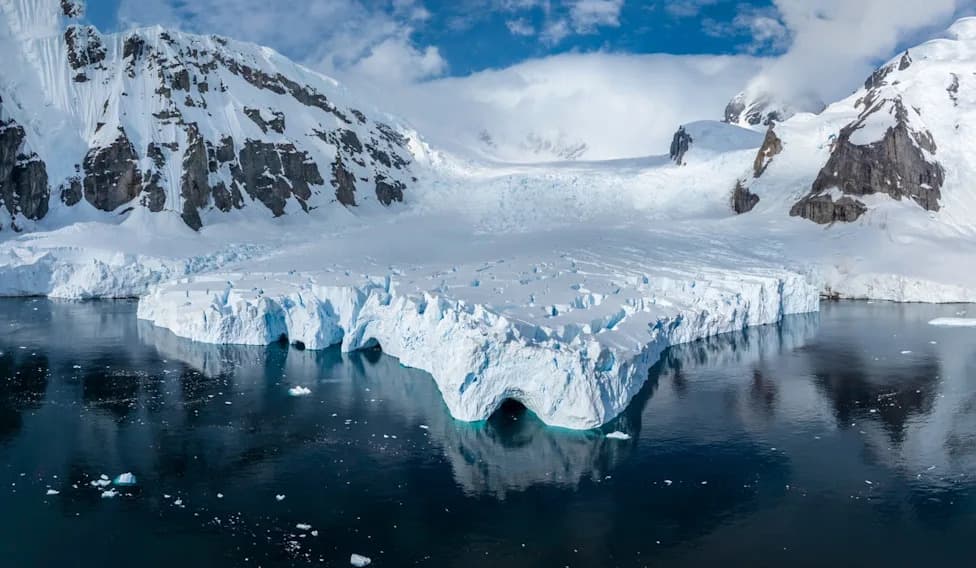
Key finding: GNSS data (1997–2015) show polar uplift accelerated from ~0.5 mm/yr to ~1.0 mm/yr while equatorial regions subsided, meaning the solid Earth is becoming slightly less flattened. Simultaneously, gravimetric measurements show the geoid is growing more flattened because meltwater is moving mass toward lower latitudes. Combining surface and gravity measurements explains this apparently paradoxical result and links it to ice loss in Greenland and Antarctica.
Earth’s Shape Is Changing — Becoming Less Squashed and More Squashed at the Same Time
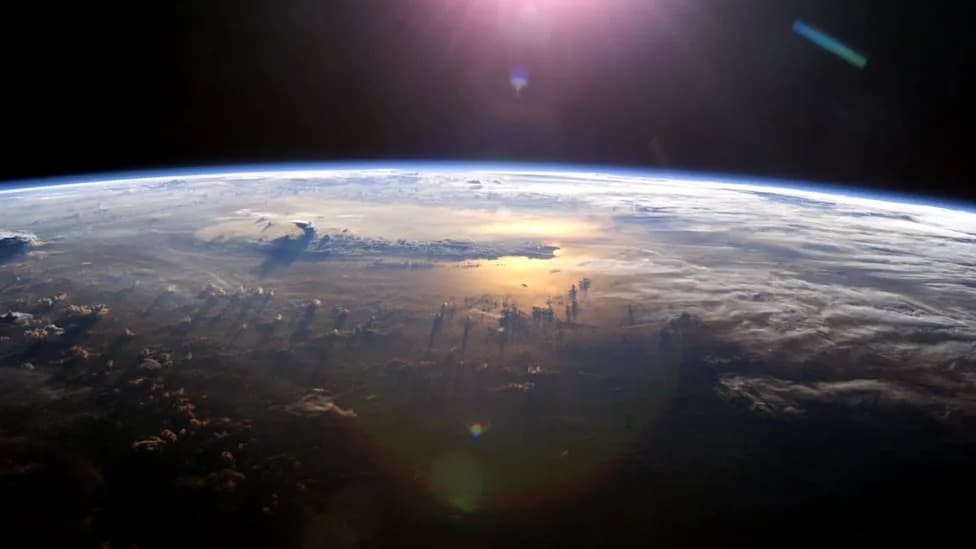
(ISS Expedition 7 Crew, EOL , NASA)
Earth is not a perfect sphere. As it spins on its axis while orbiting the Sun, centrifugal forces produce a subtle equatorial bulge and polar flattening. That deformation is tiny and invisible to most satellite photos, but it is a well-established consequence of rotational physics.
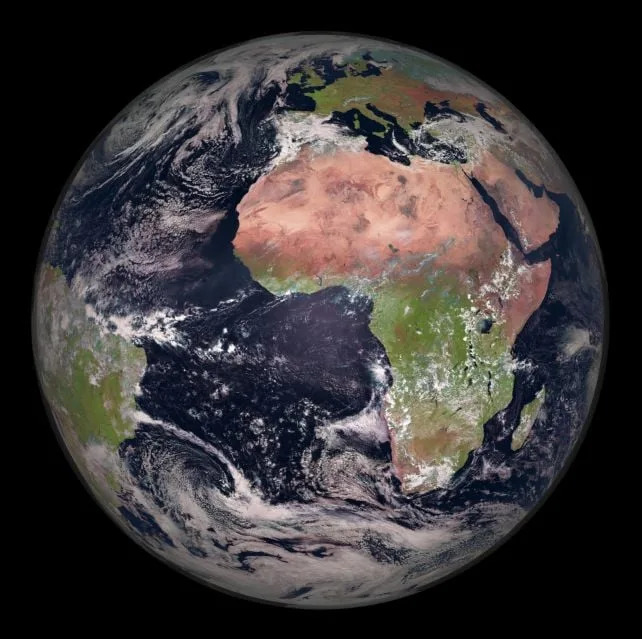
Earth imaged from space by the European Space Agency's Meteosat. (EUMETSAT/ESA)
Recent research reveals a striking, seemingly paradoxical trend: depending on how you measure it, Earth is simultaneously becoming slightly less flattened in its solid crust and more flattened in its gravitational field.
YouTube Thumbnail
What the Measurements Show
Geologist Christopher Kotsakis of Aristotle University of Thessaloniki analyzed Global Navigation Satellite System (GNSS) station records from 1997–2015 and reports an acceleration in polar uplift. Between 1997 and 2000, polar regions rose at roughly 0.5 millimeters per year; by 2015 that rate had increased to about 1.0 millimeter per year. At the same time, GNSS data show increasing subsidence around the equator. Together, those trends indicate the solid, rocky exterior of Earth is becoming very slightly less flattened.
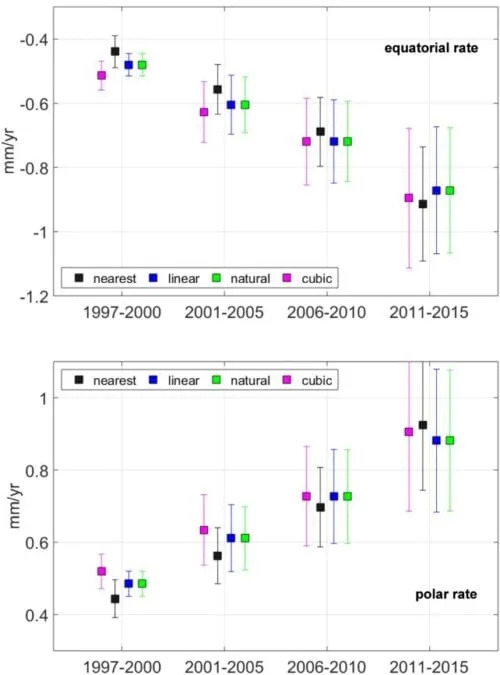
GNSS measurements show increasing subsidence around Earth's equator (top) and increasing uplift towards the poles (bottom) between 1997 and 2015. (C. Kotsakis,JGR: Solid Earth, 2026)
Why the Geoid Tells a Different Story
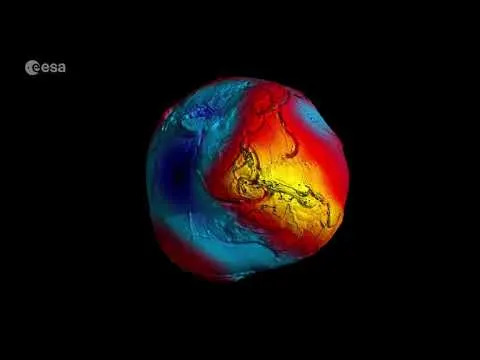
The geoid — the irregular, ‘‘potato-like’’ surface defined by Earth’s gravity field — tracks mass distribution rather than the shape of the solid crust. Gravimetric analyses since the 1970s indicate that the geoid has grown more flattened since the late 1990s. This appears to contradict the GNSS result at first glance.

Subscribe to ScienceAlert's free fact-checked newsletter
The resolution: melting polar ice removes weight from high latitudes so the crust there rebounds, while the meltwater is redistributed toward lower latitudes. Gravity responds to mass relocation, so moving water mass away from the poles toward the equator makes the gravitational field more flattened even as the solid crust physically becomes less squashed.
Causes and Implications
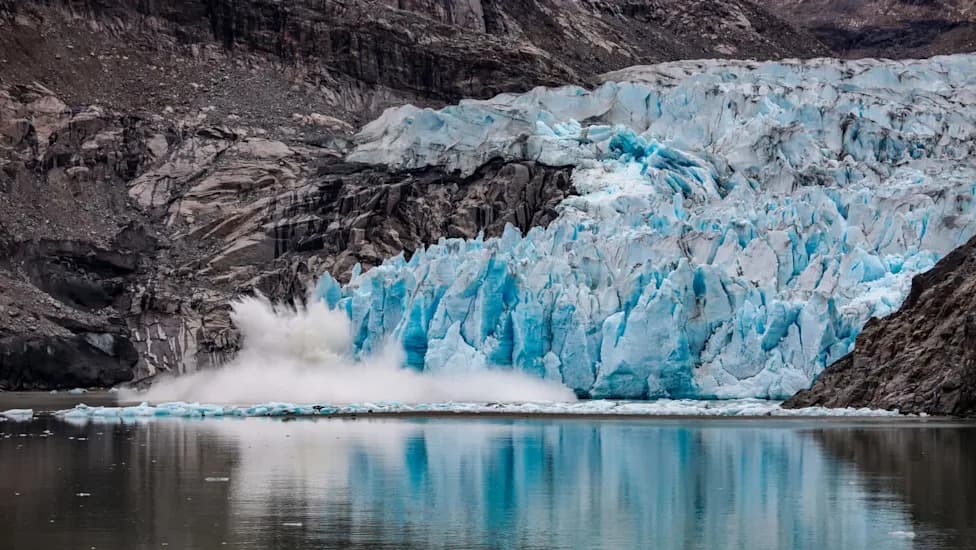
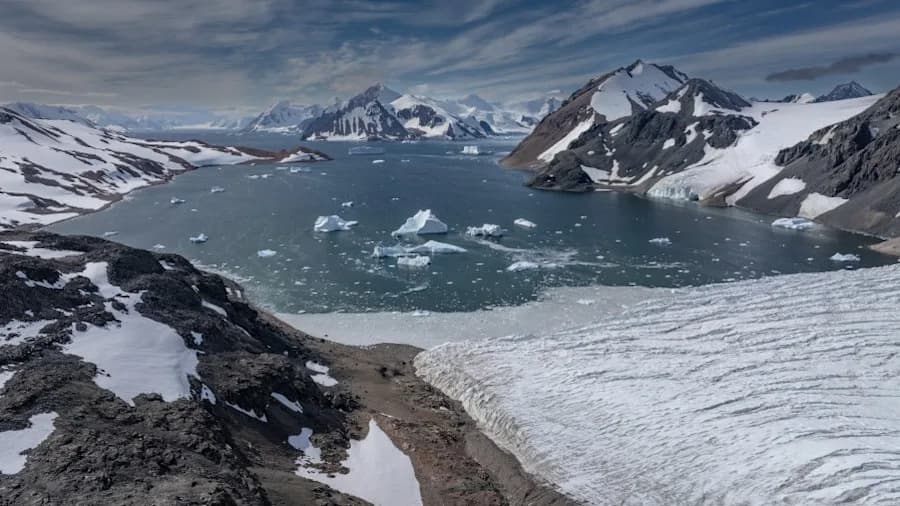
Rapid ice loss from Greenland and Antarctica is a primary driver. Removing massive ice loads allows the crust beneath to rebound (a process related to glacial isostatic adjustment), while the added ocean mass presses down on lower-latitude seafloor. The combined effect — polar uplift and equatorial subsidence of the solid Earth alongside equatorward mass transfer in the oceans — explains the divergent trends between surface shape and gravitational shape.
These findings underscore the value of combining different observational systems (GNSS surface displacement and gravimetric geoid measurements) to capture the full picture of how mass transfer, ice loss, and crustal response are reshaping our planet — even if the changes are measured in fractions of a millimeter per year.
Study reference: C. Kotsakis, Journal of Geophysical Research: Solid Earth (2026), using GNSS records from 1997–2015 and gravimetric analyses of the geoid.
Help us improve.