The first human trial of glycocalyx‑edited mesenchymal stem cells (Fuc‑autoBM‑MSCs) reported a ~94% drop in fracture rates among 10 women with advanced osteoporosis after a single infusion. Biopsies at ~120 days showed increased bone tissue area in 7 of 10 patients and imaging detected intrabecular bone density gains. The treatment was well tolerated with no treatment‑related serious adverse events, but the small, nonrandomized, single‑center design prevents definitive conclusions and larger randomized trials are needed.
Engineered “Living Medication” Cut Fractures ~94% in Small Trial of Severe Osteoporosis
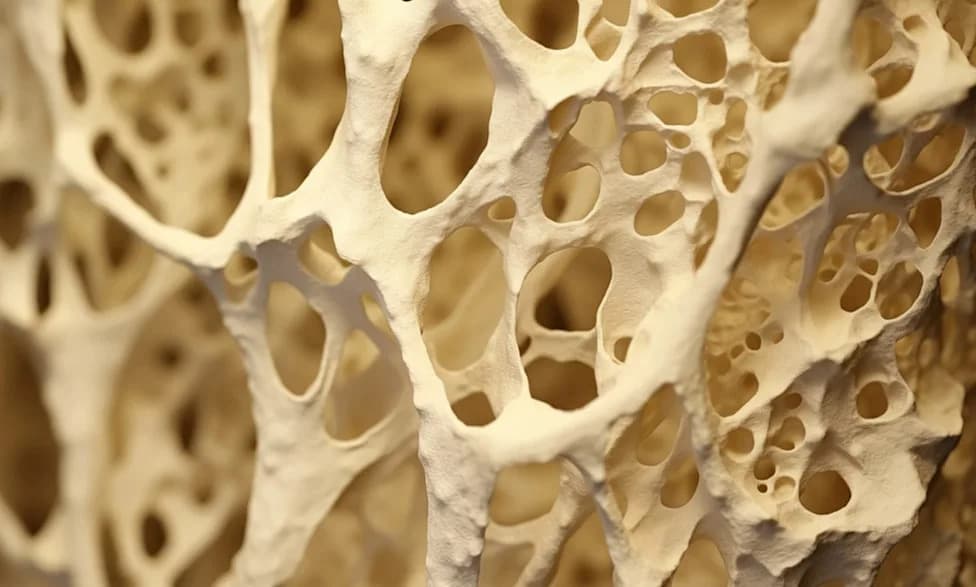
Image: Deposit Photos
Researchers report that a single infusion of autologous, glycocalyx‑edited mesenchymal stem cells (MSCs) was followed by a roughly 94% decline in fracture rates among 10 high‑risk women with advanced osteoporosis, according to a study published in Cell by José M. Moraleda and colleagues at the University of Murcia.
Osteoporosis contributes to millions of fragility fractures worldwide each year. Current drugs can slow bone loss but do not reliably rebuild bone. This first‑in‑human trial tests MSCs engineered to home more efficiently to bone marrow with the goal of regenerating skeletal tissue rather than simply managing loss.
What the researchers did
The team took each participant’s own MSCs, edited the cell surface glycocalyx to add the sugar molecule sialylated Lewis X, and reinfused the modified cells (termed Fuc‑autoBM‑MSCs) intravenously. The added sugar functions like a “postal code,” enhancing homing of MSCs to bone marrow niches where new bone formation can be stimulated.
Key results
Ten women aged 51–72 with advanced osteoporosis received a single infusion. The group experienced a combined total of 8 fractures per year in the two years before treatment and 0.5 fractures per year in the two years after treatment — a reduction the authors report as about 94%.
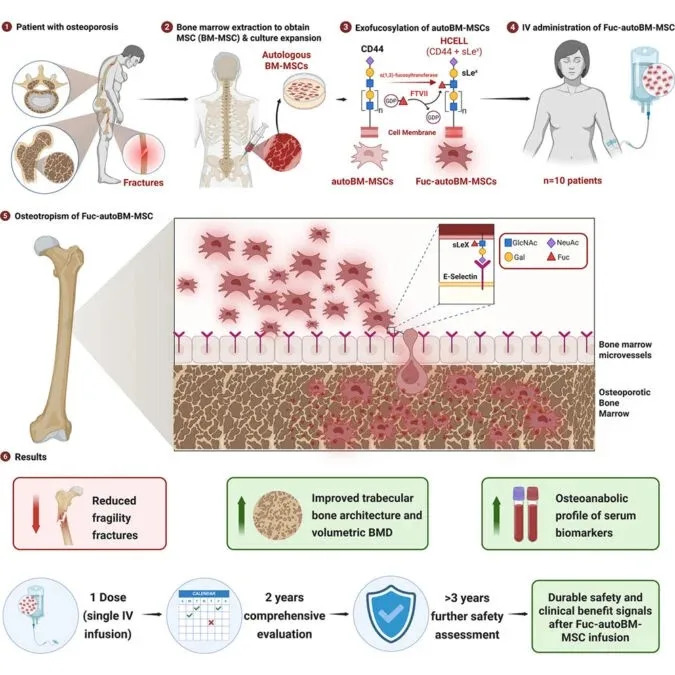
A graphical summary of the trial and its findings. (Moraleda et al., Cell, 2026)
Bone biopsies taken at approximately 120 days after infusion showed increased bone tissue area in 7 of 10 participants. Imaging also documented gains in intrabecular (trabecular) bone density, the spongy inner bone that is most vulnerable early in osteoporosis.
Safety
Safety was the trial’s primary endpoint. The infusion was well tolerated across the full follow‑up period, with no treatment‑related serious adverse events reported. Earlier interim reports from the same group, summarized in the Annals of the Rheumatic Diseases, likewise found no major short‑term adverse effects in the initial cohort.
"Precision glycocalyx editing effectuates MSC‑based therapy to reverse osteoporosis, thus potentially shifting therapeutic strategies for this disease from pharmacologic approaches to regenerative medicine." — Moraleda et al., Cell
Limitations and caution
The authors are explicit about the study’s constraints: it was a small, non‑randomized, single‑center trial with no control group or blinding, and it enrolled only women, with limited age and ethnic diversity. Those design limits make it impossible to conclude definitively that the treatment caused the fracture reduction or that the results generalize to broader populations.
What comes next
Larger randomized controlled trials are required to confirm efficacy. In the European Union this approach would be regulated as an Advanced Therapy Medicinal Product (ATMP), requiring robust GMP manufacturing, batch consistency, long‑term safety monitoring, and regulatory review. Practical questions about manufacturing scale, cost, and equitable access also remain unresolved.
While preliminary, these results offer a notable regenerative medicine signal for a condition that affects hundreds of millions worldwide. Whether the effect holds up in rigorous, controlled trials will determine the therapeutic promise of glycocalyx‑edited MSCs.
Help us improve.