Researchers found that CADD522, a RUNX2 inhibitor developed for cancer, strengthened bone structure and unexpectedly reduced body fat in postmenopausal mice despite unchanged food intake. Blood markers showed increased bone formation and healthier lipid profiles, including preservation of DHA in the brain. Preclinical safety in mice, rats and dogs was acceptable, but human trials are required before clinical use can be recommended.
Cancer Drug Candidate Cuts Fat and Boosts Bone Strength in Postmenopausal Mice — Potential Midlife Health Benefit

A woman measures her waist with a tape measure indoors.
Researchers at the University of East Anglia report that an experimental cancer compound, CADD522, improved bone microarchitecture and unexpectedly reduced body fat in a mouse model of postmenopause. The findings, published in npj Drug Discovery, point to possible applications beyond oncology — but human studies are still required.
Key Findings
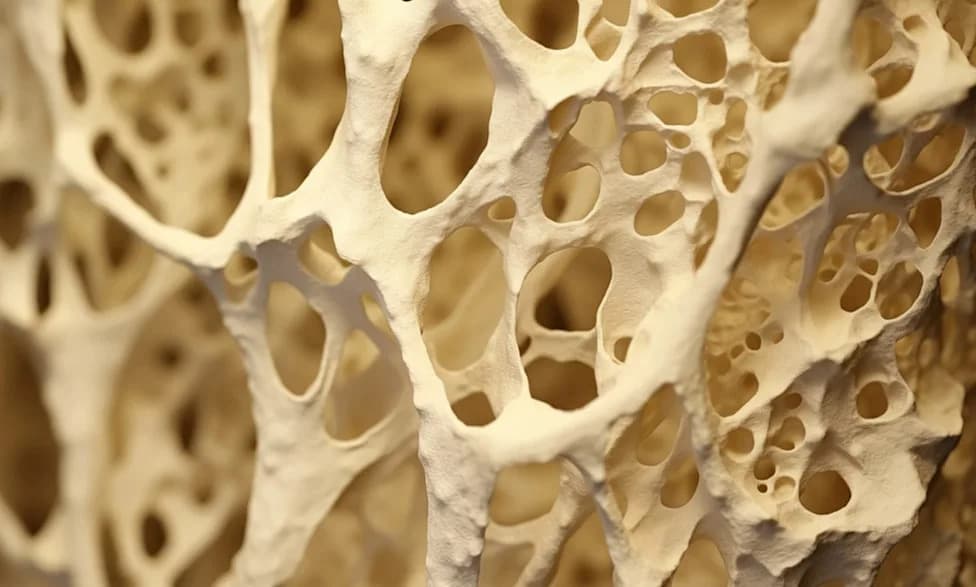
After eight weeks of oral treatment, mice given CADD522 showed increased bone volume and preservation of the delicate honeycomb-like internal structure (trabecular microarchitecture) that gives bone strength. Blood markers indicated stimulation of new bone formation while allowing the normal cycle of bone breakdown and renewal to continue.
Despite consuming the same amount of food as controls, treated animals weighed less, carried less peripheral body fat and accumulated fewer fat deposits in bone marrow — a change commonly seen after menopause and linked to poorer bone health.
Effects on Brain Lipids and Metabolism
The researchers also examined brain tissue and observed shifts in lipid profiles consistent with healthier fat metabolism: levels of beneficial omega-3 fatty acids, including DHA, were largely preserved and other lipid imbalances moved toward healthier patterns. The team notes this could have implications for cognitive health, though that connection requires further study.
"The lack of body fat accumulation was the most surprising," said lead researcher Darrell Green of UEA's Norwich Medical School. "We already had an inkling that CADD522 would benefit bone health... but the fat results were completely unexpected."
Mechanism, Safety and Translational Notes
CADD522 is a small-molecule inhibitor of RUNX2, a protein implicated in tumour growth and spread. In this study the compound appears to promote bone formation and improve lipid handling in ways that go beyond its originally intended anticancer target.
Preclinical safety studies in mice, rats and dogs reported good tolerability and demonstrated oral availability. Laboratory tests also suggest the compound is broken down more slowly in human tissue than in rodents, a property that could increase its durability in people — but this finding is based on lab assays and does not replace formal human trials.
Caveats And Next Steps
These results are preliminary and limited to animal experiments. Clinical trials in humans are necessary to determine safety, optimal dosing and effectiveness for bone health or weight management in postmenopausal women. The authors emphasize the current study modeled established postmenopausal bone loss, so immediate translational focus would likely be on treating existing bone loss rather than prevention, pending further research.
Potential target groups if human trials succeed: women with osteoporosis, women approaching or undergoing menopause, and those seeking preventive strategies after appropriate testing.
Reference: Ersek, A., Kim, M.S., Suelzu, C. et al. (2026). RUNX2 inhibitor CADD522 improves bone microarchitecture and lipid metabolism in postmenopausal bone loss. npj Drug Discovery. https://doi.org/10.1038/s44386-026-00076-z
Help us improve.