The BRICS summit in New Delhi united leaders from China, Russia, India, Iran, the UAE and South Africa as Prime Minister Narendra Modi urged the group to be "rule-shapers." Delegates adopted a cautious "New Delhi Declaration" calling for "maximum restraint" in the Middle East and reiterating support for a two-state solution, while notably omitting any reference to Ukraine. High-profile bilateral talks — including Iran–Abu Dhabi engagement and Xi’s return to India after seven years — highlighted the summit’s diplomatic value despite persistent divisions over trade and sanctions.
BRICS Summit in New Delhi: Diplomatic Gains Amid Deep Divisions
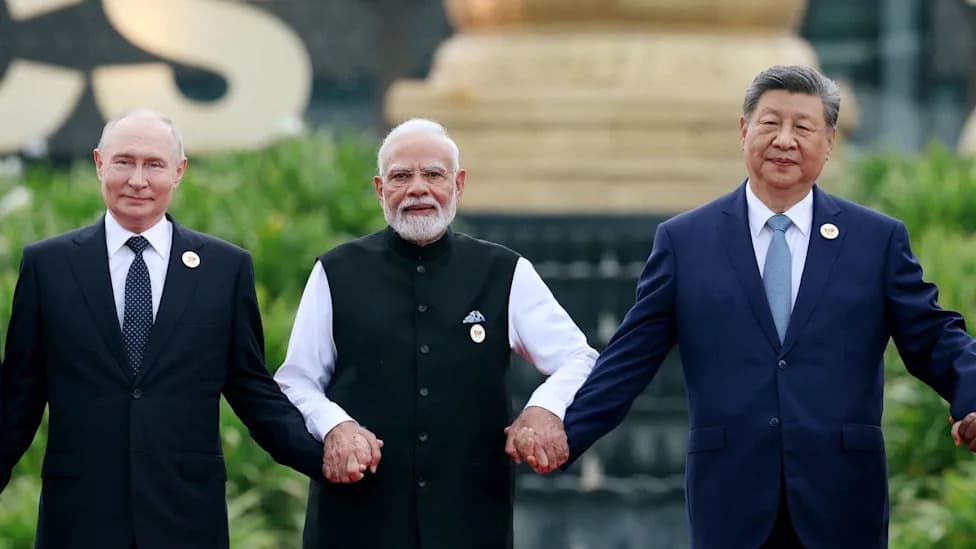
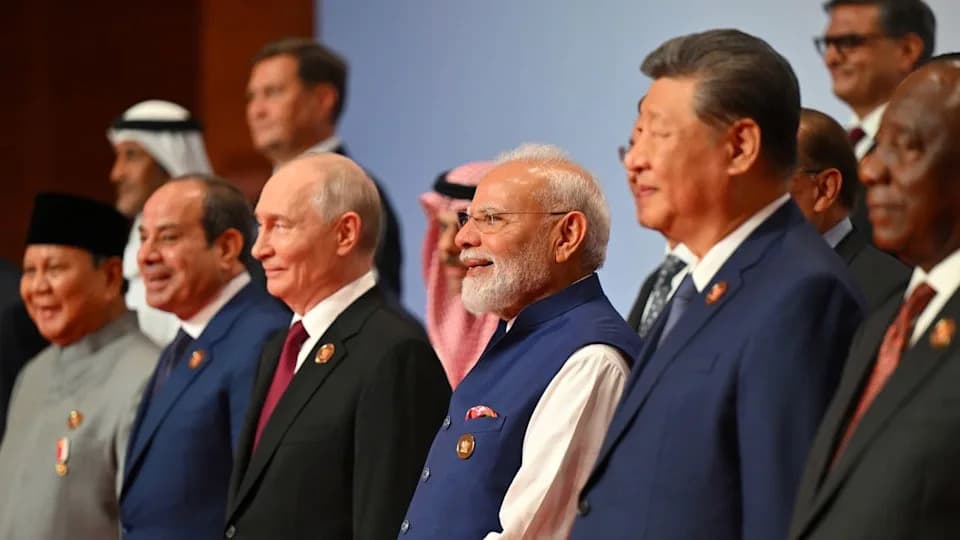
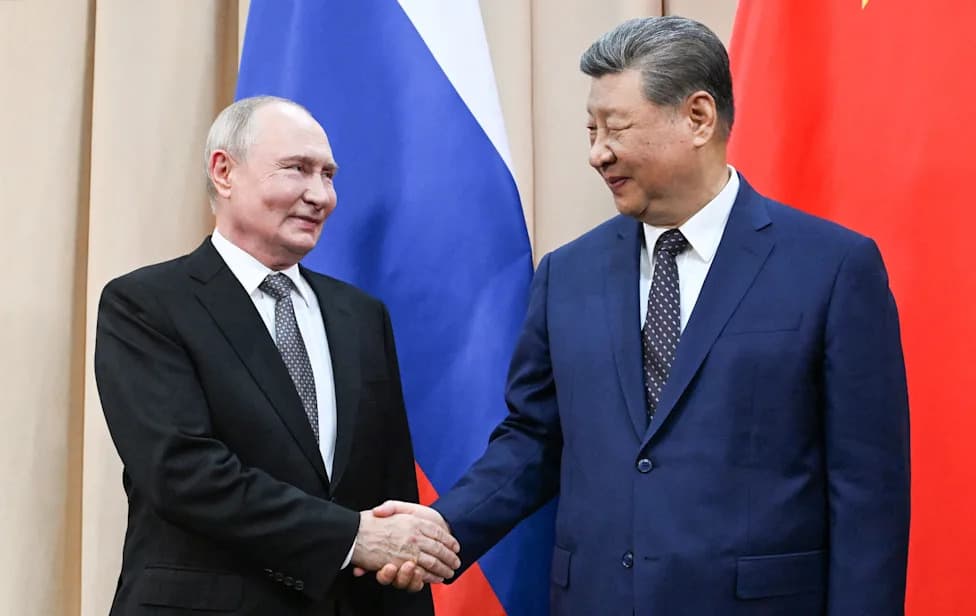
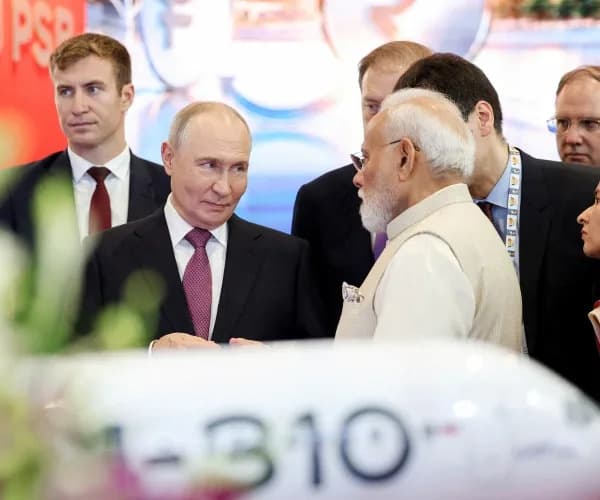
(From left) Russian President Vladimir Putin, Indian Prime Minister Narendra Modi and Chinese President Xi Jinping pose for a photo at the Brics summit in Delhi [Reuters]
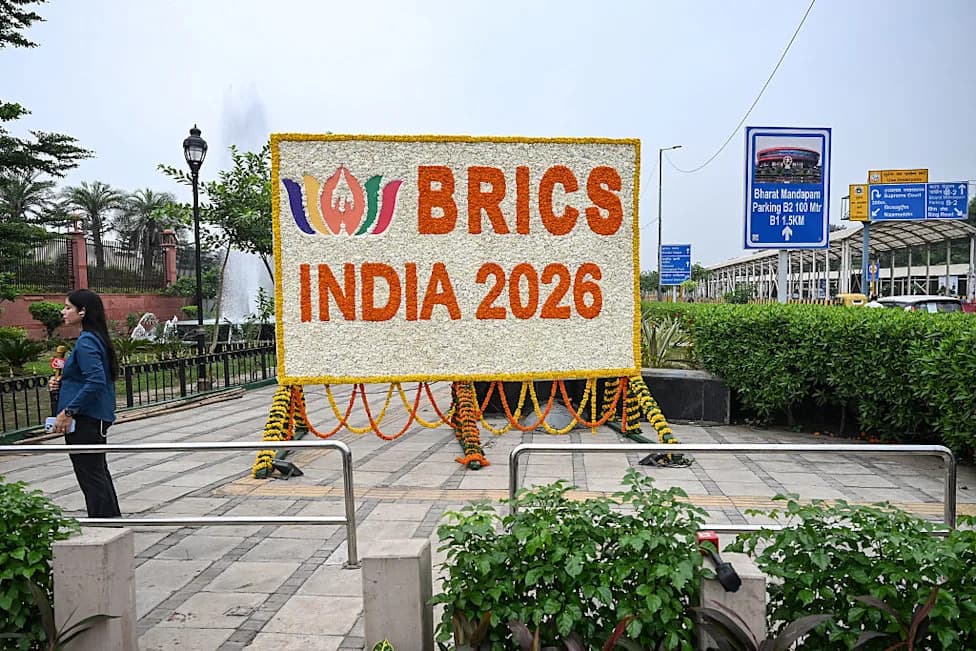
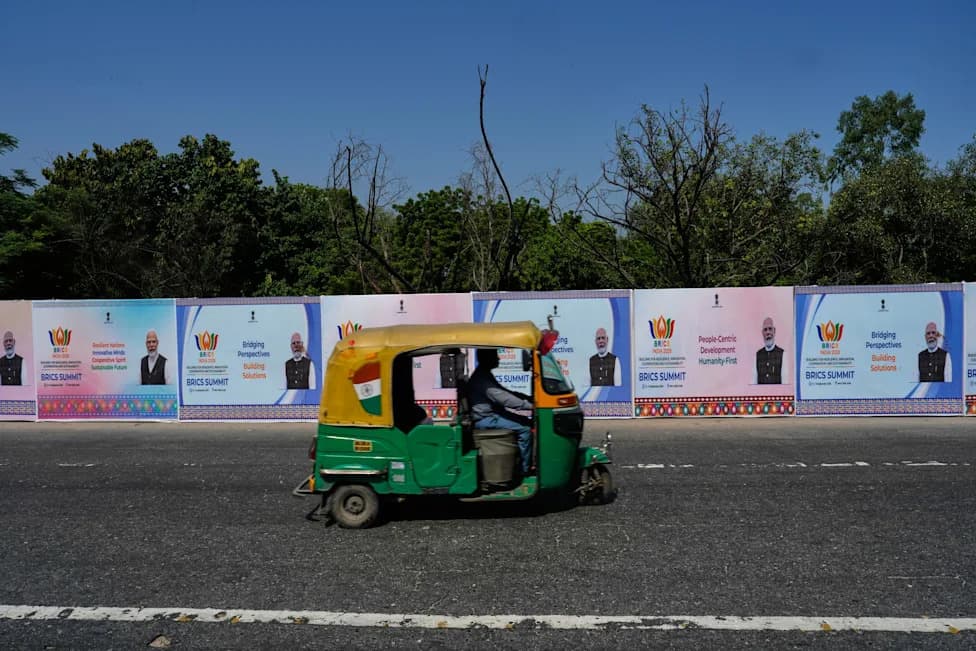
This weekend in New Delhi, India hosted a high-stakes BRICS summit that brought together an unusually diverse group of leaders around a vast circular table. Prime Minister Narendra Modi urged the gathering to become "rule-shapers," not "rule-takers," calling on members to assert greater influence over global governance.
Who Attended
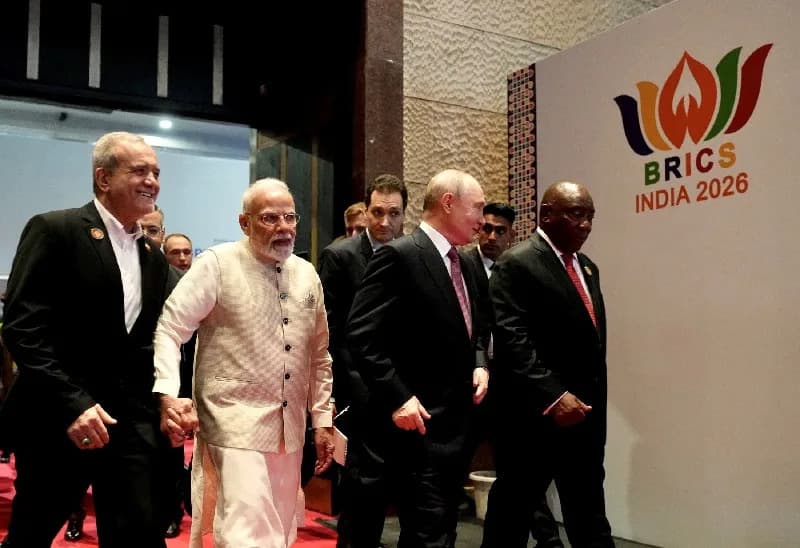
Representatives included China’s President Xi Jinping, Russia’s President Vladimir Putin, Iran’s President Masoud Pezeshkian, Abu Dhabi’s Crown Prince Sheikh Khaled bin Mohamed bin Zayed Al Nahyan, South Africa’s President Cyril Ramaphosa and India’s Prime Minister Narendra Modi. Their presence underscored both the diplomatic reach of New Delhi and the heterogeneous, sometimes adversarial nature of the bloc.
Diplomatic Feat — And Fragile Consensus
Getting these leaders together in person was itself a diplomatic achievement. The summit produced a joint "New Delhi Declaration," a notable success given that BRICS ministerial meetings earlier this year failed twice to agree a joint statement. Yet the declaration reflected the group's deep divisions: it reached consensus mostly by avoiding the most contentious points rather than resolving them.
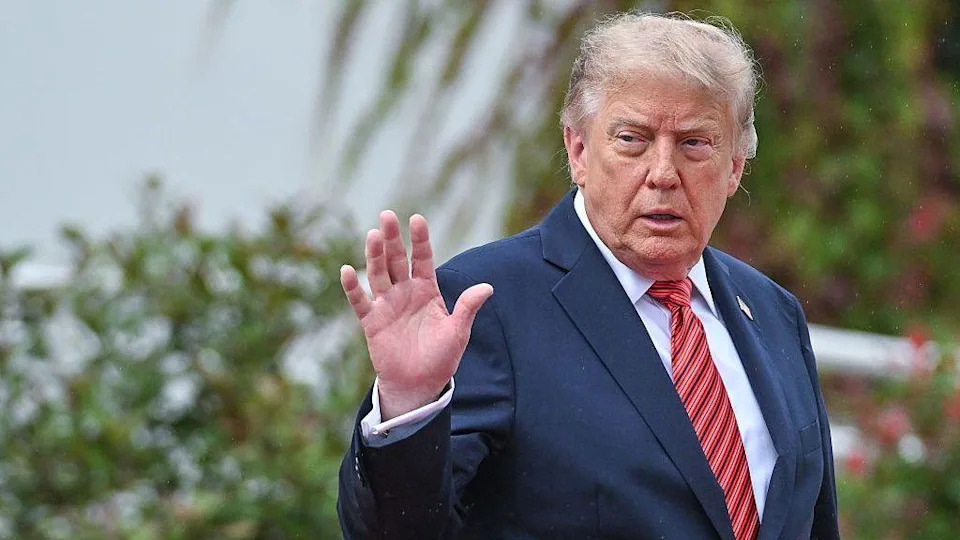
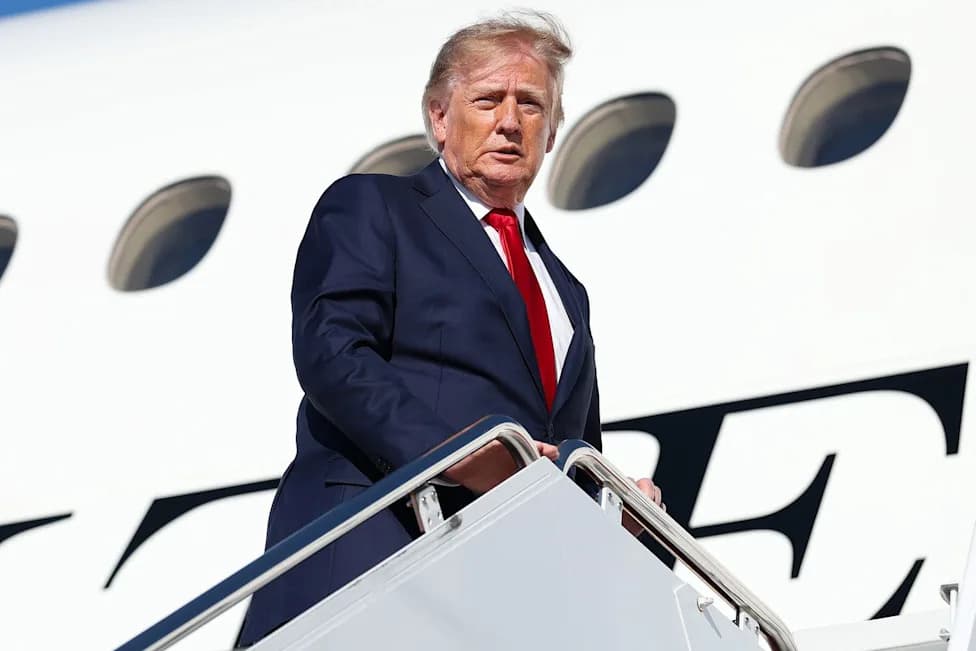
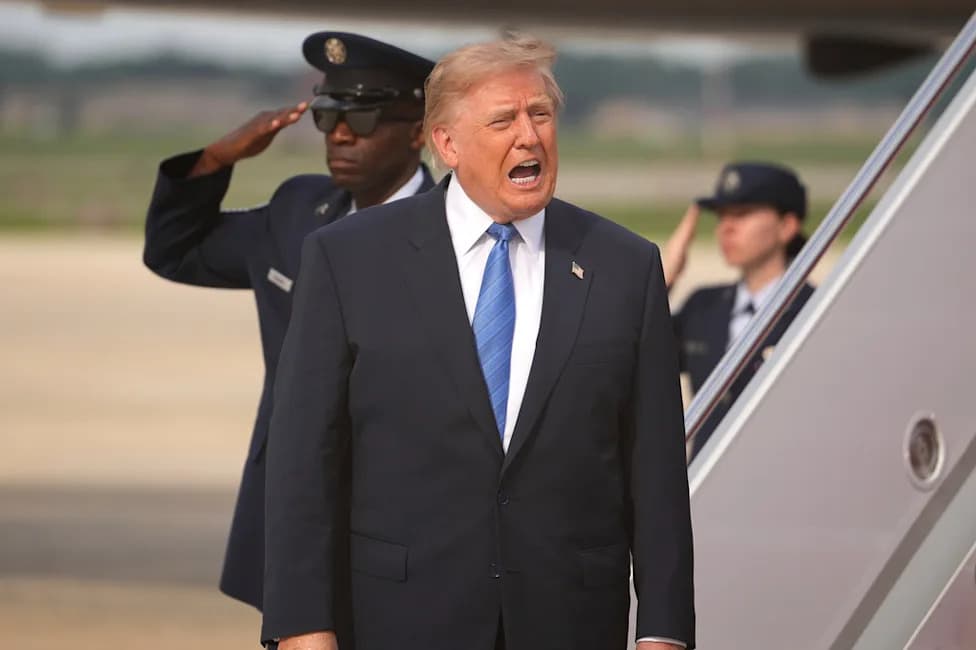
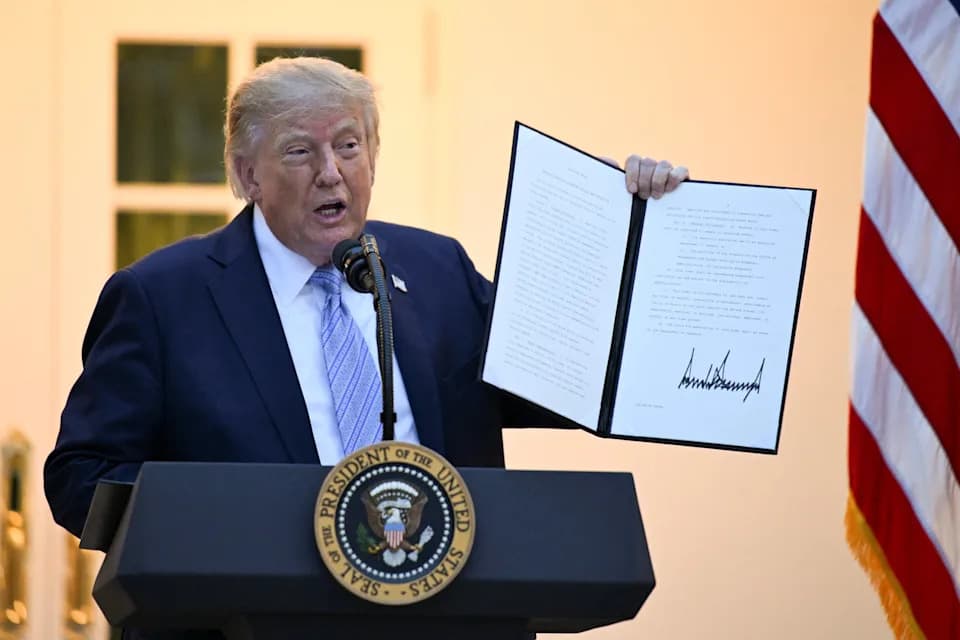
Several Brics members would have been loath to draw US President Donald Trump's anger [Getty Images]
What the Declaration Said — And What It Omitted
The declaration urged "maximum restraint" over the war in the Middle East, condemned "attacks on civilian infrastructure and peaceful nuclear facilities" and reaffirmed support for a two-state solution for Israel and Palestine. Crucially, it did not assign blame to any party and made no mention of Russia’s war in Ukraine — a departure from some previous BRICS communiqués.
On trade, the statement expressed concern about "indiscriminate rising tariffs" and criticized unilateral sanctions, but it stopped short of naming any country, reflecting New Delhi’s effort to avoid framing BRICS as an explicitly anti-Western bloc. Modi emphasized the group is "not against anyone," a line that preserves India's broader global partnerships.
High-Profile Bilateral Talks
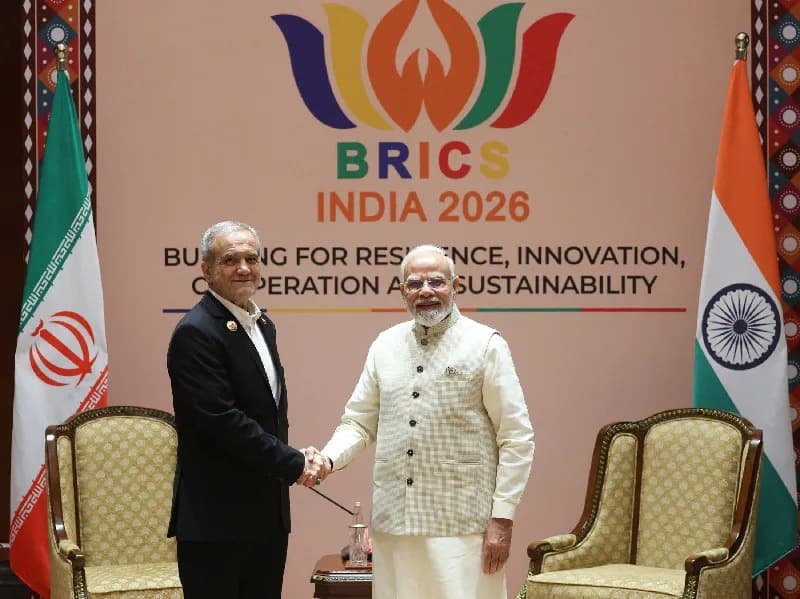
The summit created opportunities for bilateral engagement that would have been difficult months earlier. Iran’s President Pezeshkian and Abu Dhabi’s Crown Prince held what was reported as the highest-level face-to-face meeting between Tehran and Abu Dhabi since the Middle East war began. Iran used the platform to press for deeper economic ties with BRICS members as it navigates U.S. sanctions and other pressures.
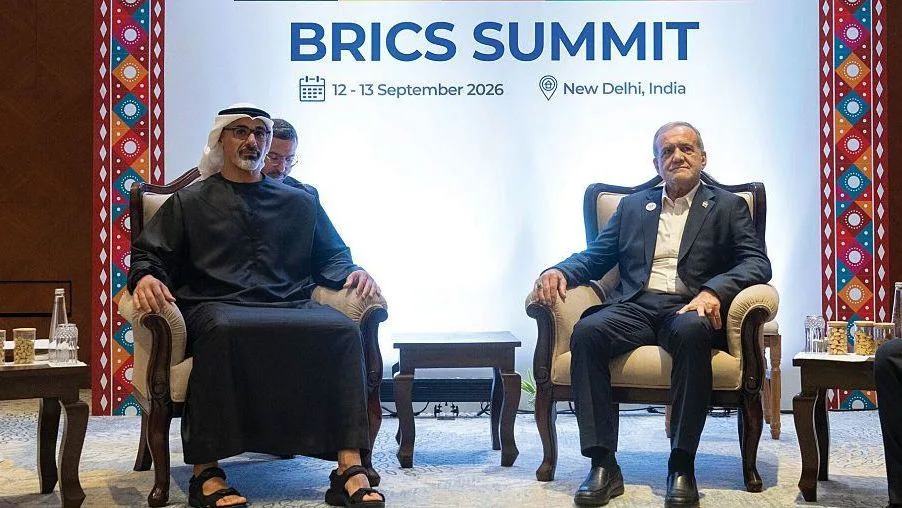
Iran's Masoud Pezeshkian (right) and Abu Dhabi's Crown Prince Sheikh Khaled bin Mohamed bin Zayed Al Nahyan held talks at the sidelines of the Brics summit [Getty Images]
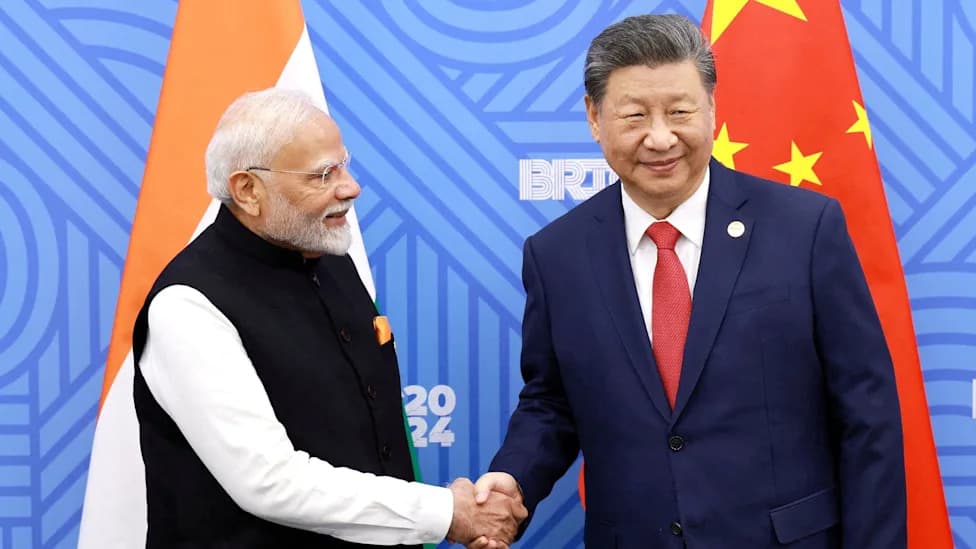
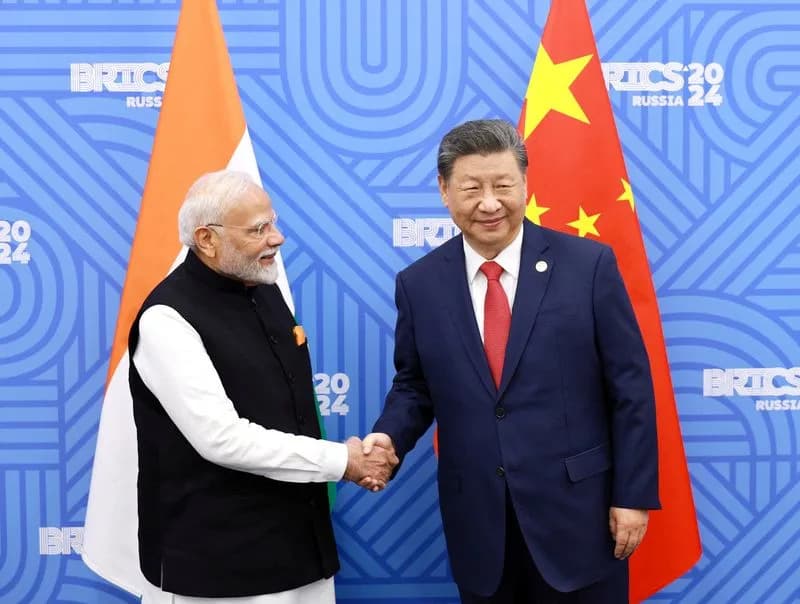
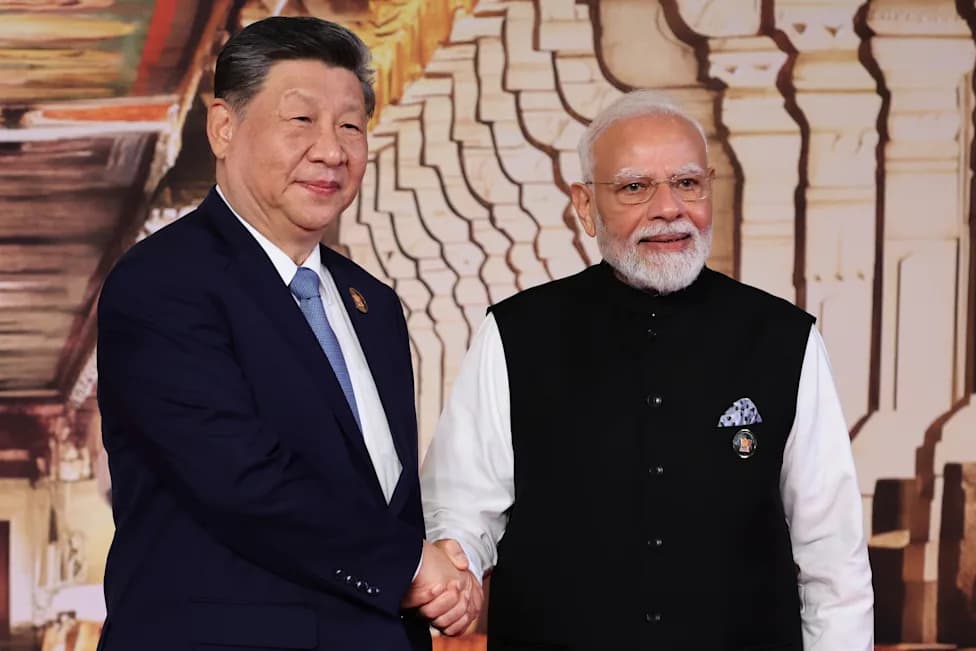
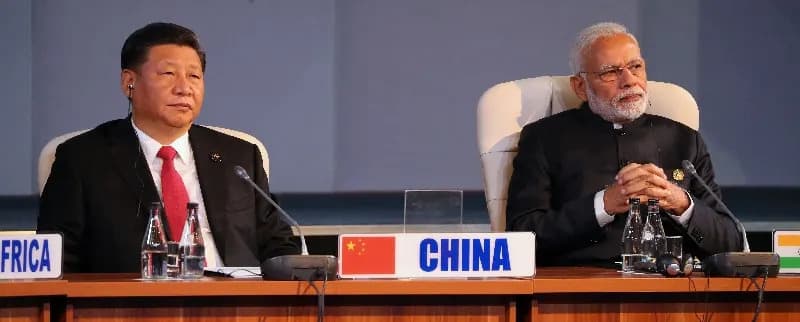
For China and India, the summit marked President Xi’s first visit to New Delhi in seven years. Tensions from the 2020 border clashes persist, and China's trade surplus with India remains large, but the leaders exchanged a cordial handshake and agreed to pursue stronger business ties, improved transport links and measures to address trade barriers. Xi’s visit was brief — under 24 hours — and he skipped a gala dinner hosted by Modi.
What This Means for BRICS
For countries like China, Russia and Iran, BRICS represents an avenue to blunt Western influence. India, however, has steered the group toward "strategic autonomy" rather than alignment against the U.S. The summit demonstrated BRICS’s capacity to convene rivals and create neutral space for diplomacy, but it left unanswered the harder questions about what a reconfigured global order would look like and how to achieve it.
"We have to trust, but verify first," said veteran diplomat Anil Trigunayat, reflecting the cautious optimism that emerged from the meetings.
While the New Delhi summit yielded visible diplomatic openings, it also exposed entrenched disagreements over trade, sanctions and geopolitical strategy — challenges that will test BRICS’s ability to turn shared rhetoric into coordinated action.
Additional reporting by Charlotte Scarr.
Help us improve.