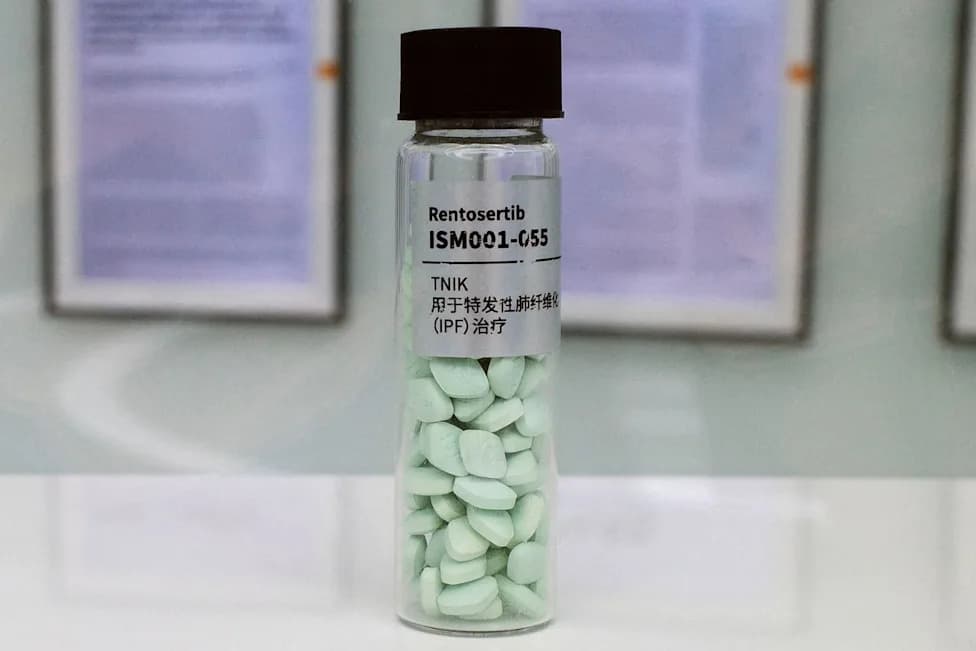
Study Reanalysis: Researchers reexamined blood from an IPF trial and used six proteomic "aging clocks" to estimate biological age. Findings: Rentosertib shifted blood protein patterns toward younger readings across all six clocks; the 60 mg group showed reductions of 2.71–3.46 years at four weeks. Limitations: Analysis included 42 participants over 12 weeks, results may reflect disease improvement rather than true anti‑aging effects, and several authors are affiliated with the drug developer. Larger, longer trials are needed.
AI-Designed Drug Produced Younger-Looking Blood Profiles in Small IPF Trial

(guvendemir/iStock/Getty Images)
An experimental drug created with the help of artificial intelligence produced blood protein patterns that multiple aging models interpreted as "younger" in a reanalysis of samples from a trial in people with idiopathic pulmonary fibrosis (IPF).

All six clocks detected a shift toward a lower predicted biological age. (Siarhei_Fetisenkov/Creatas Video+/Getty Images Plus)
What Researchers Did
Scientists reexamined blood samples from an earlier clinical trial of rentosertib, an AI‑designed compound intended to treat lung scarring in IPF and to target cellular processes linked to aging. From the original 71-person trial, 42 participants (average age 67) had usable samples. Investigators measured nearly 3,000 proteins in each sample and evaluated those proteomic patterns using six independently developed "biological aging clocks"—computational models that estimate biological age or predict health risk from blood markers.

The results are intriguing, but they come with important limitations. (Dimitri Otis/Stone/Getty Images)
Key Findings
All six aging clocks detected a shift toward a lower predicted biological age in participants treated with rentosertib, while the placebo group showed little change and, in some cases, signs of increased predicted age. The clearest effect occurred at four weeks in the 60 mg once‑daily dosing group, where clocks trained to estimate chronological age reported reductions of 2.71 to 3.46 years. Several organ‑specific or exploratory models showed larger changes, so the investigators did not report a single aggregate "years younger" figure.

Subscribe to ScienceAlert's free fact-checked newsletter
Compared with placebo (which altered only two proteins), rentosertib changed the abundance of 326 blood proteins. Affected proteins related to lung scarring and repair, inflammation, energy metabolism, cellular stress responses, and the behavior of senescent (old/damaged) cells. Many changes persisted through the 12‑week study, but the apparent shift toward a younger profile largely plateaued after week four.
Limitations And Cautions
Important caveats temper the findings. Every participant had serious lung disease, so improvements in fibrosis or disease activity could themselves make blood markers look younger without reflecting a true systemic slowing or reversal of aging. The analysis included only 42 people and lasted 12 weeks, which is too short and small to demonstrate durable anti‑aging benefits, healthspan extension, or increased longevity. Several authors are affiliated with Insilico Medicine, the company that developed the drug (lead author Alex Zhavoronkov is the founder and co‑CEO), which represents a potential conflict of interest.
What This Means
The concordant signal across six independent proteomic aging clocks is notable and suggests that drugs designed for age‑related diseases may also modulate broader biology tied to aging. However, these results are preliminary—larger, longer trials (including studies in people without IPF) are required to determine whether rentosertib truly affects aging biology rather than simply improving disease‑related biomarkers.
Bottom Line: AI‑assisted drug design and proteomic aging clocks produced an intriguing and consistent early signal that merits further study, but the evidence is not yet sufficient to call rentosertib an "anti‑aging" therapy.
Help us improve.