European museums face a surge in brazen, fast-entry thefts: this week four Renoir paintings were taken in a five-minute raid, echoing last year's €88m Louvre jewellery heist. Europol and experts report a shift toward violent methods and a preference for portable, high-value items such as precious metals, gemstones and Chinese porcelain. Smaller museums struggle to fund modern security, and authorities urge measures that "buy time"—thicker glass, seismic sensors, lockdown systems and better-trained staff—while keeping institutions open to the public.
Five Minutes to Steal a Renoir: Why Museum Thefts Are Growing Bolder Across Europe
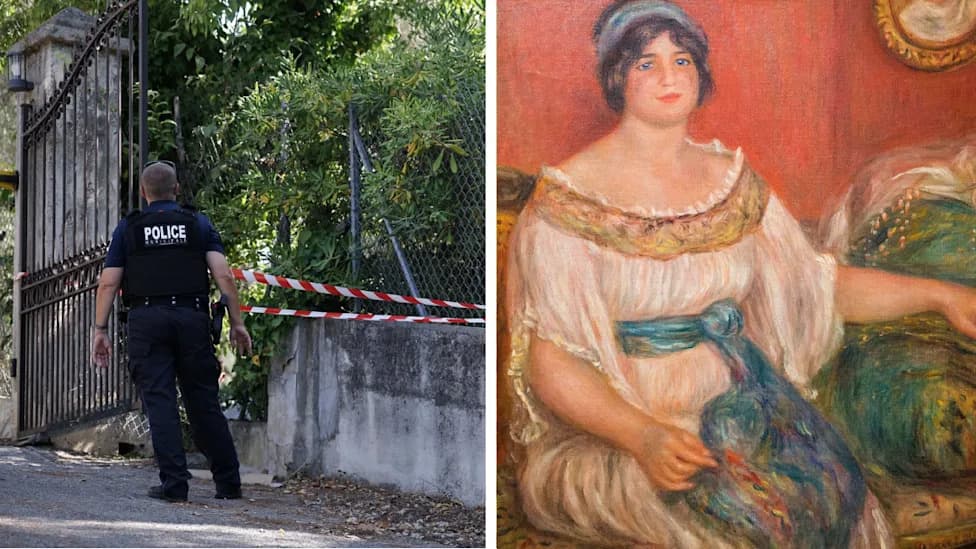
The latest heist, at the Renoir museum in the south of France, saw thieves break in by cutting through a fence with an electric knife and hacksaw [Reuters/Museum Renoir]
When four Renoir paintings—collectively worth millions—were stolen from a French museum this week, the crime confirmed a worrying trend experts have been warning about: museum thefts across Europe are becoming faster, more aggressive and more focused on high-value, portable objects.
Copycats After the Louvre Heist
Europol and independent investigators say last October's dramatic robbery at the Louvre—where jewellery valued at about €88m remains missing—appears to have inspired a wave of copycat crimes. Art detective Arthur Brand warned the BBC that high-profile burglaries were likely to increase after the Louvre raid. "We will see more of this," Brand says. "If you are able to hit the Louvre, thieves all around the world are watching that, thinking, 'Wow'—then they look at their local museums."
What Happened in Cagnes-sur-Mer
The raid on the Renoir Museum in Cagnes-sur-Mer unfolded in roughly five minutes. Two of the stolen canvases were later discarded and recovered in the museum garden; detectives continue to search for the remaining works. According to reports, the perpetrators cut through a fence with an electric knife and sawed through the fittings that held the paintings in place.

Art detective Brand helped track down this Vincent van Gogh painting, which was stolen in 2023 and eventually dropped off to him by an unknown man [Arthur Brand]
Rising Numbers And Changing Tactics
Europol says reports of museum thefts began to rise about two years ago and that both targets and tactics are shifting. The Association for Research into Crimes Against Art (ARCA) notes a growing preference for small, portable objects and attacks designed to be completed in minutes. ARCA's data shows recorded museum thefts in France spiked in 2024 and rose again slightly in 2025, though totals vary year to year.
More Violence, Different Targets
Where once thieves relied on deception, Europol's report highlights a turn toward forceful, sometimes violent entries: sledgehammers, axes, crowbars, power tools and, in some cases, explosives. At the Louvre, perpetrators used a mechanical lift, power tools to cut a window and threatened guards before seizing the jewels. In Vienna, thieves smashed display glass to steal a diamond necklace; in Spain, Bronze Age artefacts were taken in a four-minute raid.
"Security is about buying time," says Ibrahim Bulut, a museum security expert. "The objective is not to make the theft theoretically impossible, but to make removal difficult, noisy, detectable and above all, time-consuming."
Why Museums Are Vulnerable
Experts cite several reasons museums are attractive targets: they are open to the public, often housed in historic buildings that limit security upgrades, and typically have limited budgets. Directors must balance spending on security against curatorial priorities, and small institutions especially struggle to fund modern protections.
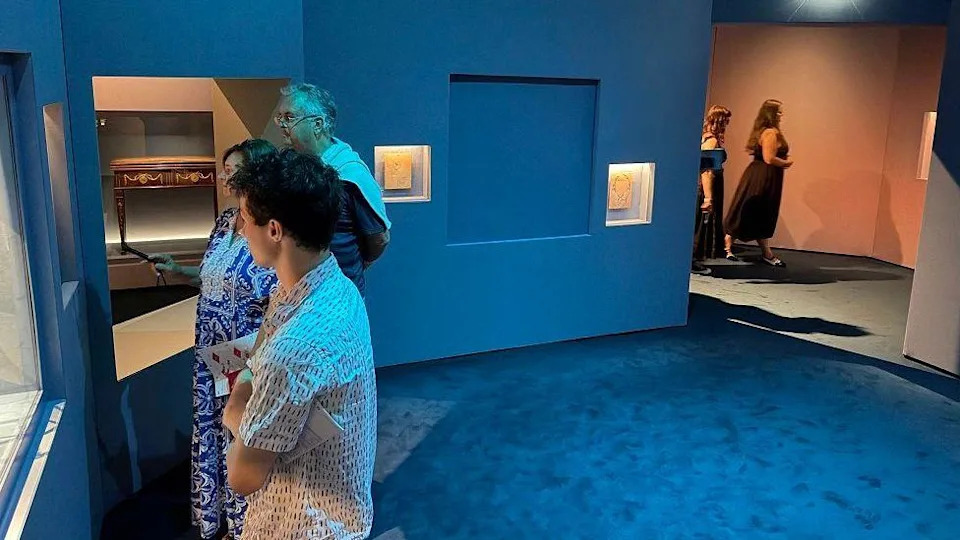
The gap at the museum exhibition in Vienna, where a necklace decorated with more than 600 diamonds was on display before thieves smashed the glass and made off with it [Jeremy Audouard/AFP via Getty Images]
What Thieves Want—and Why Recovery Is Hard
Thieves are increasingly targeting precious metals, gemstones and culturally important objects—items that can be melted down, dismantled or sold on specialised markets with relative ease. Art-recovery professionals estimate only 5–10% of stolen art is ever returned, making recoveries rare, especially for small museums.
Steps Museums Are Taking
Following recent thefts, institutions have begun upgrading security: improved CCTV, seismic vibration detectors, metal detectors for entry, thicker display glass, more visible guards and stricter bag policies. Experts also advocate practical measures that buy time—anchored heavy doors, fogging systems, integrated alarms and lockdown procedures—alongside better training for staff to spot suspicious behaviour.
The Balancing Act
Museum leaders stress the dilemma: museums must remain accessible public spaces, not fortresses. "We want to be open institutions; at the same time, we are facing new challenges and attacks against museums that will require new standards," says Lilli Hollein, director of Vienna's Museum of Applied Arts.
As investigations continue into the Renoir theft and other recent raids, authorities and curators face mounting pressure to adopt new security standards while preserving public access and historic fabric.
Additional reporting by Madeleine Lake.
Help us improve.