The U.S. Air Force's fighter pilots are flying well below the 9–10 sorties per month historically required for combat mission readiness, averaging about 5.5 sorties in fiscal 2023. Recent reporting and anecdotal evidence suggest non‑deployed jets are sometimes flown only once a month, while the official pilot shortfall is ~2,000 (anecdotally ~2,400). Budget-driven reallocation of maintenance billets and lower flying rates are cited as contributors to diminished readiness.
US Fighter Pilots Falling Short Of Sortie Minimums Needed For Combat Readiness
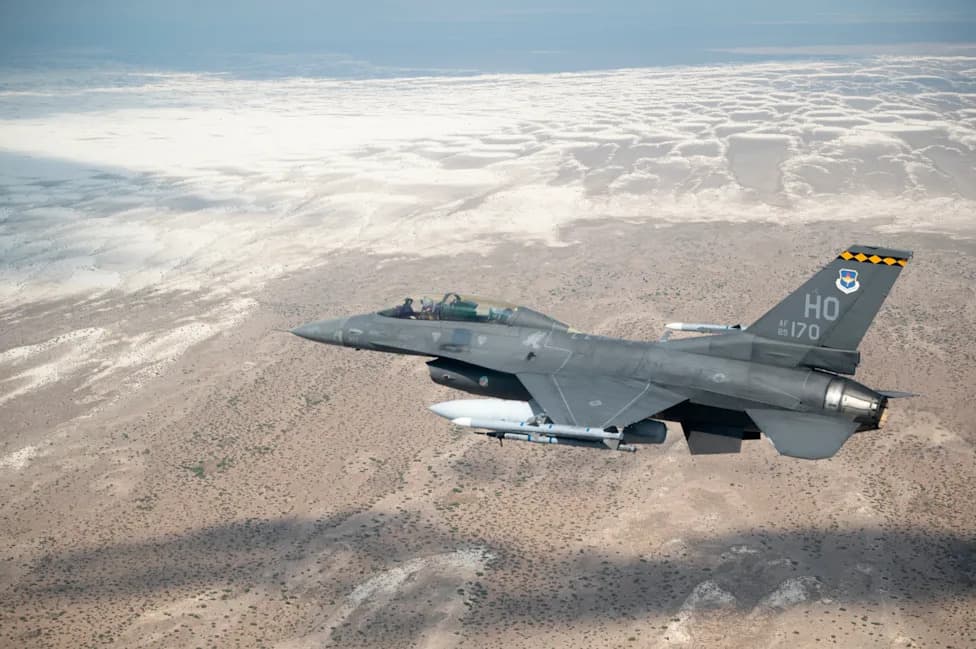
U.S. Air Force Maj. Daniel Thompson, 8th Fighter Squadron instructor pilot, conducts an F-16 training sortie over White Sands Missile Range, New Mexico, Aug. 22, 2023. (Roidan Carlson/U.S. Air Force)
The U.S. Air Force's fighter pilots are flying far fewer monthly sorties than the level historically required to be considered combat mission ready, a senior fellow at the Mitchell Institute for Aerospace Studies warned. Sortie rates have declined since fiscal 2023, and the service has not publicly updated its reporting in recent years.
Sortie Rates and Readiness
Historically, service statements indicate an average fighter pilot needs roughly nine to ten sorties per month to reach combat mission ready status. In fiscal 2023, the Air Force last reported an average of about 5.5 sorties per month — only about 60% of that benchmark. According to John Venable, a senior resident fellow at the Mitchell Institute, conversations with commanders and line pilots suggest that non‑deployed jets in the continental U.S. and some other locations are often flown only once a month.
"That has withered again in the last couple of years, and the Air Force has stopped reporting it," Venable said at a Mitchell Institute roundtable.
Personnel, Budgets and Maintenance
Venable noted the official Air Force pilot shortfall is roughly 2,000, but he said anecdotal reports place the gap closer to 2,400 pilots. He also pointed to fiscal 2025 budget changes: former Air Force Secretary Frank Kendall reallocated funding from about 6,000 aviation‑related maintenance billets to other priorities, a decision Venable says has had damaging effects on readiness.
Operational Comparisons
Venable used recent operations to illustrate consequences. During Rising Lion and Midnight Hammer — operations in June 2025 targeting Iran's nuclear and military infrastructure — he said U.S. air superiority was achieved largely "on the backs" of Israeli pilots, who were flying substantially more sorties. According to the Mitchell Institute data he presented, Israeli pilots flew about 20 sorties per month, with line pilots logging 25 to 30 flying hours.
By contrast, Mitchell Institute figures show the U.S. committed 25 squadrons (roughly 325 combat‑coded aircraft) to Operation Epic Fury. That number is out of an active inventory of about 1,084 aircraft and roughly 634 mission‑capable jets as reported for fiscal 2024 — and, Venable observed, is roughly half the combat‑coded fighter force the Air Force operated on its own during Desert Storm.
An April White House release cited operational sortie totals for Epic Fury: more than 10,200 total air sorties and more than 13,000 combat flights, figures reported by the administration.
Flying Hours And The Budget Outlook
Flying hours per pilot have been a long‑running concern. In fiscal 2017, pilots averaged about 17 hours per month. The Department of the Air Force's fiscal 2027 budget request included funding for 1.1 million flying hours in the Flying Hours Program — described by the service as the "maximum executable level for the total force." Whether that funding level will restore per‑pilot sortie rates toward historic readiness benchmarks remains an open question.
Bottom line: Declining sortie rates, maintenance‑related manpower shifts, and pilot shortfalls are converging to reduce the Air Force's peacetime flying exposure per pilot and raise questions about readiness for sustained high‑intensity operations.
Help us improve.