The University of Arizona Wild Cat Research & Conservation Center has documented five distinct male jaguars in Arizona over the last 15 years. The latest, nicknamed Cinco, was first detected in 2025 and has appeared on cameras more than 17 times, most recently near Tucson. The long-running Jaguar and Ocelot Monitoring Project operates about 120 cameras and relies on roughly 50 trained volunteers, producing the largest U.S. dataset on jaguar presence. To date all detections are males, which aligns with male dispersal behavior; researchers hope to eventually photograph a female.
Meet Cinco — The Fifth Jaguar Documented in Arizona in 15 Years
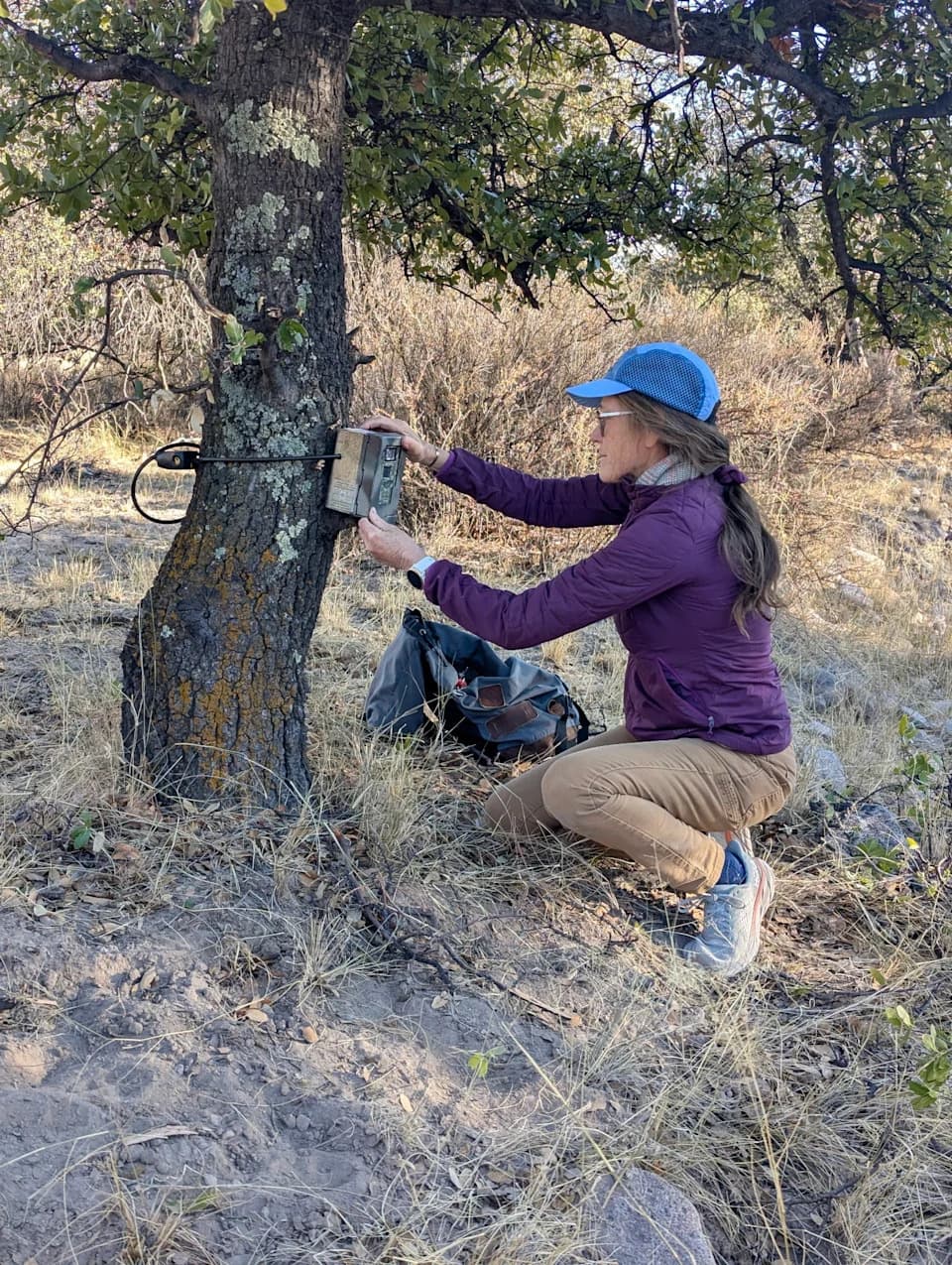
Susan Malusa in the field at one of the jaguar monitoring sites.
The University of Arizona Wild Cat Research & Conservation Center has now recorded five distinct male jaguars moving through Arizona’s mountain ranges and wilderness over roughly the past 15 years. The newest of these animals, nicknamed Cinco, was first detected in 2025 and has been captured on camera more than 17 times across southern Arizona’s Sky Islands, most recently on Aug. 20 near Tucson.
How the Monitoring Project Works
The long-running University of Arizona Jaguar and Ocelot Monitoring Project maintains roughly 120 cameras across the state at any given time. A trained network of about 50 volunteer “citizen scientists” reviews images and forwards notable detections to Susan Malusa, director of the Wild Cat Research & Conservation Center. Their effort has produced the largest dataset of jaguar presence in the United States.
Identifying Individuals and Tracking Movements
Volunteers and researchers use multiple lines of evidence — photos, video and scat analysis — to confirm detections and identify individual cats. Each jaguar’s rosette or spot pattern is unique, which allows the team to distinguish between animals much like a human fingerprint. This method helped document the earliest animal in the dataset, the Santa Rita jaguar, about 125 times between 2011 and 2014; its last known sighting was in Mexico in 2022.
The Five Jaguars Seen So Far
- Cinco — Adult male, first detected in 2025 and photographed 17+ times across southern Arizona and the Sky Islands.
- Jaguar 4 — First recorded in 2023, then absent from cameras for roughly 18 months before being re-detected several times in summer 2025.
- Chiricahua Jaguar (Jaguar 3) — First detected in late 2016, with at least 50 photo and video detections tied to movements around the Chiricahua Complex.
- Huachuca Jaguar (Jaguar 2) — Photographed by a U.S. Customs and Border Patrol camera in 2016 and again in 2017; remains believed to be found in Mexico in 2018.
- Santa Rita Jaguar (Jaguar 1) — First documented in 2011 in the Whetstone Mountains and later photographed in the Santa Rita Mountains; confirmed by scats and imagery over several years.
Conservation Context
All confirmed detections in Arizona to date have been males, which researchers say is consistent with typical male dispersal patterns that lead males to roam farther from natal ranges than females. The team hopes their expanding monitoring network will eventually document a female jaguar, which would be an important milestone for understanding potential breeding activity in the region.
“Think of it like your fingerprint. No two are alike,”
The monitoring project is supported by donations and grants and continues to grow gradually each year. Cross-border movements and the remote, rugged nature of the Sky Islands make jaguar monitoring challenging but also essential for regional conservation planning.
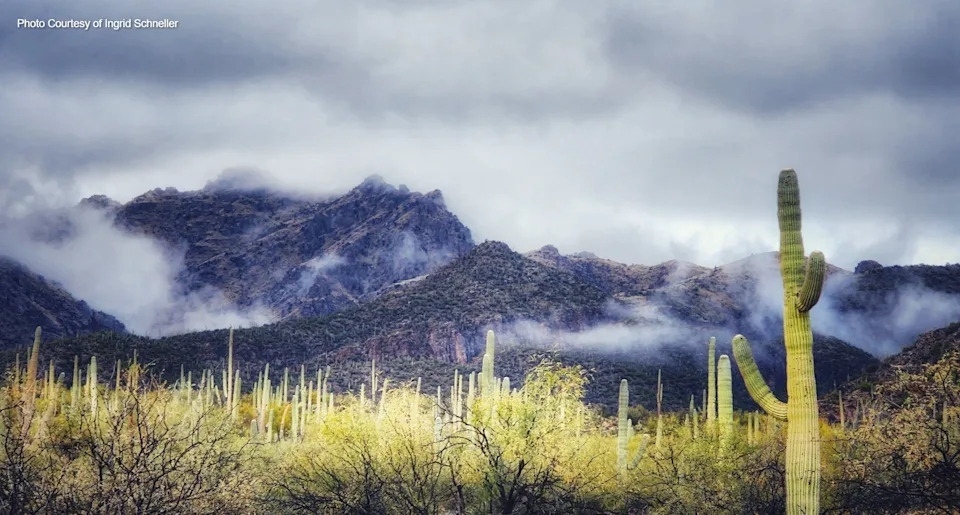
A look at the landscape on the way to one of the jaguar monitoring sites.
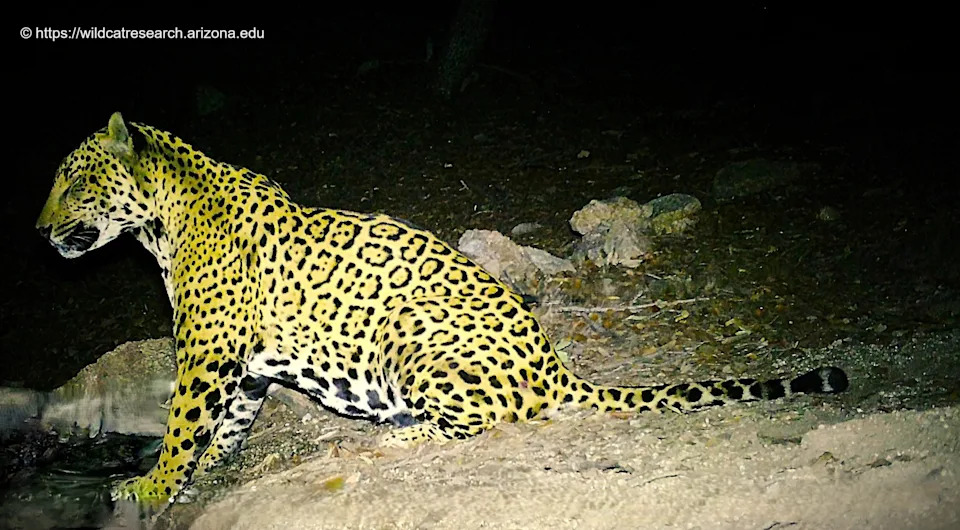
"Cinco" the jaguar, photo taken on Feb. 22, 2026.
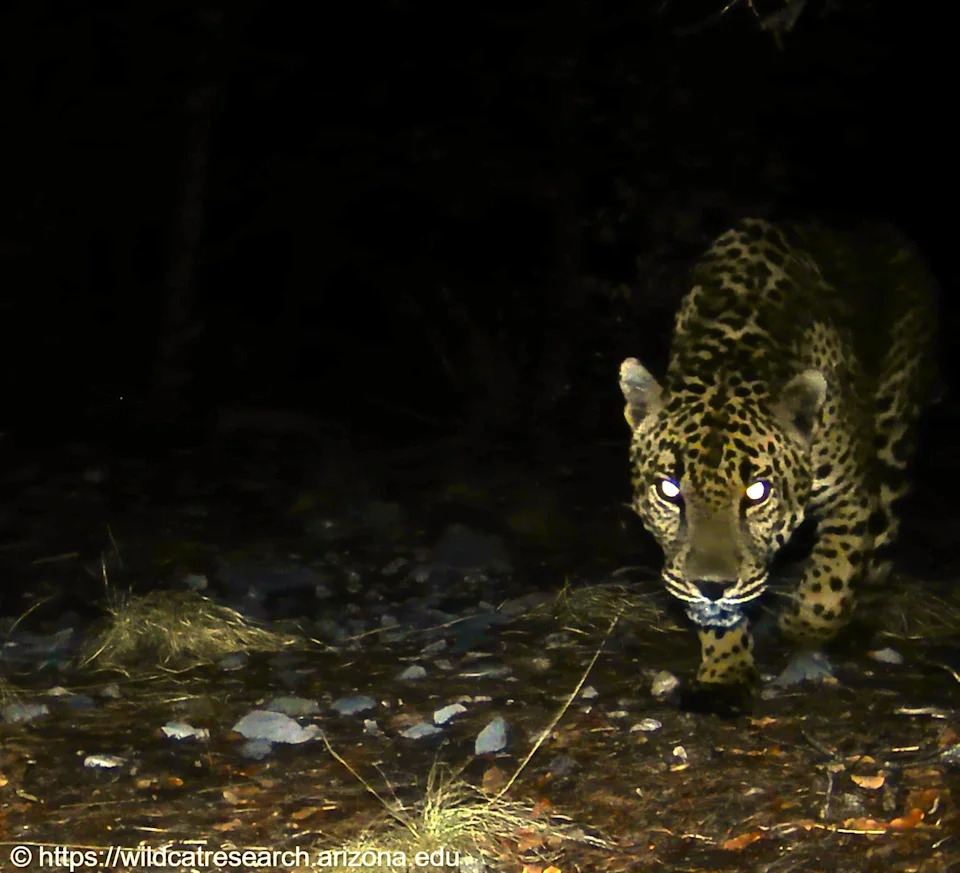
Jaguar 4, photo taken in 2025.
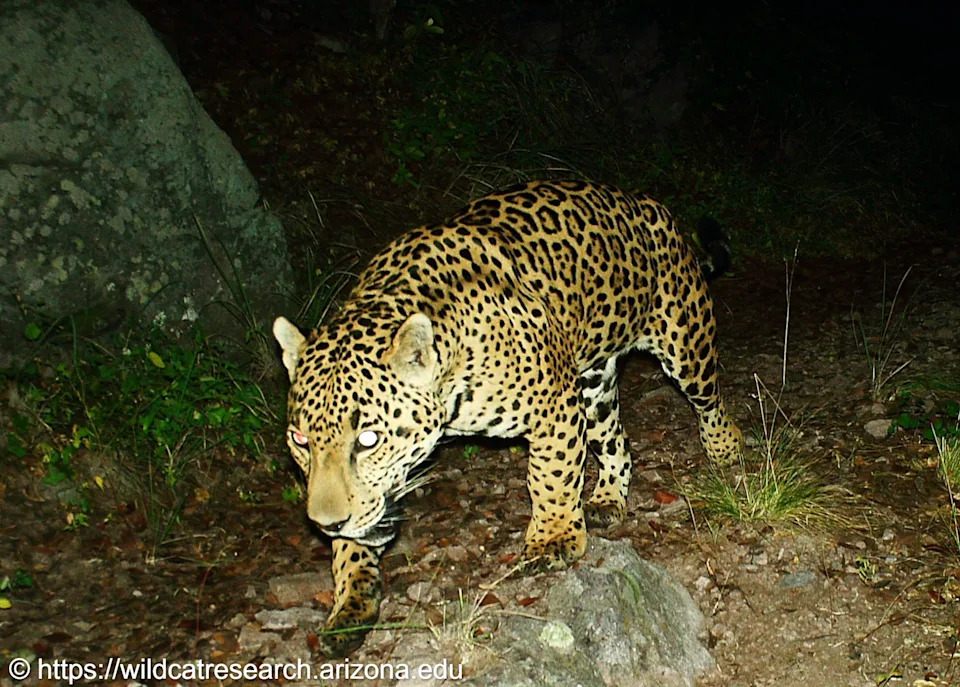
Jaguar 3, photo taken in 2022.
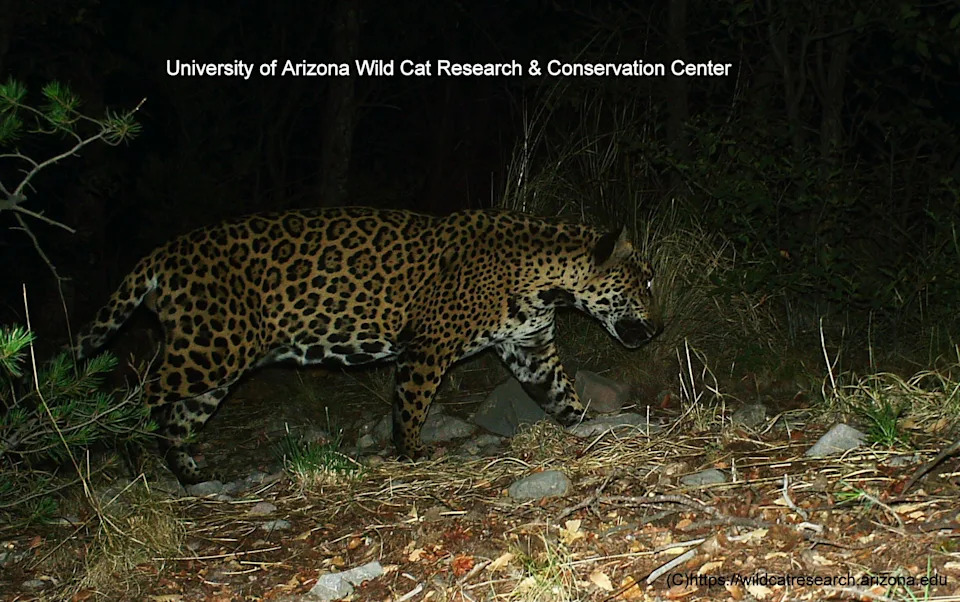
Jaguar 2, photo taken on March 26, 2017.
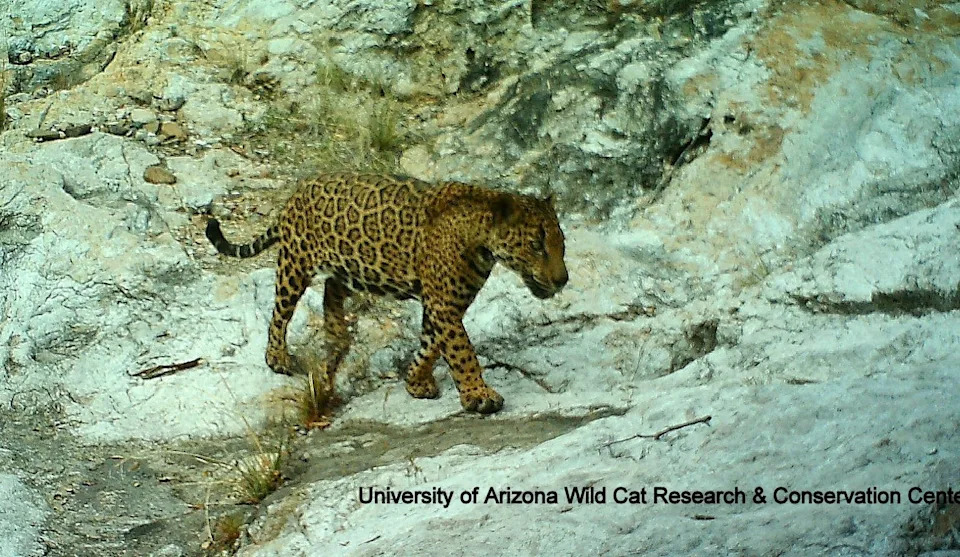
Jaguar 1, the Santa Rita jaguar documented on April 10, 2014.
Help us improve.