New genetic and isotopic evidence shows Miracinonyx trumani — long called the "American cheetah" — was actually a sister species to the modern puma. Analyses of four fossils from Wyoming and the Yukon place its divergence from pumas at about 2.6 million years ago, and reveal a huge north–south range. Northern populations show fish-heavy diets (including salmon) and genetic changes linked to circadian rhythms, while the species declined slowly during the late Pleistocene.
The 'American Cheetah' Was Actually a Puma Relative — And Some Lived on Salmon
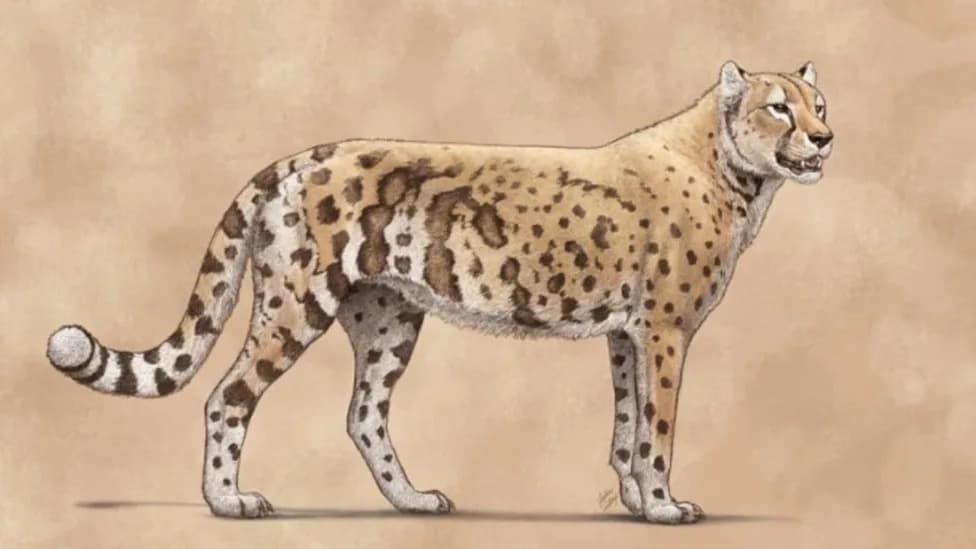
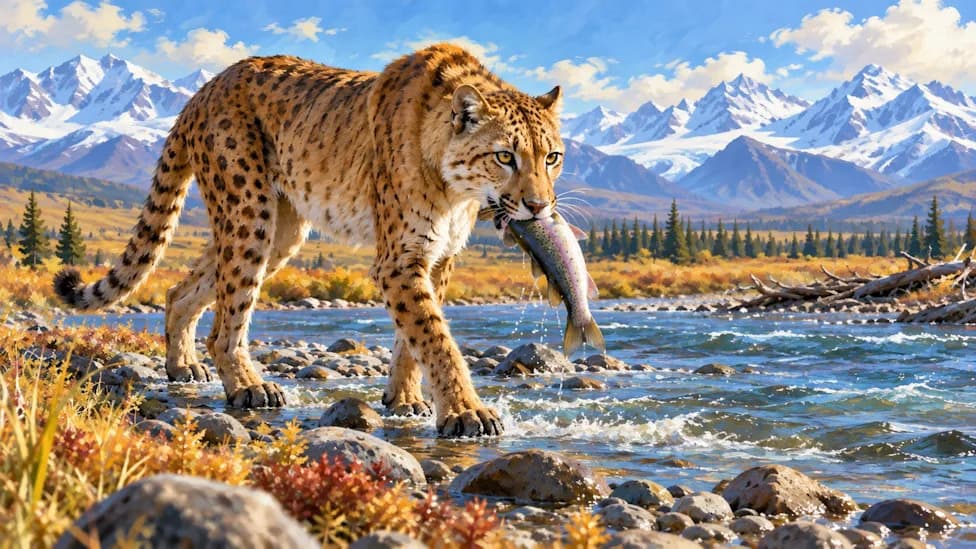
Illustration of an 'American cheetah' (Miracinonyx trumani). (Julius Csotonyi/UAF)
New paleogenomic and isotopic research overturns a long-standing idea: the so-called "American cheetah" was not a true cheetah but a close sister species of the modern puma. The study reveals surprising ecological flexibility across a vast North American range, including northern populations that specialized on fish and showed genetic signs of adapting to extreme seasonal light.
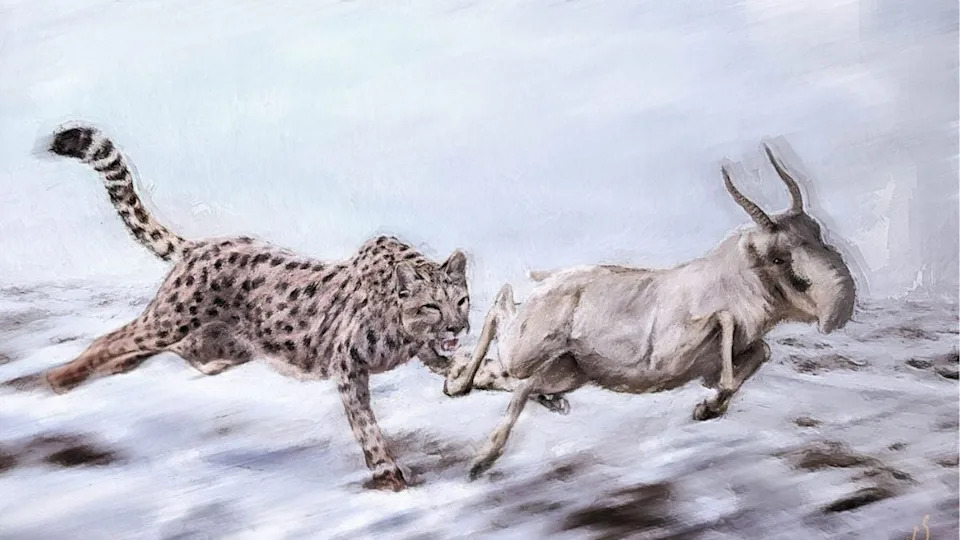
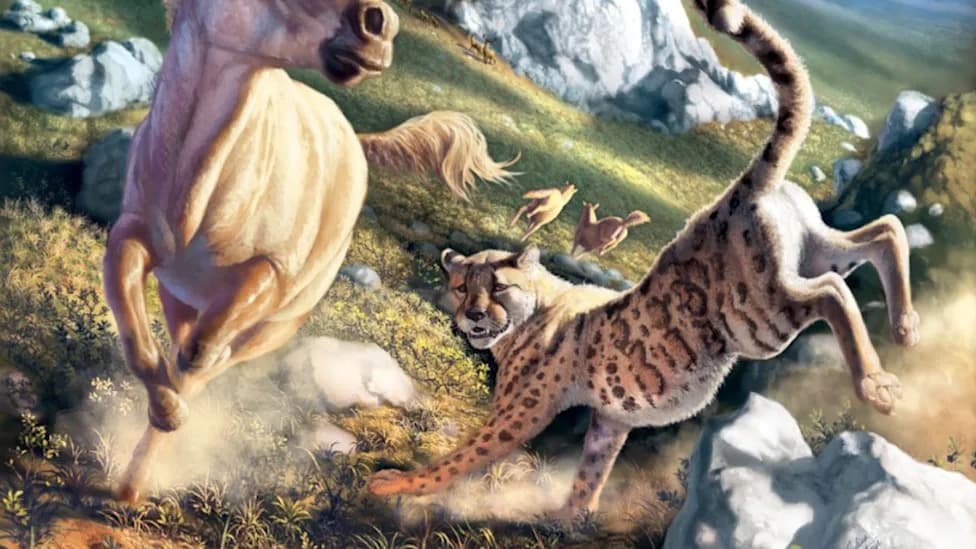
An artistic conception of an 'American cheetah', which weighed around 70 kilograms (150 pounds) and was around 2.4 meters (8 feet) from tip to tail, chasing down a Saiga antelope, a survivor of the ice age.(Velizar Simeonovski/UCSC)
A Reappraisal of Miracinonyx trumani
Miracinonyx trumani has long been portrayed as an American analogue of the African cheetah (Acinonyx jubatus) because of its gracile build, long limbs, and other running adaptations. But an unusually comprehensive analysis combining ancient DNA sequencing and stable-isotope chemistry shows M. trumani is more closely related to the puma (Puma concolor), diverging from the puma lineage roughly 2.6 million years ago.
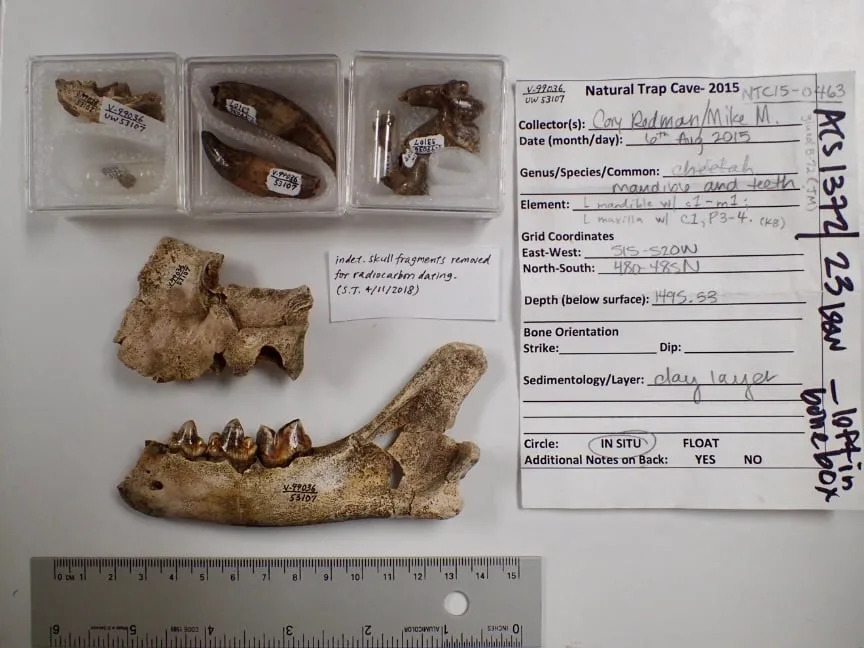
M. trumaniskull fragments recovered deep underground from Natural Trap Cave, Wyo. (Julie Meachen/UCSC)
What the Fossils Told Us
The team analyzed four fossil specimens: one from Natural Trap Cave, Wyoming (about 23,000 years old), and three specimens from the Yukon in the Canadian Arctic (each older than 30,000 years). Genetic data confirmed the Yukon specimens belong to M. trumani, expanding the species' known range by roughly 20 degrees of latitude — from the Lower 48 well into the Arctic.
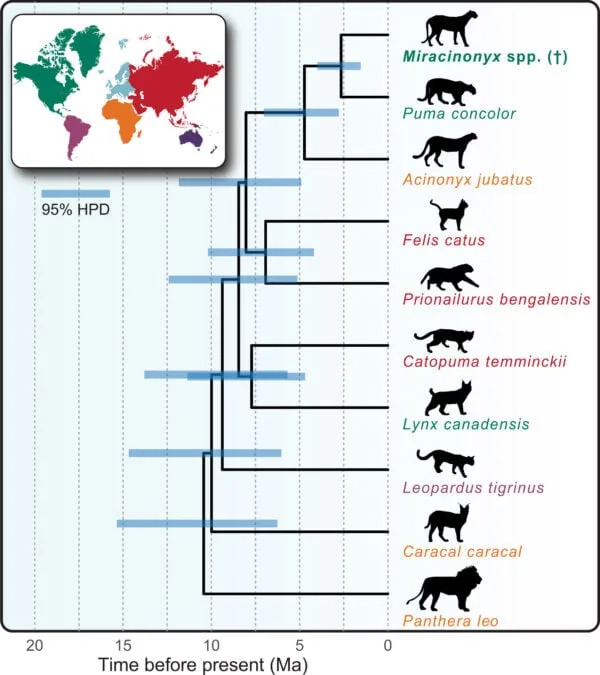
An illustration showing a species tree and estimated felid divergence, with divergence from the puma lineage around 2.6 million years ago, including DNA comparisons from lions to house cats.(Cassatt-Johnstone et al.,Current Biology, 2026)
Two Ecologies, One Species
Isotopic analysis (notably nitrogen isotopes) shows a striking ecological split. Southern populations fit the expected terrestrial predator profile, hunting ungulates such as pronghorn. Northern individuals, however, display a marine-influenced isotopic signature consistent with a diet rich in fish, including salmon — a pattern similar to modern marine predators like sea wolves and orcas.
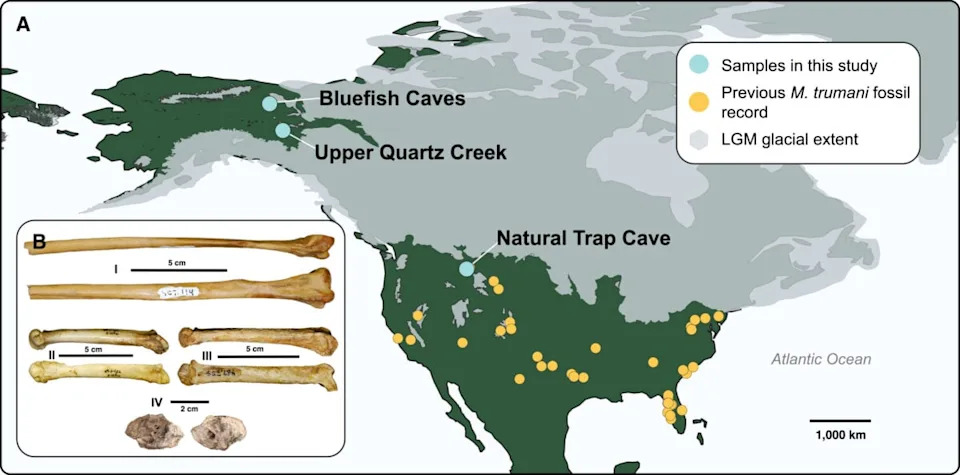
An illustration detailing the geographic distributions ofM. trumani,as well as the origin of known samples, including those used in this work.(Cassatt-Johnstone et al.,Current Biology, 2026)
"These cats were remarkably flexible, much like pumas are across their range today," says Molly Cassatt-Johnstone, lead author and paleogenomicist at UC Santa Cruz.
Genetic Clues to Arctic Life
Beyond diet, the researchers identified loss-of-function mutations in genes that regulate circadian rhythms in the northern specimens. Those changes suggest genetic adaptation to extreme seasonal light cycles — long summer days and dark winters — which would have posed unique challenges to a predator's behavior and physiology.

Subscribe to ScienceAlert's free fact-checked newsletter
Decline and Extinction
Miracinonyx persisted for a long time without clear genomic signs of severe inbreeding, but populations began a slow decline through the late Pleistocene. The authors suggest that gradual demographic weakening, combined with rapid environmental changes at the end of the ice age, may have undermined the species' ability to adapt and survive.
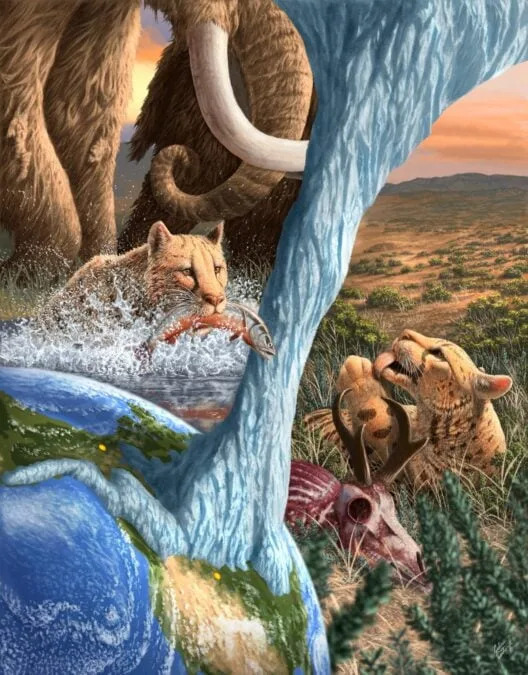
A tale of two cats. Artist's conception of how a glacier barrier split the two American 'cheetah' populations, leading to dietary specializations based on their environments.(Julius Csotonyi/UCSC)
Why This Matters
The study — published in Current Biology — highlights how convergent physical adaptations (like cursorial anatomy) can mask very different evolutionary histories and ecologies. It also underscores how wide-ranging species can develop highly localized specializations in response to regional environments.
Study Citation: Cassatt-Johnstone et al., Current Biology (2026). Paleogenomic and isotopic analyses of Miracinonyx trumani.
Help us improve.