Ancient-DNA and isotope evidence show Miracinonyx trumani was the sister lineage to the modern puma, not a true cheetah, with the lineages splitting ~2.6 million years ago. Genomes from a ~23,500-year-old Wyoming specimen and Yukon fossils dated 31–34 kya extend the species’ range into Arctic Yukon. Stable isotopes indicate Yukon individuals fed heavily on aquatic resources (likely fish), while Wyoming cats hunted mainly terrestrial herbivores. Loss-of-function variants in PER3 and NOS1 hint at possible high-latitude circadian adaptations, though sample sizes are small.
Ancient DNA Upends ‘American Cheetah’ Story — A Puma Cousin That Fished in the Arctic
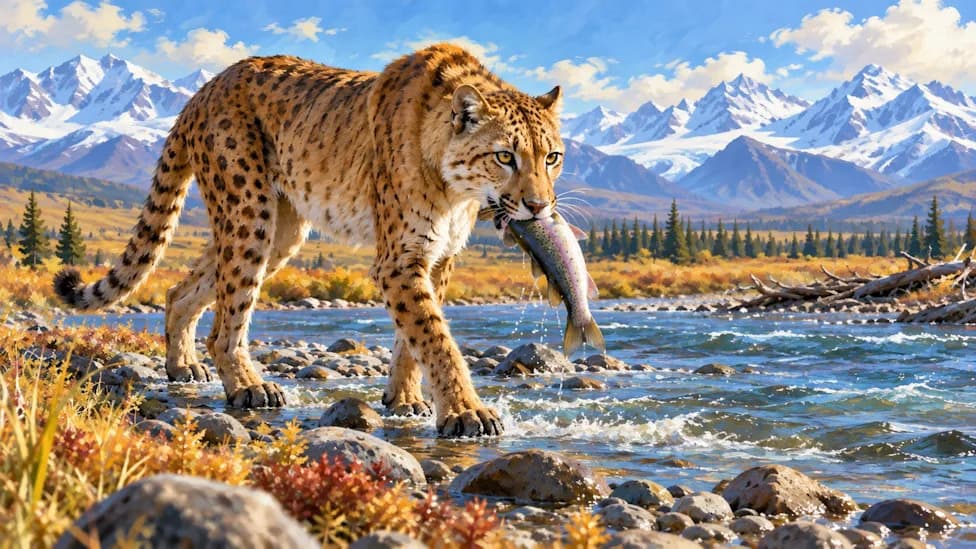
Ancient DNA shows the American "cheetah" was a puma relative, while Yukon fossils reveal a surprising diet linked to fish. (CREDIT: Shutterstock)
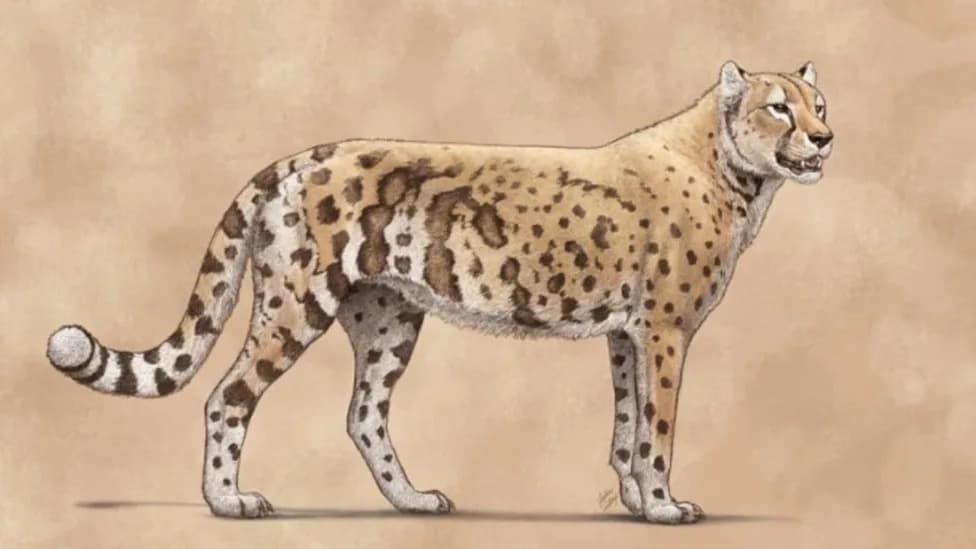
New ancient-DNA, radiocarbon and stable-isotope analyses show that the extinct 'American cheetah' Miracinonyx trumani was not a close relative of the modern African cheetah but instead formed the sister lineage to the living puma (Puma concolor). The species combined a cheetah-like build with puma-affiliated DNA and surprisingly flexible diets that varied across the continent, including evidence some northern populations relied heavily on aquatic food webs.
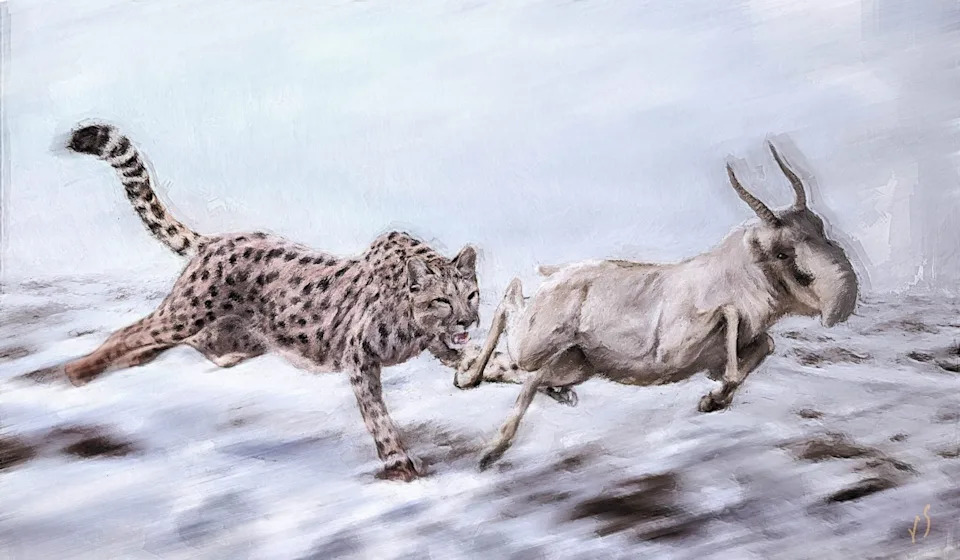
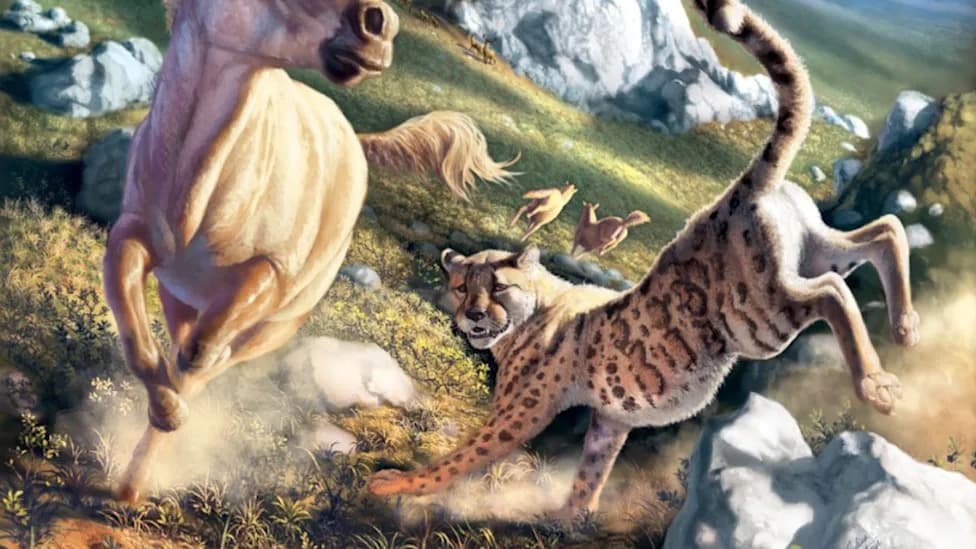
An illustration of Miracinonyx trumani pursuing a saiga antelope. (CREDIT: Velizar Simeonovski)
Genomes Rewrite Evolutionary Relationships
Researchers led by the University of California, Santa Cruz sequenced especially complete nuclear genomes from a ~23,500-year-old Wyoming specimen and a well-preserved Yukon fossil, then compared them with nine other felid genomes. The results place Miracinonyx as the closest extinct relative of the modern puma, with the two lineages diverging about 2.6 million years ago. Miracinonyx and modern cheetahs share a more distant common ancestor (~4.7 million years ago), indicating the cat’s cheetah-like morphology evolved independently through convergent evolution.
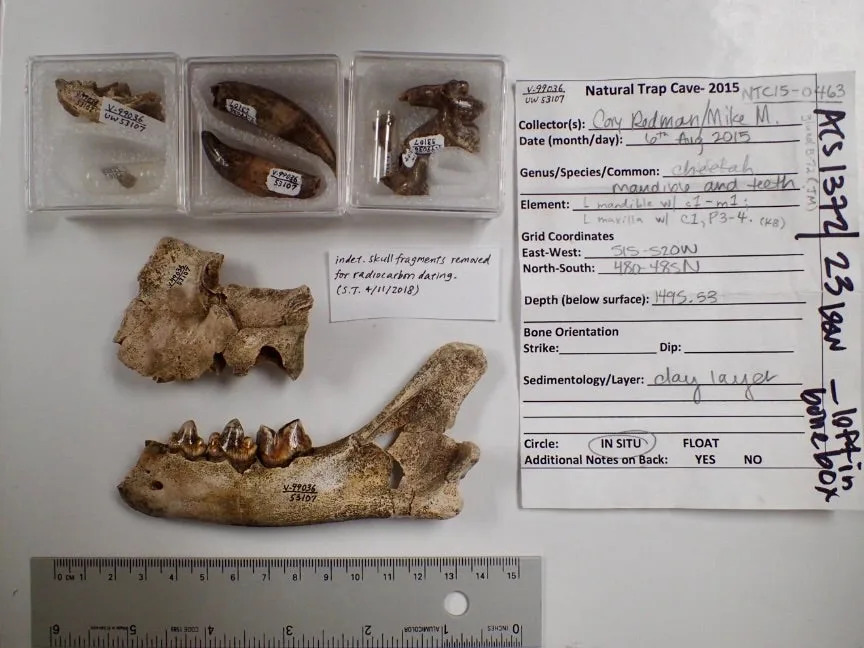
Miracinonyx trumani skull fragments found deep underground at Natural Trap Cave, Wyoming. (CREDIT: Julie Meachen)
Range Extends Into Arctic Yukon
DNA identified three Yukon fossils previously thought to be pumas as Miracinonyx, dated roughly 31,000–34,000 years ago. That shifts the species’ known distribution more than 20° of latitude northward, expanding its range from subtropical areas such as present-day Florida up into Arctic Yukon and placing the species in Pleistocene Beringia alongside steppe lions, scimitar cats, wolves and bears.
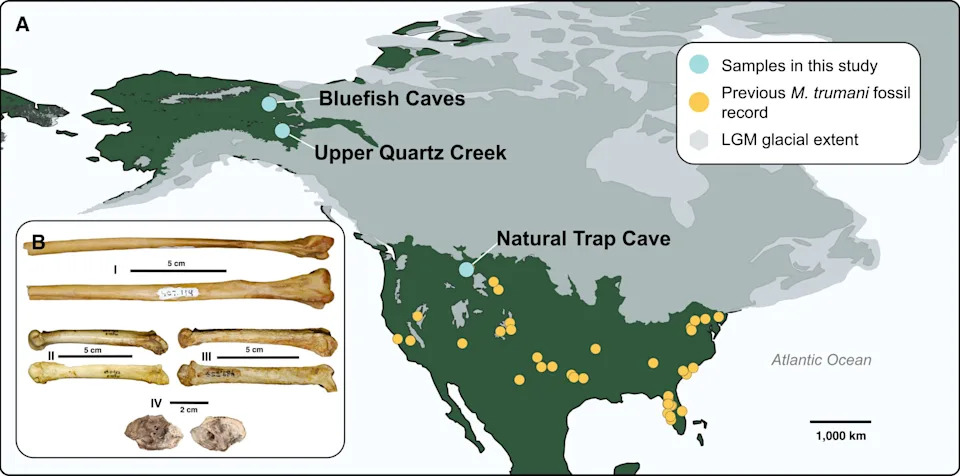
Geographic distribution and sample localities for M. trumani. (CREDIT: Molly Cassatt-Johnstone et al, Current Biology)
Evidence for Aquatic Diets in the North
Stable-isotope chemistry revealed striking differences between Yukon and Wyoming specimens. Yukon Miracinonyx had nitrogen values about 6 parts per thousand (≈6‰) higher than contemporary terrestrial carnivores and fell within isotope ranges typical of fish-eating predators. Amino-acid–specific nitrogen analysis places the Yukon individuals at trophic level 4 (tertiary consumers), whereas Wyoming specimens averaged around trophic level 3 — consistent with predominately terrestrial herbivore predation.
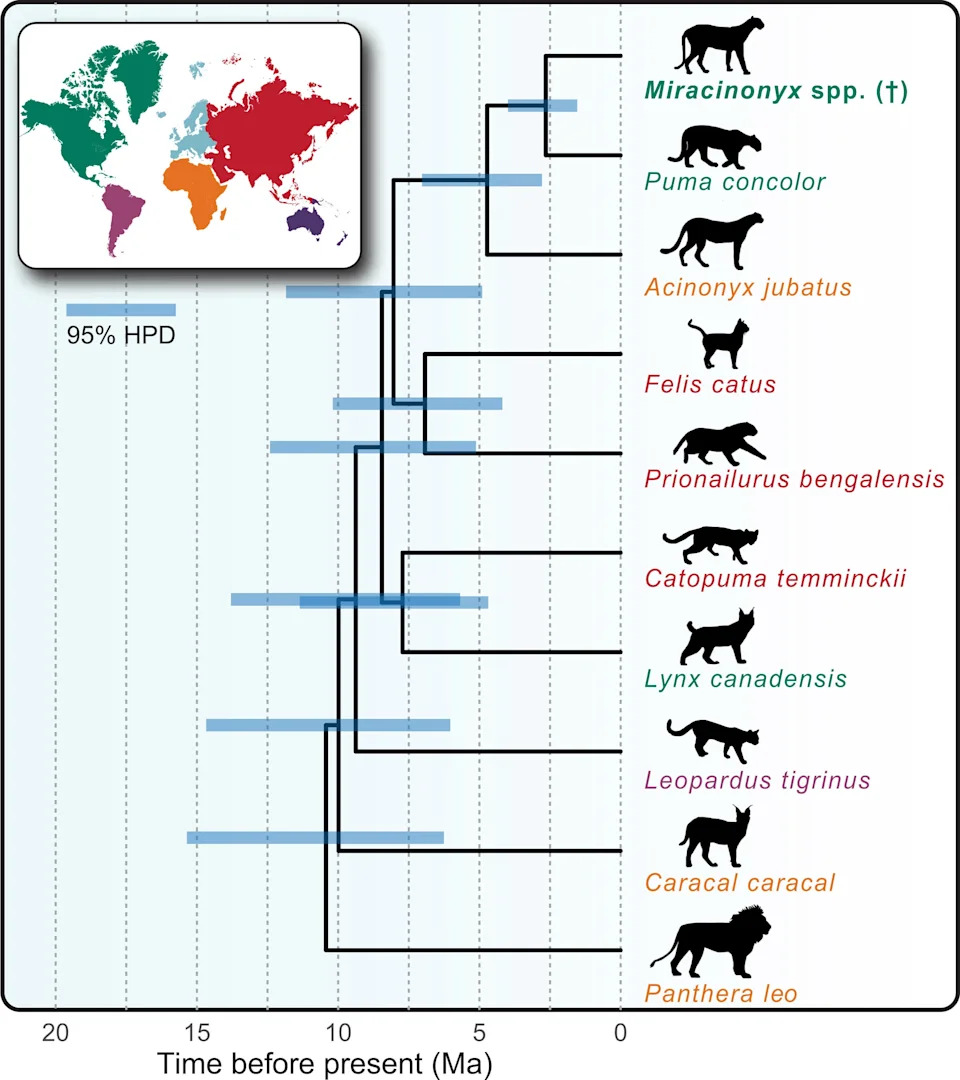
Species tree and divergence-time estimates for M. trumani and extant felids. (CREDIT: Molly Cassatt-Johnstone et al, Current Biology)
The isotope data do not identify a single fishing technique: northern cats may have caught fish in shallow water, exploited seasonal spawning runs, or scavenged along riverbanks. Archaeological and paleontological records confirm salmon, burbot and other fish were present in Ice Age Beringia, making aquatic resources a plausible food source for high-latitude Miracinonyx.
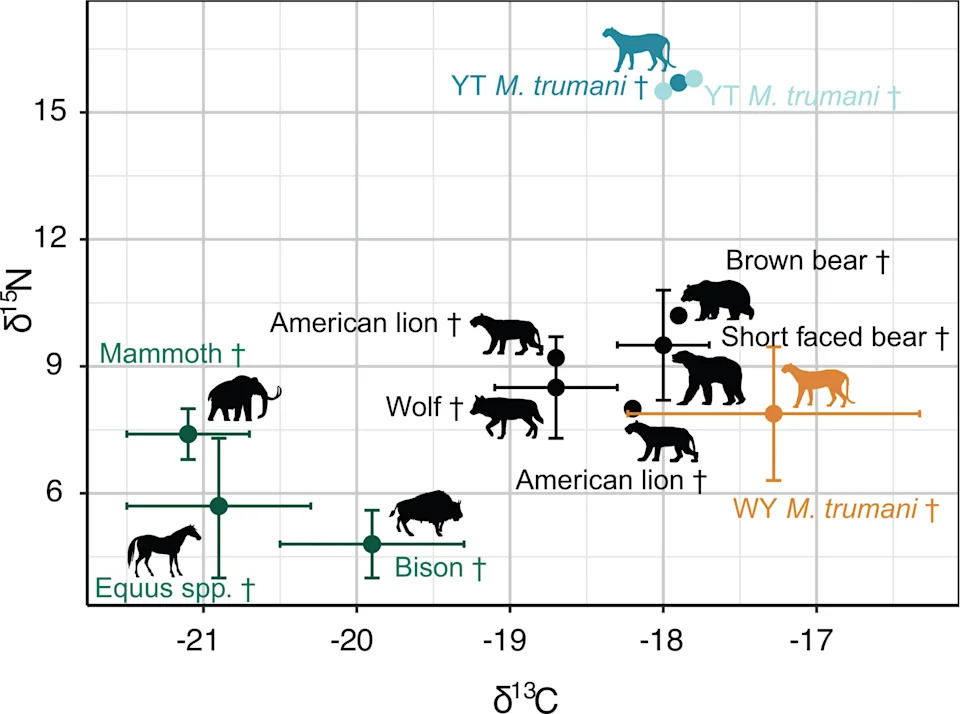
Isotopic differentiation of M. trumani relative to coeval Beringian fauna. (CREDIT: Molly Cassatt-Johnstone et al, Current Biology)
Genetic Hints of High‑Latitude Adaptation
Both sequenced Miracinonyx individuals carried loss-of-function variants in two genes involved in circadian regulation, PER3 and NOS1. PER3 affects responses to day length and seasonal sleep patterns; NOS1 contributes to light-synchronized physiology. The authors propose these variants might reflect reduced reliance on canonical light-driven rhythms in high-latitude environments or greater behavioral flexibility (e.g., crepuscular or nocturnal activity). The genetic sample is small, so these interpretations are preliminary.
Rethinking the 'American Cheetah'
For decades Miracinonyx's gracile, long-limbed appearance and association with pronghorn led to the image of a North American cheetah specialized for high-speed pursuit. The new integrated evidence — paleogenomes, isotopes and anatomy — paints a more complex picture: Miracinonyx was puma-related, geographically widespread, and ecologically flexible. Southern populations appear to have been mainly terrestrial hunters; some northern populations exploited aquatic food chains.
“There are probably other extinct species that, unfortunately, have been reduced to fewer dimensions than they deserve,” said first author Molly Cassatt-Johnstone, summarizing how combining genetic, chemical and fossil data reveals richer ecological and evolutionary stories.
Methods and Sources
The study combined high-coverage ancient nuclear genomes with radiocarbon dating and bulk and compound-specific stable-isotope analyses. Supporting research includes anatomical studies of elbow-joint mechanics, isotopic tests of Miracinonyx–pronghorn relationships, neuroanatomical reconstructions, and surveys of Pleistocene fish in Beringia. The primary genomic and isotopic results are published in Current Biology.
Uncertainties: Divergence dates and the behavioral implications of circadian gene variants carry uncertainty, and sample sizes for genomic and isotopic comparisons remain limited. Nonetheless, the multi-proxy approach provides robust evidence that Miracinonyx was more adaptable and ecologically diverse than its nickname suggests.
Help us improve.