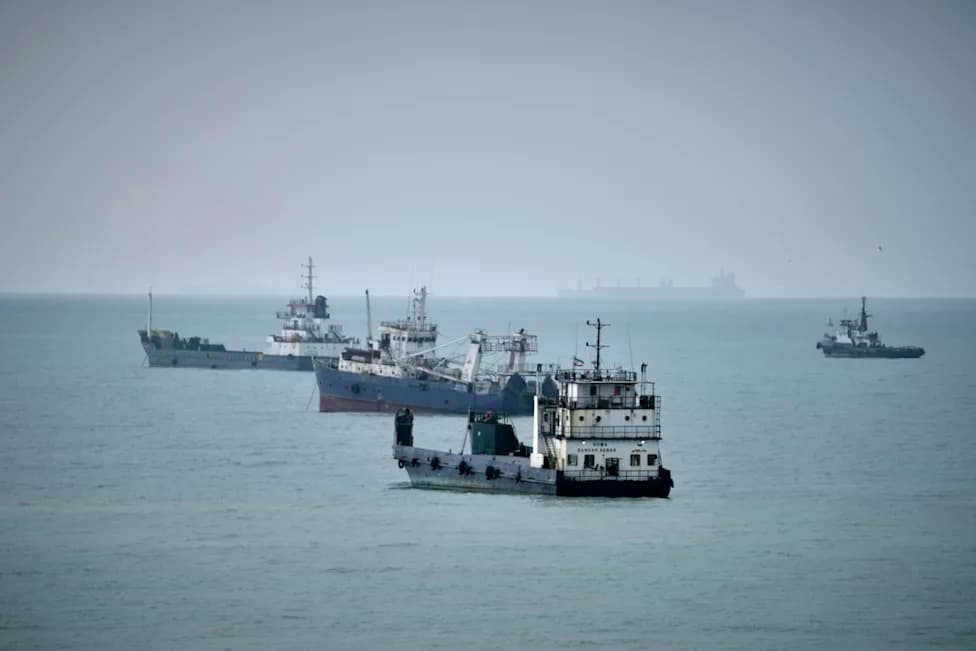
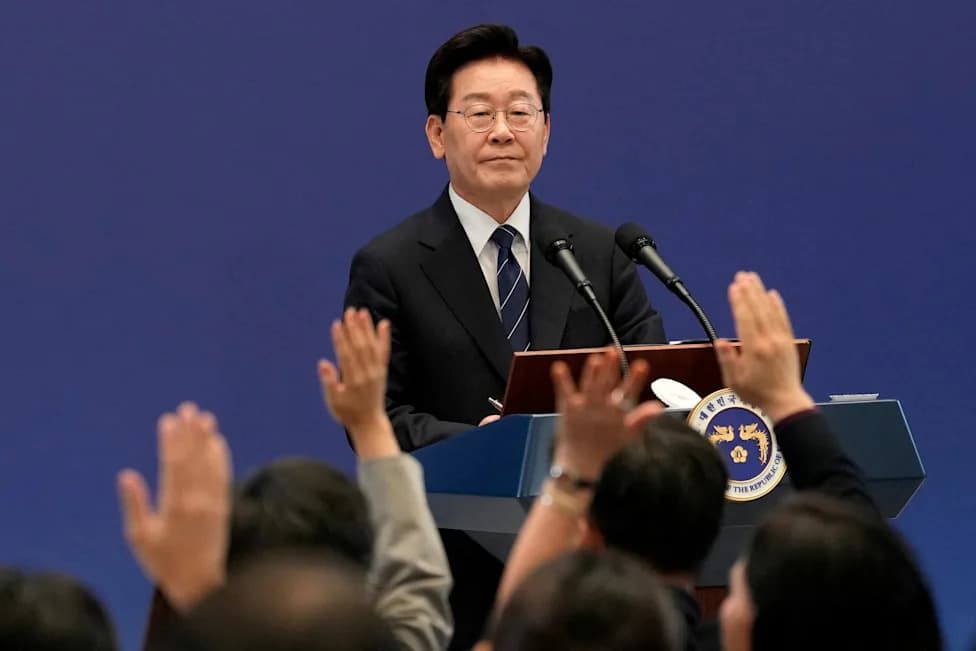
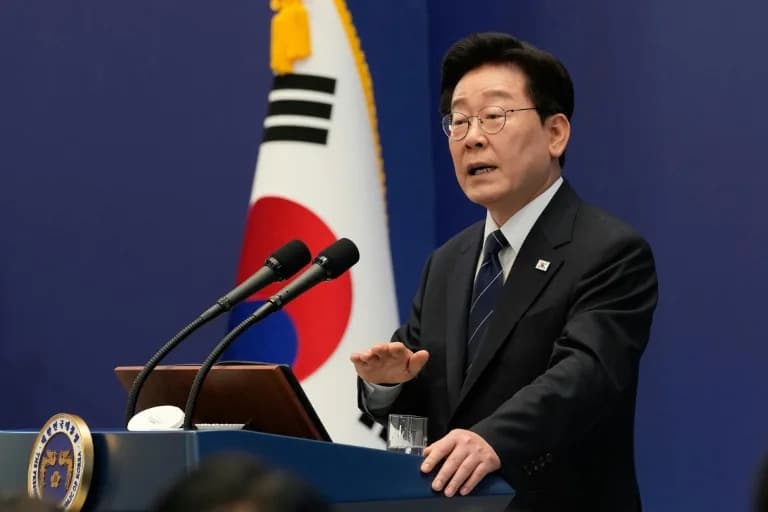
South Korean President Lee Jae Myung and French President Emmanuel Macron agreed to coordinate on maritime security and freedom of navigation in the Strait of Hormuz, but Seoul said the talks did not include plans to deploy troops. National Security Adviser Wi Sung-lac said South Korea is reviewing contribution options and has made no decision. An inspection team was sent to the UAE to assess conditions, with possible P-8 operations at Al Dhafra reported but unconfirmed. Any deployment would need parliamentary approval, and Iran warned of serious consequences if Seoul joined military operations.
South Korea and France Agree To Coordinate On Hormuz Security — Seoul Says No Troop Deployment
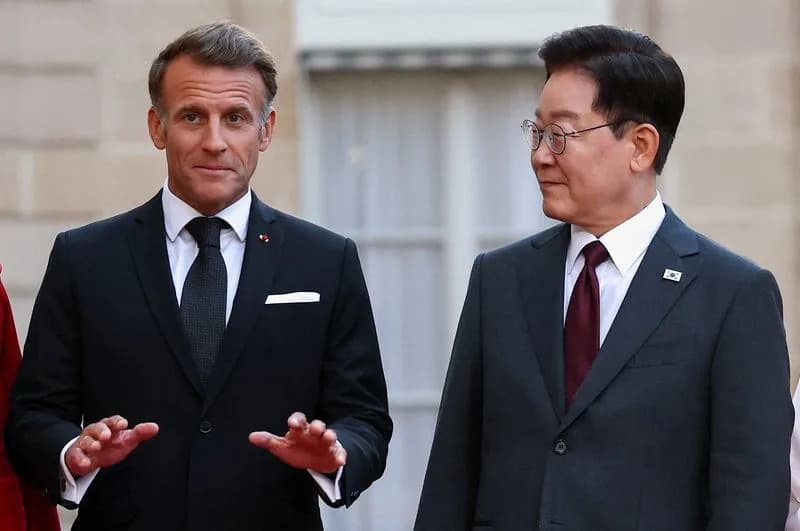
French President Emmanuel Macron welcomes South Korean President Lee Jae Myung ahead of a state dinner at the Elysee Palace during a state visit to France, in Paris, France, September 8, 2026. REUTERS/Gonzalo Fuentes
South Korean President Lee Jae Myung and French President Emmanuel Macron discussed coordination on maritime security and freedom of navigation in the Strait of Hormuz during a summit in Paris, Seoul's presidential office said, adding that the talks did not involve plans to deploy troops.
Lee, on a state visit to France, described the Hormuz issue as part of broader conversations on international security and said the two leaders agreed to maintain close coordination so that freedom of navigation through the strait and the stability of global supply chains can be restored swiftly.
Seoul Reviewing Contribution Options, Not Troop Deployment
After the summit, National Security Adviser Wi Sung-lac said discussions focused on how South Korea could contribute to international maritime security efforts in the strait rather than on stationing forces there. "We are still in the review stage," Wi said, noting that no decision had been reached.
"No decision has been made," Wi added, while stressing that reported links between Seoul's review and unrelated U.S. investment talks were incorrect.
Inspection Mission To UAE
South Korea's Defence Ministry said it sent an inspection team to the United Arab Emirates to assess regional security conditions. The ministry emphasized the mission was intended to gather information and did not presuppose any troop deployment. South Korean media reported the team was examining conditions for potential P-8 maritime patrol aircraft operations at Al Dhafra Air Base, though the defence ministry would not confirm details related to force deployment or operations.
The Strait of Hormuz is a critical energy transit route for South Korea: last year the country relied on the waterway for 61% of its crude oil imports and 54% of its naphtha imports, underscoring Seoul's interest in protecting freedom of navigation there.
Any decision to send military personnel would require approval from South Korea's National Assembly. Domestic outlets have said the issue could be discussed at a National Security Council meeting on Sept. 17, but Wi reiterated that no specific course of action had been set.
Regional Reaction And Diplomatic Notes
Iran's Foreign Ministry spokesperson warned that any South Korean military participation in Gulf operations or in the Strait of Hormuz would be regarded as support for U.S. "aggression" and would carry serious consequences. Separately, Seoul denied reports that the United States had set a deadline for South Korea to dispatch assets to the area.
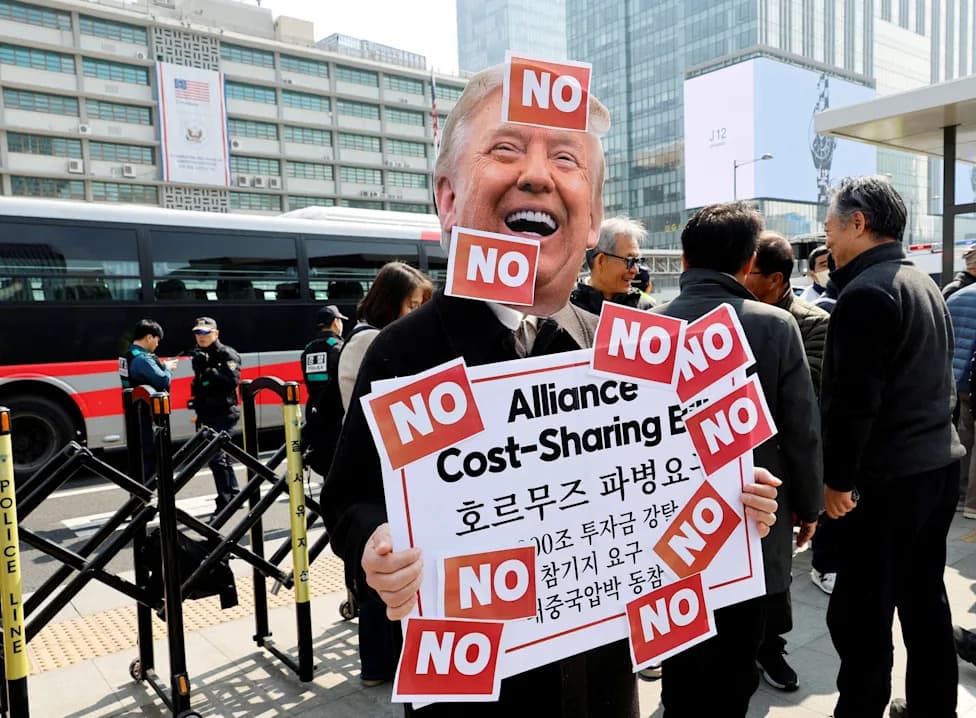
The discussions follow South Korea's recent public review of various contribution options — including potential military measures — to help ensure freedom of navigation in Hormuz. That announcement came after U.S. President Donald Trump said in August he was scaling back U.S.-South Korea joint military exercises in part because South Korea had declined to assist Washington in tensions with Iran.
(Reporting by Kyu-seok Shim; Editing by Jamie Freed and Ed Davies)
Help us improve.