The Medicare program has launched a pilot to cover hemp-derived CBD products for certain patients while Congress advances legislation that would drastically tighten the legal definition of hemp. The proposed changes would measure total THC (including THCA) and impose a 0.4 mg-per-container cap, potentially criminalizing many products that show no detectable THC. Advocates have so far been unable to secure fixes in Congress, and with a Dec. 11 deadline looming the White House has urged lawmakers to preserve access to appropriate full-spectrum CBD. Observers say federal policy must be aligned so Medicare coverage and market access for CBD are not at odds.
Medicare Pilots CBD Coverage as Congress Moves To Restrict Hemp Products — A Growing Policy Conflict
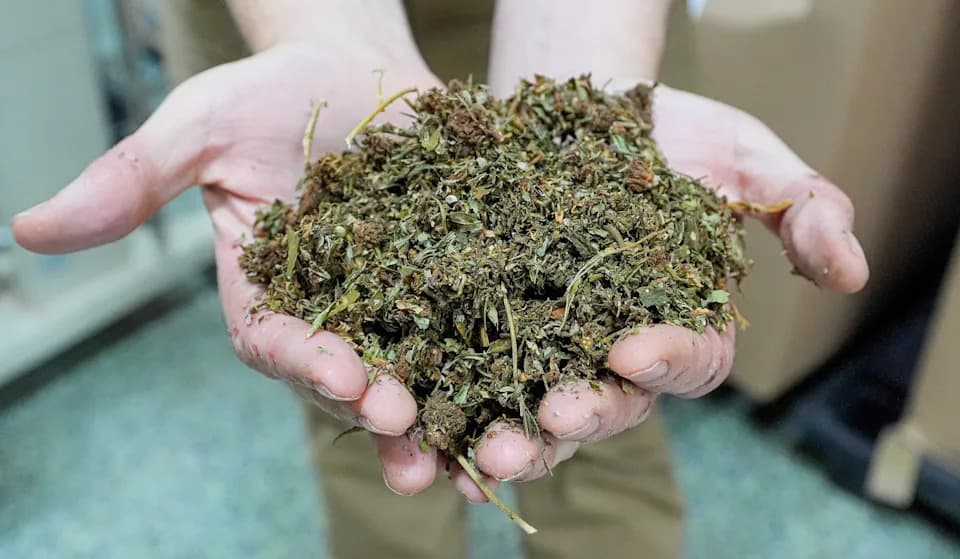
Cornbread Hemp co-founder Jim Higdon holds some of the raw hemp plants that they use to produce CBD gummies and other products at their new Louisville, Ky., location. Jan. 16, 2025.
A new Medicare pilot program now covers hemp-derived cannabidiol (CBD) products for certain patients even as Congress advances legislation that would sharply restrict many of those same products. The resulting contradiction threatens patient access, disrupts entrepreneurs and highlights a reality many lawmakers have yet to accept: hemp already plays a role in American health care.
Why This Matters
Millions of Americans use full-spectrum CBD products not for recreation but for symptom relief — managing pain, anxiety, sleep disorders and other chronic conditions. Research and analysis from the Pacific Legal Foundation show CBD use spans regions and demographics, and survey data indicate many adults have tried CBD to address medical ailments and reduce reliance on over-the-counter or prescription drugs.
The Legal Tension
Under current federal law, hemp products are legal if they contain no more than 0.3% delta-9 tetrahydrocannabinol (THC), the primary intoxicating compound in cannabis and hemp. Critics argue that focusing only on delta-9 created a loophole that allowed other THC-related compounds to circulate in products marketed as CBD.
The pending legislation would broaden the standard to measure total THC, explicitly including THCA — a non-intoxicating precursor that converts to delta-9 THC when heated through smoking, vaping or baking. That change could criminalize raw plant material used to produce many CBD products even when finished goods contain no detectable THC. For example, a topical CBD cream or a CBD gummy showing 0.0 mg of detectable THC could nevertheless be considered illegal if sourced from plant material containing THCA.
The bill would also cap THC at 0.4 milligrams per container. Because retail containers frequently hold multiple servings and each serving can contain fractions of a milligram to several milligrams of THC depending on formulation, this per-container cap would pose significant challenges for manufacturers and retailers.
Medicare vs. New Restrictions
The contradiction is stark: federal policymakers are piloting Medicare coverage to expand patient access to CBD products — including products reported to contain up to 3 mg of THC per serving in some program descriptions — while simultaneously preparing rules that could make those products functionally unavailable. Beyond incoherent policy, the clash risks undermining patient autonomy and access to lower-risk alternatives for some chronic conditions.
State Markets and Advocacy
Many states have moved in the opposite direction, establishing regulated markets for hemp-derived products and recognizing patient choice. Advocates have lobbied Congress since November to avert the most disruptive effects, but efforts have so far failed. In June, the House Rules Committee rejected amendments aimed at fixing the hemp definition. Two days later, the White House issued a statement urging Congress to "update the statutory definition of final hemp-derived cannabinoid products to allow Americans to benefit from access to appropriate full-spectrum CBD products." With a Dec. 11 implementation deadline approaching, options to prevent widespread market disruption are narrowing.
What Should Happen Next
Policymakers face a straightforward choice: align federal law so Medicare's pilot and the market can coexist, or accept that restrictive definitions will curtail access for patients who currently rely on hemp-derived therapies. If Congress cannot enact balanced, timely reforms to regulate bad actors and preserve access, a limited extension to pause implementation of the new restrictions would allow lawmakers time to evaluate hemp's role in American health care and craft a coherent approach.
About the authors: Maddie Salamone is Federal Policy Counsel and Caitlin Styrsky is Strategic Research Manager at the Pacific Legal Foundation.
Help us improve.