Researchers have identified more than 120 Latin inscriptions from the 1st–2nd centuries CE in Valencia’s Cova Dones, a cave sanctuary located over 200 meters underground. Five votive texts invoke a deity titled Domina, and three inscriptions bear the previously unknown epithet Malaci, possibly linked to water. The concentration of texts deep inside the cave, spindle whorls, and modified stalagmite pieces suggest organized, female-centered cult activity. Analyses continue to clarify the sanctuary’s rituals and the meaning of "Malaci."
120+ Roman-Era Latin Inscriptions and Evidence of a Female-Centered Cult Found Deep in Valencia’s Cova Dones
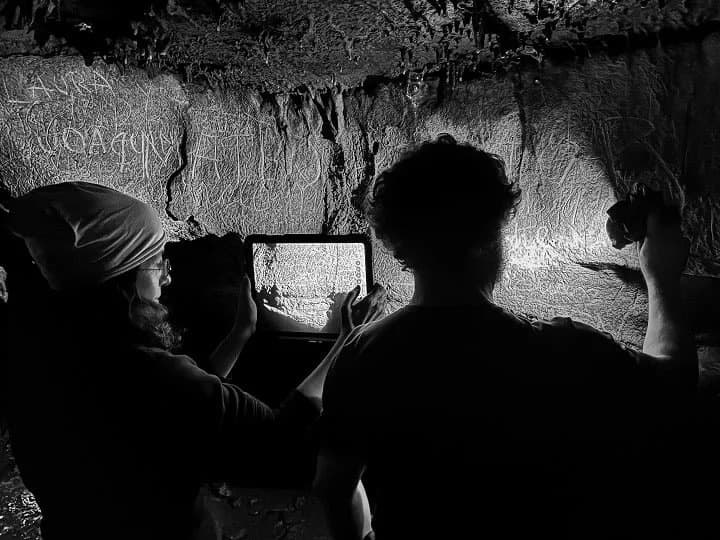
Members of the research team during the documentation and analysis work, September 4, 2026. (photo credit: ArcheoSymbol Group/University of Alicante)
Archaeologists working at Cova Dones, a deep cave near Valencia, Spain, have identified more than 120 Latin inscriptions dating to the 1st and 2nd centuries CE — a dramatic increase from the roughly 15 inscriptions recorded at the site before 2026. The discoveries, announced in late July 2026 by the University of Alicante, point to an organized sanctuary with strong female associations and worship directed to a deity called Domina.
Discovery and Context
The inscriptions were recorded during fieldwork in May and June 2026 led by Virginia Barciela (University of Alicante) and Aitor Ruiz-Redondo (University of Zaragoza). They appear on walls and ceilings within a cave first documented in 2024 and situated more than 200 meters below the surface. The cave floor contains numerous small natural pools (gours) formed by water seeping through fissures in the rock.
Inscriptions and Deity
Epigrapher Silvia Alfayé (University of Zaragoza) reports that five votive inscriptions address a deity styled Domina (Latin for "the Lady"), and three inscriptions include the previously unknown epithet Malaci. Alfayé cautions that "Malaci" is not yet fully understood; preliminary readings suggest the epithet may indicate a particular aspect of the deity, possibly linked to water, but definitive interpretation awaits further analysis.
"Preliminary results indicate that Cova Dones was a cave-sanctuary frequented by women, since several female names appear among the inscriptions documented so far," the research team said.
Material Culture and Ritual Indicators
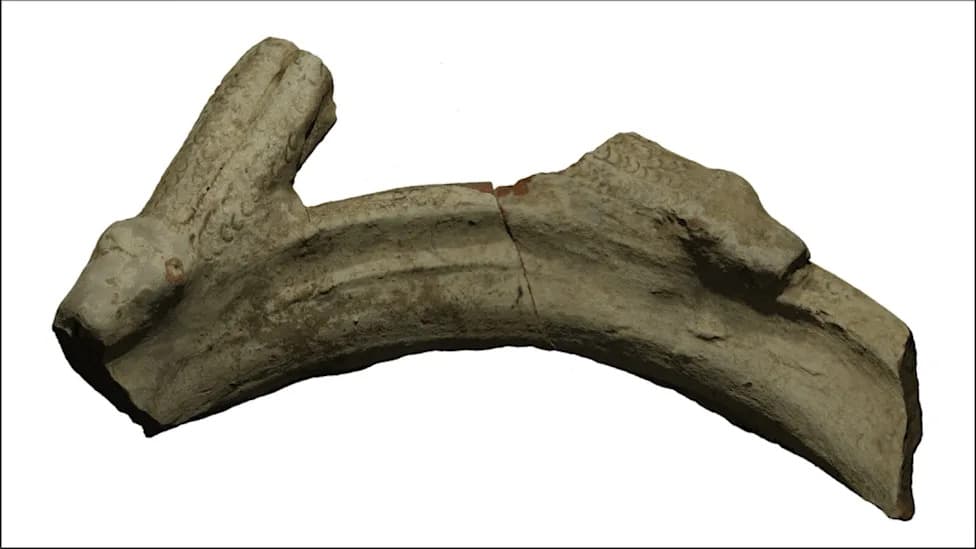
Researchers also recovered several spindle whorls — small objects used to increase spindle rotation — and more than 100 stalagmite pieces that show evidence of human modification. The spindle whorls are consistent with offerings associated in antiquity with female domestic and ritual spheres, reinforcing the epigraphic evidence for women's active participation in the sanctuary. In 2024 excavations had already yielded about 15 Latin inscriptions and a coin from the reign of Emperor Claudius (41–54 CE).
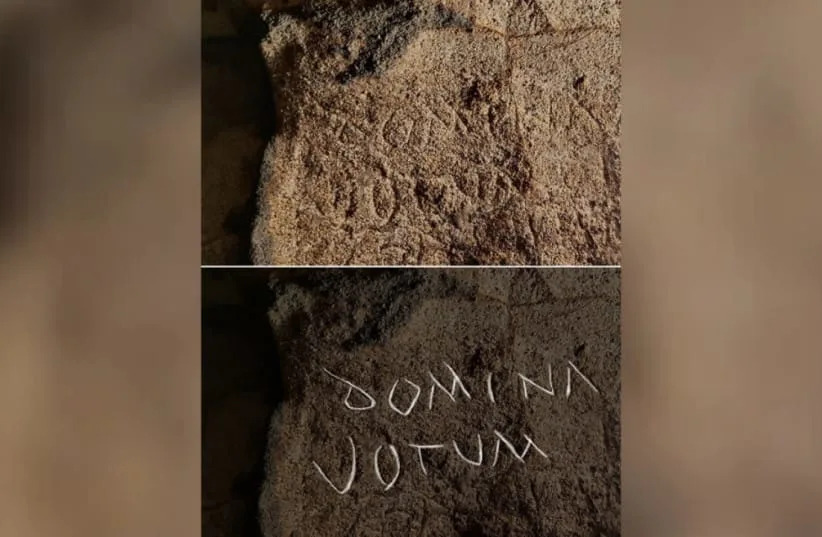
Detail of one of the inscriptions found within Cova Dones in Valencia, Spain, September 4, 2026. (credit: ArcheoSymbol Group/University of Alicante)
Spatial Patterning and Interpretation
Sergio García-Dils, an epigraphy specialist who worked on the readings, emphasizes that multiple inscriptions to the same deity and their concentration deep inside the cave argue against casual graffiti. Instead, the pattern points to organized, repeated cultic activity dedicated to a named goddess.
Longer Chronology and Significance
Cova Dones first attracted attention in 2023 when more than 100 Paleolithic paintings were discovered, making the site one of the most important Paleolithic art deposits in eastern Iberia. The new Roman-era evidence adds another layer to the cave’s long history of use and suggests continuity or reactivation of ritual significance across millennia.
Next Steps
Analyses are ongoing to clarify the function of the sanctuary, the precise meaning and origin of the epithet "Malaci," and the relationship between the cave’s Paleolithic art and later Roman cult practices. The team continues to document and conserve the inscriptions and associated finds.
Research Leads: Virginia Barciela (University of Alicante), Aitor Ruiz-Redondo (University of Zaragoza). Photo credit: ArcheoSymbol Group / University of Alicante.
Help us improve.