Two national polls — Reuters/Ipsos (Aug. 14–17) and Economist/YouGov (August) — put President Trump’s approval at 33% with disapproval in the mid-60s, tying the lowest marks of his presidency. Both surveys show a sharp decline in the share who strongly approve (as low as 14% in one poll and 17% in another), signaling attrition among core supporters. Analysts point to Trump’s failed confrontation with Iran and resulting price spikes as a key driver. The weakening base raises the risk of lower GOP turnout in the midterms and challenges Trump’s turnout-centered electoral strategy.
Why Trump’s Falling Approval Numbers Are More Troubling Than They Seem
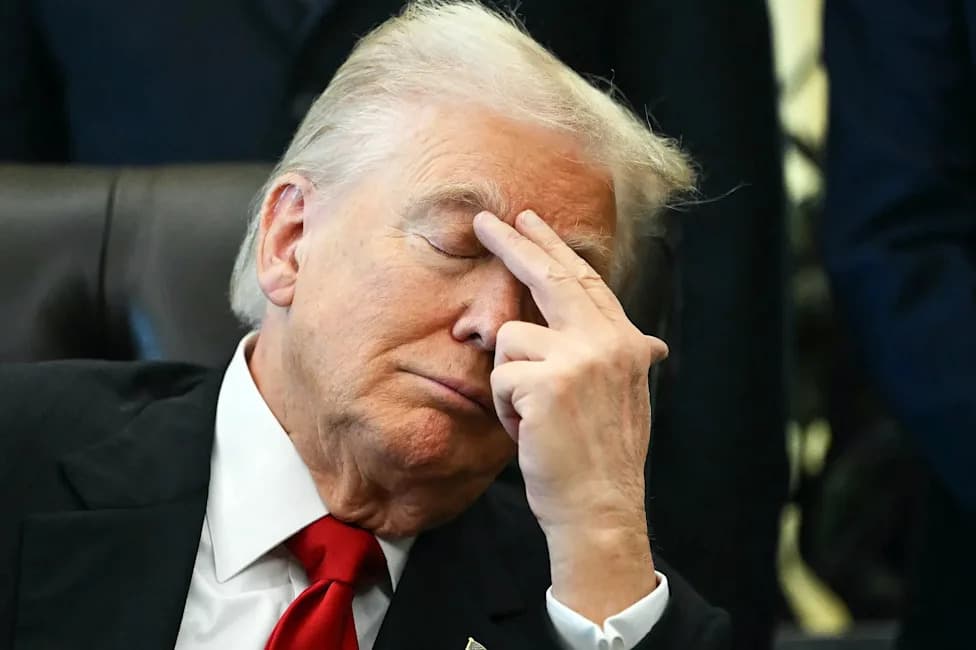
President Donald Trump gestures during an event on Nov. 6, 2025, in the Oval Office of the White House.
Two recent national polls show President Donald Trump’s approval ratings slipping to some of the lowest levels of his presidency — and, more importantly, suggest his most committed supporters are starting to fade. That erosion could depress GOP turnout in the midterms and weaken the potency of the MAGA brand over time.
Reuters/Ipsos surveyed adults Aug. 14–17 and found 33% approve of Trump’s job performance while 64% disapprove. Reuters noted that the 33% figure, down from 35% in a poll that closed earlier the month, is the lowest of his current term and ties the low point reached in December 2017.
Beyond the headline numbers, the Reuters/Ipsos data show a sharp drop in the share of Americans who strongly approve of Trump’s stewardship — just 14%, a 12-point decline since February 2025. Analysts treat that strongly-approve cohort as a useful proxy for the president’s most devoted base.
An Economist/YouGov poll in August produced similar results: 33% approval and a record-high 63% disapproval in that series. Economist/YouGov also found strong approval at a new low for this term, about 17%, and reported that fewer than half of Republicans in the sample said they strongly approve of Trump.
What’s Driving the Drop?
One major factor analysts cite is Trump’s failed confrontation with Iran. That episode coincided with higher oil prices, which have pushed up gasoline and food costs for American households — a political liability for an incumbent party. An earlier Reuters/Ipsos survey also found that voters now prefer Democrats over Republicans as better stewards of the economy for the first time in roughly a decade, indicating a shift in economic confidence that previously favored Republicans.
Political Consequences
The shrinking core of enthusiastic supporters helps explain why some candidates endorsed by Trump have underperformed in recent GOP primaries. More consequentially, if core voters are becoming disillusioned, Republican turnout at the midterms could fall — a critical risk for the president’s party in a typical midterm environment.
Strategically, the trend threatens Trump’s central electoral model. Rather than persuading undecided voters or building broad coalitions, his approach has relied heavily on mobilizing intense turnout among sympathizers and channeling anti-establishment anger into ballots. If that intensity is fading, the mechanics of his approach face a real challenge.
Bottom line: Shrinking approval and weakening loyalty among hard-line supporters create a tangible political vulnerability for Trump and the GOP ahead of competitive midterm contests.
Originally published on MS NOW.
Help us improve.