America’s 911 system was designed for landlines in 1968 and is now ill-equipped for a world where over three-quarters of emergency calls come from cellphones or VoIP. Many call centers can only locate callers to the serving cell tower, and carrier updates arrive only every 20–30 seconds, which can delay lifesaving help. Past federal programs like the ENHANCE 911 Act were underfunded; a full nationwide NextGen 911 rollout is estimated at about $15 billion. Congress should prioritize funding NG911 to deliver accurate location data and enable text, photo, and video communications to improve emergency outcomes.
America’s 911 System Is Critically Outdated — Why NextGen 911 Can't Wait
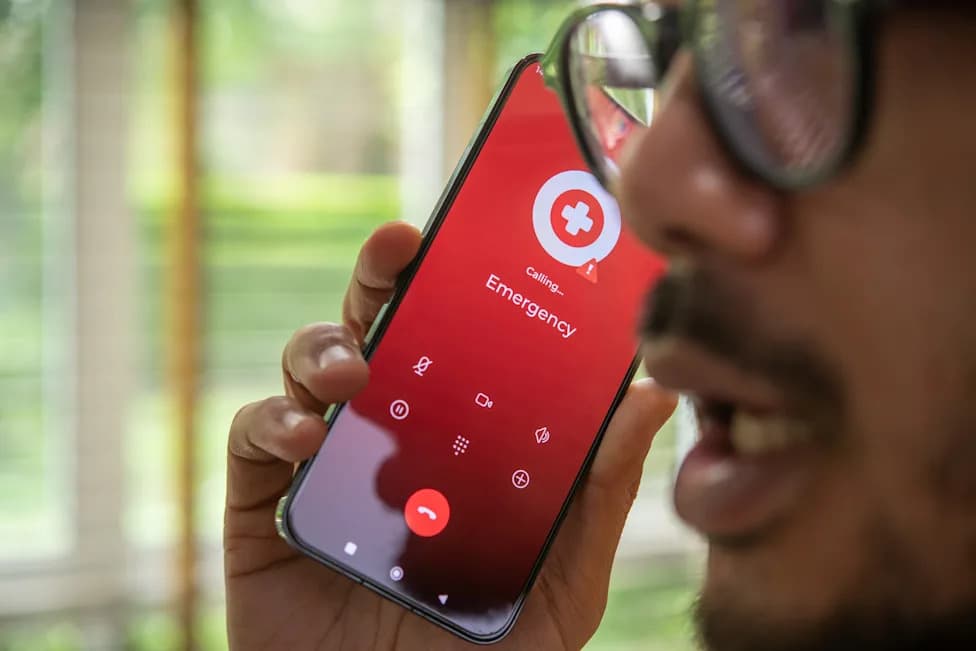
—amenic181—Getty Images
"911, what is your emergency?" is still the familiar prompt that reassures millions of Americans in moments of panic. But increasingly, callers instead hear a variation that reveals a growing problem: "911, where is your emergency?" That small shift underscores a much larger crisis—many 911 call centers cannot automatically determine a caller's precise location, and callers themselves are not always able to provide it.
Why Location Matters—and Why the System Fails
When the nationwide 911 system launched in 1968, it was designed for landlines tied to fixed addresses. Dispatchers relied on phone-to-address databases to send help quickly. Today, that model is obsolete: in 2024 more than three-quarters of 911 calls originated from cellphones, Voice over Internet Protocol (VoIP), or other wireless services, while landlines account for roughly 7% of calls and under 5% in many states.
Most call centers can only triangulate a call to the cell tower that handled it—a location that can be miles away from the caller. Studies suggest as many as 20% or more of calls are associated with the wrong tower. Carrier-provided location snapshots are often captured at call initiation, with updates only every 20–30 seconds. If a call is transferred between centers, the location process may restart, wasting critical time. These limits are especially acute in rural areas with sparse towers and in dense urban settings such as high-rise buildings.
Why Asking "Where Is Your Emergency?" Is Not Enough
That question presumes callers know and can speak their precise location. But many callers are unable to answer because they are: in unfamiliar places, under immediate threat, incapacitated, moving, or attempting to remain silent for safety. Even when a phone stores emergency location information, call takers and dispatchers often cannot access it during the call.
Past Funding Shortfalls and the Case for NextGen 911
Congress tried to address these gaps with the ENHANCE 911 Act of 2004, which authorized up to $250 million in annual grants to help states modernize. However, those full appropriations were never provided, subsequent programs were smaller, and reauthorization stalled—leaving many upgrade projects unfunded.
NextGen 911 (NG911) would move emergency communications from analog infrastructure to an Internet Protocol–based system. Properly implemented, NG911 would deliver precise, timely location data to call centers and enable richer communications—text messages, photos, and video—that can be lifesaving for callers who cannot speak or do not know where they are. It would also expand access for people who are deaf or hard of hearing. Thirty-eight states have pledged to adopt NG911, and a nationwide rollout is estimated to cost roughly $15 billion.
The Cost Of Inaction
The price of not modernizing is measured in delayed response times and, potentially, lost lives. Better location data would let dispatchers triage faster and send the right responders to the right place more reliably. Upgrading 911 is not a technological luxury—it is an urgent public-safety necessity.
Bottom line: America’s emergency-response system was built for a bygone era of landlines. Updating it for a wireless, mobile world is feasible, costed, and essential—and Congress must provide the funding to finish the job.
Help us improve.