The CDC deployed its Nowcasting model to provide South Carolina officials with near–real-time estimates during a measles outbreak that ran from October through March and totaled 997 cases. By adjusting for a 2–3 day gap between rash onset and reporting, the model identified likely uncounted infections in December and supported sustained surge staffing ahead of a large January spike. Nowcasting also helped time staff rotations as the outbreak waned in February and is being considered for broader use in future outbreaks.
How CDC Nowcasting Gave South Carolina a Near–Real-Time Edge During a Historic Measles Surge

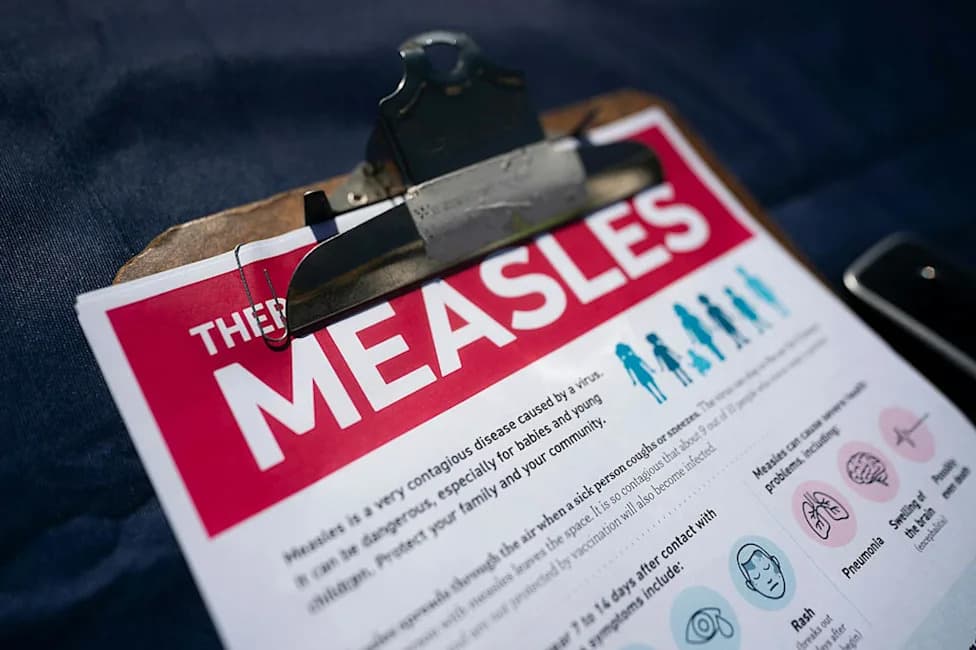
Information regarding the spread of measles is displayed in the waiting room at Pelican Pediatrics, Thursday, July 23, 2026, in Charleston. File/Grace Beahm Alford/Staff
Even as public case reports suggested South Carolina's measles outbreak was easing in late December, a CDC modeling tool called Nowcasting signaled otherwise — estimating additional, unreported infections and prompting officials to maintain surge staffing that proved crucial when cases spiked in January.
What Is Nowcasting?
Nowcasting is a modeling approach that adjusts reported case counts for known delays between symptom onset and formal reporting. By estimating those delays, the method produces a more accurate near–real-time picture of how many infections have occurred and whether transmission is increasing, decreasing or stable.
How It Was Used in South Carolina
From October through March, South Carolina recorded 997 measles cases — the state's largest single outbreak since New York City in 1991. The CDC's Center for Forecasting and Outbreak Analytics adapted its Nowcasting model for live use during the outbreak and described the experience in the agency's Morbidity and Mortality Weekly Report.
The state was already collecting two key dates for each case: rash onset and the date the case was reported to public health. That gap averaged about 2–3 days. Feeding these dates into Nowcasting allowed analysts to estimate infections that had occurred but were not yet reflected in provisional counts.
'This is really the first time that CDC was able to do this type of analysis…to really test how it was doing in real time during an active measles outbreak,' said Paige Miller, lead author of the CDC report.
Decision Support and Results
After South Carolina provided the additional reporting-date data in December, the Nowcasting team returned analyses within hours. Public postings on Dec. 19 and Dec. 23 listed nine newly reported cases each day, but the Nowcast suggested more infections were likely already underway. That insight helped justify keeping surge staff in place.
When students returned after the holiday break, cases surged: between Jan. 9 and Jan. 20 the state reported 435 new cases, jumping from 211 to 646 total cases in under two weeks. Later, Nowcasting projections also supported decisions to rotate staff off the response as weekly counts declined in February (from 73 cases in the first week to 12 in the final week).
'It is hard to understand when you're in the middle of all the trees how big the forest is,' said Dr. Marco Tori, a CDC epidemiology field officer embedded with the South Carolina Department of Public Health. 'Nowcasting validated those staffing decisions.'
Broader Value and Lessons
Nowcasting had been used retrospectively for events such as the 2022–23 monkeypox epidemic, but this is among its first live applications during an active outbreak. Officials say the approach could be adapted for other outbreaks where reporting lags obscure the current trajectory — for example, multi-state foodborne outbreaks like cyclosporiasis.
Key takeaways: reporting delays can make growing outbreaks appear to decline (and vice versa); short lags (2–3 days) still matter for rapid responses; and virtual analytic support from federal partners can meaningfully augment state-level actions during urgent events.
Help us improve.