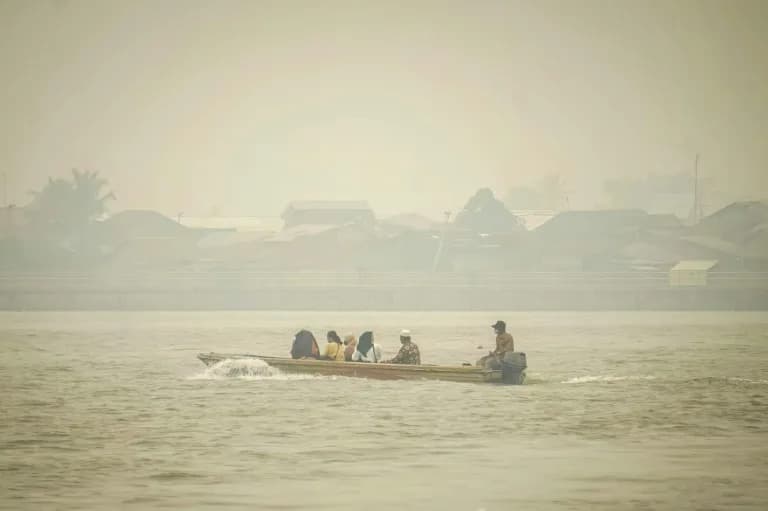
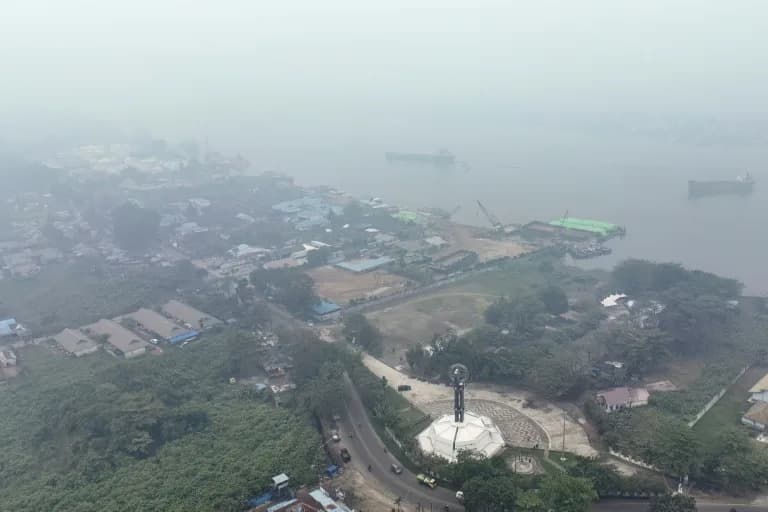
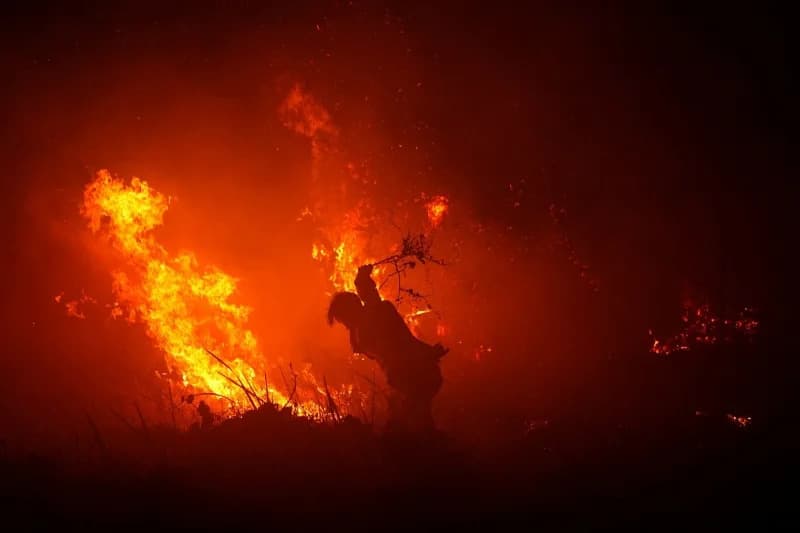
Indonesia is escalating cloud-seeding missions to try to reduce a severe wildfire season in Borneo driven by a strong El Niño. Officials report more than 100,000 hectares burned in the first half of the year, while independent monitors estimate losses through July at over 285,000 hectares. Authorities deploy aircraft, nearly 50,000 firefighters and peatland rewetting efforts, but experts warn cloud seeding is limited when clouds are scarce and activists say deeper issues — peatland conversion, illegal burning and climate change — must be addressed.
Indonesia Turns to Cloud Seeding as El Niño Fuels Devastating Borneo Fires
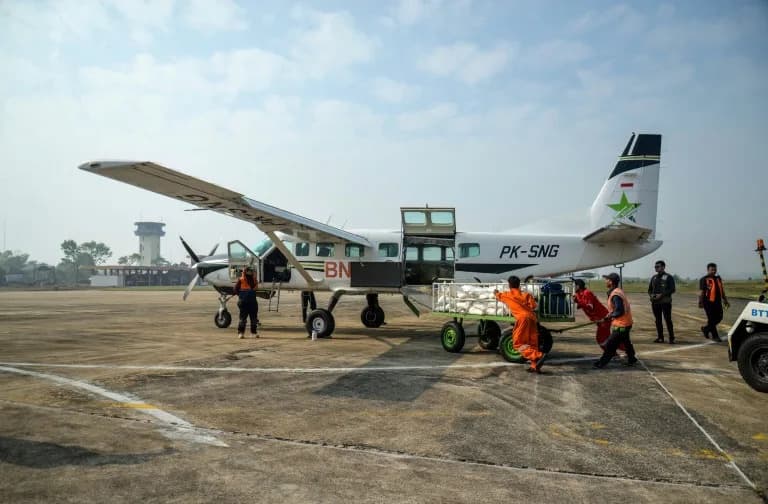
Personnel from the National Disaster Management Agency loading Sodium Chloride into an aircraft before a cloud seeding mission at Tjilik Riwut Airport in Palangka Raya, Central Kalimantan (REINA)
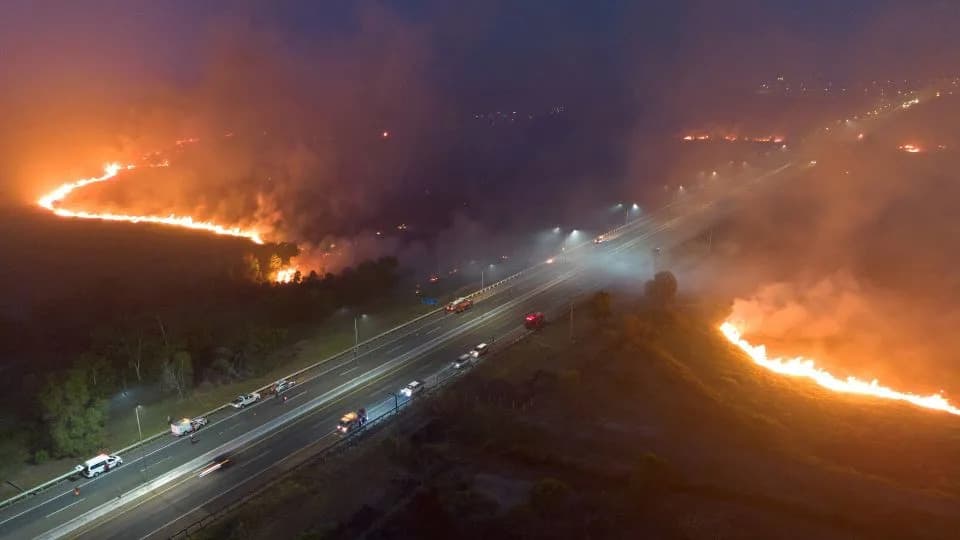
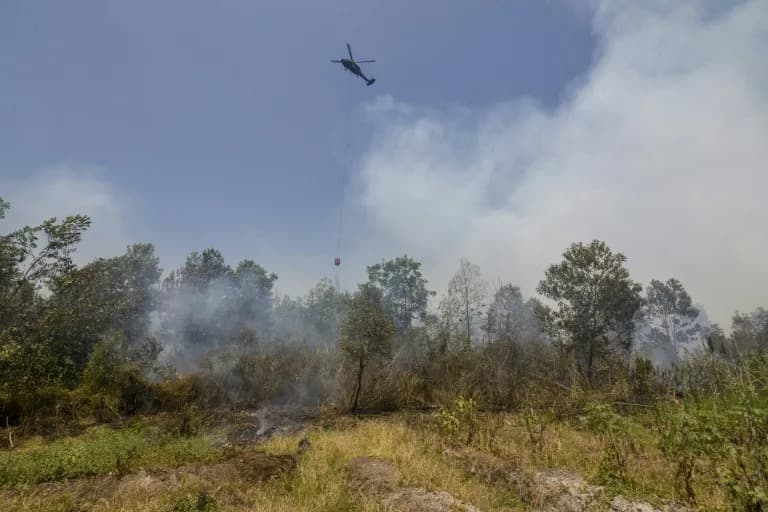
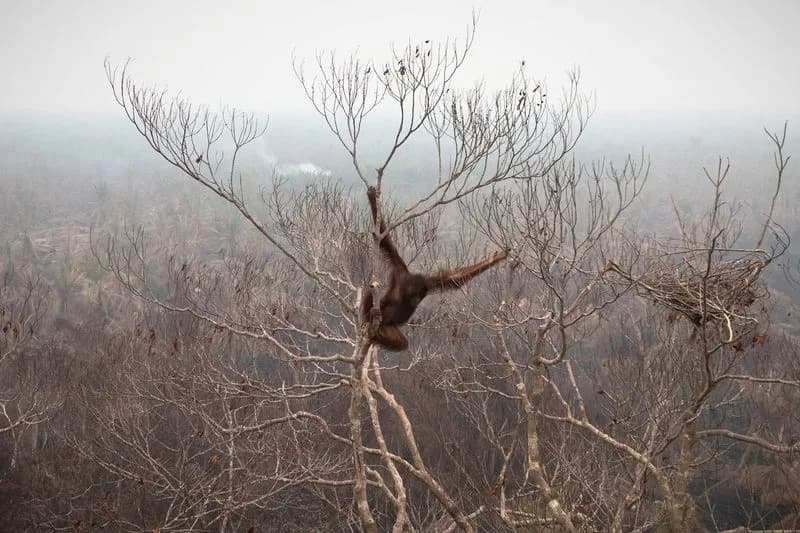
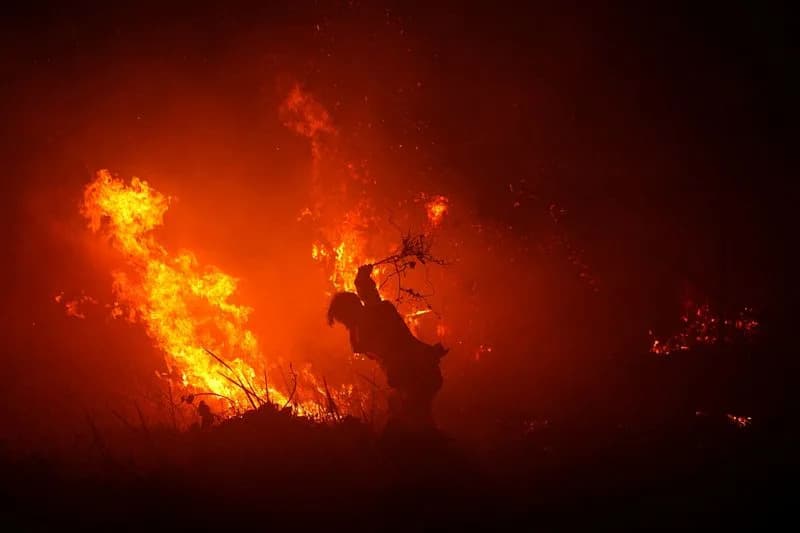
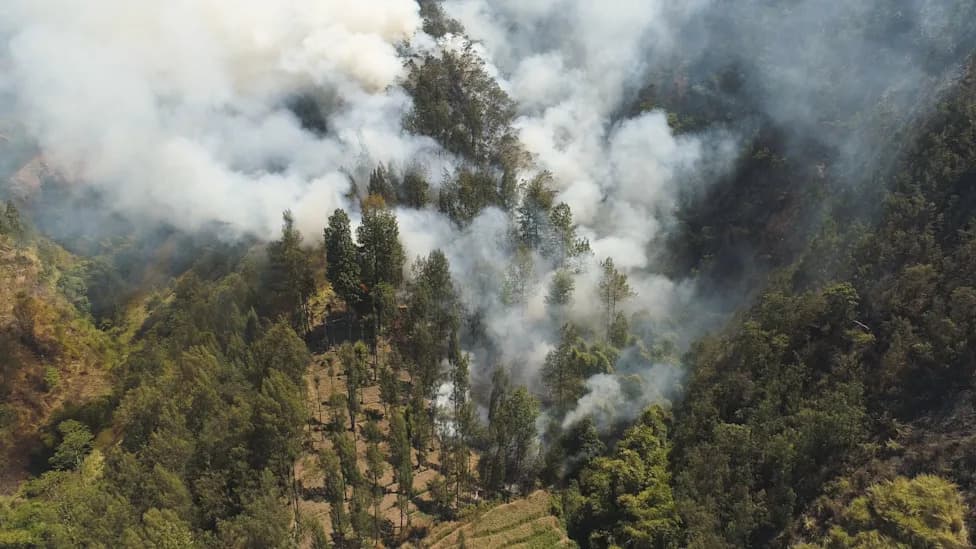
Indonesia's portion of Borneo — home to intact rainforests and protected wildlife — is burning, and authorities are intensifying cloud-seeding operations to try to blunt an unusually severe wildfire season driven by a strong El Niño.
Cloud Seeding: A Stopgap, Not a Cure
Cloud seeding disperses particles such as silver iodide or salts into clouds to encourage precipitation. The technique is uncommon globally as a frontline wildfire tool, but Indonesia has ramped up missions after the catastrophic 2015 fires. According to the BMKG weather agency, the country conducted 252 cloud-seeding operations between 2021 and August this year, up from 85 in the previous decade, and says dozens of helicopters and fixed-wing planes are on standby nationwide.
Scale of the Crisis
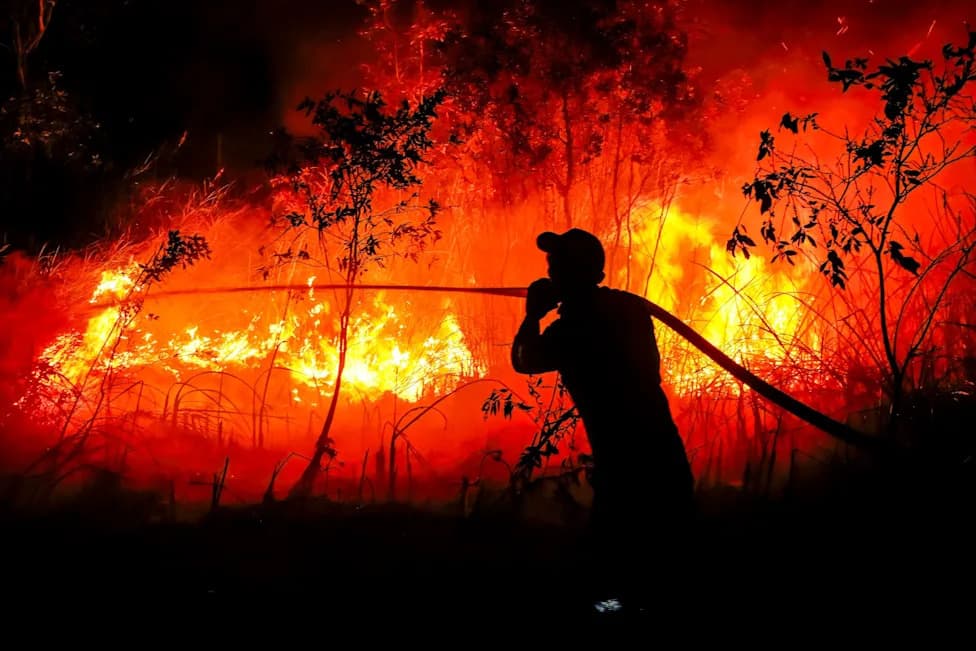
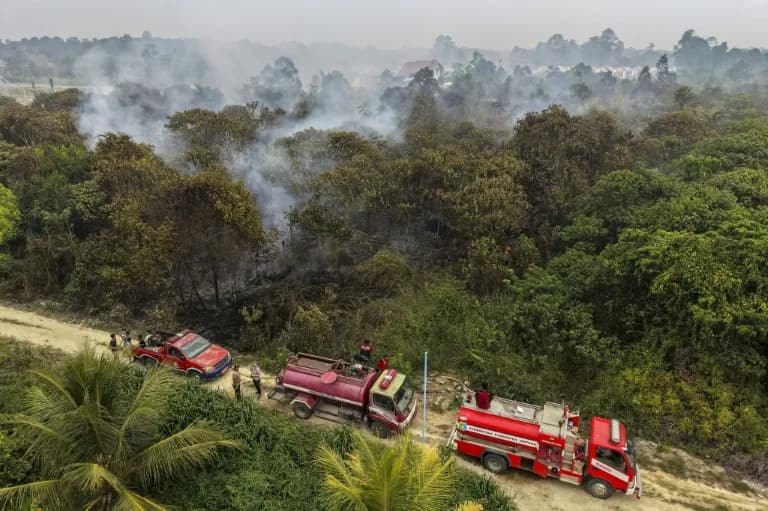
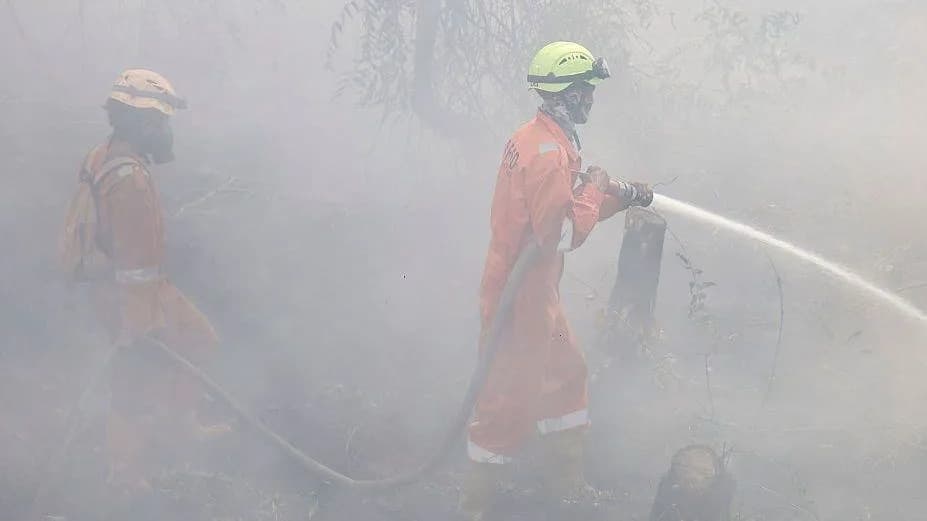
Indonesia's government reports that more than 100,000 hectares burned in the first half of the year. Independent monitoring group Nusantara Atlas estimates losses through July exceed 285,000 hectares — more than four times the size of Jakarta. Nearly 50,000 firefighters are currently deployed on the ground, and authorities are also using satellite monitoring, ground patrols and peatland rewetting efforts.
Voices From the Field
“Weather modification does not create clouds: we optimise clouds that have the potential to produce rains,” meteorologist Safillah Anggie Wahyuni told AFP after flying over Palangkaraya in Central Kalimantan. “Weather modification will only be effective if the conditions are right.”
BMKG weather modification director Budi Harsoyo, who co-authored research on recent operations, described cloud seeding as a mitigation tool rather than a permanent fix and said a 12-day campaign in 2023 doubled probable rainfall and removed fire hotspots. Yet other scientists caution the technique is difficult to evaluate conclusively.
Limits, Costs and Environmental Concerns
Experts warn cloud seeding is limited during the dry season — when fire risk peaks — because it depends on the presence of clouds. I Putu Santikayasa, a hydroclimatology lecturer at IPB University, said effectiveness can be “very low” when clouds are absent. There are also questions about the long-term costs and the environmental impacts of widespread silver iodide use, even though BMKG maintains there is no clear evidence of harm.
Underlying Causes
Activists say that focusing on technological mitigation risks overlooking root drivers: the large-scale conversion of rainforest and peatland for agriculture and plantations, and the continued use of fire to clear land. Indonesia's peatlands store vast amounts of carbon when wet but become highly flammable when dry and can smoulder underground for long periods. WALHI campaign coordinator Uli Arta Siagian urged the government to stop issuing permits in fire-vulnerable areas.
Regional Impacts and Policy Responses
Seasonal fires in Indonesia often send a choking haze across neighbouring Malaysia and Singapore; recent smoke spikes have closed schools in parts of Malaysian Borneo. In addition to cloud seeding and peatland rewetting, the government has enforced bans on large-scale burning, increased hotspot monitoring and urged local authorities to step up preventive patrols and legal sanctions, including fines and criminal penalties for illegal burning.
The Role of El Niño and Climate Change
A powerful El Niño is intensifying dry conditions this year, contributing to the unusually large burned area that already exceeds 2023's total. Climate groups warn that rising baseline global temperatures are amplifying weather extremes, making El Niño-driven fire seasons even more severe.
Help us improve.