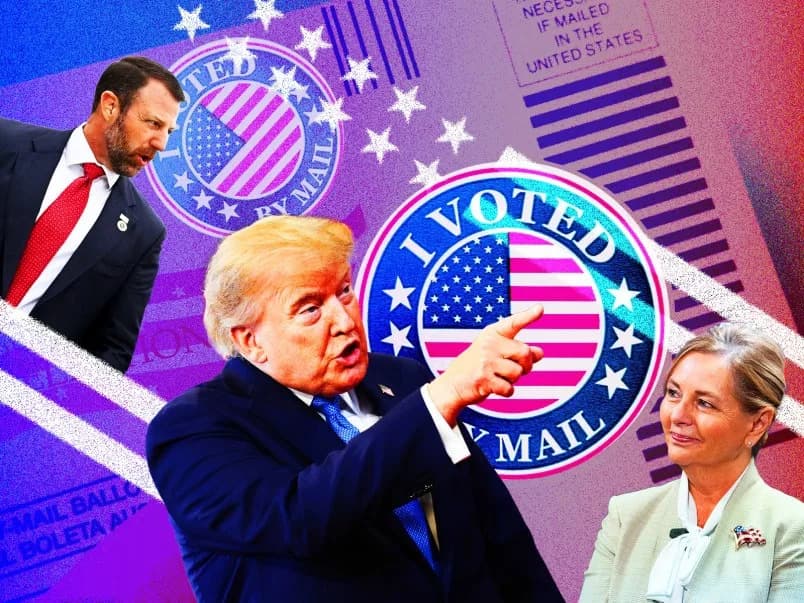
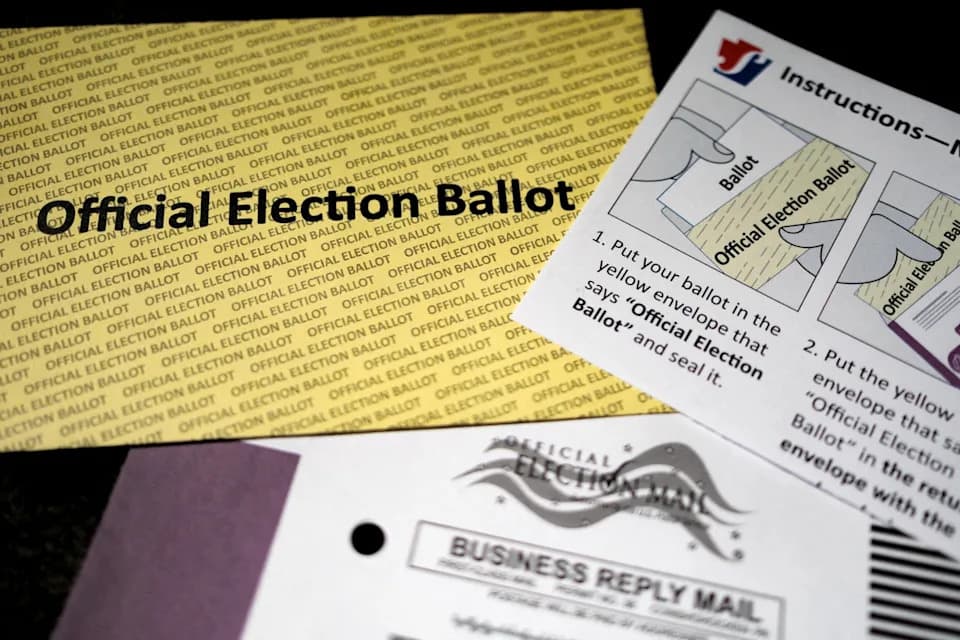
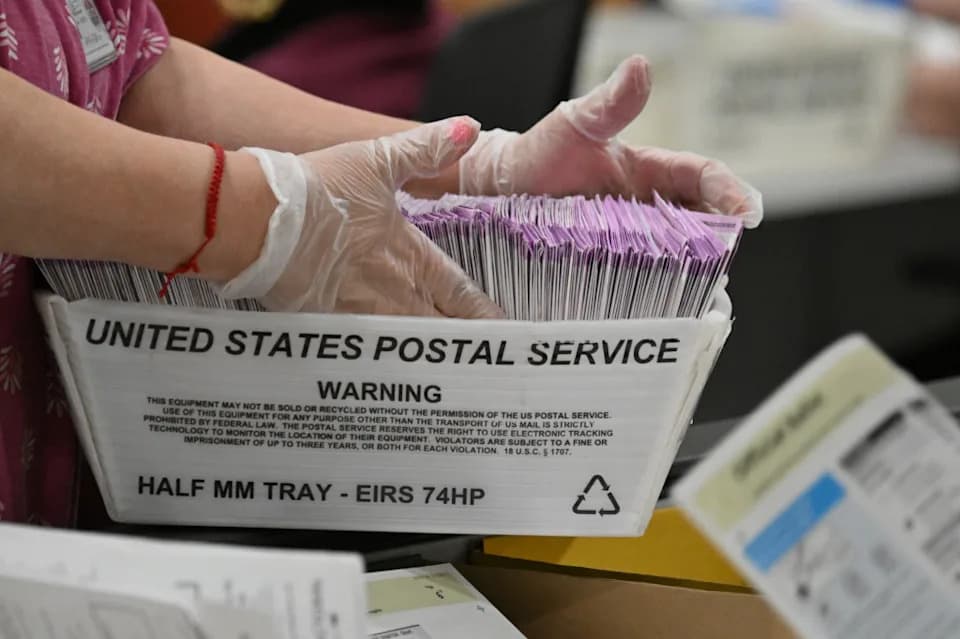
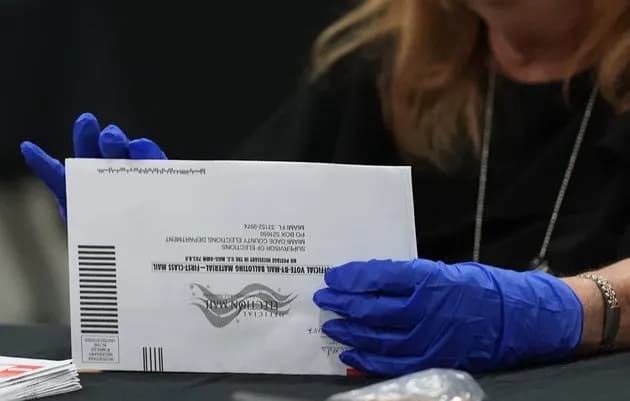
The Supreme Court is being asked to block parts of a Trump administration executive order that would give federal agencies new influence over mail-in voting and change Postal Service postmarking practices weeks before the midterms. State officials and a bipartisan group of election administrators warn the changes could cause administrative chaos and voter confusion. Many states now urge voters to return ballots early or use secure local drop boxes while the legal dispute plays out.
States Ask Supreme Court To Block Trump Administration Changes To Mail-In Ballot Rules
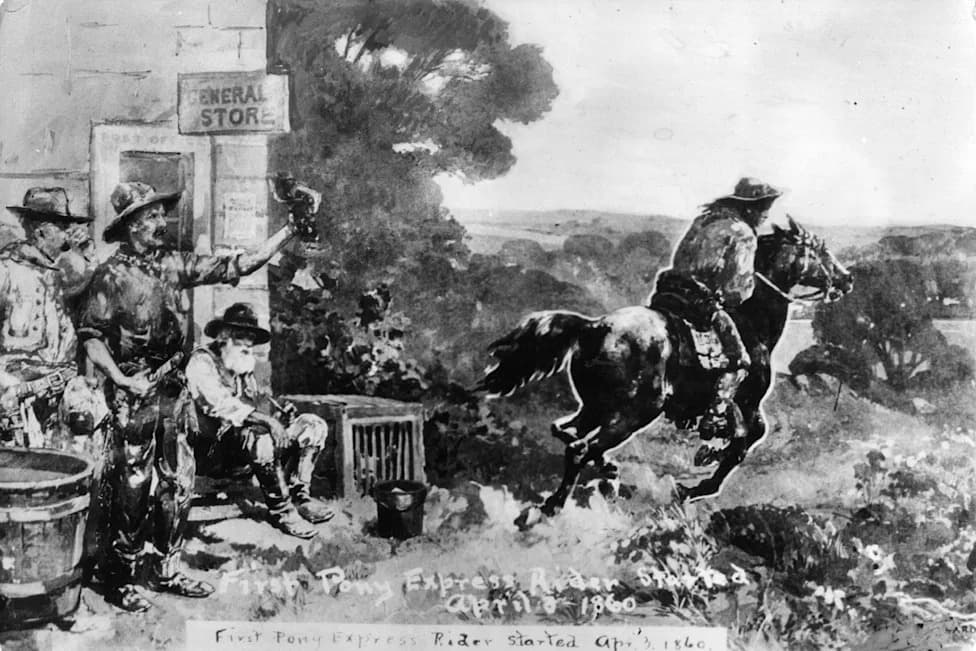
The first Pony Express carrying mail from St Joseph, Missouri to California in 1860. Founded in 1775 by Benjamin Franklin, the Postal Service evolved from Pony Express riders to modern Segways connecting the nation, but continues to have financial problems and rising costs.(Keystone, Getty Images)
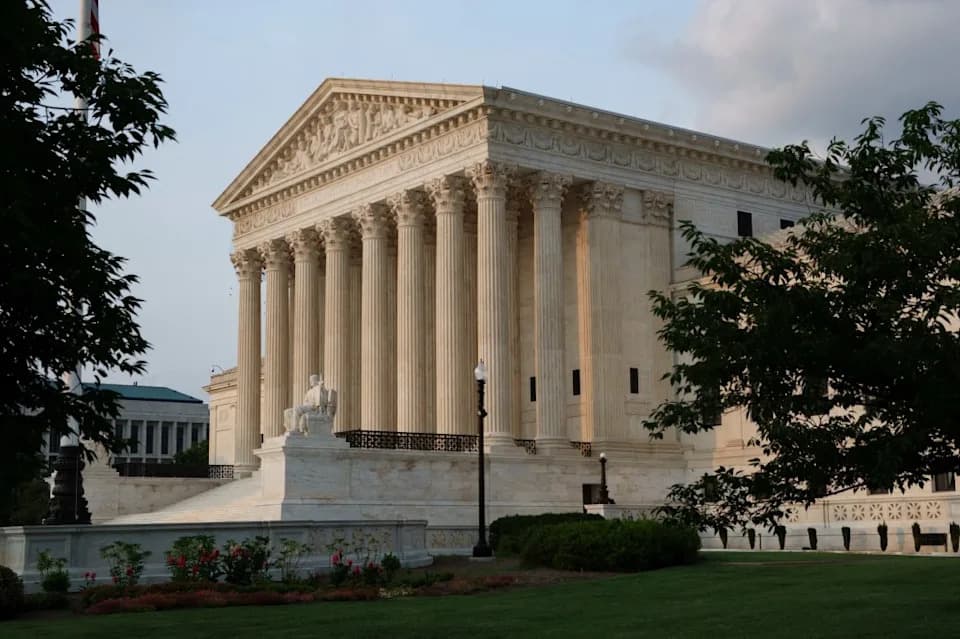
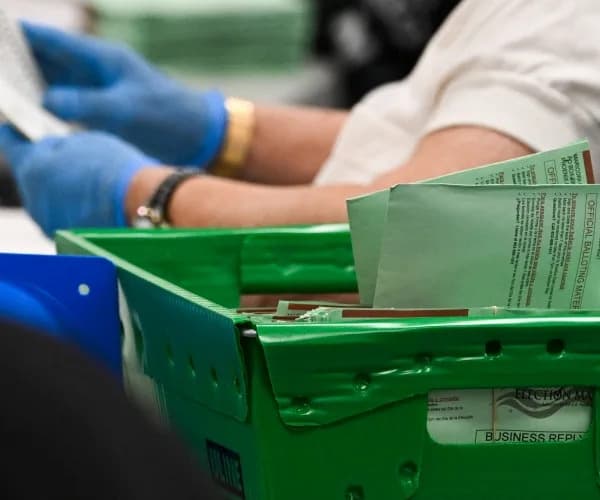
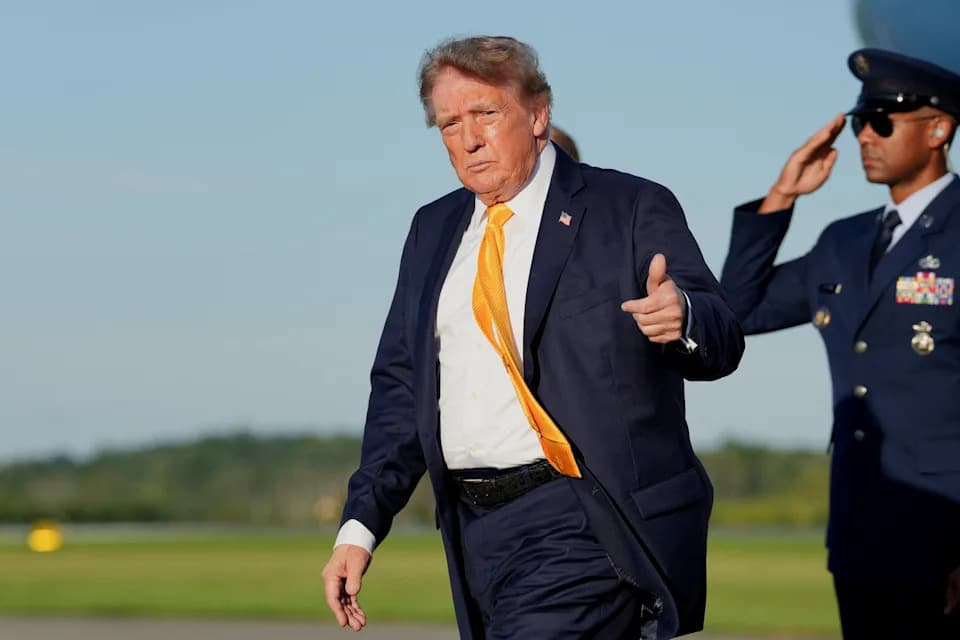
With fewer than 90 days until the midterm elections, state election officials have asked the U.S. Supreme Court to halt parts of a Trump administration plan that would give federal agencies new authority over mail-in voting and alter how the U.S. Postal Service postmarks mail. Officials say the moves, if implemented close to the election, would create administrative confusion and risk disenfranchising voters.
What Officials Are Seeking
State plaintiffs and a bipartisan coalition of more than 100 election administrators urged the high court to block two elements of an executive order: an instruction to the Department of Homeland Security to compile lists of confirmed U.S. citizens for states to consult, and a directive to the Postal Service to limit ballot delivery to names on state-approved mail-in lists. Lower courts enjoined the order, and the administration filed an emergency appeal to the Supreme Court on July 27.
Concerns About Postmarks And Timing
Earlier this year, the Postal Service changed how it records postmarks, moving to use the date an item is first processed by an automated sorting machine rather than the date it was deposited in a mailbox. Election officials say that change means a ballot placed in a mailbox may not receive a same-day postmark—and in more than a dozen states, a timely postmark can determine whether a ballot is counted.
Election administrators warn that implementing new voter-list and postmark procedures within weeks of a national election would leave insufficient time to test systems, train staff and educate voters. In a July 5 amicus brief, more than 100 election officials said allowing the rules to take effect fewer than 100 days before the midterms would produce "chaos." The coalition emphasized that states have spent months preparing voter outreach and logistics for the election timeline already in place.
Advice To Voters
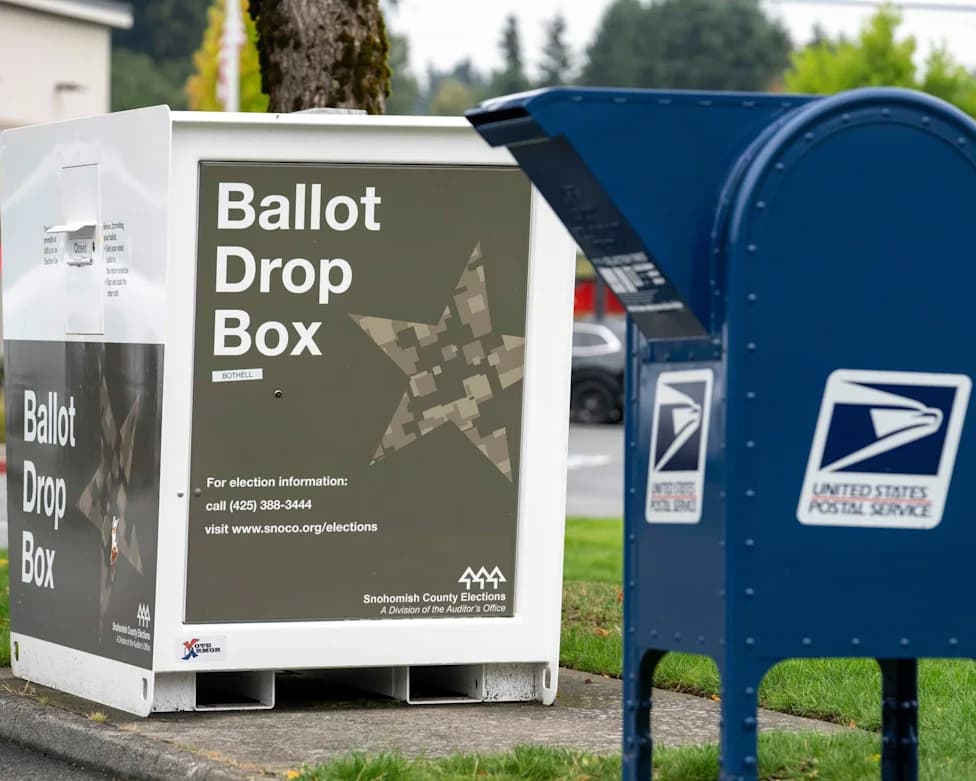
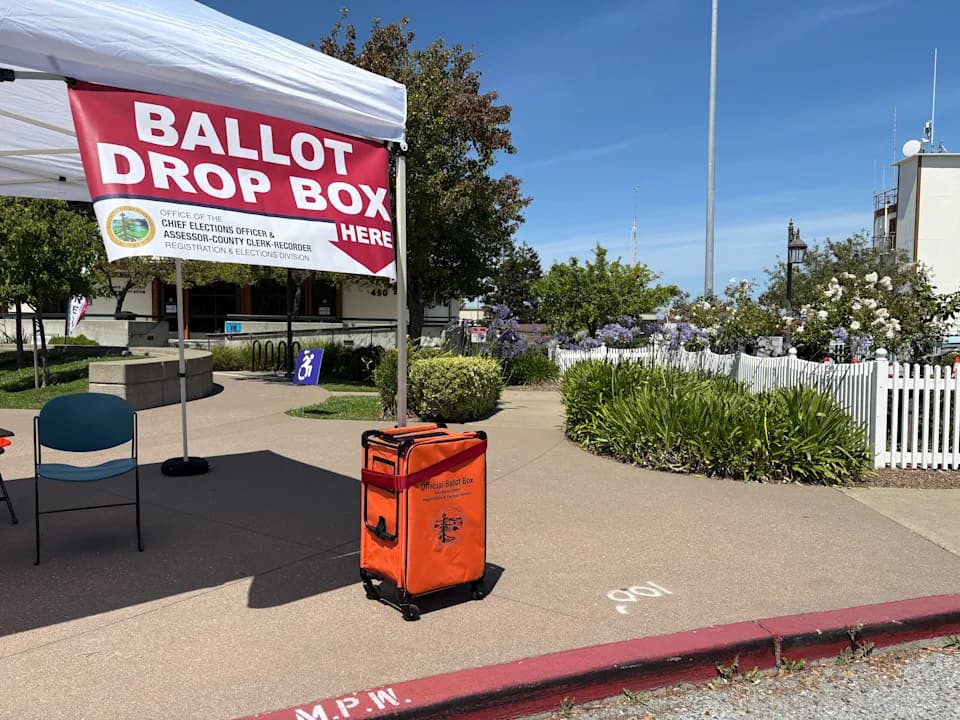
To reduce risks, many states are urging voters to return ballots earlier than Election Day or use locally controlled ballot drop boxes rather than relying on outgoing mail. Local officials say drop boxes avoid potential postal delays and remain under local control.
"If you're going to vote by mail on Election Day, make sure you drop it off at a polling location or a secure drop box, not in an outgoing mailbox," Nevada Secretary of State Cisco Aguilar told USA TODAY.
What Happens Next
The Supreme Court could rule at any time on the administration's emergency request. The Justice Department has argued that lower courts acted prematurely because the Postal Service had not finalized implementing rules. The administration says the changes are part of broader efforts to secure and standardize aspects of voting administration.
Regardless of the court's decision, states continue public education campaigns—using social media, local news, radio and mailers—to remind voters of deadlines and return options well ahead of Election Day.
Sarah D. Wire covers national politics for USA TODAY and can be reached at [email protected].
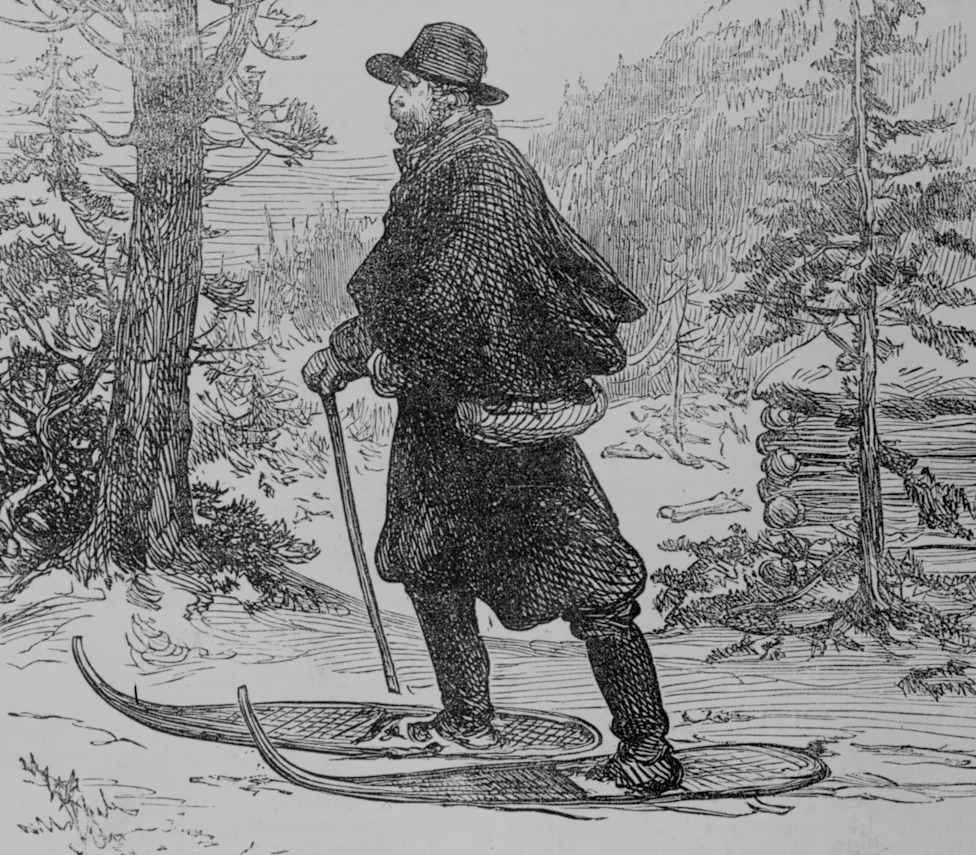
A postman wearing snow shoes in the Rocky Mountains circa 1870.(Hulton Archive, Getty Images)
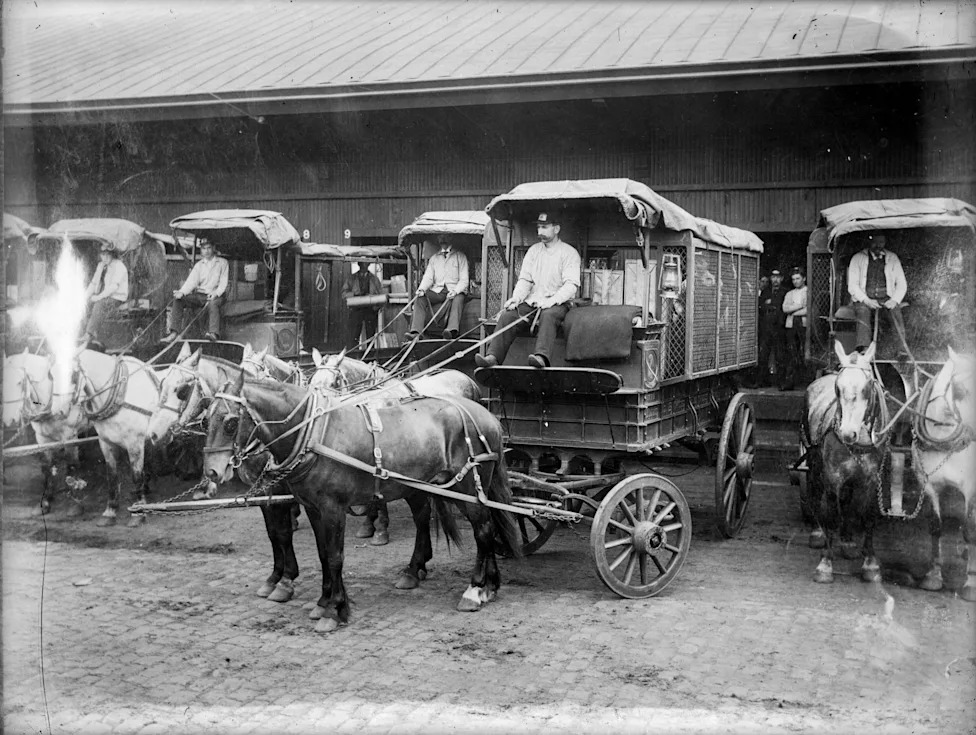
Horse-drawn mail wagons circa 1909.(Topical Press Agency, Getty Images)
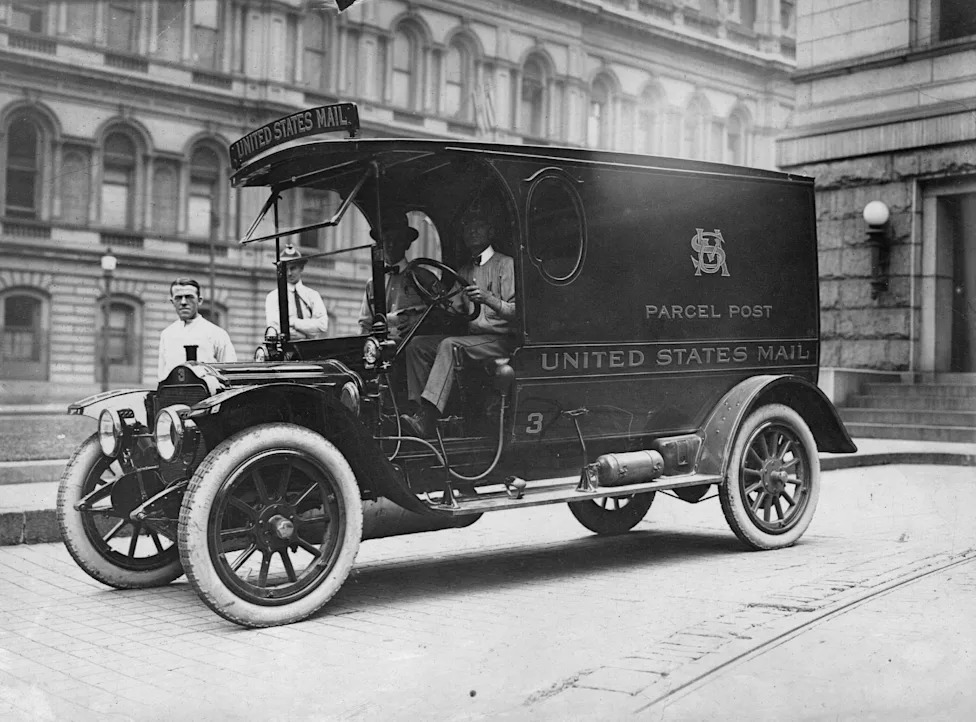
The new auto truck put into service by the United States Mail for the delivery of Parcel Post circa 1910.(Paul Thompson, Getty Images)
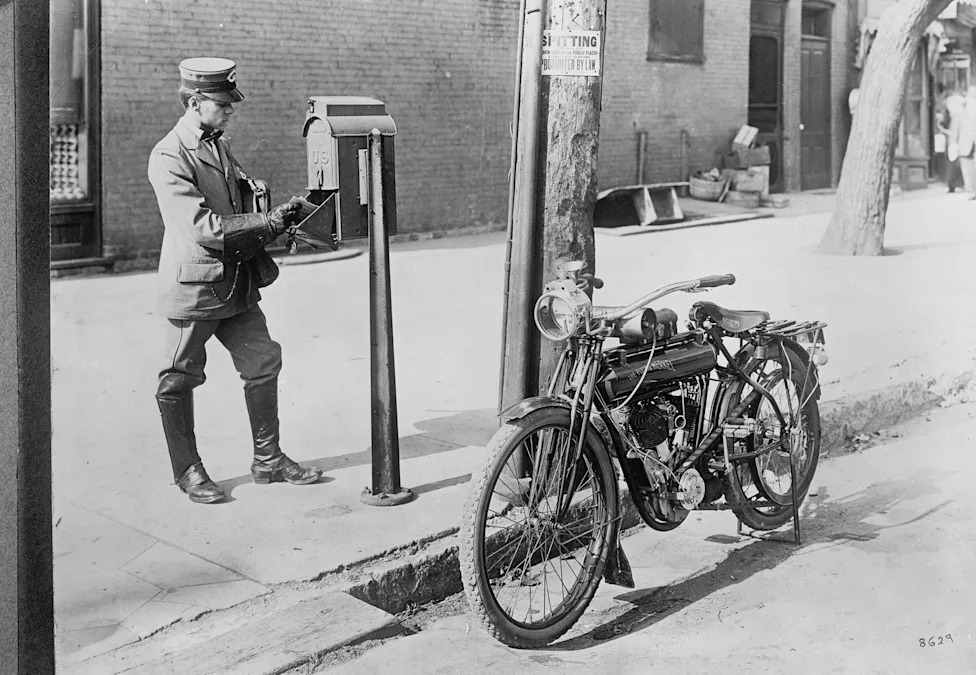
Around 1911, the Flying Merkel—a bright orange, American-built motorcycle produced by the Miami Cycle & Manufacturing Co.—was briefly pressed into service by the U.S. Post Office Department as officials experimented with faster mail delivery methods. Period photographs show Postal Service carriers using belt‑driven, V‑twin Flying Merkels for urban and rural routes, especially when roads were too rough or distances too long for horses and bicycles. The bikes’ speed, durability, and ability to carry mail bags made them well‑suited to early 20th‑century delivery trials, helping demonstrate the practicality of motorcycles for government service and paving the way for wider mechanized mail transport in the years that followed.(Library of Congress)
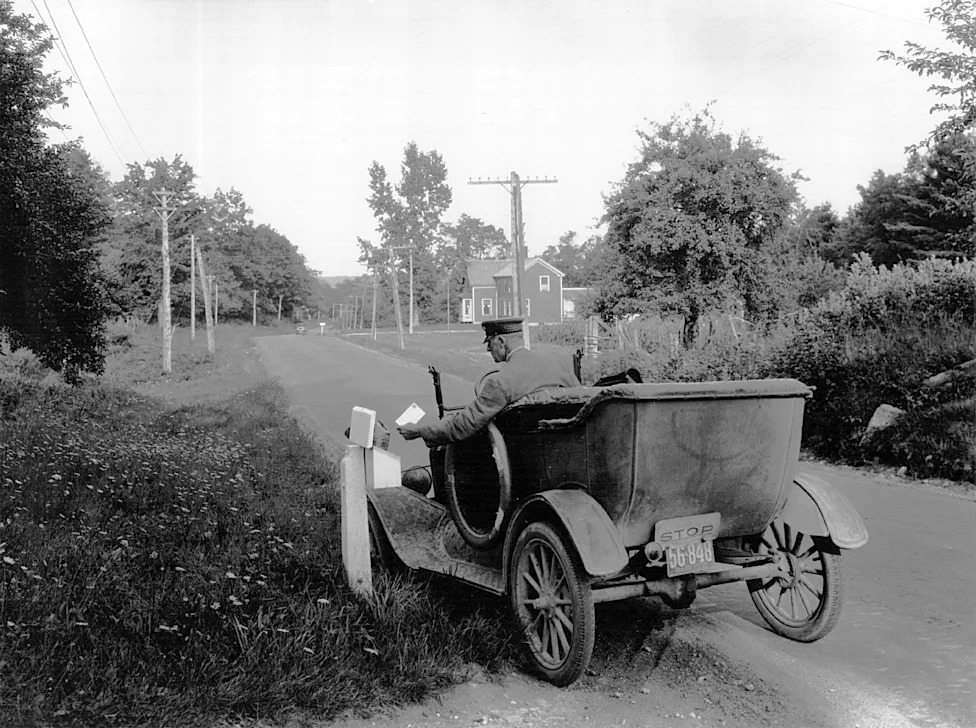
A postman delivers the mail on a rural route in York County, Maine on Aug. 26, 1930.(National Archives, Getty Images)
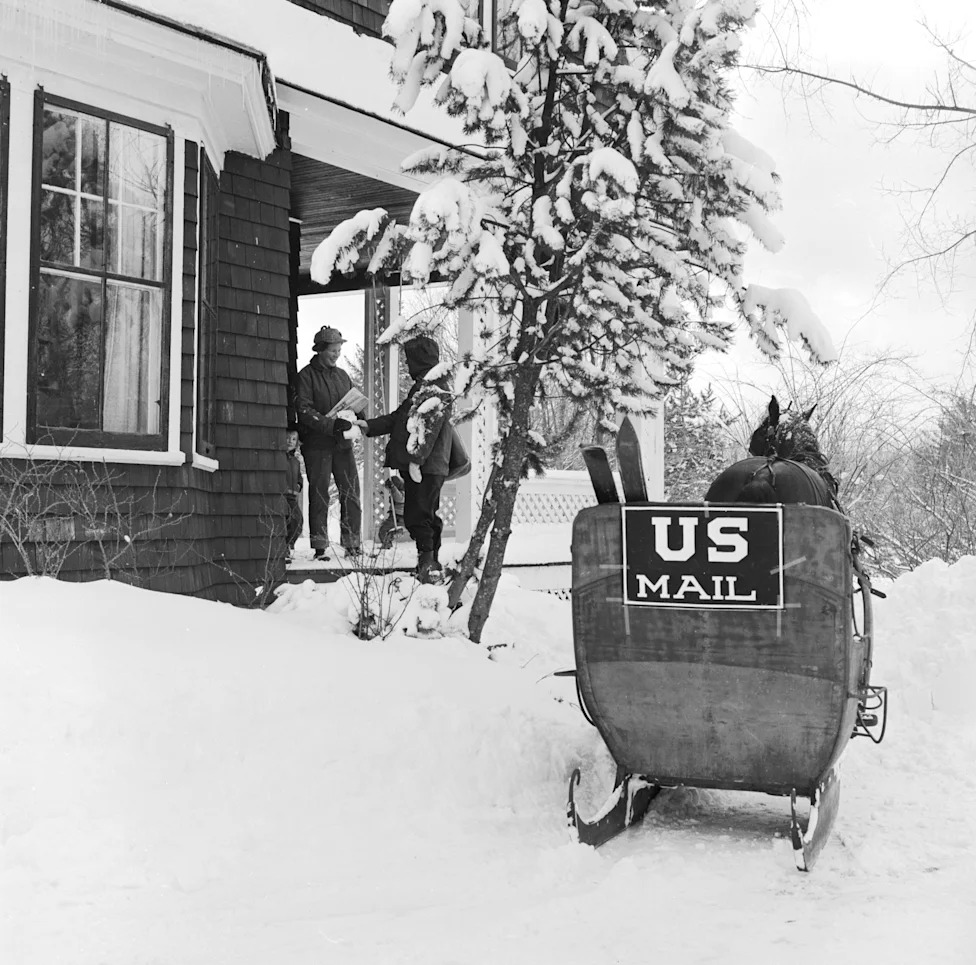
Postman Arthur LeBlanc from Berlin, New Hampshire, delivering post from his horse-drawn sled circa 1950.(Orlando, Getty Images)
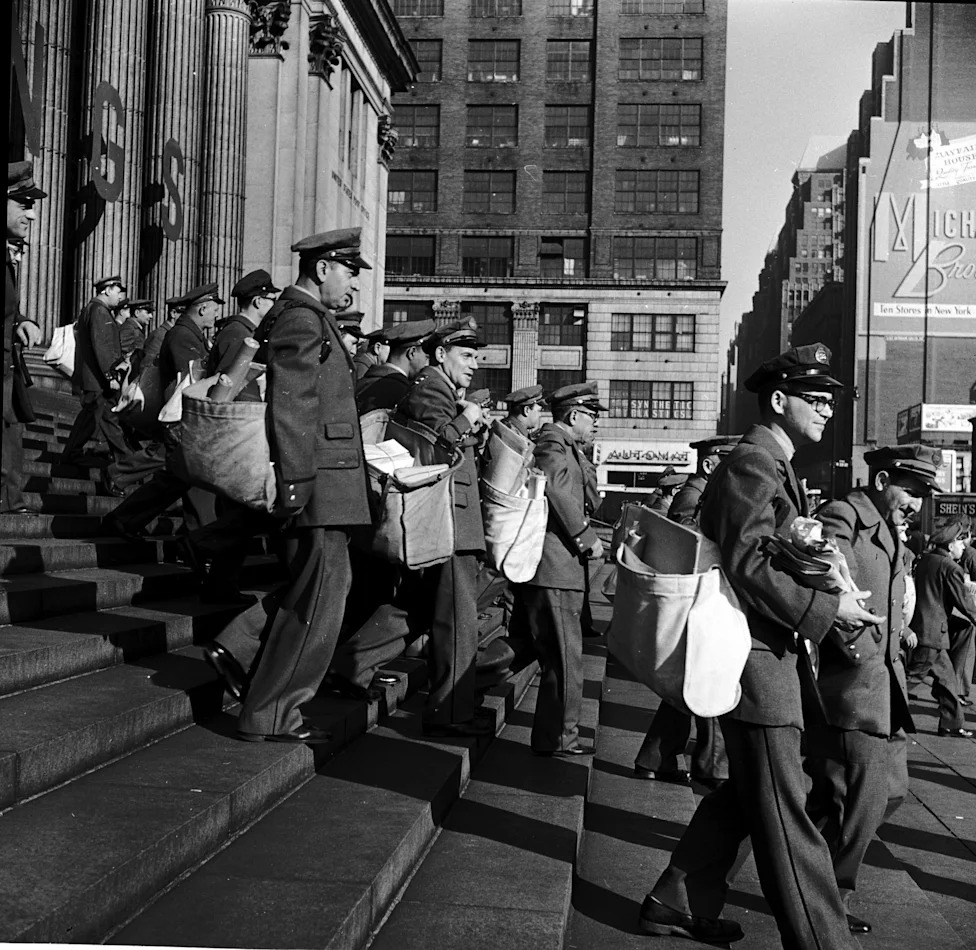
A group of New York postmen set off on foot from the General Post Office to deliver mail in New York City at Christmas around 1955.(Vecchio, Getty Images)
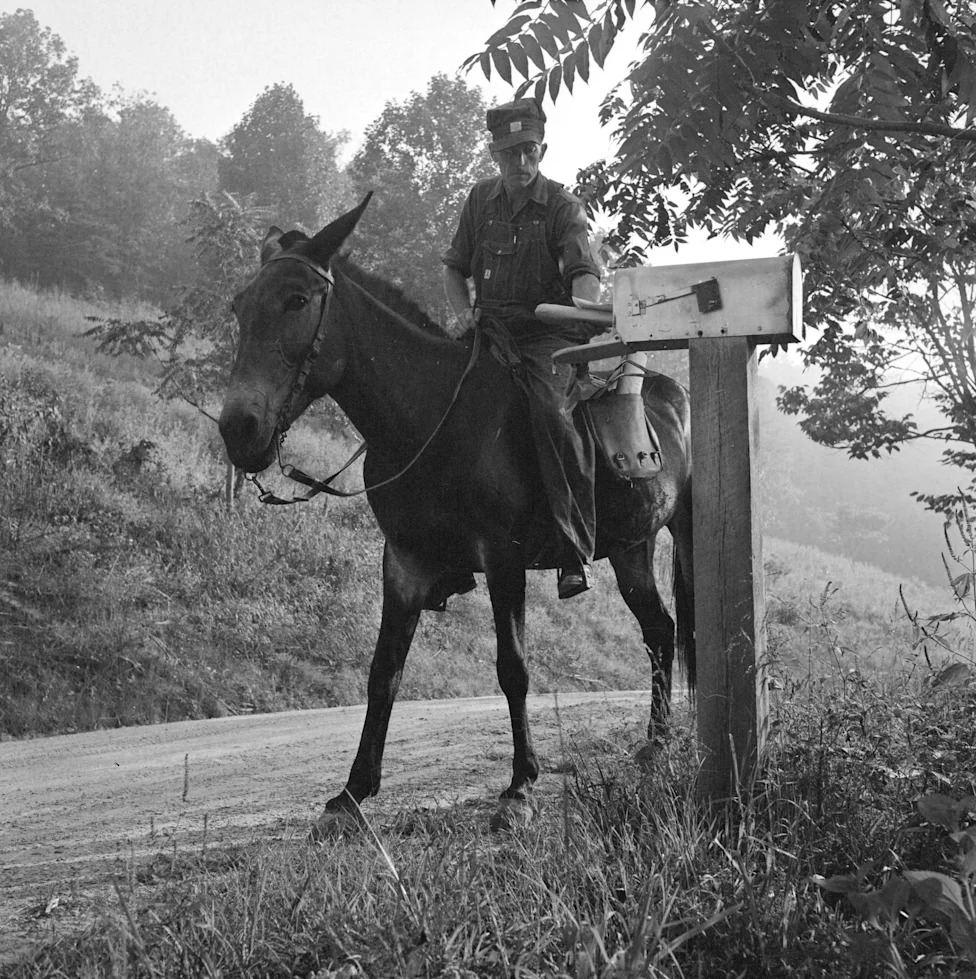
Postman delivering letters by mule circa 1955.(Evans, Getty Images)
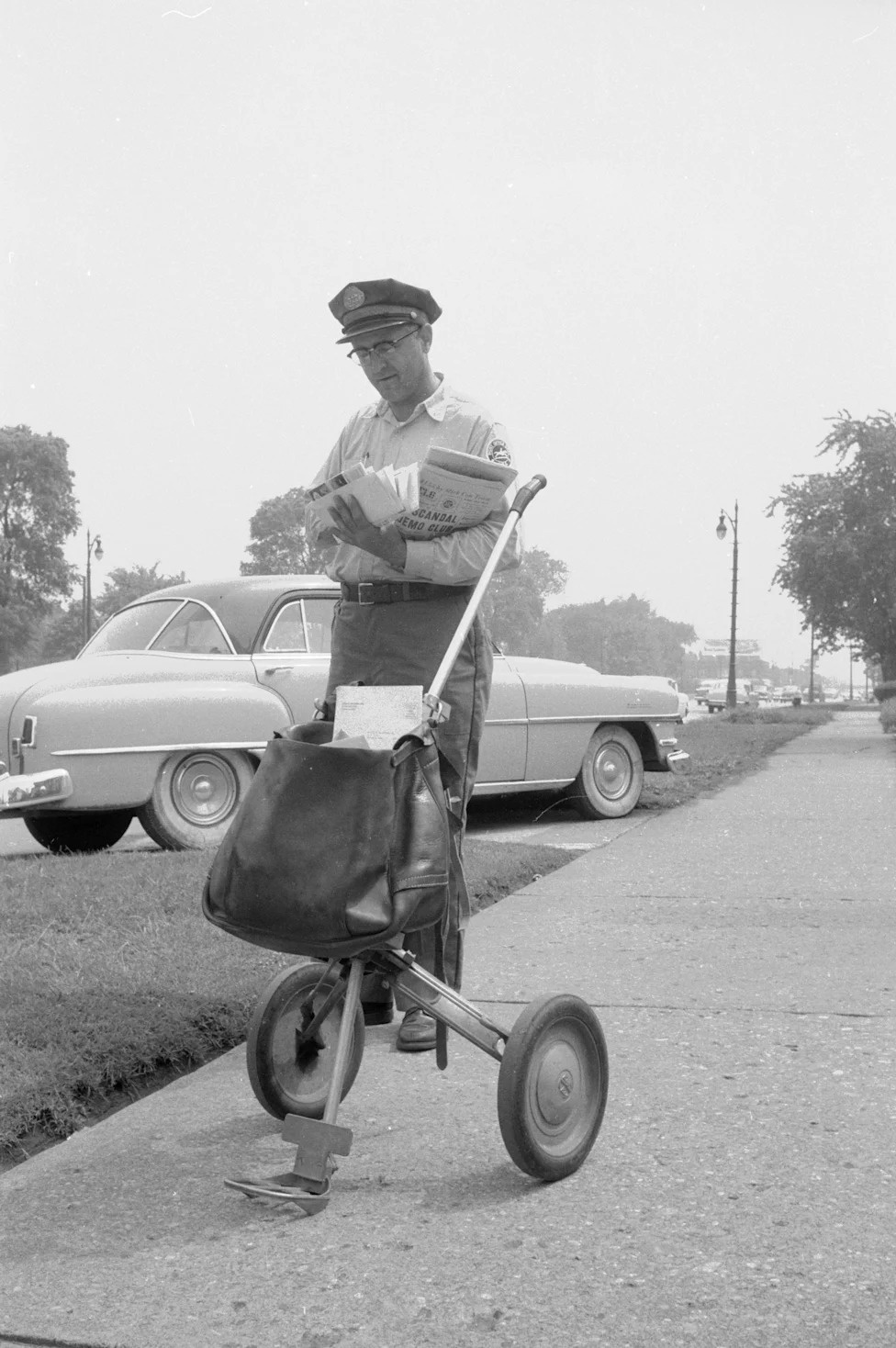
A postman standing by a two wheeled mail cart whilst delivering mail in Detroit, Mich. circa 1955.(Three Lions, Getty Images)
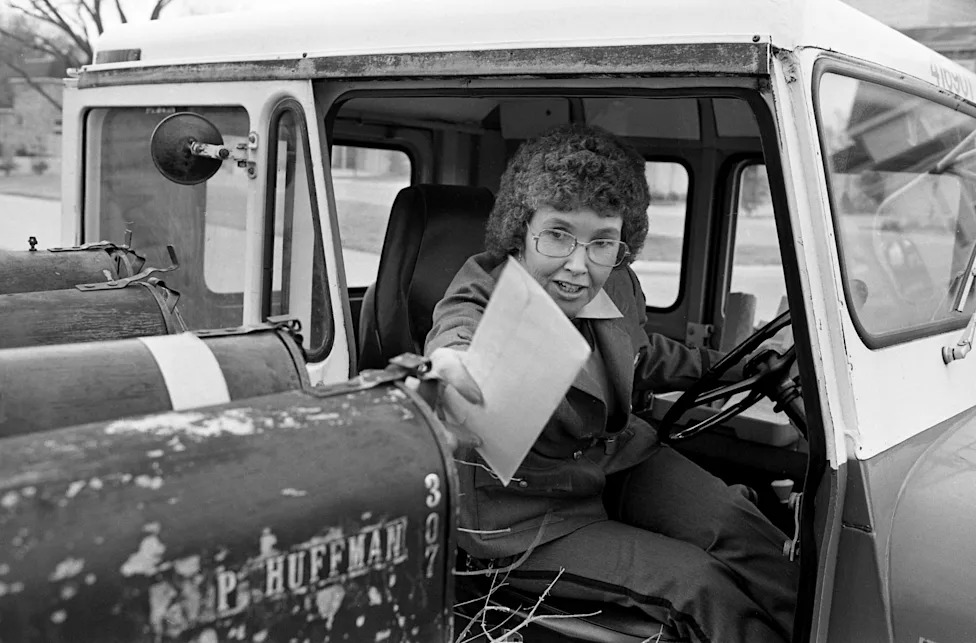
Gwin Pardin, a mail carrier out of the Belle Meade Post Office, stuffs a mailbox as part of her duties on Jan. 15, 1980. Pardin hopes her driving a mail route is a first step up the ladder to becoming postmistress in a rural Tennessee town one day.(Robert Johnson, The Tennessean via USA TODAY Network)
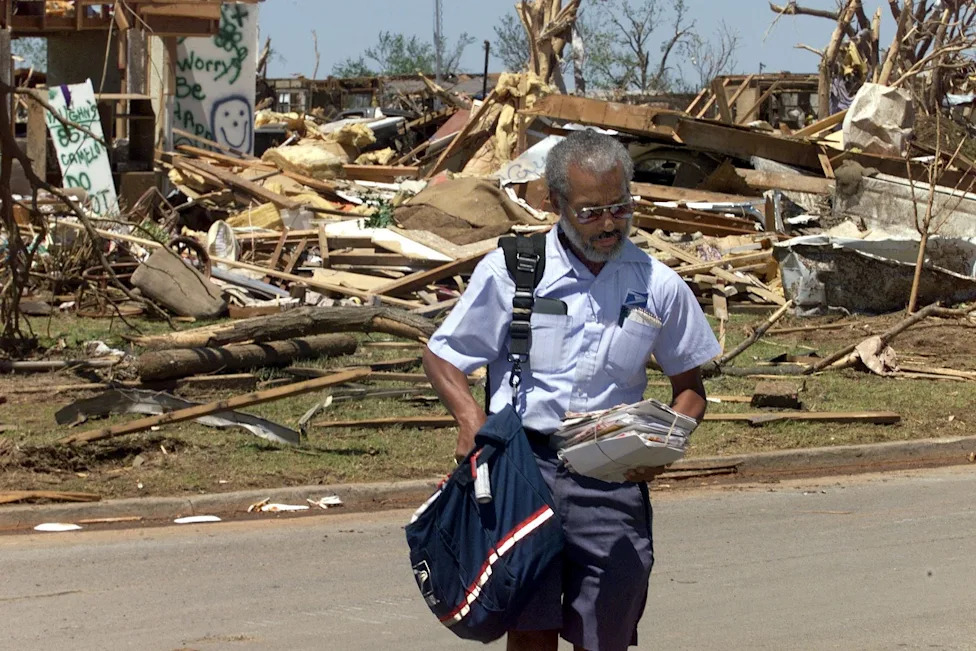
Moore City postman Dennis Albert walks the streets of Moore City, Okla. delivering the mail on May 9, 1999. Primary services are being reestablished in the tornado-ravaged area. Official sources indicated that 41 people died and more than 500 people were injured in what was classified as an F5 tornado, the most severe type of twister, with winds of more than 250 miles per hour.(HECTOR MATA, AFP via Getty Images)
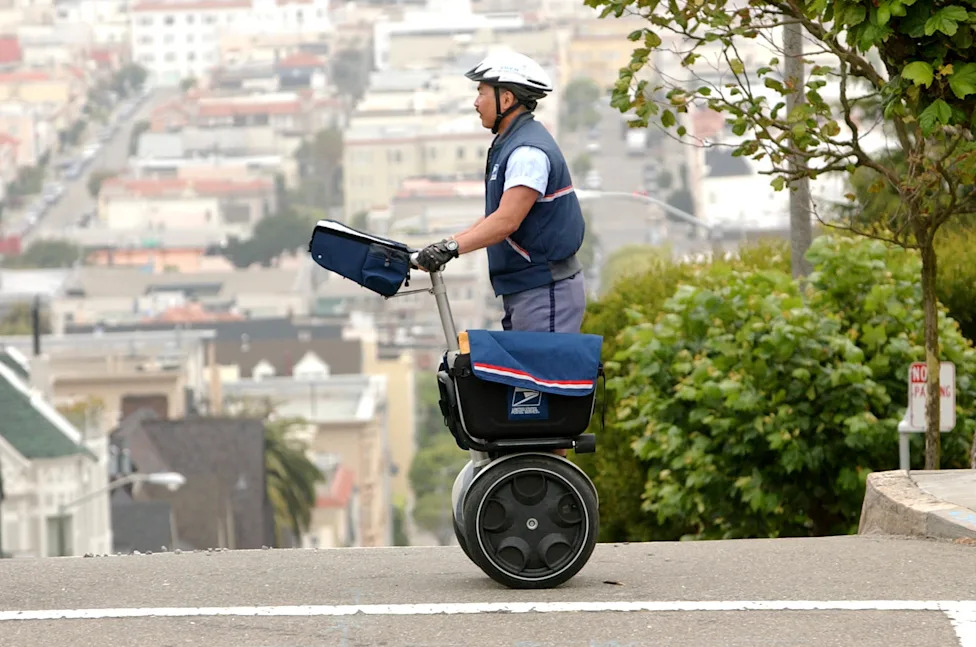
Postal letter carrier K. Ng rides a Segway Human Transporter on his postal route July 15, 2002 in San Francisco, Calif. The U.S. Postal service is testing out the Segway on routes in San Francisco.(Justin Sullivan, Getty Images)
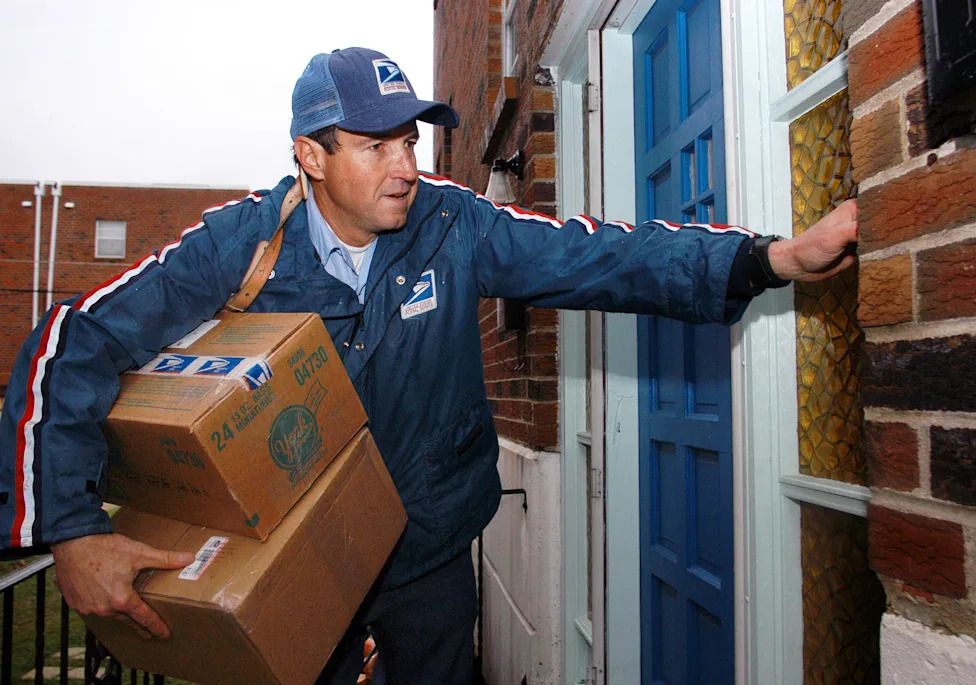
Postal Service carrier Ron Comly carries parcel packages to a home while delivering mail along his postal route Dec. 17, 2003 in Philadelphia, Pa. December 17 is expected to be the busiest delivery day for the U.S. Postal Service.(William Thomas Cain, Getty Images)
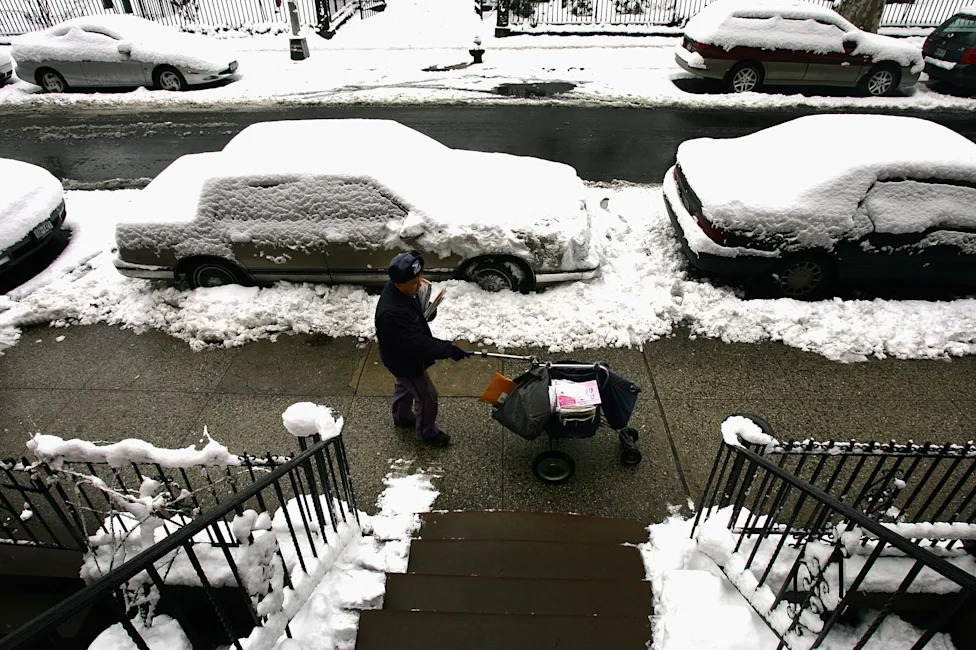
A mailman walks down the wintry street the morning after a snowstorm March 1, 2005 in Brooklyn, New York. New York received seven inches of snow while parts of New England received over a foot.(Spencer Platt, Getty Images)
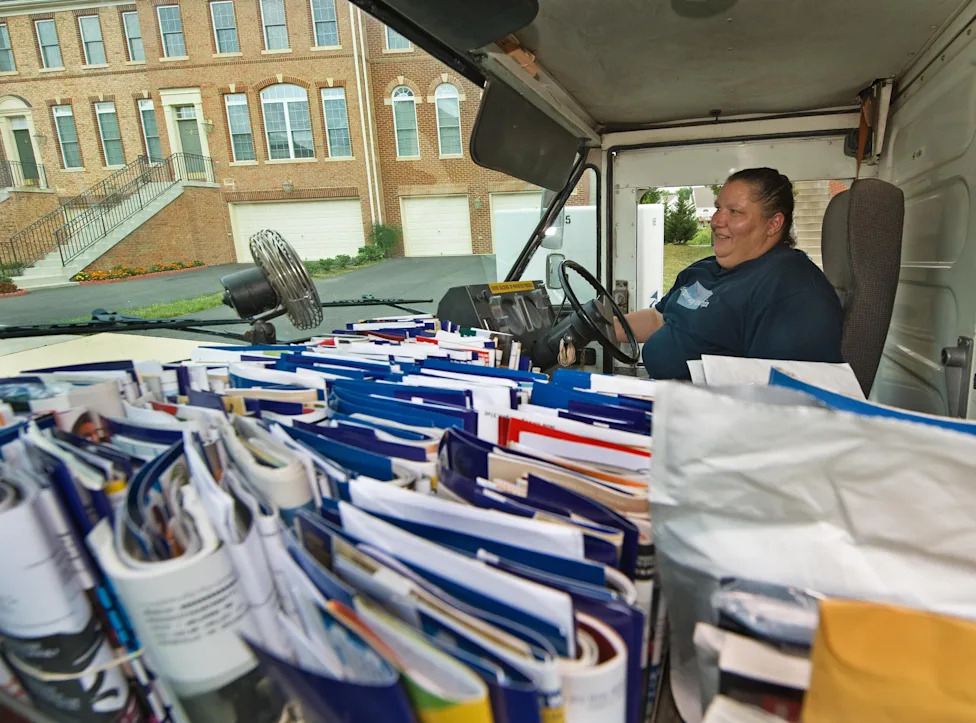
A Postal Carrier drives her delivery truck taking US Mail to residential boxes Aug. 5, 2009 in Centreville, Virginia. The US Postal Service has announced closings of over 600 post offices across the US stating they are losing money.(PAUL J. RICHARDS, AFP via Getty Images)
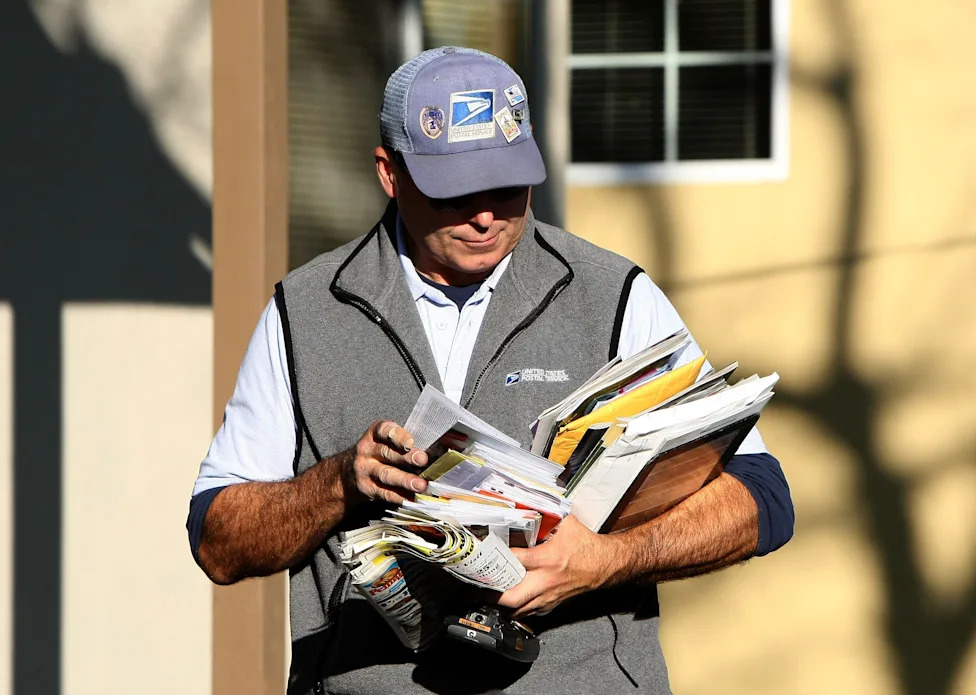
US Postal Service letter carrier Dennis Stecz carries a load of mail as he walks his delivery route Jan.28, 2009 in San Lorenzo, California. The US Postal Service asked the US Congress for permission to discontinue mail delivery one additional day a week in an effort to make up financial losses. The Postal Service is forecasting a loss of $9 billion in 2009.(Justin Sullivan, Getty Images)
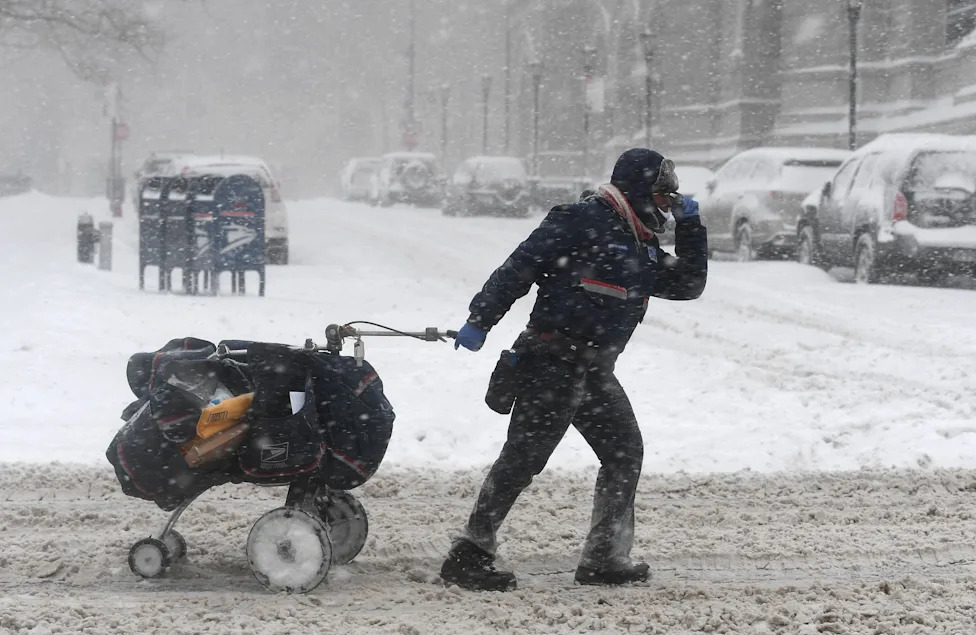
A mail delivery person pulls her cart through the snow on Jan. 4, 2018 in Brooklyn, New York during a giant winter "bomb cyclone”.(ANGELA WEISS, AFP via Getty Images)
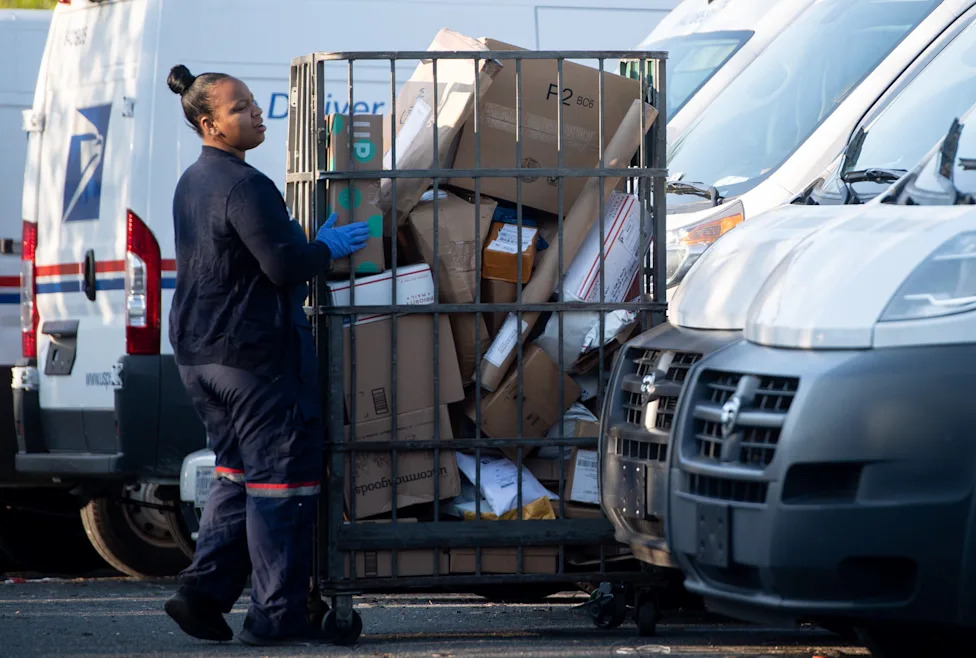
A mail carrier loads a postal truck with packages at a United States Postal Service (USPS) post office location in Washington, DC, April 16, 2020. For many Americans, checking the mailbox is a daily ritual, a constant in a quickly changing world that can yield anything from wedding invitations to tax audits to new clothes. But as with many ordinary things as the coronavirus crisis unfolds, the US Postal Service -- already compromised by a mountain of debt -- has a most uncertain future.(SAUL LOEB, AFP via Getty Images)
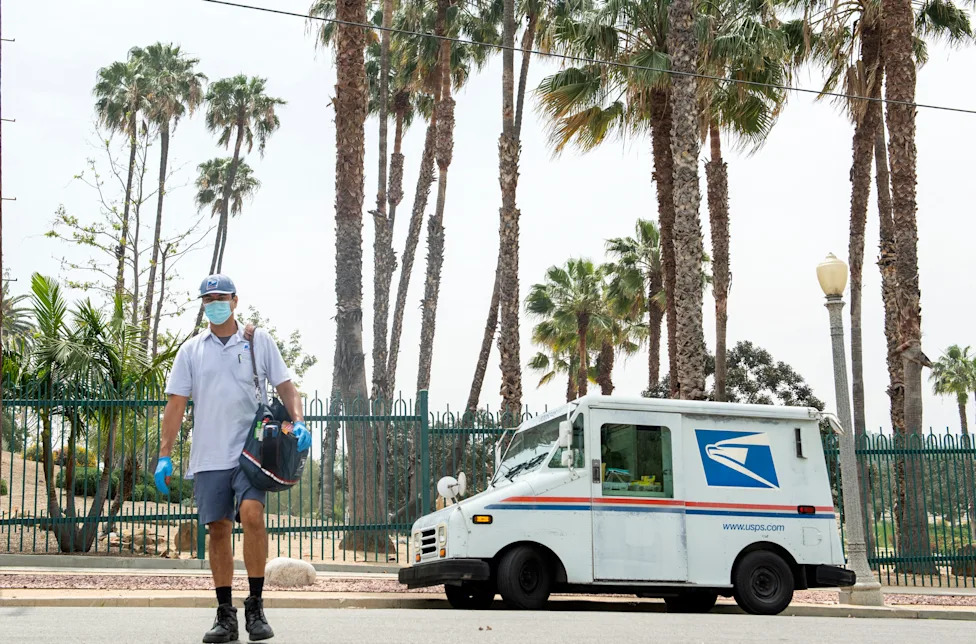
Mail carrier Oscar Osorio continues to deliver mail in Los Feliz amid the Covid 19 pandemic on April 29, 2020, in Los Angeles, Calif. Everyday the United States Postal Service (USPS) employees work and deliver essential mail to customers.(VALERIE MACON, AFP via Getty Images)
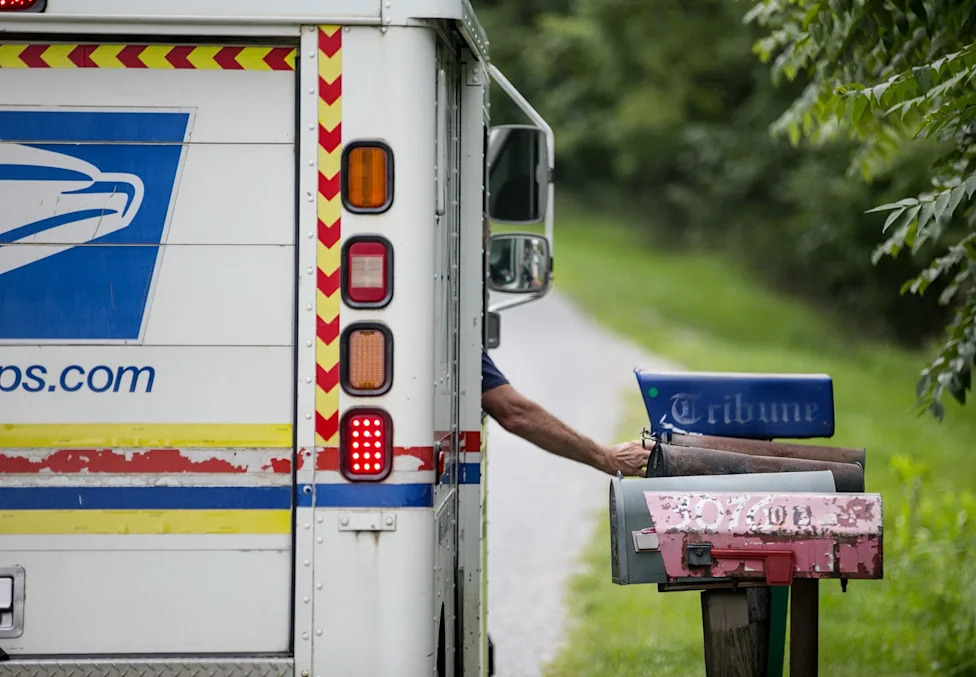
Michael Miller has been delivering the same rural USPS mail route in Gallia County, for the past 30 years, Tuesday, August 11, 2020. Some of his route consists of dirt and gravel roads for over a mile jut to deliver to two houses. Mail carriers are in many ways a lifeline to their rural communities. They don't just deliver letters and magazines, but also lifesaving medicines and packages from Amazon and FedEx that wouldn't otherwise make it.(Courtney Hergesheimer, Columbus Dispatch via USA TODAY NETWORK)
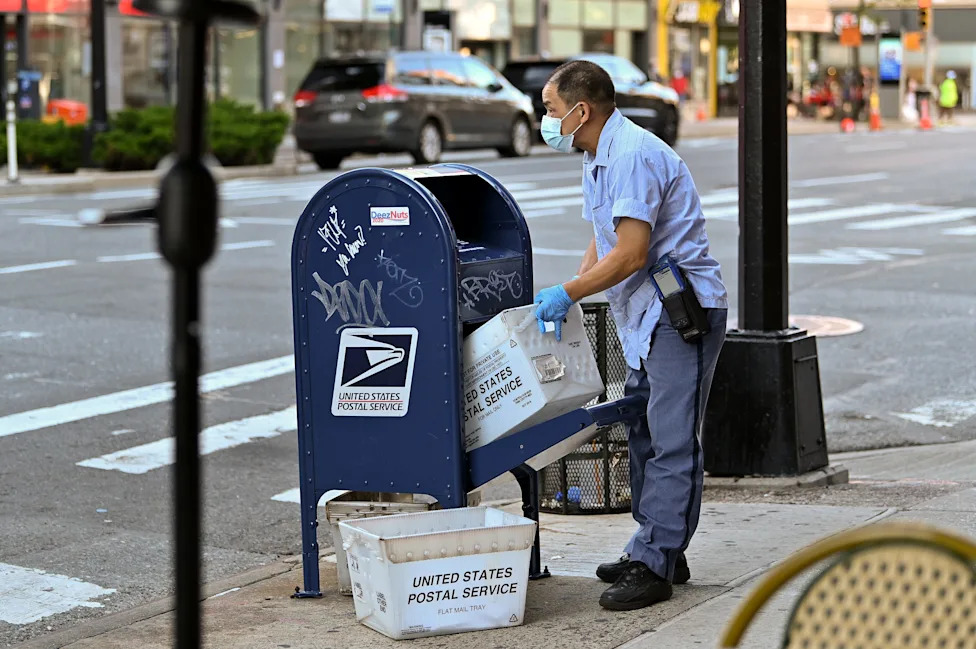
A United States Postal Service (USPS) worker wearing a protective mask and gloves makes his rounds in the Chelsea neighborhood of Manhattan as the city continues Phase 4 of re-opening following restrictions imposed to slow the spread of coronavirus on Aug. 20, 2020 in New York City. The fourth phase allows outdoor arts and entertainment, sporting events without fans and media production.(Dia Dipasupil, Getty Images)
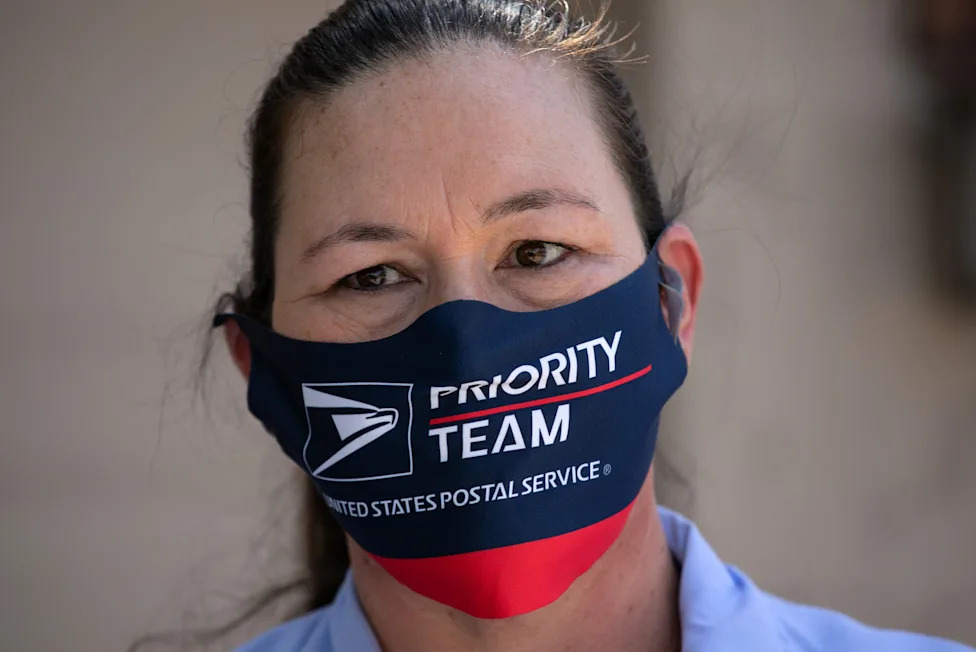
Postal Service letter carrier Dawnya Allred delivers mail-in ballots in a residential neighborhood on Oct. 8, 2020 in Phoenix, Ariz. Postal authorities are expecting a record number of mail-in ballots this year due to the coronavirus pandemic.(John Moore, Getty Images)
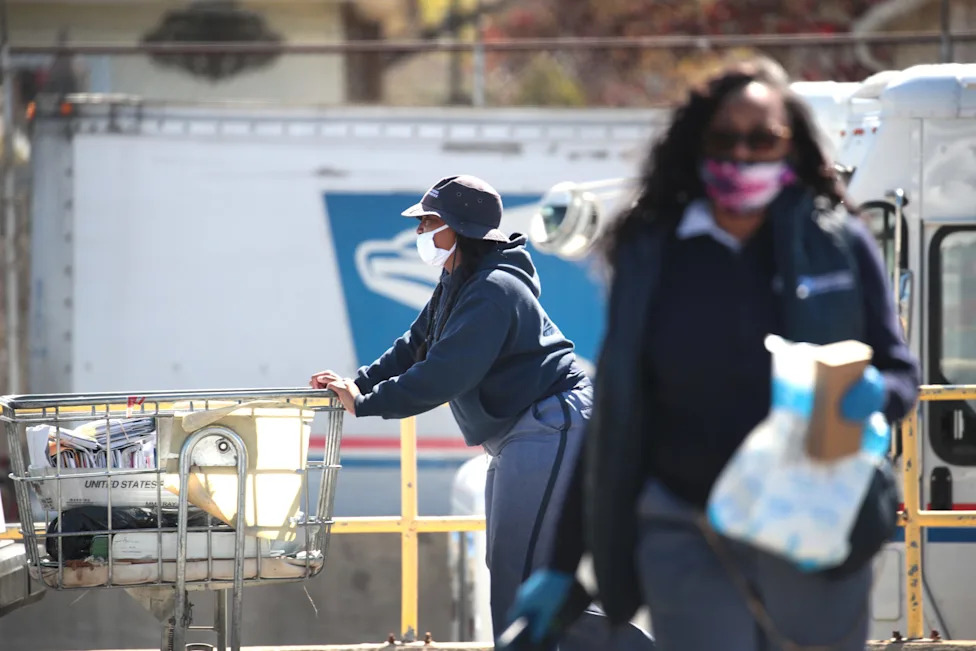
Postal workers prepare mail for delivery at the Kilbourn Park post office on May 9, 2020 in Chicago, Ill. Unique Clay, a 31-year-old letter carrier who worked at the Kilbourn Park post office, died of complications from COVID-19 on May 5, a week after giving birth to her third child. She was the first letter carrier in the city to die from the virus, more than 30 have tested positive.(Scott Olson, Getty Images)
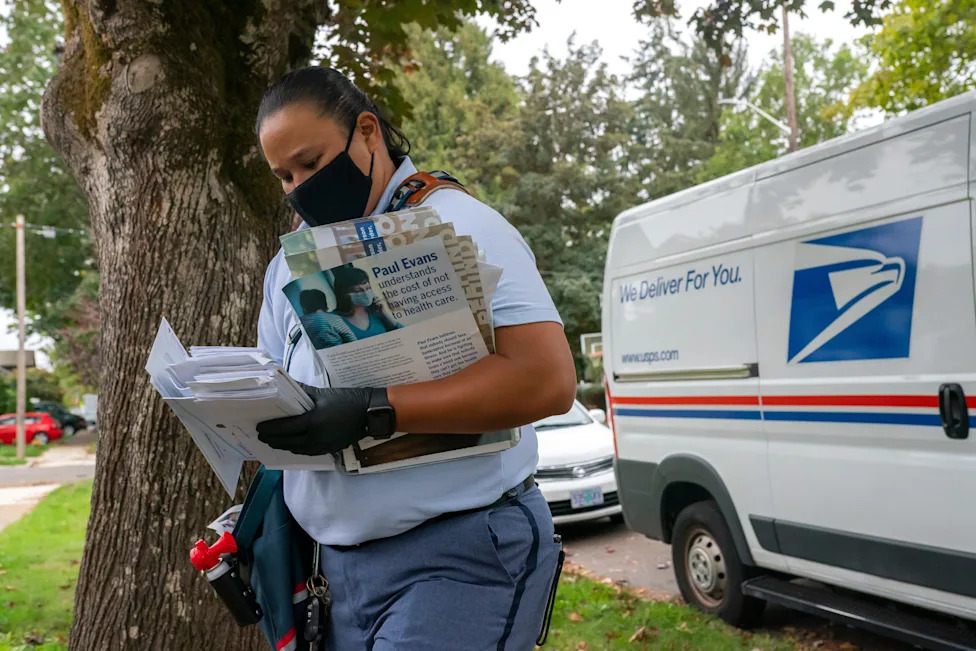
Letter Carrier Connie Cruz delivers mail on Oct. 8, 2020 in Salem, Ore. Mail carriers throughout Oregon are preparing for millions of mail-in ballots as the general election nears.(Nathan Howard, Getty Images)
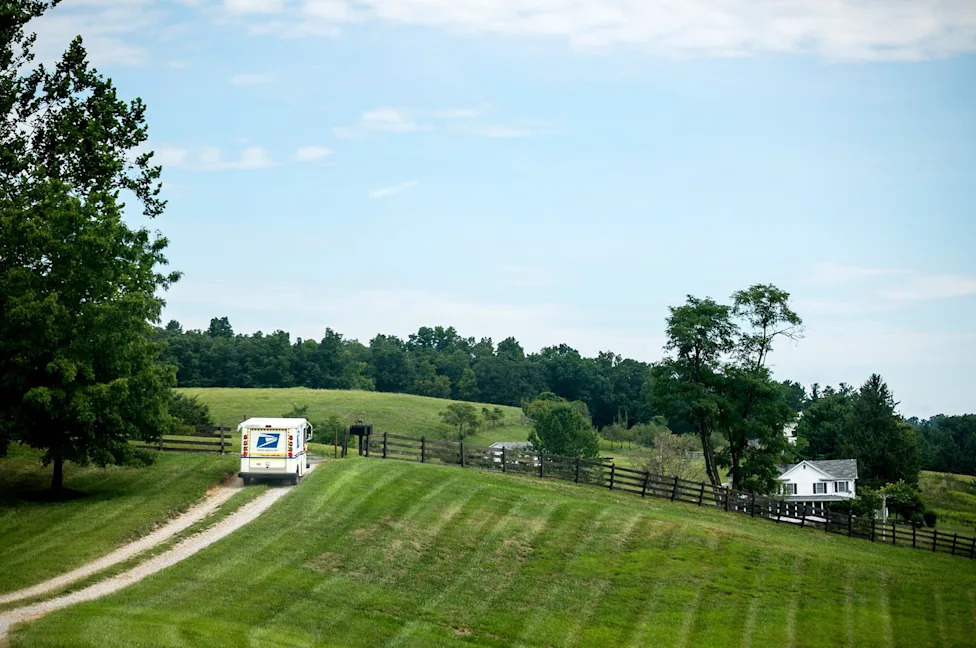
Michael Miller has been delivering the same rural USPS mail route in Gallia County, for the past 30 years, Tuesday, August 11, 2020. Some of his route consists of dirt and gravel roads for over a mile jut to deliver to two houses. Mail carriers are in many ways a lifeline to their rural communities. They don't just deliver letters and magazines, but also lifesaving medicines and packages from Amazon and FedEx that wouldn't otherwise make it.(Courtney Hergesheimer, Columbus Dispatch via USA TODAY NETWORK)
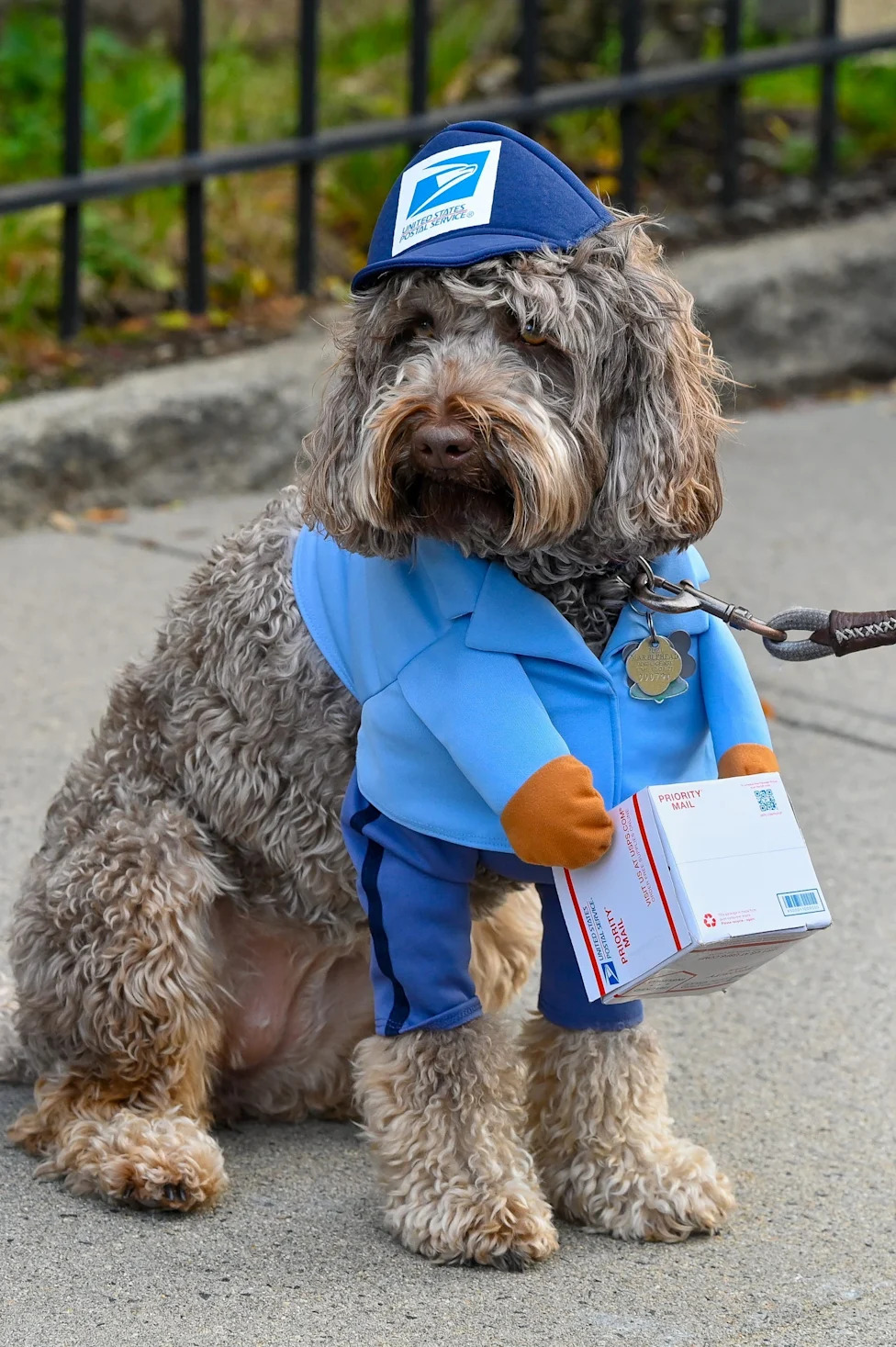
Meghan Mooradian dressed her dog Cisco as a mailman during the Chamber of CommerceÕs Trick or Treat night on Thursday, Oct. 28, 2021 in Randolph, Ma.(David Sokol, Wicked Local Staff Photo via USA TODAY NETWORK)
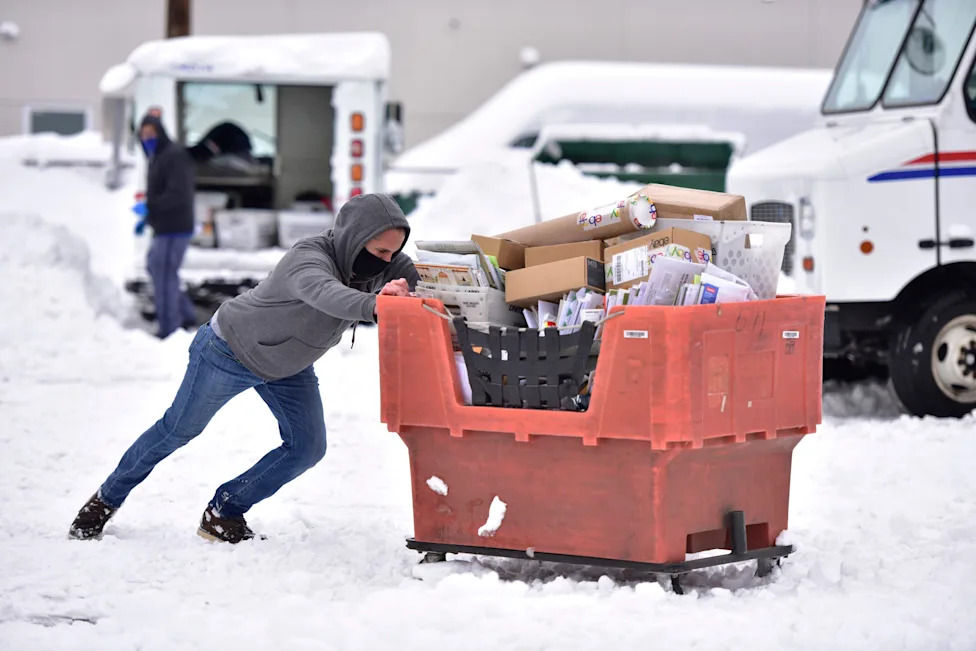
Post Master Tim Mulligan pushes a cart of mail through the snow to a letter carriers truck in Westwood, NJ. on Tuesday, Feb. 2, 2021.(Tariq Zehawi, NorthJersey.com via USA TODAY Network)
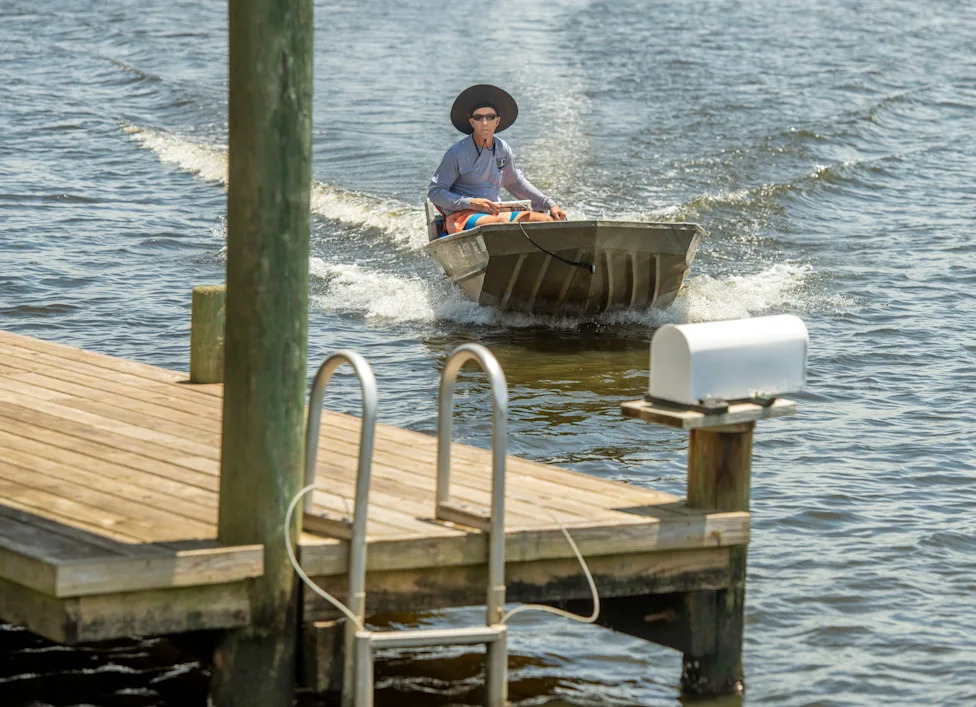
Mailman Reid Cole delivers mail by boat on the Magnolia River in Magnolia Springs, Ala. on Wednesday, July 20, 2022.(John Blackie, News-Journal via USA TODAY NETWORK)
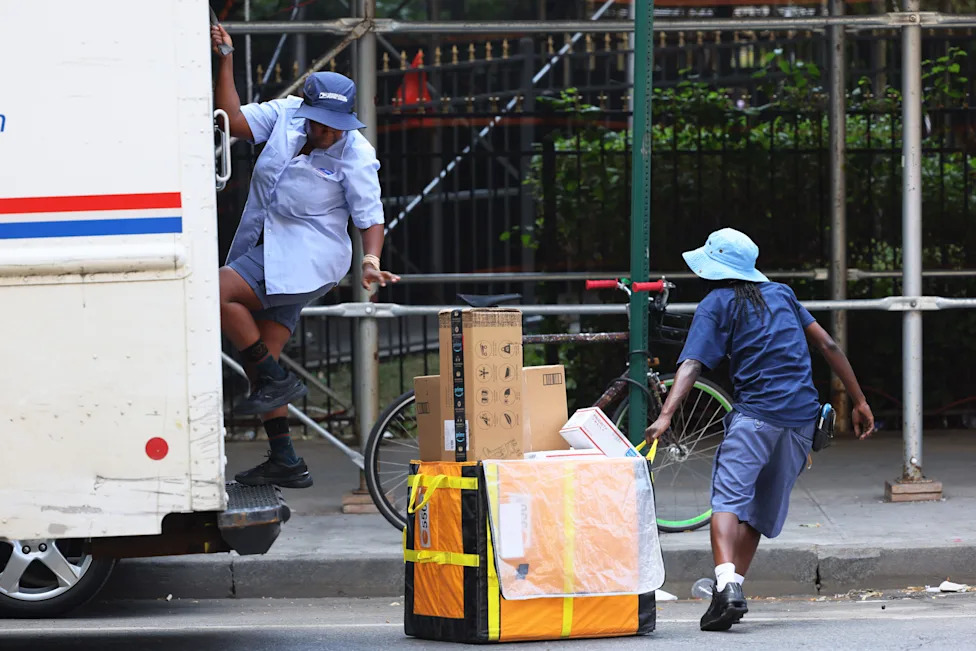
Mail delivery workers unload a truck on Flatbush Avenue on July 22, 2022 in the Flatbush neighborhood of the Brooklyn borough in New York City. A heat advisory is in effect in the city and is expected to last through the weekend, with Sunday expected to see a high of 98 degrees, which could break NYCÕs record of 97 that was set in Central Park in 2010.(Michael M. Santiago, Getty Images)
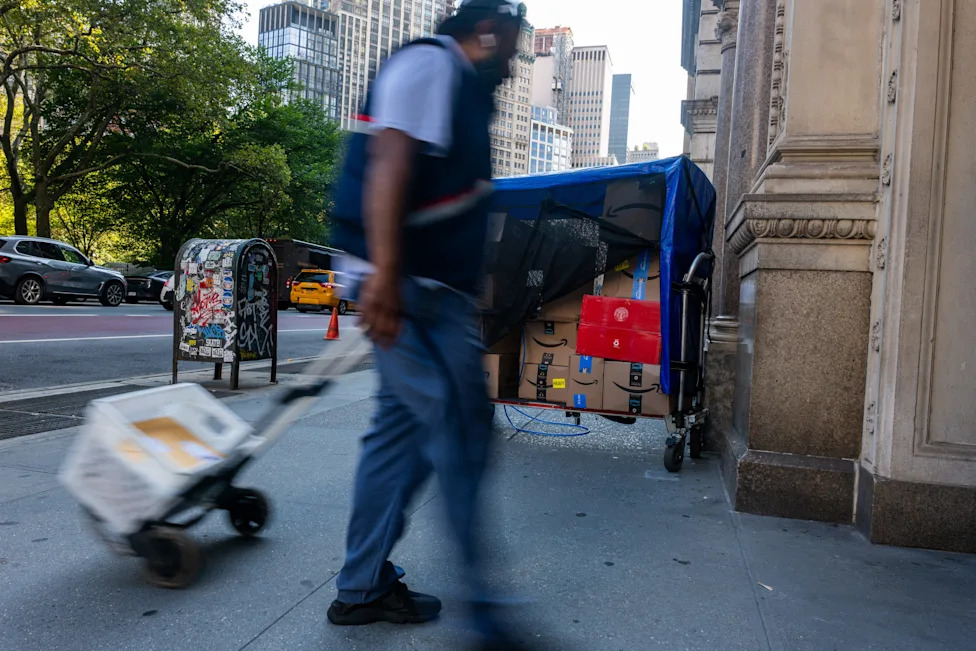
A postal worker delivers mail in Manhattan on Sept. 5, 2025 in New York City.(Spencer Platt, Getty Images)
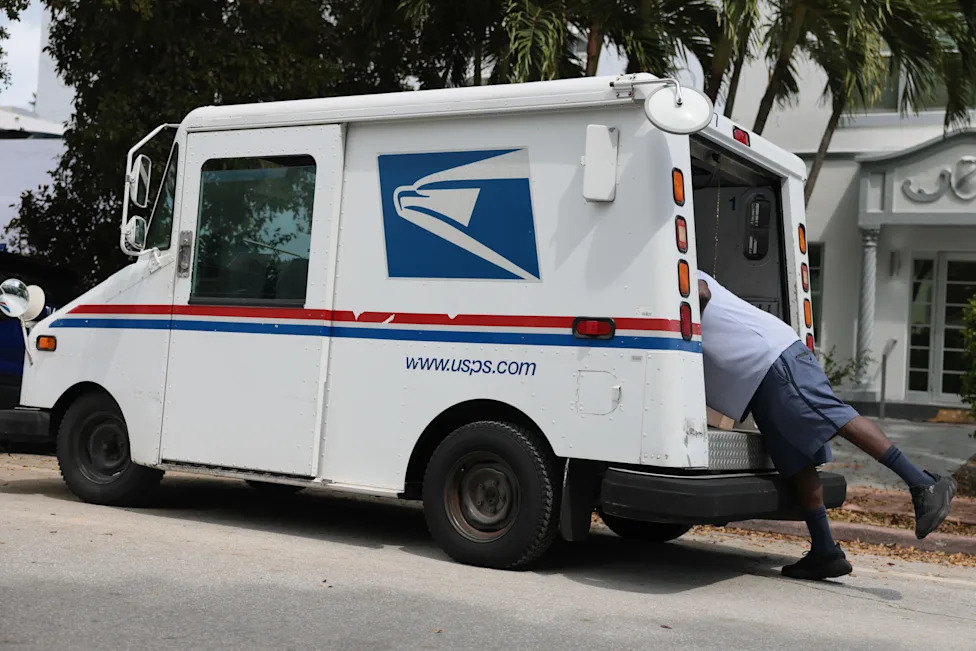
Postal carrier Marc Jacques delivers the mail in a neighborhood on March 19, 2026 in Miami, Fla. The head of the US Postal Service has warned lawmakers that it may run out of money in less than a year unless Congress allows it to borrow more money and charge more for postage.(Joe Raedle, Getty Images)
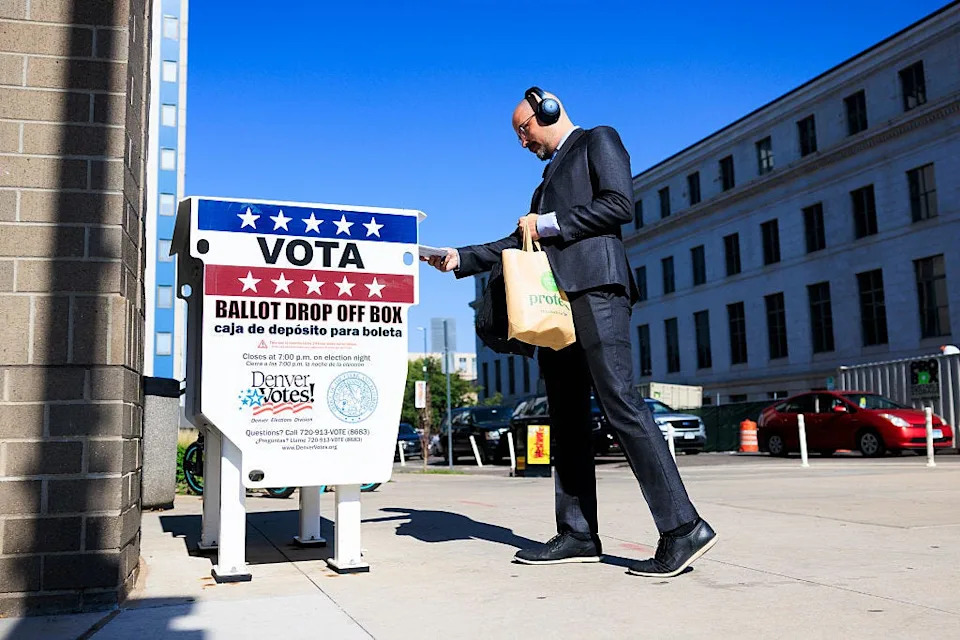
A voter places his ballot in a drop-off box as he votes in Colorado's primary election on June 30, 2026, in Denver, Colorado.
Help us improve.