The April 1939 BBC broadcast that transmitted the sound of Tutankhamun's trumpets reached an estimated 150 million listeners and created a vivid link to ancient Egypt. Two ornate trumpets — one silver, one likely bronze or copper — were damaged during rehearsals when a modern mouthpiece caused the silver instrument to fracture. Conservators now house the trumpets and their wooden cores in the Grand Egyptian Museum under strict climate control (18–22°C / 64–71°F), and say the originals will almost certainly never be played again. The episode highlights the ongoing tension between public access and the preservation of fragile cultural heritage.
When Tutankhamun's Trumpets Sang: The 1939 BBC Broadcast That Brought Ancient Egypt to Life
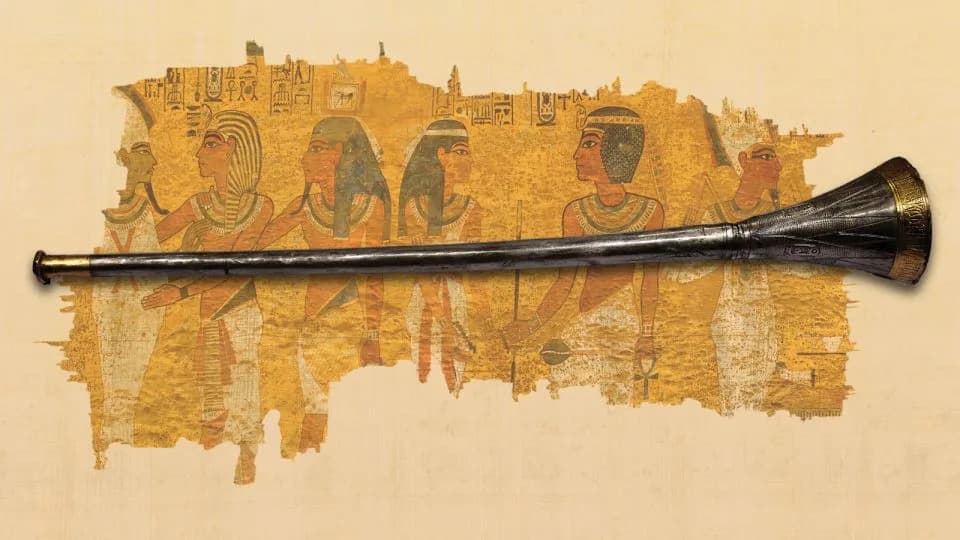
Photo Illustration by Jason Lancaster/CNN/Getty Images/Photo12/Ann Ronan Picture Library
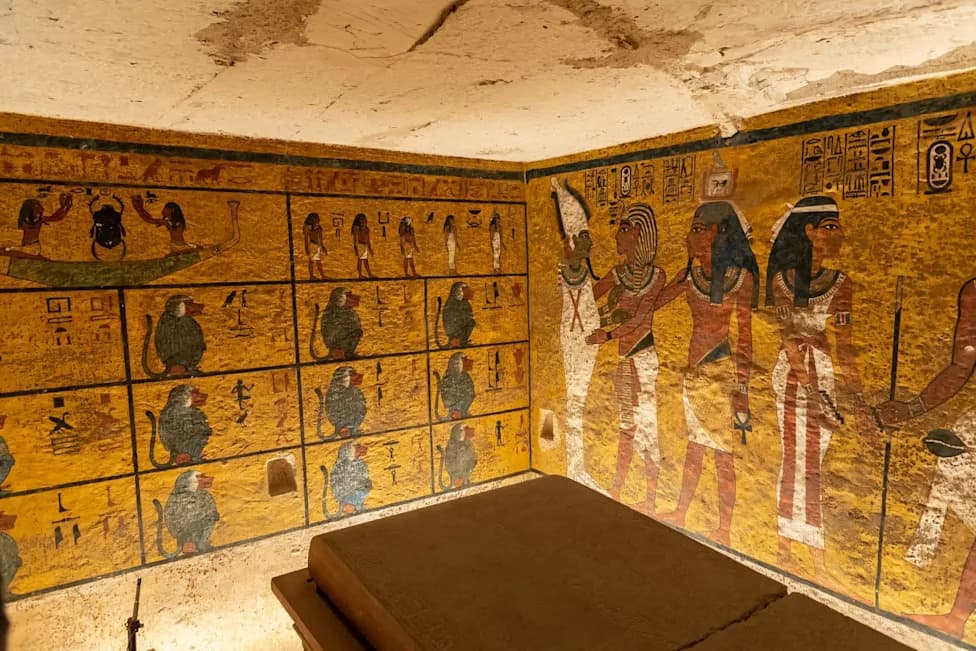
On an April evening in 1939, roughly 150 million listeners around the world tuned in to a BBC radio broadcast that remains hauntingly memorable: the live sound of trumpets recovered from the tomb of the boy-king Tutankhamun. For about a minute a military-style fanfare, played in Cairo, traveled across the airwaves and created a tangible link between modern audiences and ancient Egypt.
The Instruments and Their History
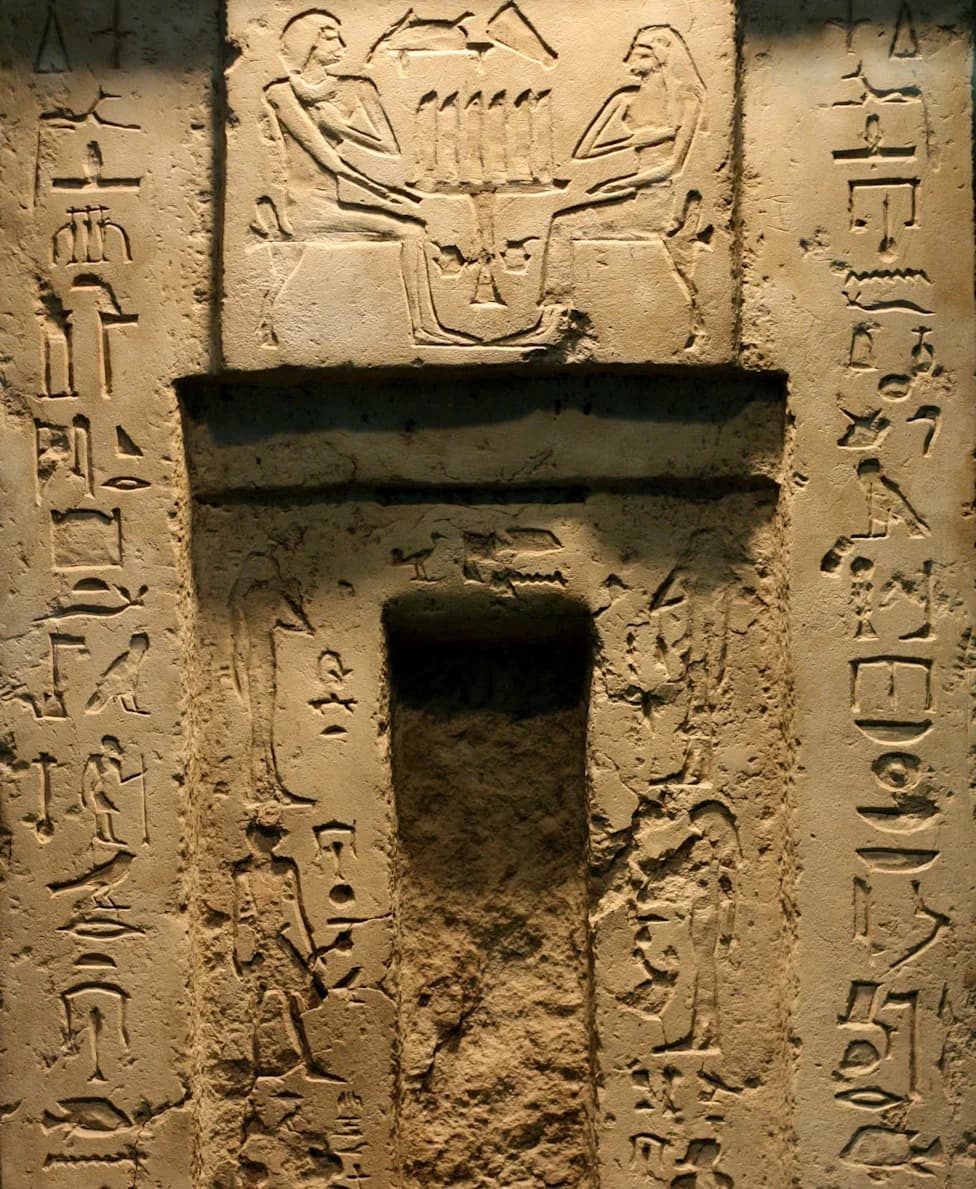
Archaeologists recovered two small, ornate metal trumpets from Tutankhamun's tomb more than a decade earlier. One is silver and bears the king's cartouches; the other is likely bronze or copper. Both feature flared bells decorated with intricate motifs — floral patterns and images of Egyptian deities — testifying to the skill of ancient metalworkers who produced instruments that were both beautiful and functional.
'An auditory and sensory bridge between the time of Tutankhamun and now,' said Salima Ikram, professor of Egyptology at the American University in Cairo.
The 1939 Recording: Drama and Damage
The trumpets were played publicly for the last time on April 19, 1939. British army bandsman James Tappern blew the instrument that came to be described as the oldest surviving metal trumpet. The recording carried an uncanny double-time travel: listeners in the 1930s hearing a sound from antiquity, and modern audiences transported back to that radio moment.
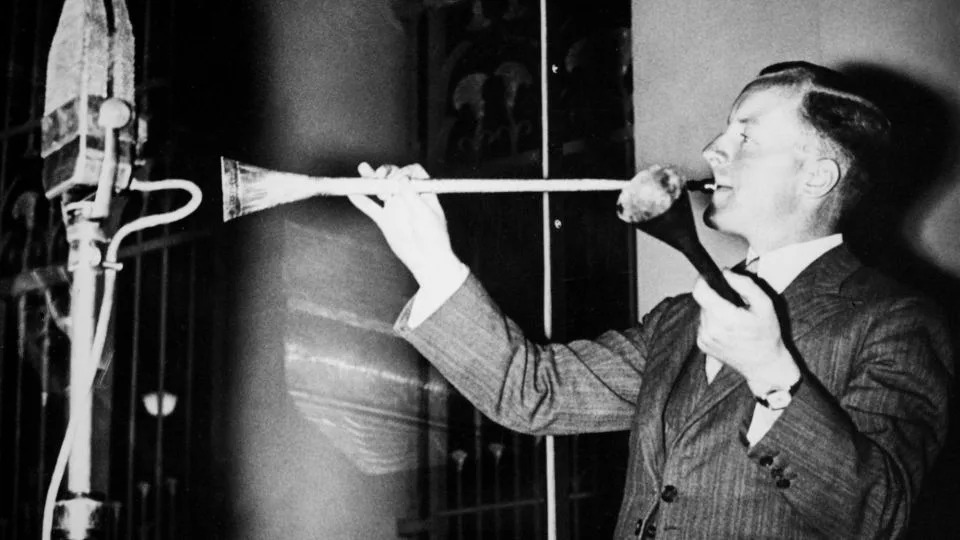
The trumpets were last played during a BBC broadcast on April 19, 1939 in Cairo, Egypt. - Keystone-France/Gamma-Keystone/Getty Images
During rehearsals a modern mouthpiece was fitted to the silver trumpet and, when played, the instrument fractured. Reports say archaeologist Alfred Lucas, present at the time, was so shocked he was hospitalized. The trumpet was later repaired for the broadcast, which — after a power cut at the museum — was performed partly by candlelight. A few months later, World War II began; contemporaries interpreted the mishaps as ominous, though scholars dismiss the notion of a curse.
Conservation, Display, and Security
Because the trumpets are fragile, conservators now say the originals are almost certainly never to be played again. Each trumpet contains an original wooden core that preserved its shape, but the presence of organic material complicates conservation. At the Grand Egyptian Museum, where the pair now reside, cases are maintained at a stable 18–22°C (64–71°F) and tightly controlled humidity to protect both metal and wood.
Security has also been strengthened after one trumpet was stolen from the old Egyptian Museum during the 2011 uprising and recovered weeks later in a bag left at a Cairo Metro station. The new museum combines building-level protections with display-specific systems to safeguard these priceless artifacts.
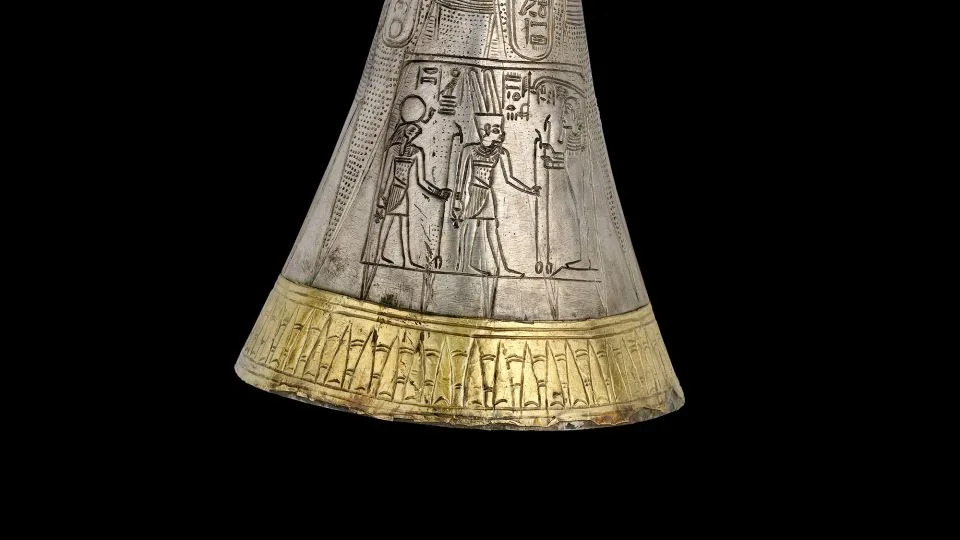
The silver trumpet bears the king's cartouches. - Sandro Vannini/Laboratoriorosso
Access Versus Preservation
The 1939 episode raises a familiar museum dilemma: how to balance public access with the obligation to preserve fragile objects. Many experts say replicas are a safer way to demonstrate how ancient instruments sounded. As Christine Finn, a journalist and archaeologist, has observed, incidents like cracked trumpets and damaged records underscore the fragility of relics and the need for careful stewardship.
At the same time, technology offers ways to keep these sounds alive without risking originals: historic recordings, high-quality digital reproductions, and physical replicas can convey the experience while protecting the artifacts themselves.
Why It Still Matters
The 1939 BBC recording endures as an evocative trace of a vanished voice from ancient Egypt — an audible reminder that artifacts are not only visual objects but carriers of sound, ritual, and human experience. Today the trumpets sit within sight of the Pyramids of Giza, in climate-controlled displays that reflect how conservation practices have evolved since that dramatic broadcast.
Help us improve.