Summary: Wildfires are intensifying worldwide—sometimes burning so hot that aerial water drops evaporate before reaching flames. Prolonged drought, record heat, and abandoned rural landscapes are producing fires that create their own weather (pyrocumulonimbus), making suppression difficult and forcing mass evacuations. The human and economic toll is rising, though successful evacuations and accelerating renewable energy deployment offer limited hope if societies curb emissions and extreme consumption.
When the World Is on Fire: How Supercharged Wildfires Are Reshaping Our Era
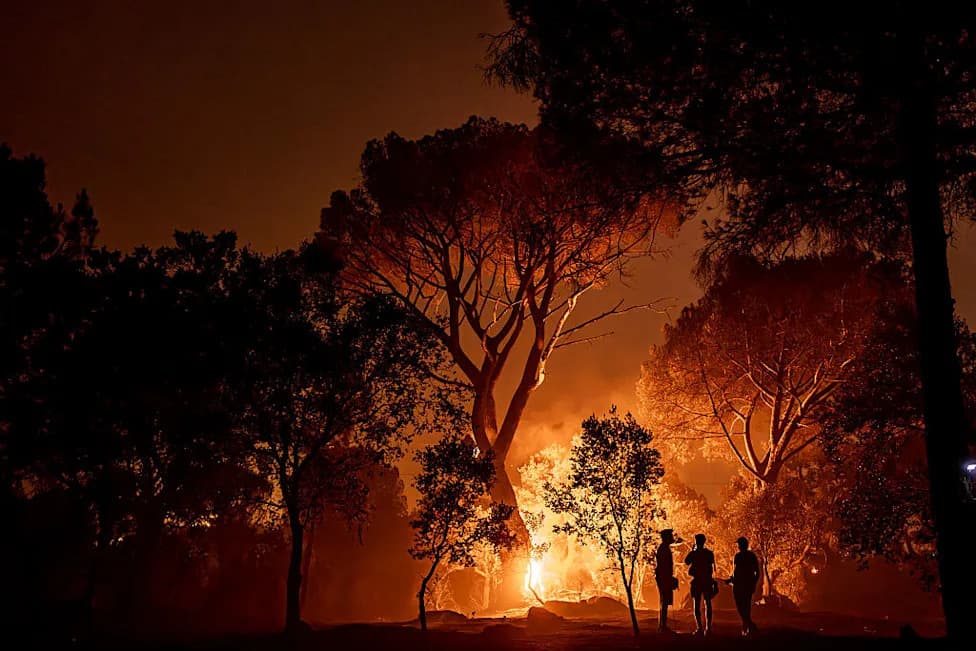
Water-bombing aircraft—the aerial cavalry of wildfire response—skim tree canopies like stunt pilots, delivering precise loads of water or orange retardant to blunt fast-moving flames. But increasingly, those deliveries fail: as one pilot working the vast Gironde blaze west of Bordeaux put it, "The environment above the fire is so hot that my payload of 10,000 liters of water evaporates in the air." Mathieu Jomain, a commander with 26 years in Gironde's fire service, compared the blaze's intensity to "a meteorological nuclear bomb."
An Era of Different Fire
That grim observation captures a defining feature of 21st-century wildfires: they behave differently now. From the United States to Algeria and across Europe, fires are burning faster, hotter, and more unpredictably, revealing what life will look like in an age of intensified fire.
Flames and Mass Evacuations
In Spain, Interior Minister Fernando Grande-Marlaska declared that several recent blazes represented "the most significant and aggressive fire in Spain's history." Across France and Spain alone, roughly a third of a million people were displaced—the largest evacuations in Europe since World War II. This summer large-scale evacuations have been ordered across the continent, from Portugal to Turkey; in Germany, record heat triggered evacuations after a wildfire set off explosions at a nature reserve contaminated with leftover ordnance.
Fires That Create Their Own Weather
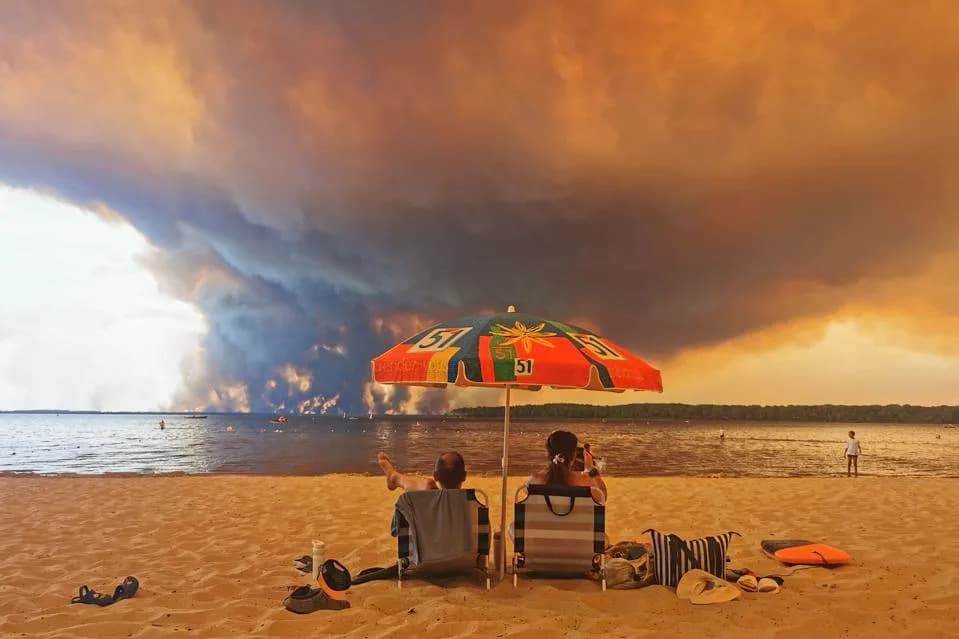
Prolonged drought and record heat are converging to produce wildfires that can generate their own extreme weather. A pyrocumulonimbus ("pyroCb") is a towering fire-driven storm cloud that can spin like a hurricane, inject smoke into the stratosphere, and generate ember storms and lightning that ignite fuels far beyond the original fire perimeter. PyroCbs were once rare; since the late 1990s—after atmospheric CO2 reached roughly 370 ppm—they have become increasingly common in major fires. Today, atmospheric CO2 is approaching ~430 ppm, and pyroCbs have appeared with growing frequency, including in regions such as Gironde, France.
When Containment Becomes Rescue
When flames are hot enough that aerial drops vaporize, firefighting shifts from containment to lifesaving. Evacuation becomes the only safe option in many communities—whether in the suburbs of Athens, Bordeaux, or Spokane. Over the past decade, millions have fled suddenly accelerating fires—from Valparaíso, Chile to Fort McMurray, Alberta—often surprised by how quickly fire advances.
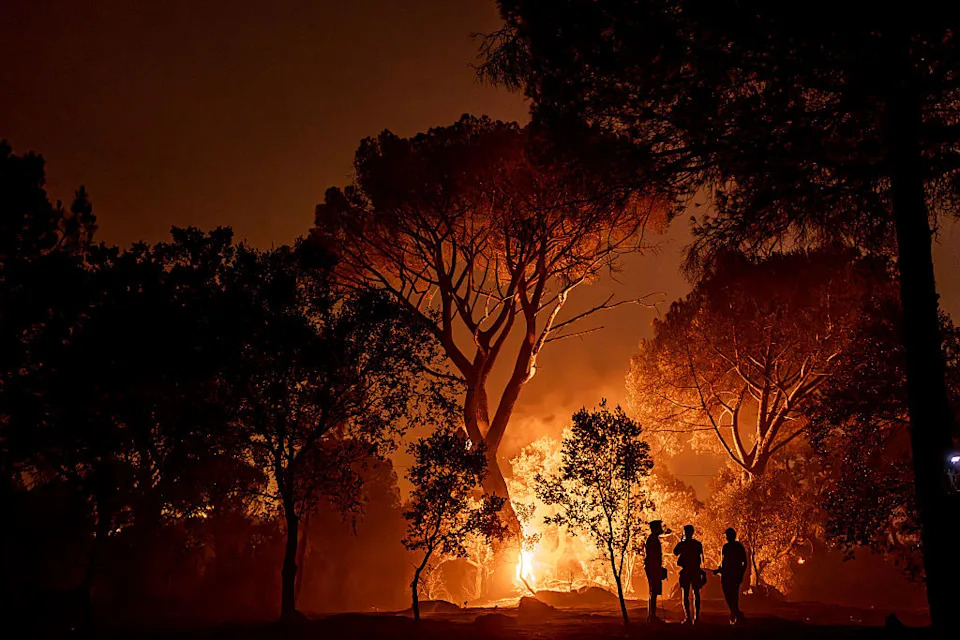
Flames engulf trees as a wildfire burns during overnight in La Adrada, Spain on July 26, 2026. —Diego Radames—Anadolu/Getty Images
Broader Impacts: Infrastructure, Health, and Food
Wildfire-driven heat and drought ripple through economies and daily life: skies can turn yellow or orange with smoke; crops fail; rail lines buckle; nuclear plants may be forced offline when cooling water runs low. Extremely high temperatures can force airlines to lighten payloads or cancel flights and can ground firefighting aircraft, leaving communities more exposed.
Fuel Buildup, Rural Abandonment, and Flash Droughts
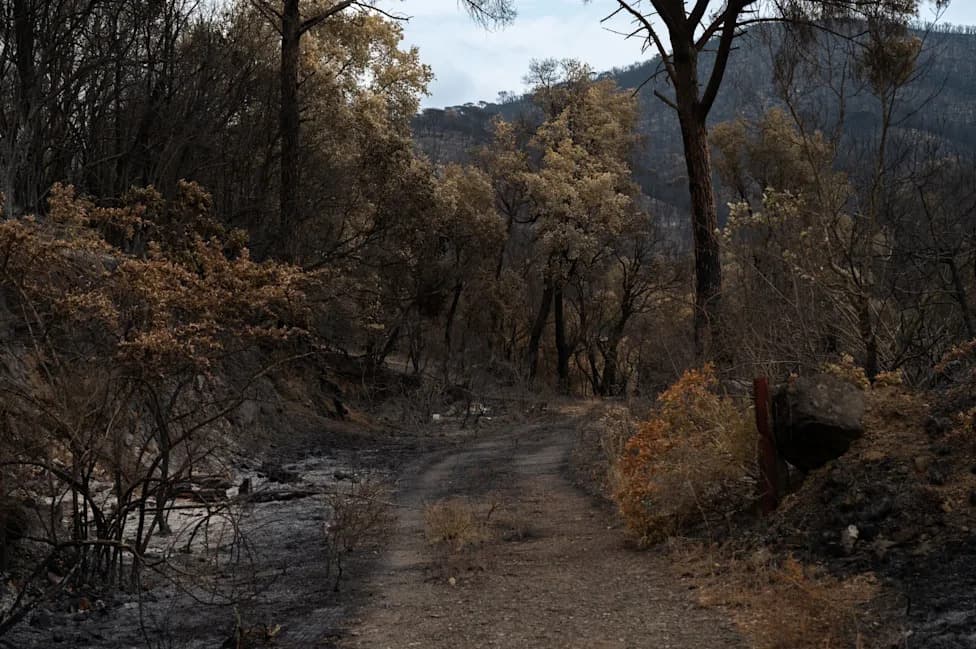
Long-term demographic shifts—people moving from rural areas into cities—leave previously managed landscapes overgrown and more flammable. In many regions, heavy winter rains promote explosive spring growth that is then desiccated by summer heat in a phenomenon called "weather whiplash." Combined with "flash droughts"—sudden, severe drying and heat—these trends create vast new fuel beds for catastrophic fires.
Security, Migration, and Social Risks
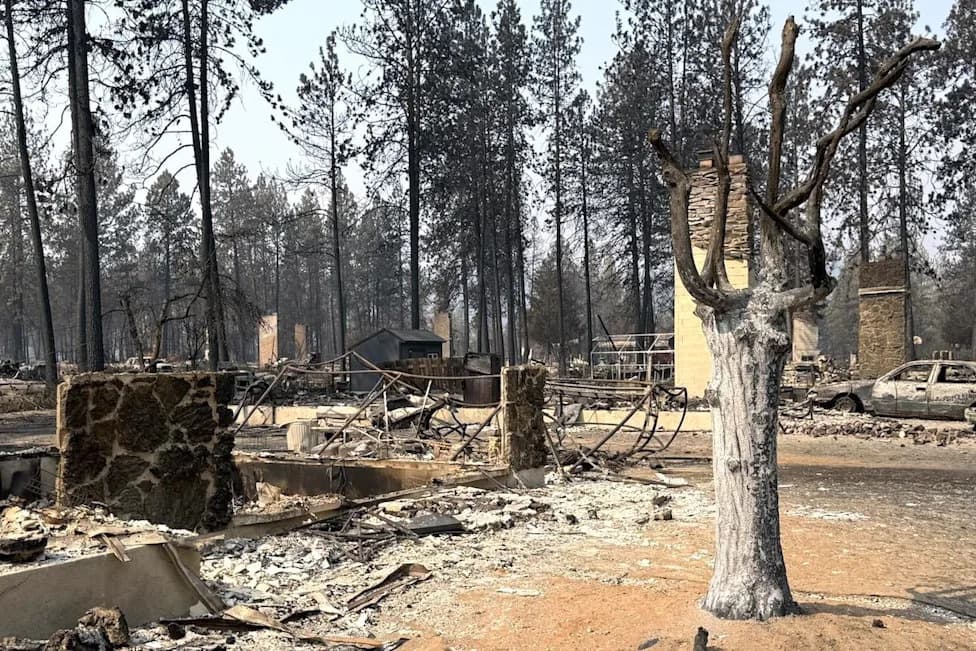
Climate stresses can amplify migration and social tensions. Syria's conflict, for example, was aggravated by internal migrations driven in part by failed harvests and drought. Today, regions across Europe and North America are seeing increasingly large internal displacements from fires: in Spokane more than 800 homes burned and over 60,000 people were displaced this season; British Columbia and Utah have also faced major evacuations and home losses.
How We Got Here—and What Can Be Done
Fossil fuels powered industrial progress and shaped modern society. But their cumulative emissions are driving the warming, drought, and extreme weather that amplify wildfire risk. As Senator Sheldon Whitehouse warned, rising climate risk threatens insurance and mortgage markets and, by extension, the economy. Spain's Prime Minister Pedro Sánchez bluntly summarized the human toll: "Climate change kills: it kills people...it destroys the things we as a society hold dear."
Signs of Resilience and a Path Forward
There are reasons for cautious hope. Recent evacuations have, in many cases, kept mortality low, demonstrating strong civic coordination. The energy transition to renewable power is advancing: deployment of wind, solar, storage, better grid management, and energy efficiency is reducing CO2 trajectories in many places. Yet technological progress must be paired with changes in consumption—especially among the wealthiest 10%—to make a decisive difference.
Bottom line: As wildfires grow fiercer and more complex, societies must adapt—improving land management and emergency response, accelerating clean energy deployment, and confronting excessive consumption—to reduce risk and protect communities.
Sources and context: Pilot and firefighter accounts from the Gironde fires; official evacuations reported across Europe and North America; scientific observations of pyroCbs and rising atmospheric CO2 (~430 ppm). This article synthesizes reporting and scientific context to explain why recent fires mark a new chapter in wildfire risk.
Help us improve.