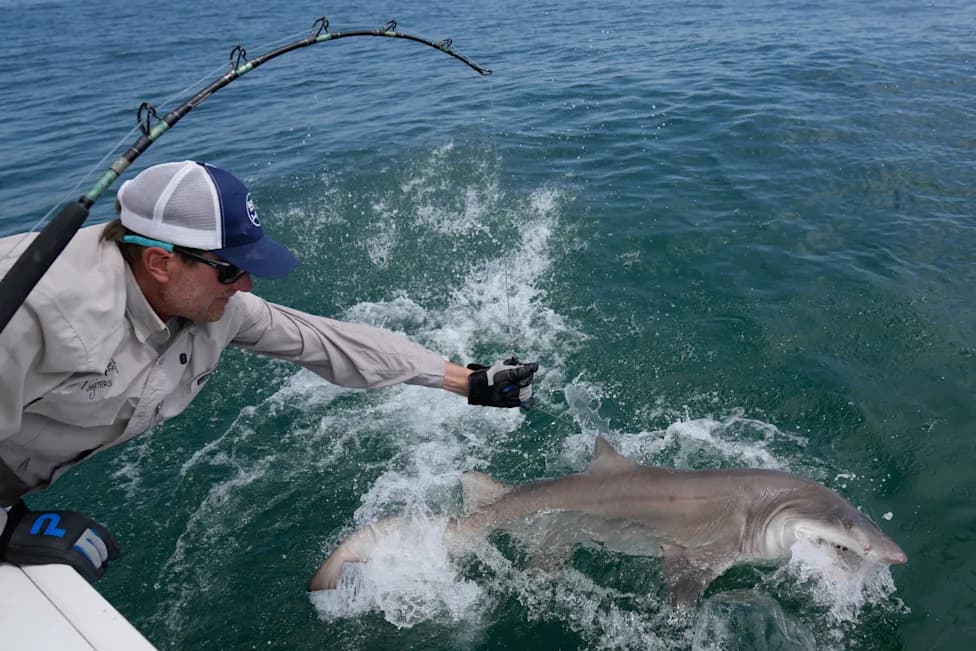
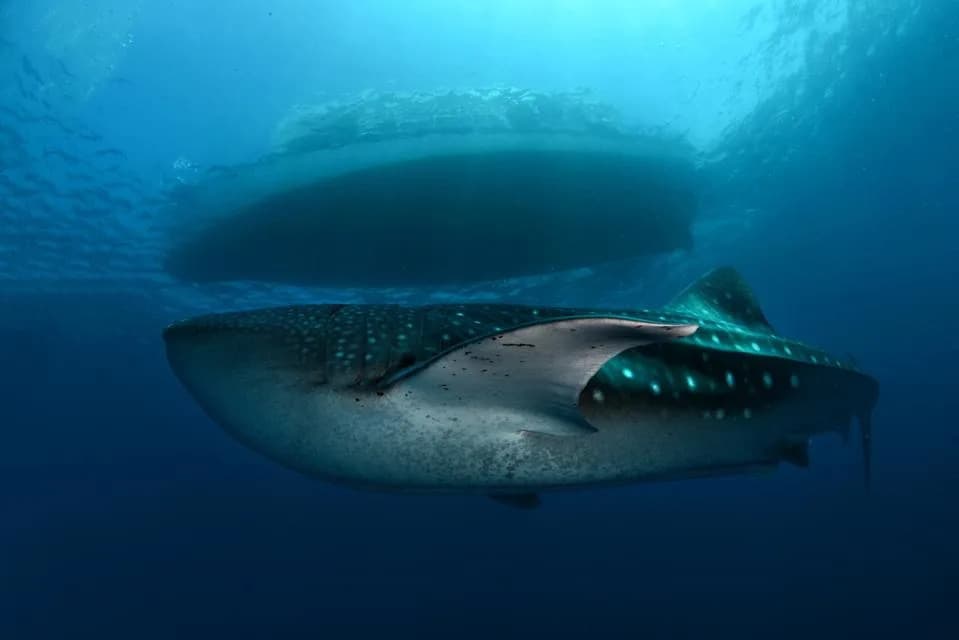
University of Hawaiʻi at Hilo researchers identified Hilo Bay as the first documented nursery for oceanic blacktip sharks in Hawaiian waters. Acoustic tagging from July 2022 to January 2024 shows juveniles reside in the bay year-round, peaking from March to August. The study underscores how habitat impacts—development, traffic, pollution, and climate change—threaten nursery areas and integrates Native Hawaiian practices with scientific research.
Hilo Bay Named First Documented Blacktip Shark Nursery in Hawaiian Waters
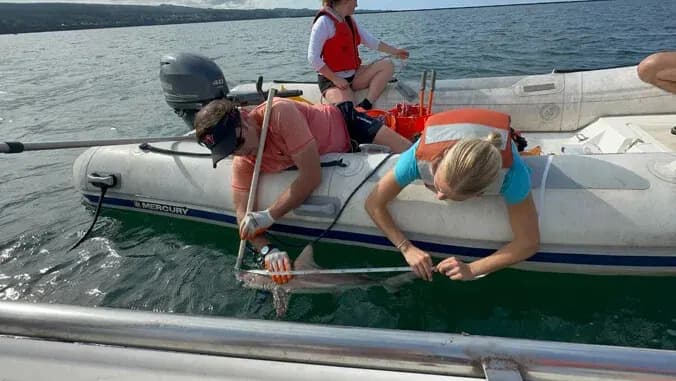
Team from UH Hilo measures a blacktip shark. (All animal interaction is under state and/or federal permits)
Researchers from the University of Hawaiʻi at Hilo have identified what appears to be the first documented nursery for oceanic blacktip sharks in Hawaiian waters, centered in Hilo Bay. The findings, published in Frontiers in Marine Science, were led by graduate student Lauren Moe with co-author and thesis advisor Associate Professor Jason Turner.
The research team captured juvenile sharks under state and federal permits, fitted them with acoustic transmitters, and monitored their movements from July 2022 through January 2024. Tracking data show these juveniles use Hilo Bay year-round, with peak activity between March and August.
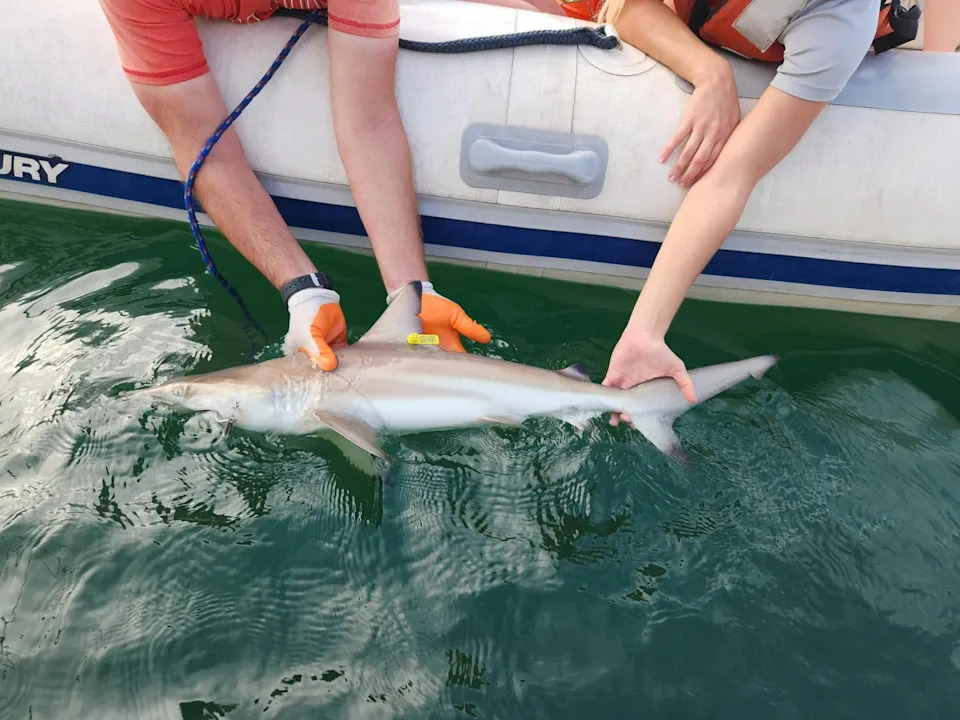
Jason Turner and student hold a baby blacktip shark. (all animal interaction is under state and/or federal permits)
The study focuses on oceanic blacktip sharks, a species not typically aggressive toward people; unprovoked bites are rare. Based on residency and movement patterns, the authors conclude that Hilo Bay functions as a nursery habitat where young sharks find food and shelter during the first years of life.
"Nursery habitats provide food and shelter while these young sharks are growing," said Jason Turner, associate professor of marine science at UH Hilo and co-author of the study. "Impacts to these habitats—coastal development, maritime traffic, pollution, or climate change—can be as harmful to shark populations as overfishing or bycatch."
The project intentionally combined Western scientific methods with native Hawaiian protocols and knowledge, emphasizing respect for the elements through practices such as setting intention, offering hoʻokupu (ceremonial gifts), and expressing gratitude during fieldwork.
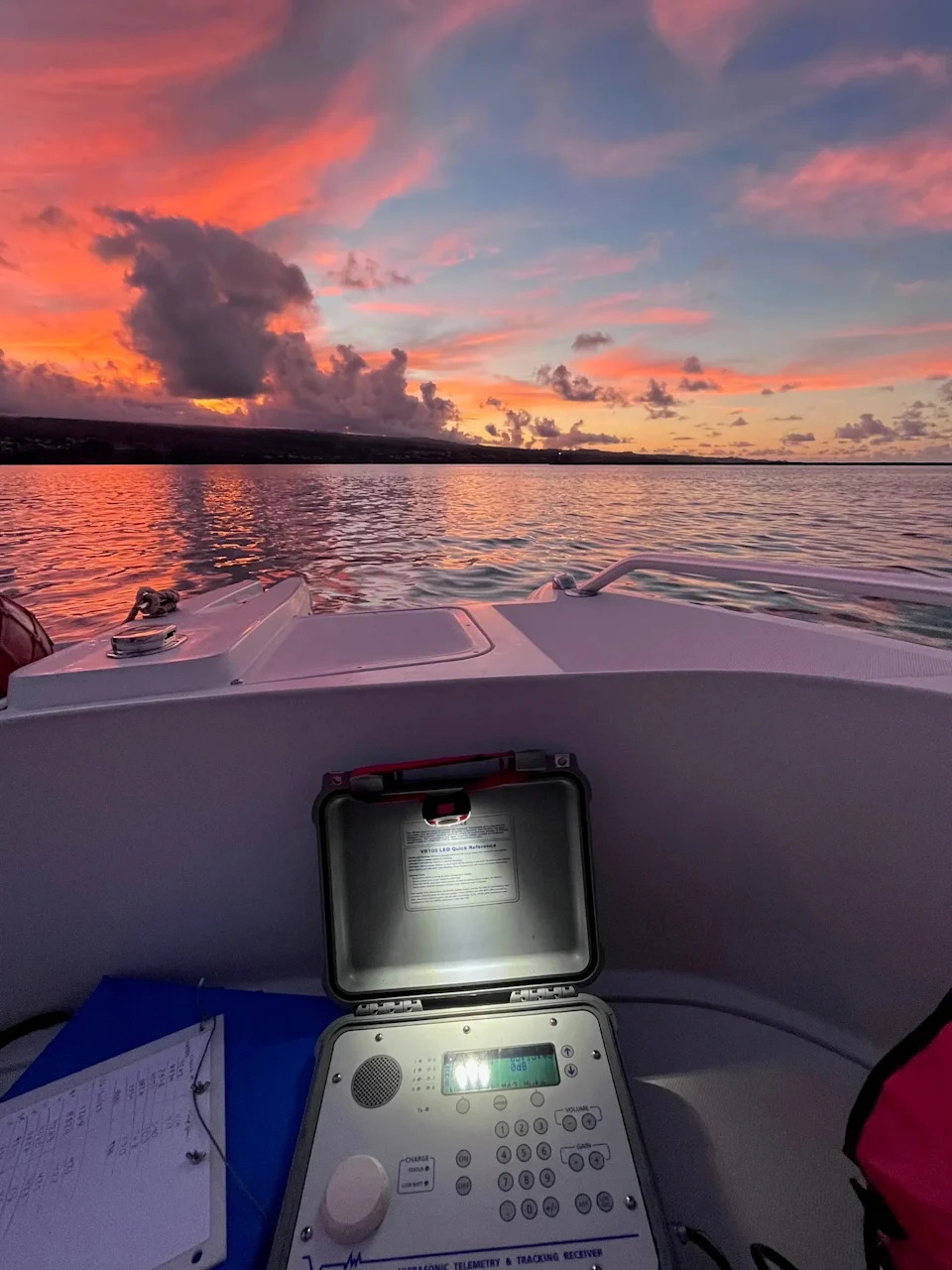
Shark tracking at sunset. (All animal interaction is under state and/or federal permits)
Building on these results, UH Hilo researchers are expanding their work to analyze 15 years of shark and ray population trends in Hilo Bay to better understand long-term changes and inform conservation and management strategies.
Study Details: Published in Frontiers in Marine Science. Tracking period: July 2022–January 2024. Location: Hilo Bay, Hawaiʻi. Permits: State and federal research permits obtained for all animal handling.
Help us improve.