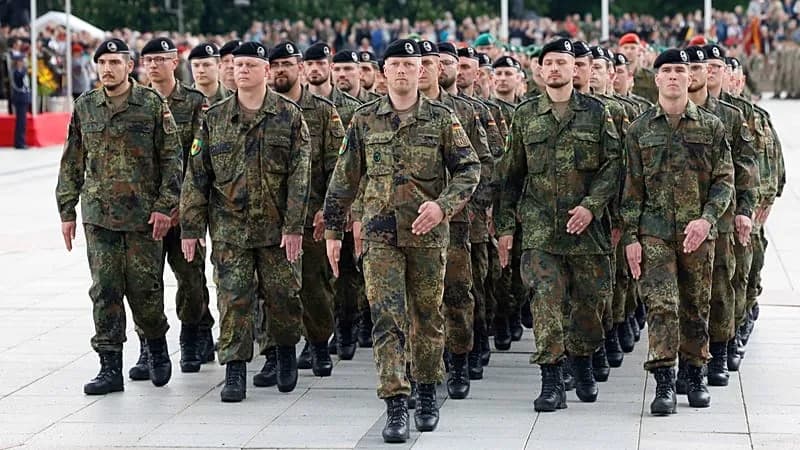
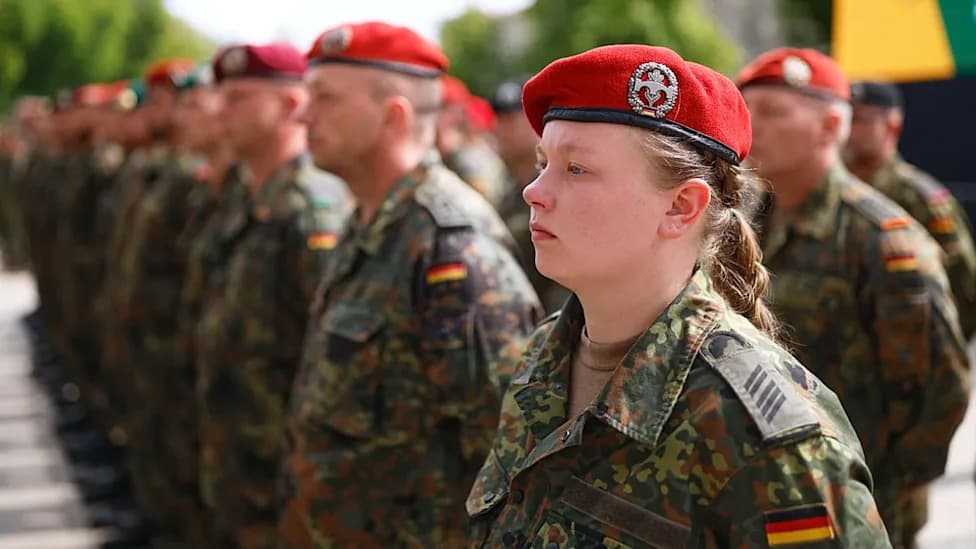
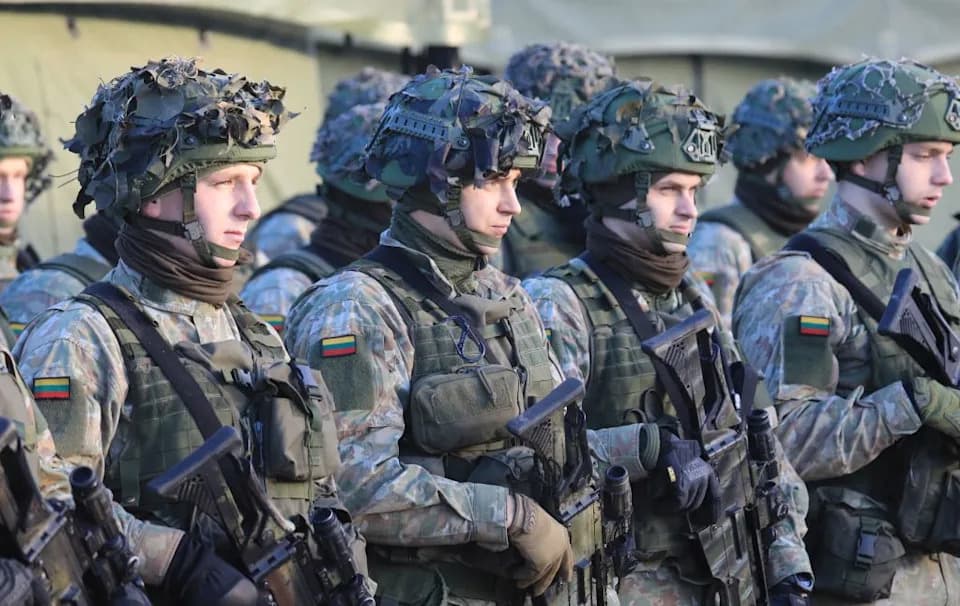
Germany will permanently station Panzerbrigade 45 — known as the Lithuania Brigade — in Lithuania, placing roughly 5,000 troops near the Belarusian border by the end of 2027. The move marks the first time the Bundeswehr will keep a fully operational combat brigade abroad since it was founded in 1955 and is intended to bolster deterrence on NATO's eastern flank.
Why Lithuania and Why Now?
Lithuania's Foreign Minister Kęstutis Budrys speaks with the media as he arrives for a meeting of EU foreign ministers at the European Council building in Brussels, 16 March, - AP Photo
Lithuanian Foreign Minister Kęstutis Budrys told Euronews that Lithuania does not want an expansion of Russian influence on its borders and is concerned about hybrid activities originating from neighbouring Belarus. He pointed to incidents Lithuania regards as destabilising, including the instrumentalisation of migration, violations of airspace with meteorological balloons, and harassment of Belarusian opposition figures in exile.
Voices From The Region
Sviatlana Tsikhanouskaya in Berlin, 01.04.2026 - Franziska Müller
Belarusian opposition leader Sviatlana Tsikhanouskaya told Euronews that Russia has turned Belarus into "a military backyard," citing deployments of systems such as Oreshnik, use of Belarusian infrastructure and logistics, and a reported conversion of hundreds of enterprises to military production for Moscow.
Budrys described Belarus as "a tough neighbour" and said the Lithuanian approach relies on strong regional and institutional partnerships, especially EU and NATO membership, which provide political solidarity and collective instruments for security.
From Rotations To A Permanent Brigade
Outgoing German Chancellor Olaf Scholz in the first voting process at the German federal parliament in Berlin, 6 May, 2025 - AP Photo
Germany has contributed to NATO's Enhanced Forward Presence (eFP) in the Baltics since 2017 with rotating multinational units. After Russia's full-scale invasion of Ukraine in 2022 and security developments in 2023 — including Yevgeny Prigozhin's failed Wagner mutiny and the subsequent movement of Wagner fighters into Belarus — Berlin accelerated plans for a lasting presence.
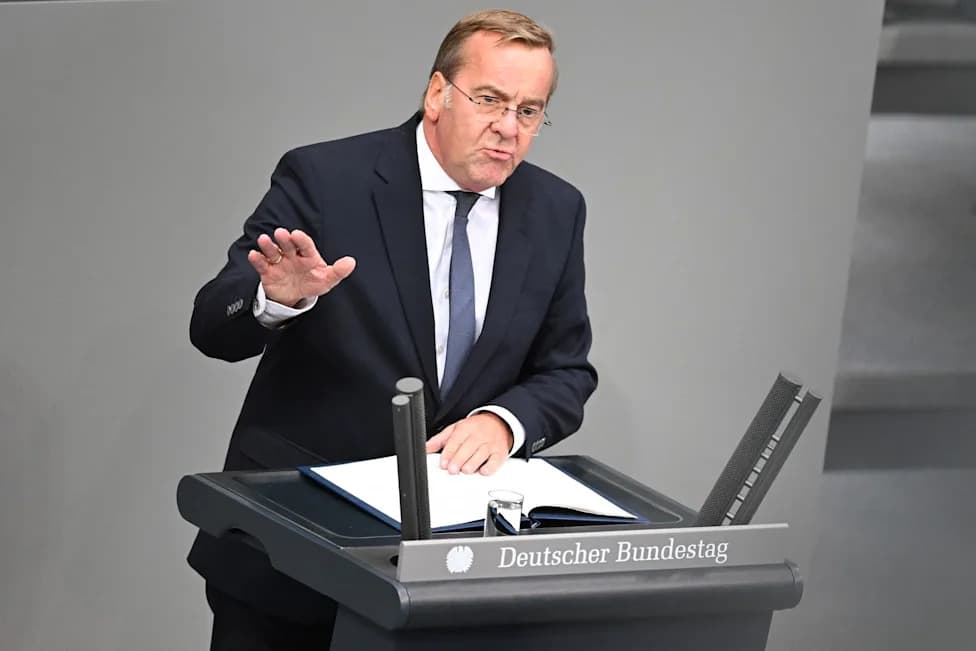
Former Chancellor Olaf Scholz pledged in June 2022 to lead a robust Bundeswehr brigade permanently stationed in Lithuania, and Germany's Defence Minister Boris Pistorius and Chief of Defence General Carsten Breuer later announced the decision to base a fully operational combat brigade abroad for the first time in the Bundeswehr's history.
FILE - Yevgeny Prigozhin, the owner of the Wagner Group military company, looks from a military vehicle leaving an area of the HQ of the Southern Military District in a street - AP Photo/File
What The Deployment Means
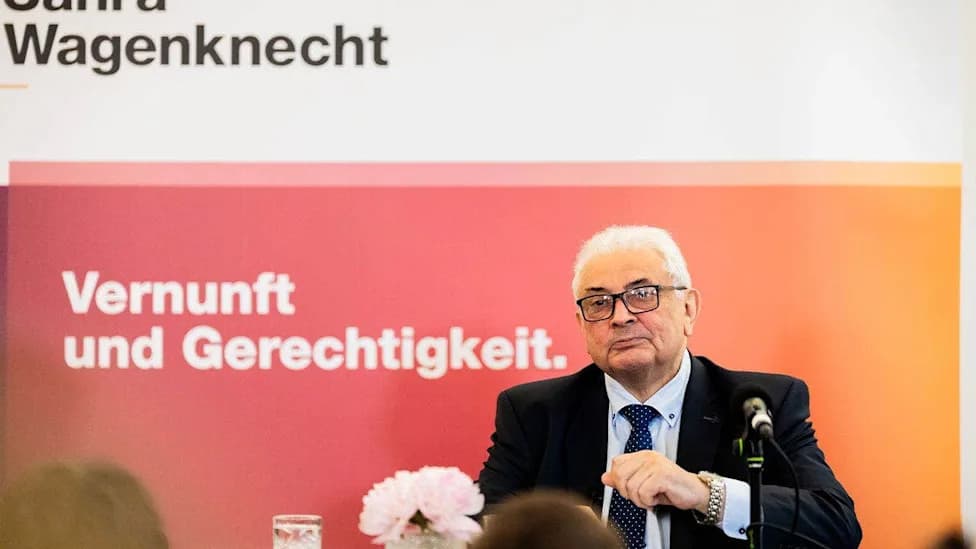
German officials frame the deployment as a deterrent measure that "starts from the border," aiming to defend territory with concrete, ready forces rather than hypothetical capabilities. Budrys praised Germany's leadership and called the deployment an example for other allies, describing it as "the key to peace and success" and stressing that Lithuania is preparing security to preserve a stable environment for its people and businesses — not to provoke conflict.
Kęstutis Budrys - Franziska Müller
Regional NATO Arrangements And Public Opinion
Within NATO's Baltic security architecture, the United Kingdom leads the eFP battlegroup in Estonia, Canada leads the NATO Multinational Brigade in Latvia, and Germany provides protection in Lithuania through the eFP and now the permanent Lithuania Brigade.
Public support in Lithuania is strong: a November 2023 Spinter Research poll commissioned by the Lithuanian Armed Forces' Strategic Communications Department found about 82% approval for the German brigade and an 83% positive view of the German military. By contrast, a 2023 YouGov survey for the German Press Agency (dpa) showed roughly 49% public support in Germany for the Lithuania Brigade deployment.
Outlook
The permanent stationing of Panzerbrigade 45 underscores a shift in NATO and German posture in response to evolving regional threats. It aims to provide a continuous, visible deterrent and to reassure Baltic allies while remaining part of broader NATO collective defence and reinforcement plans.