Britain’s childhood vaccination rates have fallen in recent years: four‑in‑one coverage at age five has dipped to about 81% (from 89% in 2014) and MMR uptake is near 84% (down from 88%). Experts say the decline is driven more by reduced face‑to‑face contact with health professionals — including a 45% fall in health visitors — and access barriers than by social‑media misinformation alone. Local walk‑in clinics, like a repurposed shop unit in Keighley that lifted first‑dose MMR uptake from 78% to 88% in three years, show how small, familiar venues can boost coverage. Policymakers are debating a mix of community delivery, incentives and controversial opt‑out or mandatory schemes, each with trade‑offs for trust and equity.
Why Britain’s Childhood Vaccination Rates Are Falling — And How Local Clinics Could Reverse The Trend
[BBC]
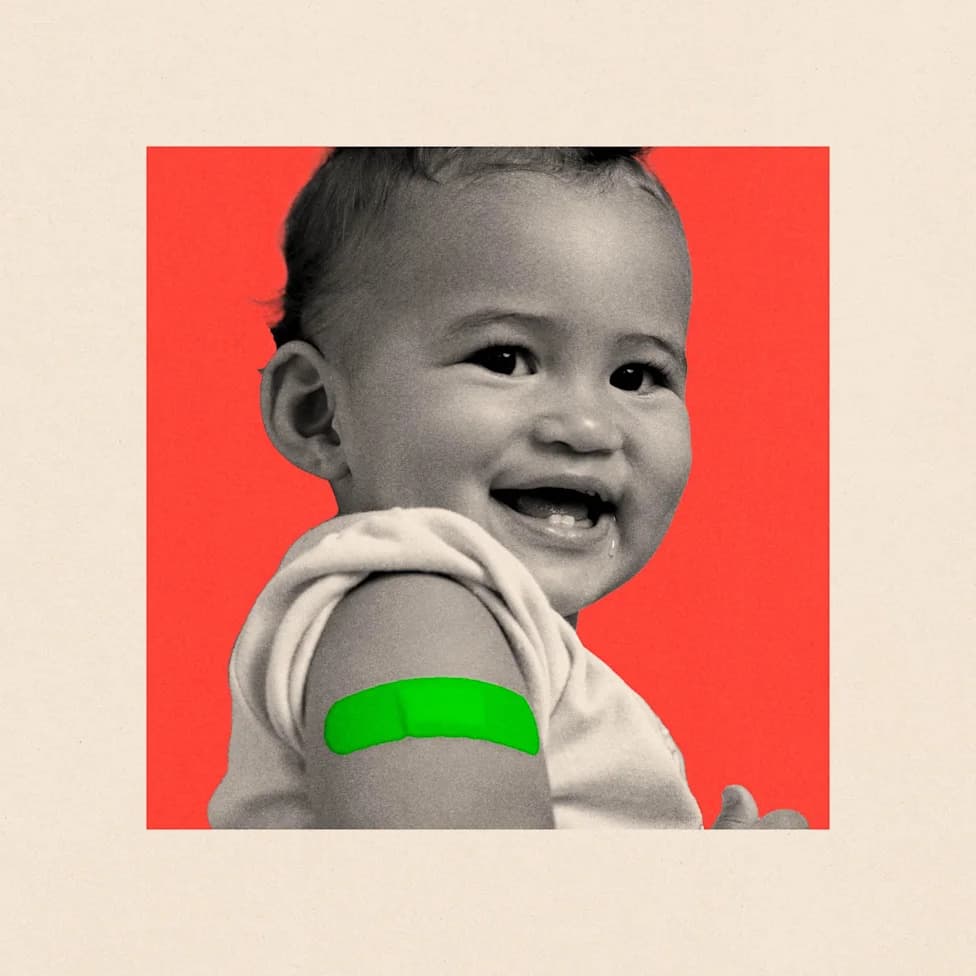
Twenty-week-old Grayson nearly became one of the tens of thousands of British infants who have missed early childhood vaccines against infections such as polio and diphtheria. His mother, Lily, supports immunisation in principle but found the early weeks of motherhood overwhelming: recovering from a traumatic birth and living with post-partum depression, she was daunted by a long trip to a GP surgery. “I've been through the trenches, awake all night. You don't want to leave the house, or go to a different town,” she says.
When Grayson missed his scheduled eight-week jabs he was recorded by the NHS as “overdue.” The solution came when Lily discovered a walk-in clinic in a vacant retail unit at Airedale shopping centre in Keighley, West Yorkshire. Local staff transformed the previously boarded shop into a welcoming, low-barrier place for parents to get their children immunised.
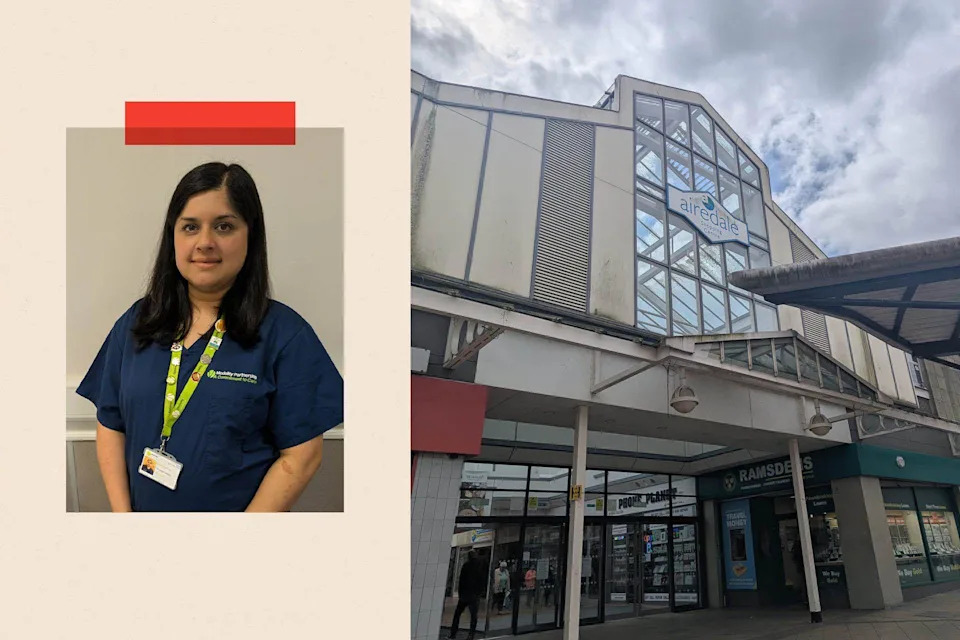
Dr Zoyah Hussain leads a walk-in vaccination clinic at the Airedale shopping centre, helping to boost the area's immunisation rates [BBC]
Small Changes, Big Impact
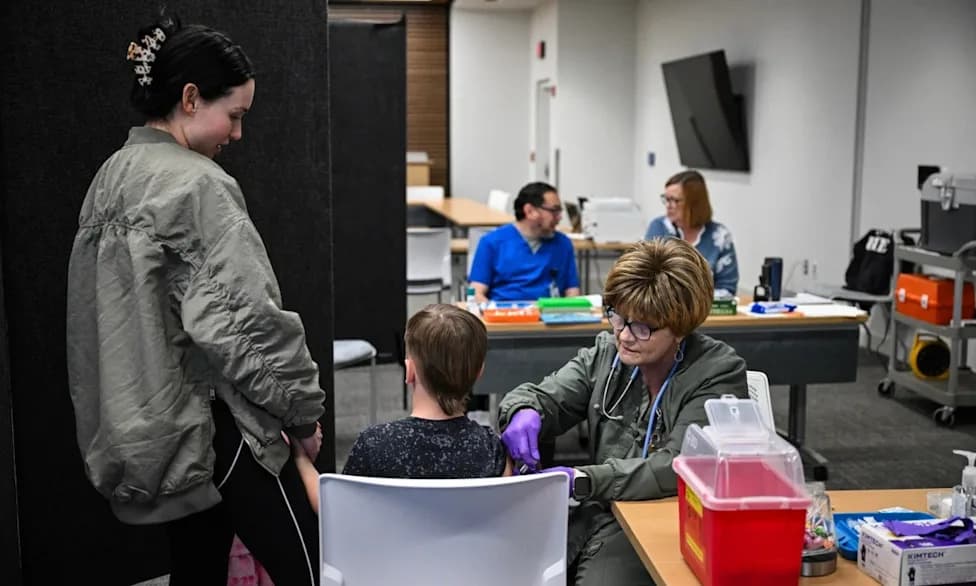
Inside the Keighley clinic the atmosphere is deliberately informal: nurses pass around biscuits, a soft play area lets siblings wait safely, and clinicians offer vaccinations alongside other drop-in services such as baby-weighing. Many parents arrive for routine checks and accept an on-the-spot offer to vaccinate. In one morning session the clinic immunised 10 infants, several of them recorded by the NHS as overdue.
The results are tangible. Since 2023 the clinic — run by Modality AWC GP practice — has helped raise the share of children receiving a first MMR dose by 18 months from 78% to 88% as of March this year. “We are bucking that national trend,” says Bill Graham, a senior administrator at the practice.
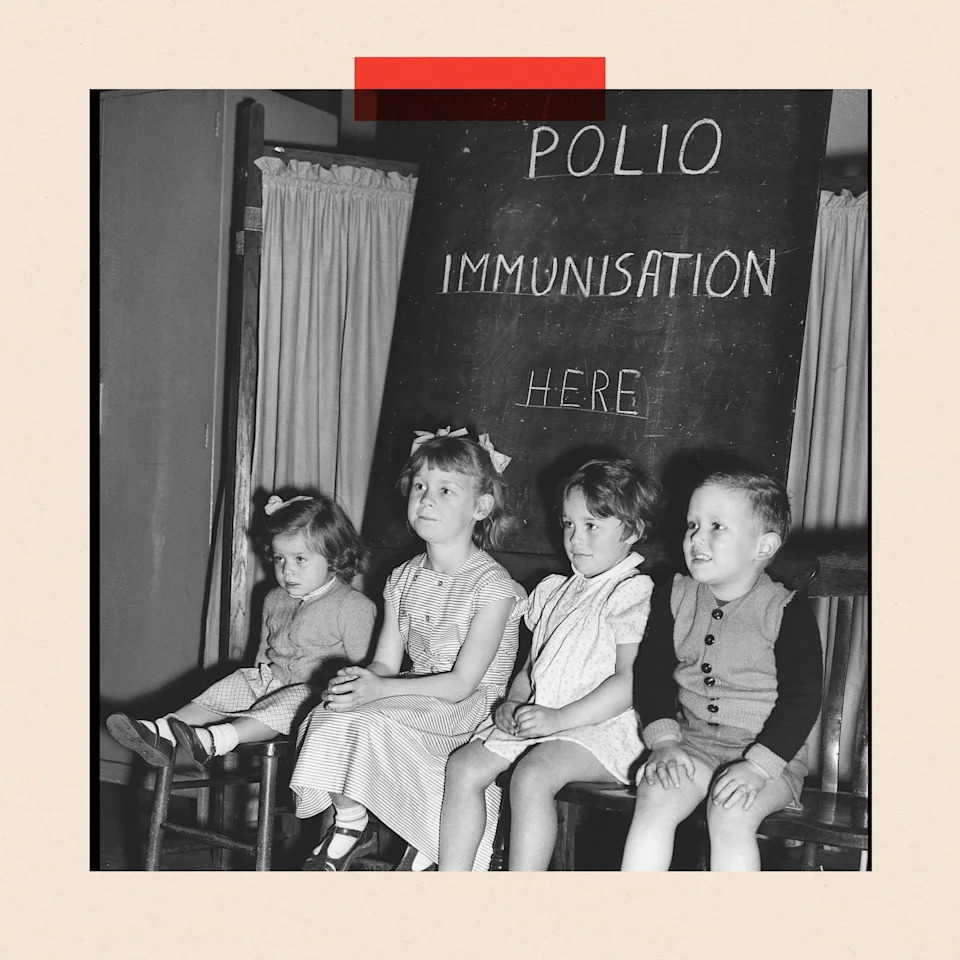
Child vaccinations are a key reason infant mortality fell over the 20th Century, scientists say. Above, children at a south London vaccination clinic in 1956 [Getty Images]
The Wider Picture
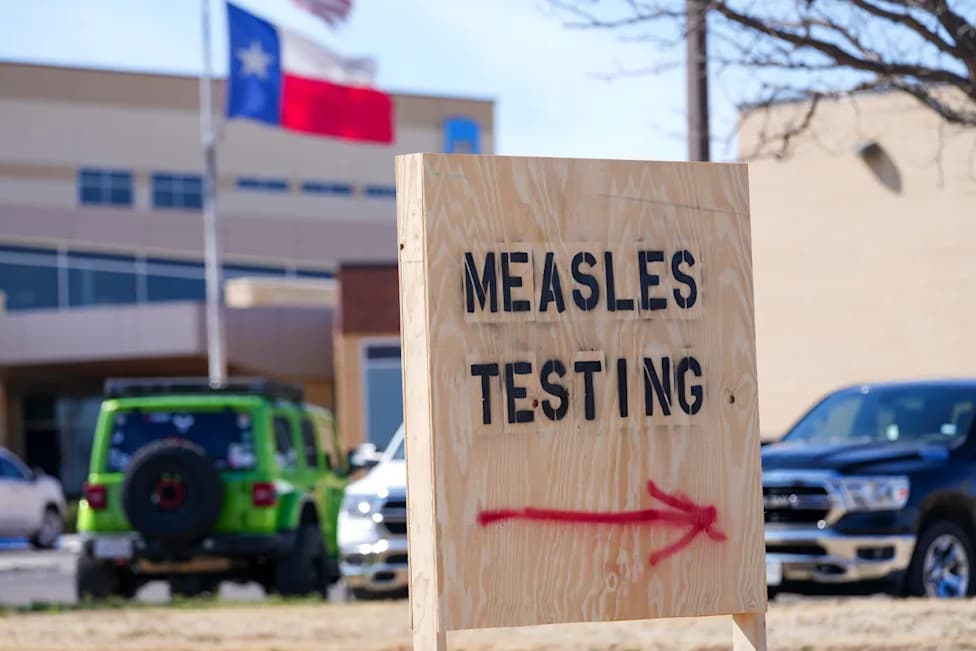
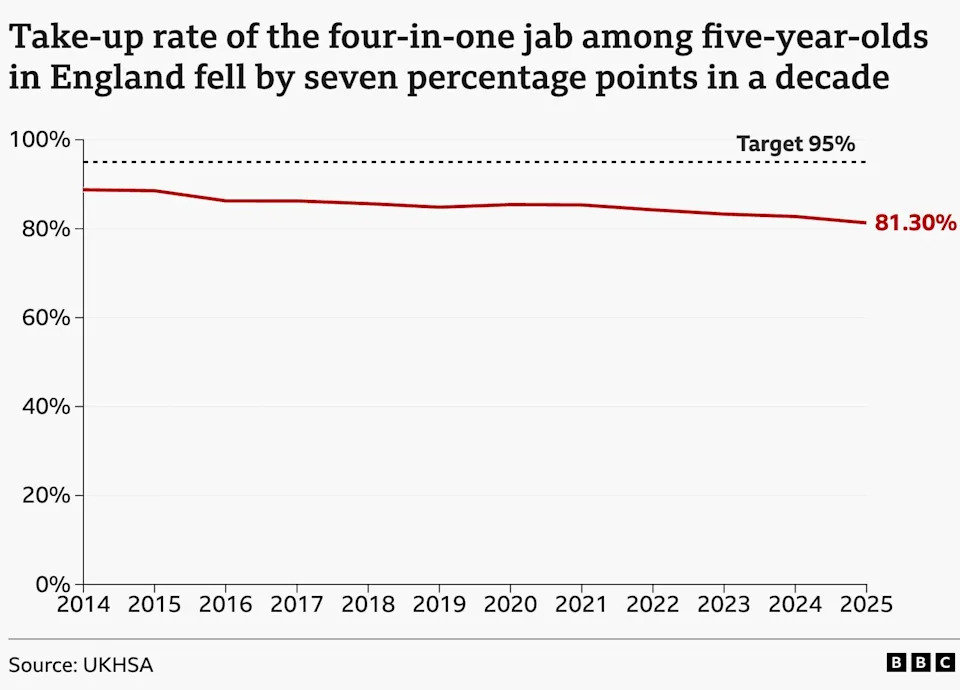
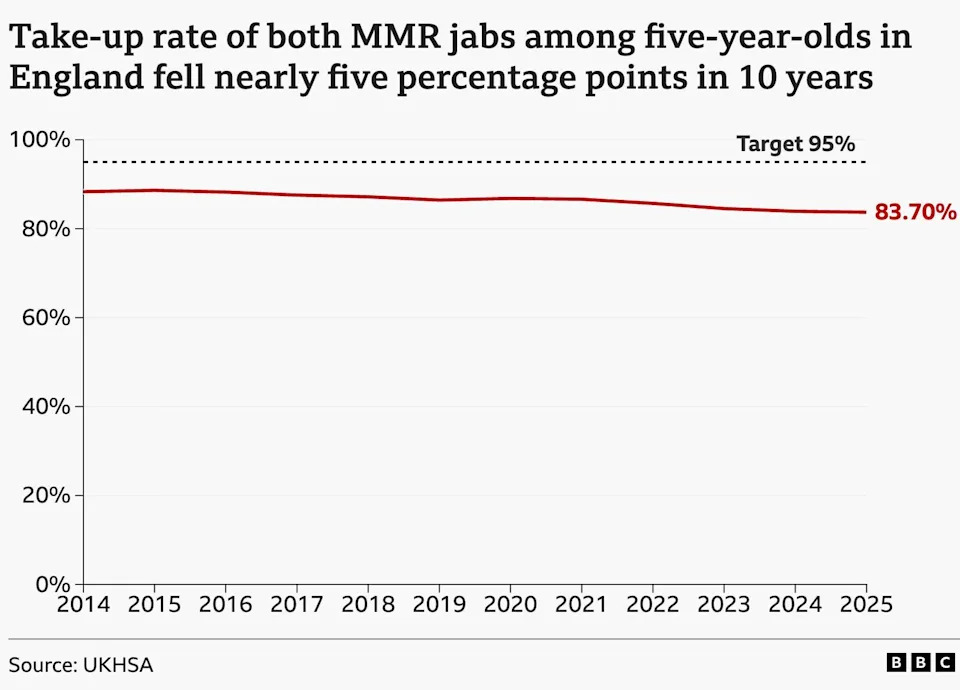
Childhood vaccination coverage in England has fallen over the past decade. The proportion of five-year-olds who have received the four-in-one jab (protecting against diphtheria, tetanus, polio and whooping cough) is now about 81%, down from 89% in 2014. About 84% of children receive both recommended MMR doses, down from 88% a decade ago. Experts warn these declines have real consequences: last year saw measles outbreaks in Birmingham, Bristol and north London, and two children in England have died of measles so far this year.
Why Rates Are Falling
While online misinformation and anti-vaccine content on social media contribute to hesitancy, most public-health experts interviewed for this article say social media is not the principal driver of the decline. Instead, they point to reduced face-to-face contact between parents and health professionals. BBC analysis shows a roughly 45% decline in the number of health visitors in England over the last decade; health visitors routinely remind families about vaccines and sometimes administer them directly. At the same time, GP shortages and lower continuity of care mean fewer trusted, repeated encounters that prompt timely vaccination.
[BBC]
“If you just look at the generalised population, the decline doesn't look horrific,” says Professor Dan Hungerford, epidemiologist at the University of Liverpool. “But compared with other European nations, we perform poorly at delivering early-life vaccinations.” Beccy Baird of the King's Fund stresses that many parents who miss jabs are not ideologically opposed — convenience and access are key barriers.
Policy Choices And Debates
Policymakers are considering a range of responses. Some propose scaling up community-based, low-barrier services like Keighley’s walk-in clinic — putting vaccinations where people already go, in familiar venues such as shopping centres or local community hubs. Research from the Covid vaccine rollout suggests that local, trusted venues increase uptake.
[BBC]
Other voices call for more coercive measures. Labour MP Paulette Hamilton has urged a national conversation about an “opt-out” default for childhood immunisations or incentives for parents. Elsewhere, policies vary: several US states tie vaccination to school entry with limited exemptions, Germany fines parents who do not vaccinate children against measles, and Australia’s “no jab, no pay” policy links benefits to vaccination status.
Many experts warn that mandatory or punitive approaches risk eroding trust and could further marginalise vulnerable families. “I think it destroys trust,” says Bill Graham. “Healthcare in Britain is based on trust. We’re not going to build that up by mandating healthcare.”
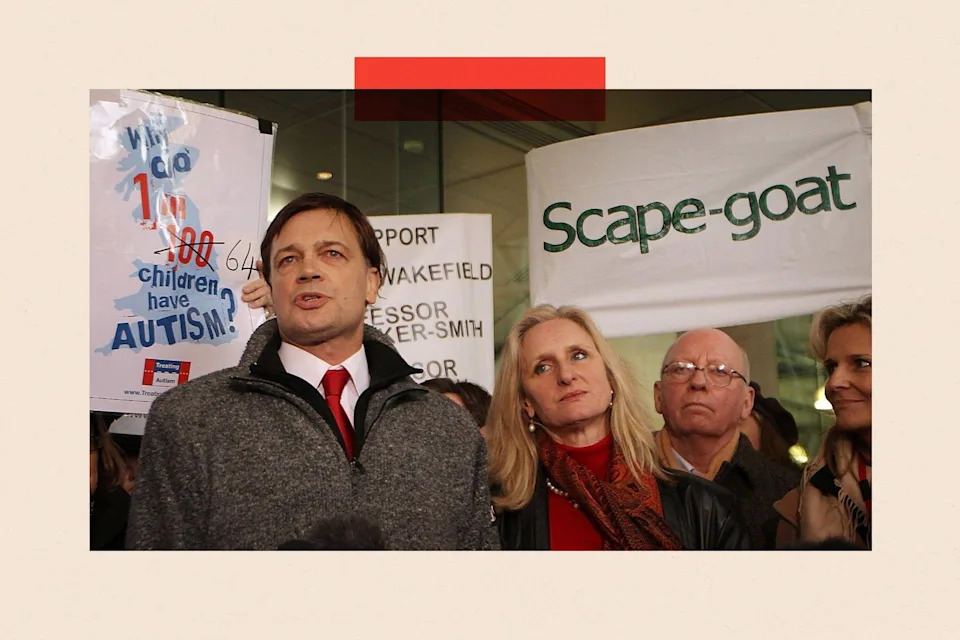
Andrew Wakefield was struck off the medical register in 2010, following controversy over his 1998 academic paper linking the MMR jab with autism [Getty Images]
Remaining Unknowns
Some parents who decline vaccinations give no reason, and these families tend to be harder to reach in surveys — often from lower-income households or with less formal education. Clinicians at the Keighley clinic emphasise gentle, personalised conversations and accessible information as ways to address concerns and change minds over time. “I’ve sent her some information. Giving them a platform to speak about their concerns can help,” says Dr Zoyah Hussain. “It's not us forcing it on anyone. This is a choice.”
Conclusion
Britain’s decline in early-life immunisation is a complex problem with social, structural and logistical roots. While social media misinformation matters, the evidence points strongly to reduced in-person contact with health professionals and barriers of convenience. Local, low-friction solutions — walk-in clinics in familiar venues, better-resourced health visitor services, and outreach in deprived communities — offer practical ways to improve uptake without undermining trust. Policymakers must weigh these community-first approaches against more coercive options, mindful of the potential trade-offs in equity and public trust.
Help us improve.