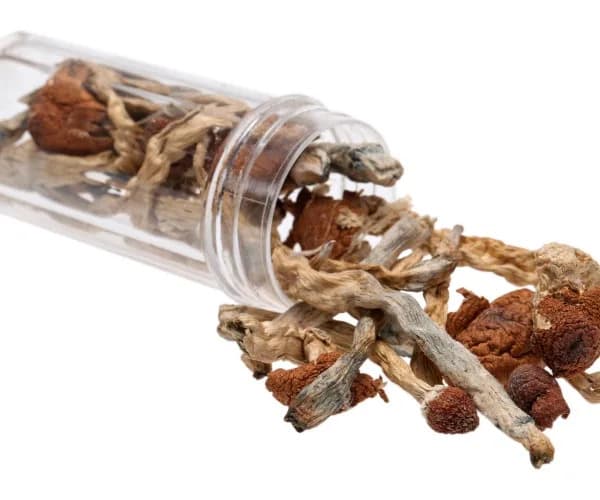
This early‑stage U.S. pilot trial reports that 9 of 12 veterans with treatment‑resistant PTSD no longer met diagnostic criteria one month after psilocybin‑assisted therapy. The 11‑week protocol combined preparatory psychotherapy, two supervised doses of synthetic psilocybin given two to three weeks apart, and follow‑up integrative therapy. The most common side effect was a mild headache. Researchers stress the study was designed to evaluate safety and call for larger randomized trials and continued follow‑up to six months.
Psilocybin Therapy Puts 9 of 12 Treatment‑Resistant Veterans With PTSD Into Remission in Small U.S. Pilot
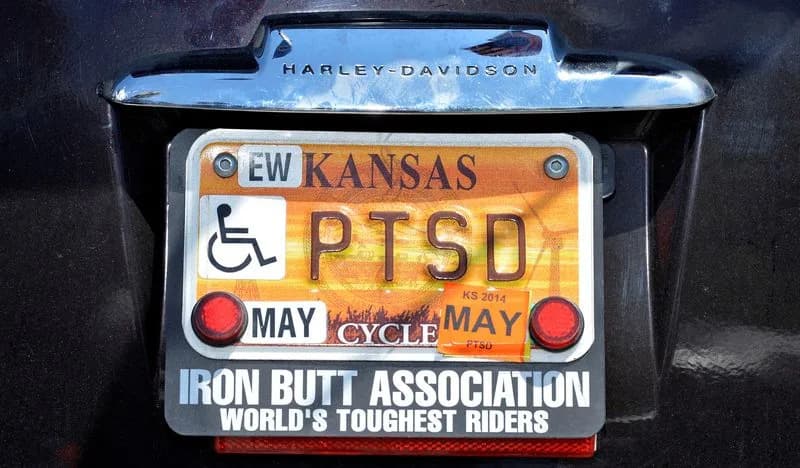
FILE PHOTO: Vietnam veteran Larry Edwards ,63, of Ellsworth, KS, sports a personal license plate "PTSD" for the Post Traumatic Stress Syndrome he still suffers for his service in Vietnam, as he arrives in Fairfax, Virginia May 25, 2013, along with hundreds of thousands of motorcycle riders gathering on Memorial Day weekend for the 26th Annual Rolling Thunder Rally May 26, 2013 to remember POWs and MIAs from America's wars, in Washington. REUTERS/Mike Theiler/File Photo
A small U.S. pilot study found that military veterans with severe, treatment‑resistant post‑traumatic stress disorder (PTSD) experienced substantial benefit after a protocol that combined psychotherapy with the psychedelic compound psilocybin, researchers report.
The early‑stage trial — the first formal study of psilocybin‑assisted therapy specifically in veterans with PTSD — enrolled 12 participants and prioritized safety and feasibility rather than definitive proof of efficacy. One month after completing the 11‑week program, nine of the 12 veterans no longer met diagnostic criteria for PTSD, according to a report published in Communications Medicine.
Study Design and Treatment
The 11‑week protocol included approximately eight hours of preparatory psychotherapy, two supervised doses of synthetic psilocybin given two to three weeks apart, and an additional six to eight hours of integrative therapy after the drug sessions. The team emphasized careful clinical support during dosing and integration to help participants process difficult memories and emotions.
Safety and Side Effects
The most commonly reported adverse effect was a mild headache following psilocybin dosing. Two of the three participants who had not reached remission at the one‑month assessment showed modest symptom reductions; a third showed negligible change. Because this was a small, uncontrolled safety trial, the findings cannot establish causation or generalize to broader populations without larger randomized studies.
"The capacity for participants to revisit very difficult events, to reinterpret them and to find new ways to move forward in life has been particularly encouraging," study leader Alan Davis of The Ohio State University said in a statement.
Context and Next Steps
Psilocybin remains a controlled substance in the United States and is regulated similarly to drugs judged to have high abuse potential. The researchers said they hope to secure funding for a larger randomized, controlled clinical trial and will continue to monitor participants for up to six months to assess longer‑term outcomes, biological markers, and effects on related issues such as sleep disturbances and substance use. The report also notes limited authorized clinical use of psilocybin in some countries, such as Australia and Switzerland.
Note: The trial’s promising results are preliminary. Further rigorous research is required to confirm safety, efficacy, optimal dosing, and which patients may benefit most.
Help us improve.