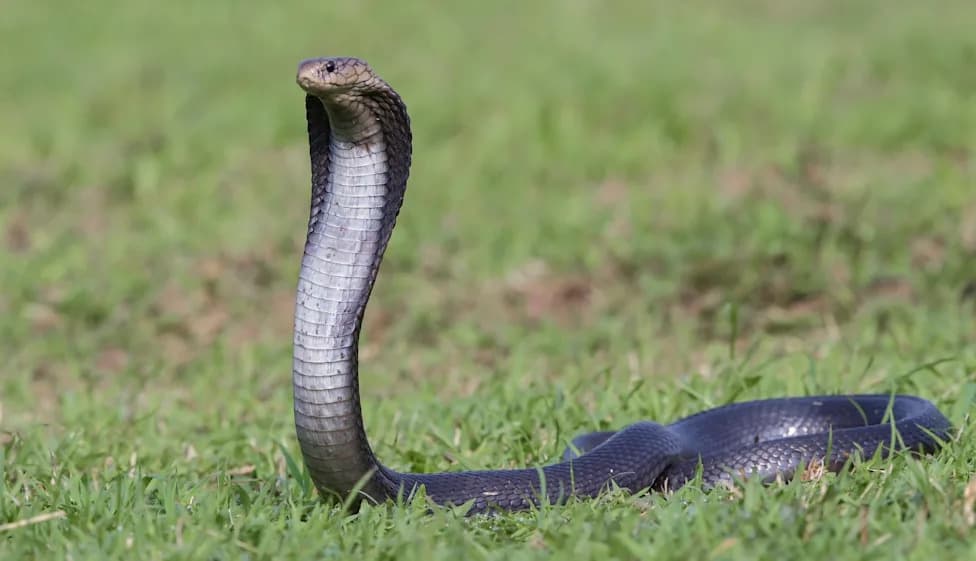
Foragers found a king cobra nest on July 15 in the Ambe Community Forest near Jhakri Sota, prompting officials to restrict access and increase monitoring. Conservationists note that female king cobras build and guard nests of 30–40 eggs for two to three months, and the species can exceed 18 feet (5.5 m). Rescuers, led by Kuldeep Neupane, continue regular inspections while urging caution and community cooperation. Despite their vulnerable status, king cobras are not currently listed among species protected by Nepal.
Mushroom Foragers in Nepal Discover Rare King Cobra Nest; Area Secured for Conservation
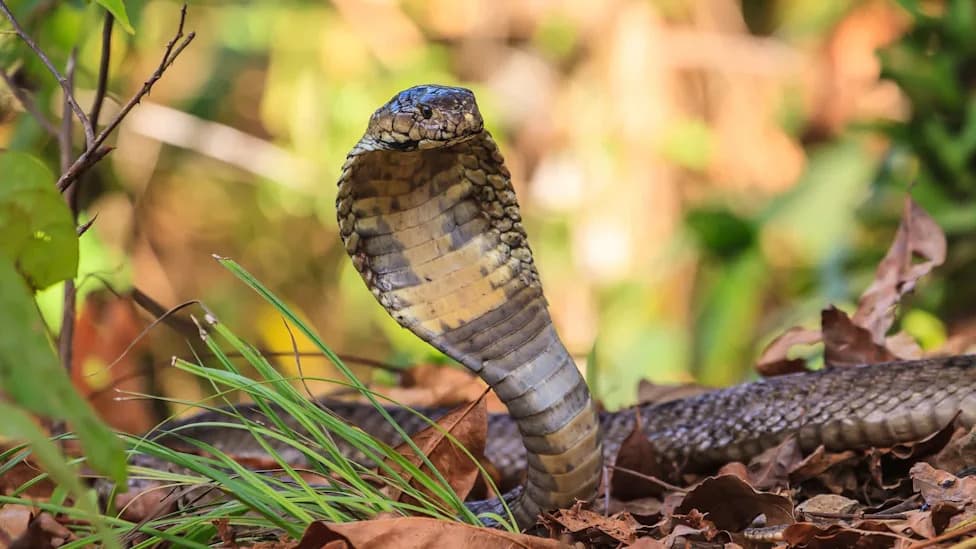
Photo Credit: iStock
Local residents collecting mushrooms in a community forest in Nepal made a rare and remarkable discovery on July 15: a king cobra nest built near Jhakri Sota in the Ambe Community Forest of Ghorahi Sub-Metropolitan City-18.
According to The Rising Nepal, community forest chairman Bhandari said the site was secured with the help of snake rescuer and conservationist Kuldeep Neupane, who has worked on snake rescue and conservation in the area for the past four years. Since the find, officials have restricted access to the immediate area and prohibited collection of grass, firewood and mushrooms near the nest to reduce disturbance and risk.
Local Response and Ongoing Protection
Om Bahadur Oli, acting chief of the Division Forest Office in Dang, said officials are closely monitoring the location and coordinating with the community forest users' committee to keep the site protected. Neupane continues to inspect the nest regularly, and the Division Forest Office is also maintaining venomous snakes that rescuers remove from human settlements for conservation.
What Makes This Nest Significant
Snake researcher and conservationist Basanta Subedi explained that female king cobras are the only snakes known to construct nests. They build mounds of dry leaves and other vegetation, lay a clutch of eggs—typically 30 to 40—and remain near the nest to guard and regulate conditions until the eggs hatch after about two to three months.
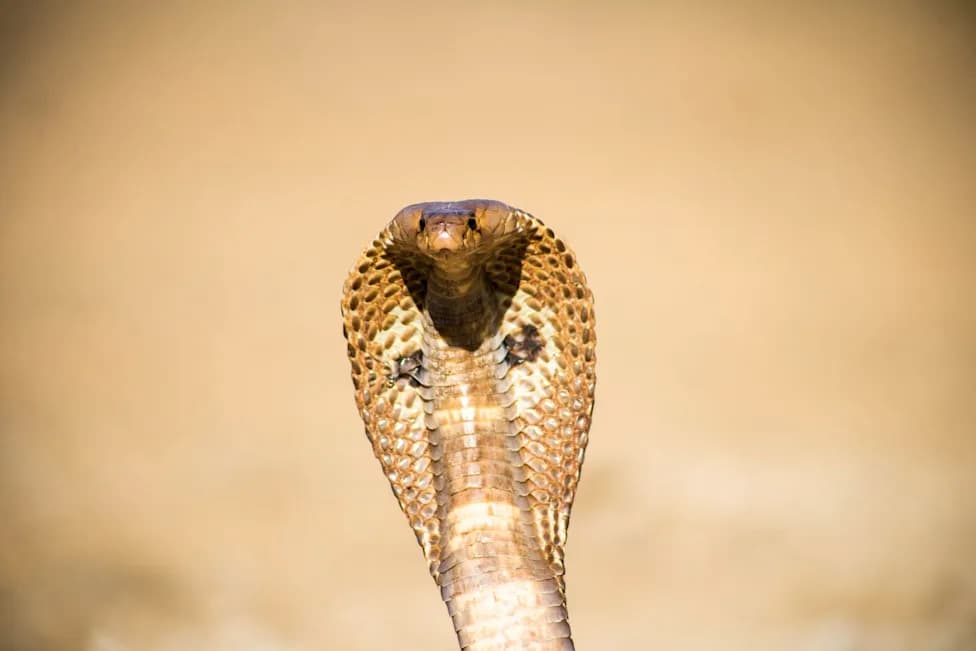
King cobras are also notable for their size: the species can exceed 18 feet (5.5 meters) and is considered the world's longest venomous snake. By preying on both venomous and nonvenomous snakes, king cobras help maintain ecological balance; Subedi warned that a decline in king cobra populations could allow other venomous species to increase, potentially raising snakebite risk.
Safety, Conservation, and Local Impact
A king cobra nest in an area regularly used by people can pose a danger if someone unknowingly approaches too closely—especially while a female is guarding eggs. The immediate response has therefore focused on giving the nest space: restricting access, stepping up patrols, and coordinating with local forest users to reduce human-wildlife conflict.
Neupane said he has rescued and conserved around 3,000 venomous and nonvenomous snakes in the wider area and has relocated king cobras on several occasions after they entered homes in the Rampur and Balrampur areas of Ghorahi-2.
Subedi noted that although Nepal protects pythons, king cobras are not currently listed among the country's protected species despite their vulnerable IUCN status—an issue conservationists say may merit review.
The discovery highlights the growing overlap between people and wildlife in community-use forests and underscores the need for community-led protection measures, awareness, and cautious coexistence.
Help us improve.