The Austin prosecution involves a 17-year-old and two juveniles accused of a two-day shooting spree in May 2026 that allegedly involved nearly 150 rounds across 13 incidents, striking homes, vehicles and two fire stations. Texas investigators have recommended a rare first-degree terrorism charge under a 2023 law that elevates violent acts committed with an intent to intimidate the public or influence government. The key legal question: can terrorism be proven by the intent to create widespread fear and disrupt civic life even without an ideological motive? A ruling for prosecutors could set a precedent expanding the use of state terrorism statutes in nonideological mass-violence cases.
Austin Teen Shooting Spurs Rare Terrorism Charge — Could It Redefine Domestic Terror Law?

Texas broadened its terrorism law in 2023; a new prosecution is testing how far it reaches.Bo Zaunders/Getty
Texas prosecutors have recommended a first-degree terrorism charge in a high-profile Austin case that may reshape how state and federal authorities define and prosecute domestic terrorism. The charges stem from a two-day spree in May 2026 in which investigators say a 17-year-old, identified as Cristian Fajardo Mondragon, and two juveniles allegedly fired nearly 150 rounds across 13 separate shooting incidents, struck residences, occupied vehicles and two fire stations, injured multiple people and prompted shelter-in-place orders.
What Happened
According to public reporting and charging documents, the alleged incidents included shootings, vehicle thefts and burglaries over a 48-hour period. Texas law treats 17-year-olds as adults for criminal prosecutions, so Fajardo Mondragon faces adult-level charges. The case began with counts such as aggravated assault, deadly conduct and firearm theft and later prompted investigators to recommend an elevated terrorism charge under Texas' 2023 revisions to its terroristic-threats statute.
Why This Charge Matters
The central legal question is whether terrorism in Texas can be established by proving an intent to intimidate or coerce the public or to influence government operations — without proving an ideological or political motive. The 2023 amendment allows prosecutors to elevate certain violent offenses to terrorism-related offenses when the violence is committed with the intent to intimidate the public or influence government policy through coercion or intimidation.
"This approach shifts the focus from why the violence occurred to what the violence was intended to accomplish — for example, creating widespread fear or disrupting government services."
Federal Context And State Variations
There is no single federal crime labeled "domestic terrorism." Federal law defines domestic terrorism as dangerous acts intended to intimidate civilians or influence government policy, but Congress has not created a standalone criminal offense called "domestic terrorism." Federal prosecutors typically rely on murder, firearms, conspiracy, hate-crime or civil-rights statutes, with the terrorism designation affecting investigative priorities and sentencing in some circumstances.
States have taken diverse approaches. After 9/11, federal tools to prosecute international terrorism expanded rapidly, but domestic political violence has been handled unevenly. Some states have stand-alone terrorism statutes that emphasize ideology or bias; others do not. Texas' statute is noteworthy for allowing prosecutions based primarily on intent to intimidate or coerce rather than on demonstrated ideological motivation or ties to extremist groups.

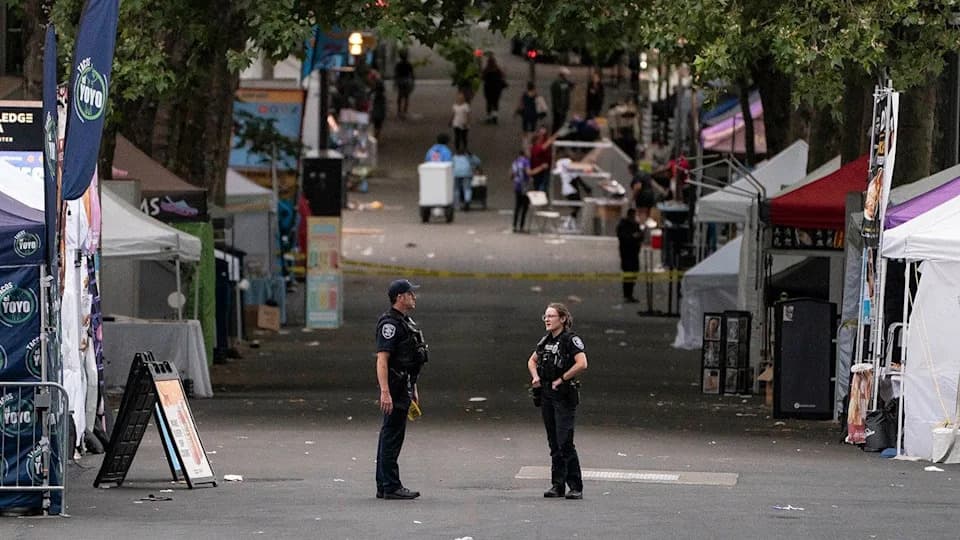
The charging documents in this case focus on whether the alleged violence was intended to intimidate the public, generate widespread fear and disrupt community life across Austin, Texas.halbergman/Getty
Comparisons To Other Mass-Violence Prosecutions
The Austin theory differs from cases where prosecutors tied attacks to explicit bias or ideology. For example, the 2022 Buffalo supermarket shooter was convicted of domestic terrorism in New York under a statute addressing hate-motivated mass attacks; the 2019 El Paso Walmart massacre produced federal hate-crime and state capital-murder charges grounded in an alleged anti-immigrant manifesto. By contrast, several other recent mass-casualty shootings (Boulder 2021; Highland Park 2022; Waukesha 2021) were prosecuted primarily under homicide statutes even though they caused broad public fear.
Evidence, Motive, And The Importance Of Caution
Publicly available reports in the Austin case do not indicate a manifesto, ideological writings or links to an organized extremist movement. Scholars of political violence caution investigators and prosecutors not to assume motive prematurely: mass violence can arise from multiple pathways, including extremist ideology, criminal opportunism, interpersonal grievances or thrill-seeking. Distinguishing among these causes matters for both legal strategy and public understanding.
Potential Consequences
If Texas courts accept a theory of terrorism grounded primarily in the intent to terrorize the public or disrupt civic life — rather than proof of political ideology — the ruling could set a precedent that prompts prosecutors in other states to pursue terrorism enhancements in cases previously handled as homicide or attempted murder. That would expand the practical reach of state terrorism statutes and reshape prosecutorial options for nonideological mass violence.
Youth Crime Trends And Context
The defendants' ages have raised public interest. Juvenile violent crime in the United States has declined substantially since the mid-1990s, and arrest rates for many violent offenses remain well below historical peaks. However, firearm violence tells a more complex story: firearms are now the leading cause of death for American children and adolescents, and youth firearm homicide rates rose during and after the COVID-19 pandemic. Some researchers point to fluid peer networks and social-media dynamics as factors in contemporary youth violence.
Conclusion
From the perspective of terrorism studies and criminal law, the most consequential question in the Austin case is whether courts will accept a definition of terrorism that does not require proof of ideological motive. The answer could influence how prosecutors nationwide charge future incidents of mass or community-wide violence that generate widespread fear but lack an apparent political agenda.
Author: This analysis was written by Art Jipson, University of Dayton. It originally appeared in The Conversation.
Help us improve.