China has sharply narrowed the AI lead once held by the US, driven by open-source models like DeepSeek's R1, Z.ai's GLM 5.2 and Moonshot's Kimi K3 and by major state investment. Beijing treats open AI as both an economic lifeline and a diplomatic tool, launching a new international organisation in Shanghai and pledging roughly 2tn yuan in sector investment. The competition forces other nations to choose between cost, control and security while China balances centralised planning against the need for entrepreneurial innovation.
Xi’s 'AI Communism' and China’s Rapid AI Surge — Global Stakes and Choices
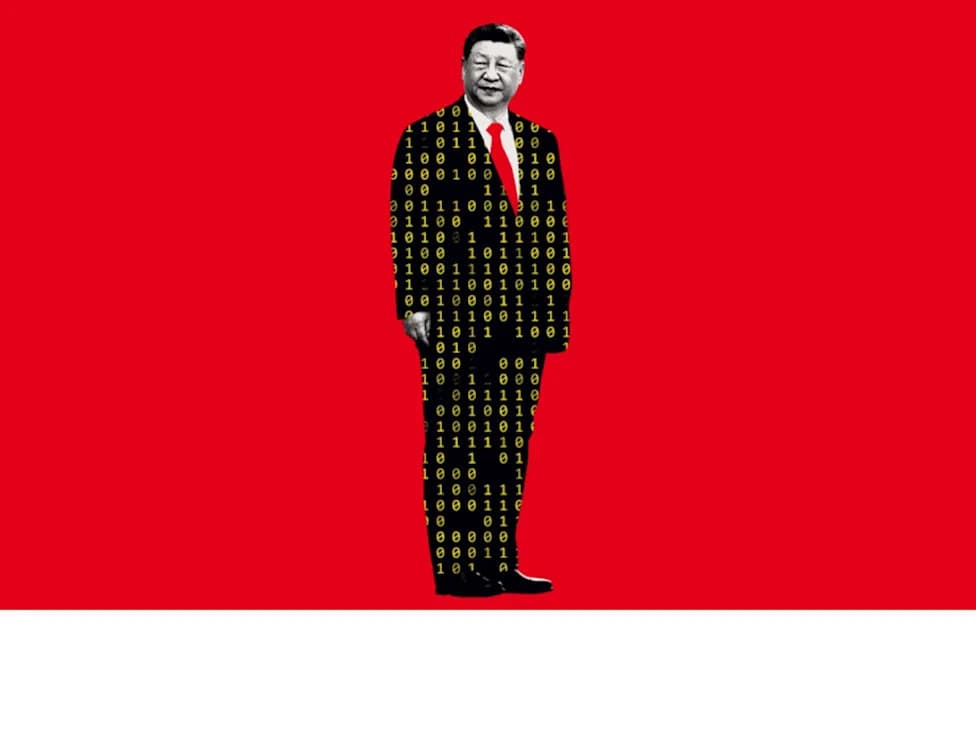
Xi Ai
Less than four years ago the United States looked comfortably ahead in the race for AI supremacy. The release of ChatGPT in late 2022 and a tightening of US export controls on chips seemed to cement America's lead. But China has closed the gap with startling speed, driven by open-source innovation, heavy state support and an urgent push for technological self-reliance.
How China Caught Up
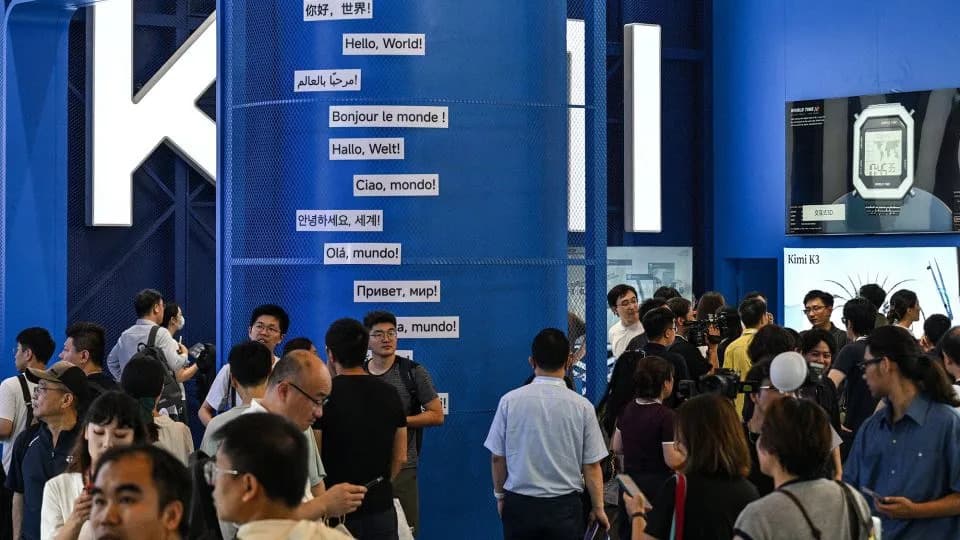
In early 2025, Chinese firm DeepSeek published R1, an open-source model that hinted at how rapidly domestic developers were advancing. Although R1 lagged behind the most powerful US systems, it triggered market jitters about China's potential to challenge Silicon Valley. Subsequent releases — Z.ai's GLM 5.2 and Moonshot's Kimi K3 — have narrowed that distance further, with Kimi notable for its low cost relative to western rivals.
Open Source Versus Proprietary
The latest Chinese models are mostly open-weight, meaning they can be downloaded, modified and run locally by organizations with sufficient compute. By contrast, models such as OpenAI's ChatGPT and Anthropic's Claude remain proprietary and centrally controlled. Each approach has trade-offs:
- Open-Source: Lower cost and greater deployability; attractive to companies that want to run models on their own servers and avoid external oversight. Monetization and long-term sustainability of open projects remain uncertain.
- Proprietary: Easier for regulators to supervise and for creators to manage safety and updates, but users can be vulnerable to policy shifts or export controls that limit access.
"The US moat in building frontier AI software might be softer than many people thought," says Ryan Fedasiuk of the American Enterprise Institute. "The race to build computing infrastructure and set AI standards is a contest over the operating systems through which people live, work and obey."
Geopolitics, Markets and Standards
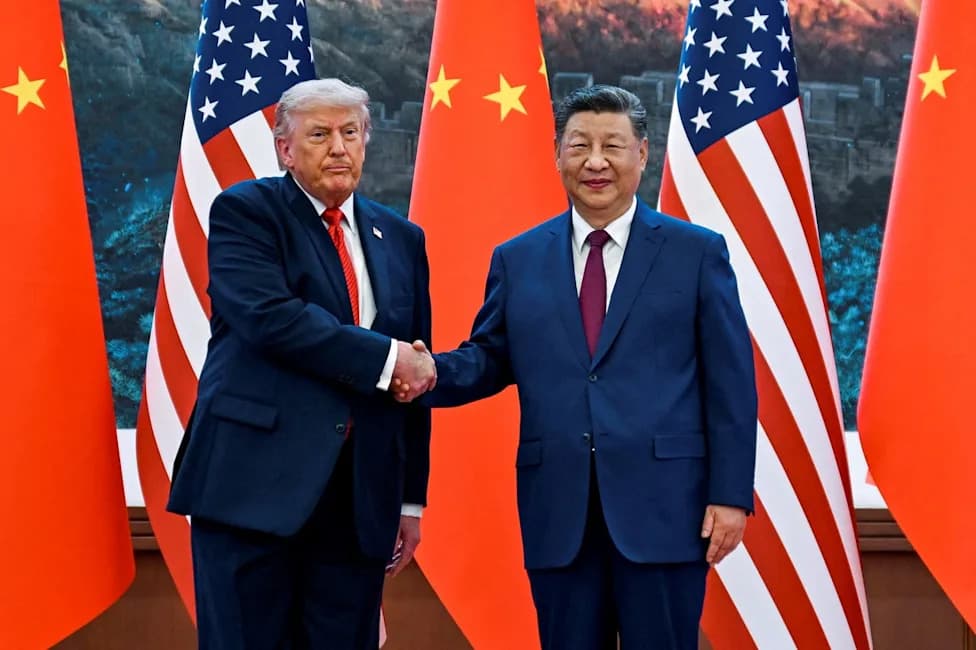
For Beijing and Washington, AI is not only a technological contest but a civilisational one: control of AI standards, infrastructure and ecosystems will shape economic power and geopolitical influence. China is using open-source AI diplomatically — President Xi Jinping launched the World Artificial Intelligence Cooperation Organisation in Shanghai, which has attracted about 30 member countries — while also pursuing large state-directed investments in chips, data centers and industrial AI.
Economic Imperatives and State Strategy
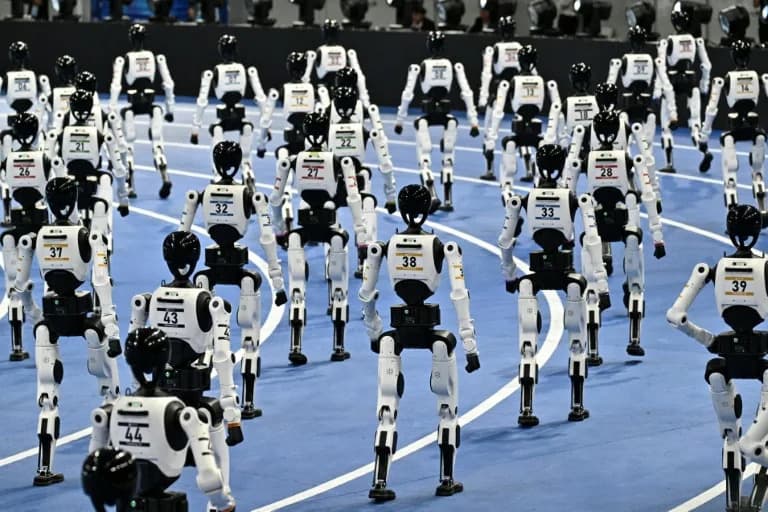
China's economy needs new drivers. With consumer demand subdued and traditional exports facing barriers, officials are betting on AI to revive growth. Authorities plan roughly 2 trillion yuan (about £220bn) of directed investment into the sector over the next three to four years and are rolling out blueprints to spread AI across manufacturing, healthcare and other industries. Recent data show faster adoption of AI in China and rising semiconductor exports, and more than half of recent quarterly growth has come from electronics, technology and telecommunications.
Constraints and Trade-Offs
China faces serious bottlenecks: it lags the US in high-end compute and advanced chip fabrication, and key tools such as ASML's extreme ultraviolet lithography machines remain difficult to obtain. Those restrictions have pushed Beijing toward self-reliance, but building domestic capacity is costly and time-consuming.
Politically, China must balance centralized control and industrial planning with the need to foster entrepreneurial risk-taking and innovation. The Communist Party's willingness to discipline or constrain tech firms poses a risk that the environment will favor stability over creative disruption. Some analysts warn of the temptation to concentrate scarce compute resources in a single, state-led programme — a "national Manhattan Project" for AI — which could accelerate progress but potentially crowd out competitors and innovation.
What This Means For The World
Other countries face difficult choices: align with American proprietary ecosystems, adopt cheaper and more portable Chinese open models, or pursue independent paths. Each option involves trade-offs between cost, control, security and influence. The international competition over AI infrastructure, standards and supply chains will shape policy decisions in capitals from London to Brussels to New Delhi for years to come.
Conclusion: China has made rapid, tangible gains in AI capability, powered by open-source models and state support. But significant technical, economic and political hurdles remain. How Beijing balances central planning with innovation — and how democracies respond to Chinese advances — will determine the next phase of the global AI era.
Help us improve.