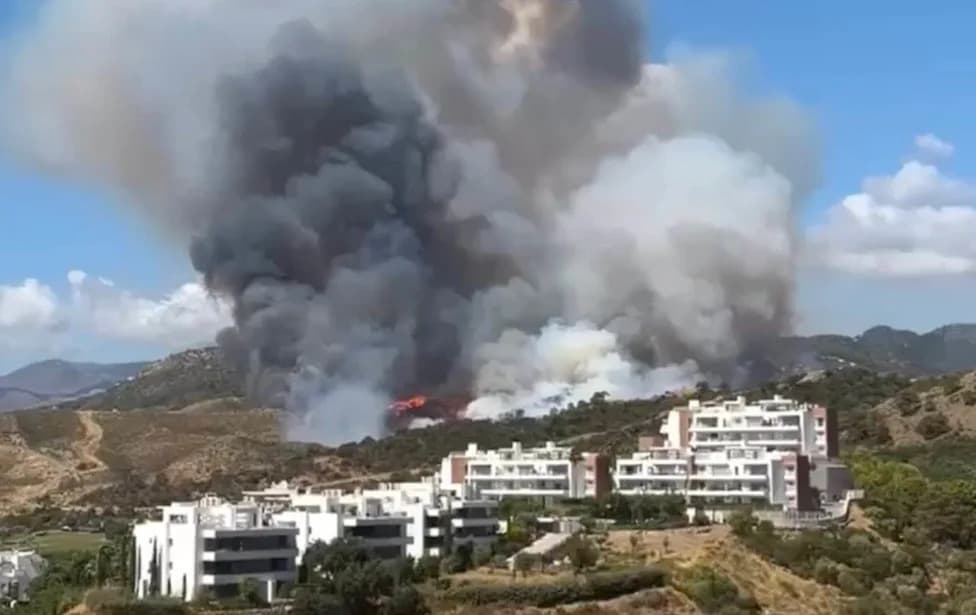
Fast-moving wildfires in southwest France and west of Madrid, Spain, have forced tens of thousands to evacuate and destroyed homes, campsites and other buildings. French authorities cleared the Cap Ferret peninsula and reported roughly 10,000 hectares burned in Gironde, while Spain declared a national emergency after fires west of Madrid forced more than 19,000 people to leave. Officials and climate experts say extreme heat, strong winds and dry vegetation — conditions worsened by climate change — are driving unusually intense and rapid fire behaviour.
Mass Evacuations After Fast-Moving Wildfires Devastate Southwest France and Areas West of Madrid

Hundreds have been evacuated from the peninsula by boat while others have been told to leave via road [Getty Images]
Rapidly spreading wildfires have forced mass evacuations across southwest France and multiple zones west of Madrid, Spain. The blazes have consumed thousands of hectares, destroyed homes and campsites, and prompted large-scale rescue operations as firefighters battle extreme heat, strong winds and severe drought.
France: Cap Ferret, Gironde and Landes
French authorities ordered the full evacuation of the Cap Ferret peninsula on the Bay of Arcachon, with hundreds transported by boat and tens of thousands told to leave. Interior Minister Laurent Nuñez said roughly 40,000 people had either been evacuated or were in the process of leaving Gironde. Officials reported about 10,000 hectares (nearly 25,000 acres) burned in the region.
Local prefect Sophie Brocas said 53 homes and a campsite were destroyed on the peninsula, while around 2,000 houses were saved. Fire chief Marc Vermeulen warned that the fires spread especially rapidly overnight, comparing their behaviour to the 2022 blazes but saying this drought is more severe. "When I say explosion, it means that for several hours we had propagation speeds on the order of 800 to 1,000 hectares burned per hour," he said.
[BBC]
Further down the Atlantic coast in the Landes department, a large fire near Biscarrosse prompted the evacuation of more than 23,000 people — about 18,000 in Biscarrosse and some 5,000 in Parentis-en-Born — including residents of homes, campsites, a nursing home and a summer camp. Landes prefect Gilles Clavreul said winds of up to 50 km/h (31 mph) and daytime temperatures of 36–37°C made containment unlikely by the end of Friday; he reported 105 buildings identified as partially or completely destroyed.
No additional civilian casualties were reported overnight in southwest France, though two firefighters died earlier in the week while tackling a blaze near Bordeaux airport. President Emmanuel Macron called the situation "very tense," particularly in Gironde.
Spain: National Emergency West of Madrid
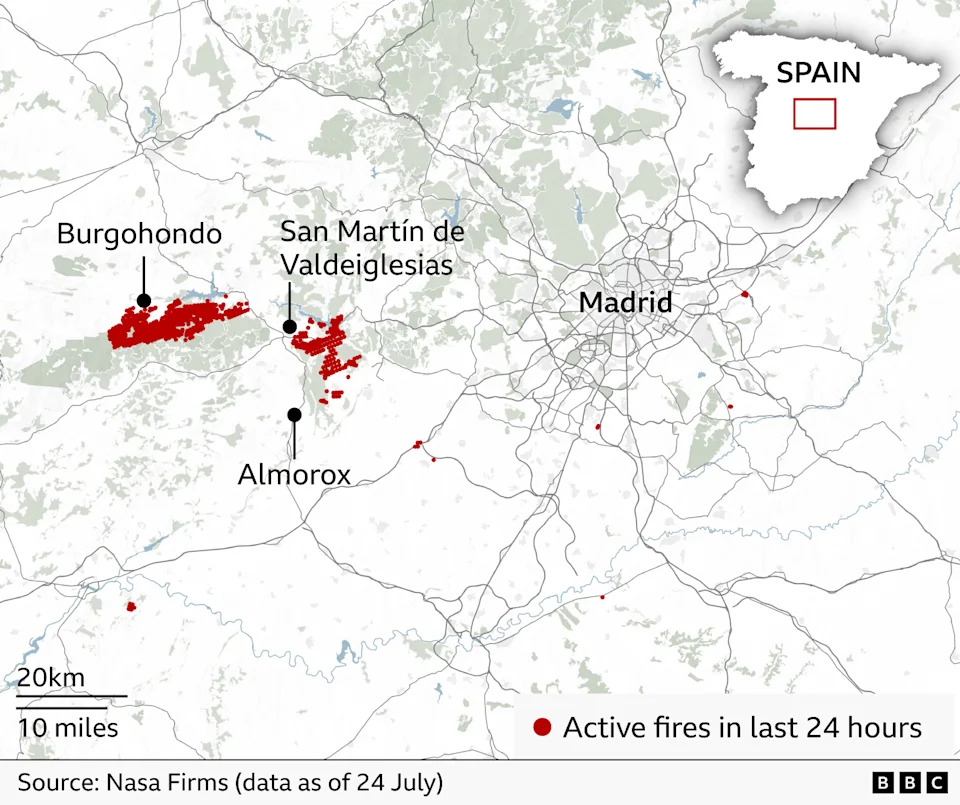
Spain declared a national emergency after multiple wildfires around Madrid merged into rapidly advancing fronts. Authorities evacuated more than 19,000 people from towns west of the capital, and Interior Minister Fernando Grande-Marlaska reported roughly 9,000 hectares burned in Ávila and 3,000 hectares in the Madrid region.
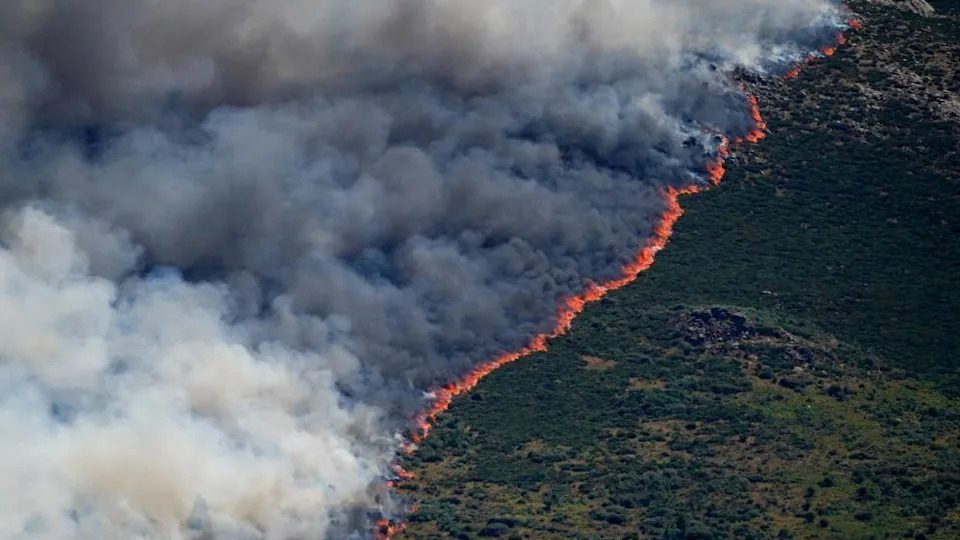
A wildfire was captured spreading across the Burgohondo mountains, in Avila, Spain on Thursday [Reuters]
The mayor of El Tiemblo said a fire jumped from Navaluenga to the Iruelas Valley — a distance of about 20 km (12 miles) — in under 30 minutes. Residents described thick smoke and choking conditions as emergency services issued Es-Alert warnings ordering people to leave towns including Chapinería, Navas del Rey and Colmenar del Arroyo.
Isabel Díaz Ayuso, regional president of Madrid: "The worst fire in the history of the region... The situation is completely unusual and catastrophic."
Firefighting Effort and International Support
The European Union deployed three planes and two helicopters to assist France and sent four planes to Spain. Firefighters, emergency services and local volunteers have been stretched across multiple fronts while officials prioritize saving lives and protecting communities.
Climate Context
Scientists point to Europe's rapid warming as a major factor increasing wildfire risk. The EU's Copernicus Climate Change Service says Europe has warmed faster than the global average since the 1980s. Hotter, drier summers reduce moisture in soils and vegetation, creating abundant fuel for fires. Extreme heat, dry plant matter and strong winds can then make blazes spread faster and burn more intensely.
Eyewitness Accounts
Visitors and residents described chaotic, night-time evacuations. One holidaymaker said emergency alerts woke his family at 03:00, and they fled with many others along the peninsula's single exit road. Another evacuee recounted leaving tents, bikes and camping gear behind as they escaped to Bordeaux under sirens and loudspeakers.
Authorities have urged anyone in affected areas, when safe to do so, to follow official evacuation orders and to report their status through local emergency channels.
Help us improve.