The Iran-aligned Houthi rebels claim they struck two Saudi tankers and plan to blockade the Bab al-Mandeb strait, threatening a crucial maritime chokepoint. The strait is a short but strategically vital passage between the Arabian Peninsula and the Horn of Africa that carried about 12% of global oil shipments in 2023. Disruption there — especially alongside closures at the Strait of Hormuz — would force detours around Africa, extending voyages from roughly 20 to 50 days and creating major pressure on energy markets. Western military actions and EU protective operations have helped, but traffic has yet to return to pre-2023 levels.
Bab al-Mandeb Under Threat: Houthi Blockade Claims Put Global Oil Routes at Risk
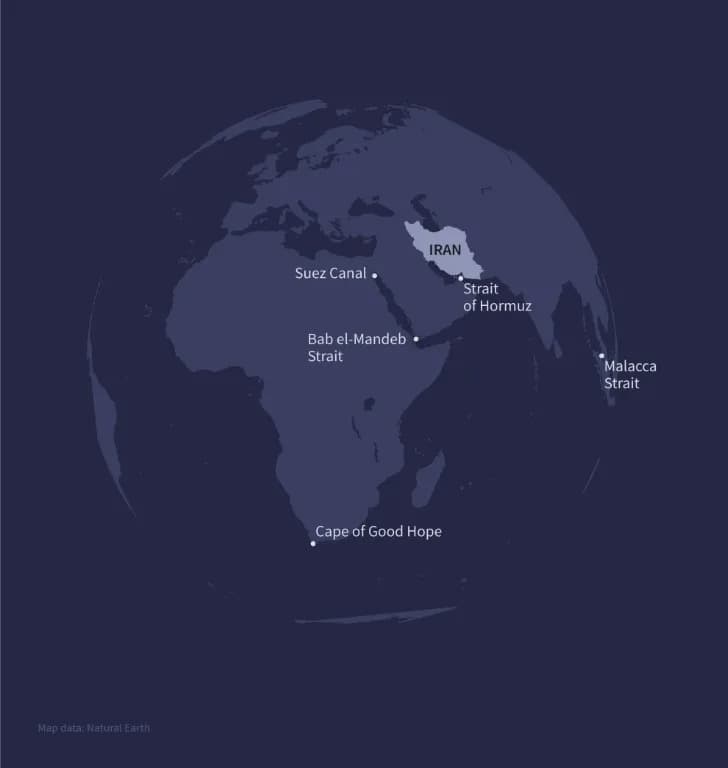
Infographic showing the key points of global maritime transport (Julie PEREIRA)
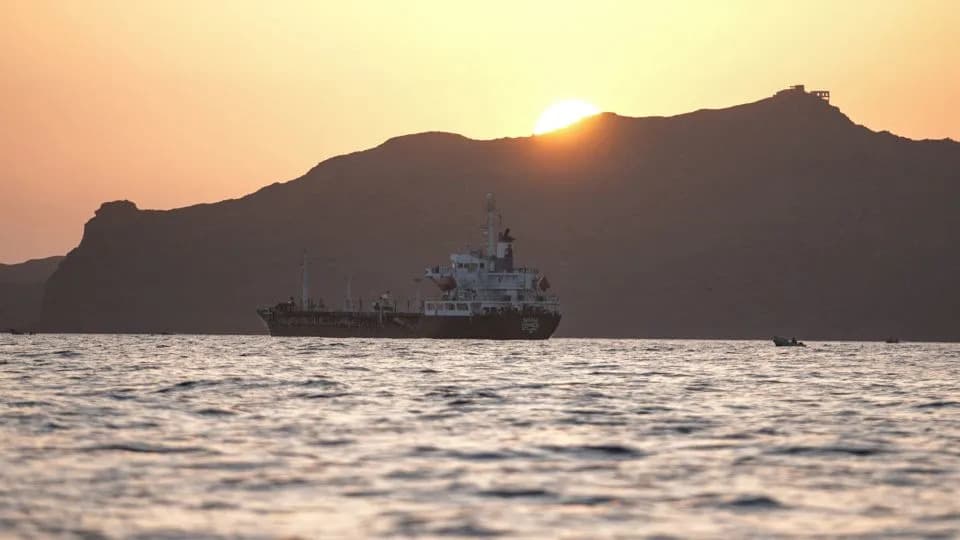
Yemen's Iran-aligned Houthi rebels say they struck two Saudi oil tankers in the Red Sea and have announced plans to blockade the Bab al-Mandeb strait, a vital chokepoint that links the Red Sea to the Gulf of Aden. The move threatens a major corridor for global trade and oil shipments and could force ships onto much longer, costlier routes.
Gateway To The Red Sea
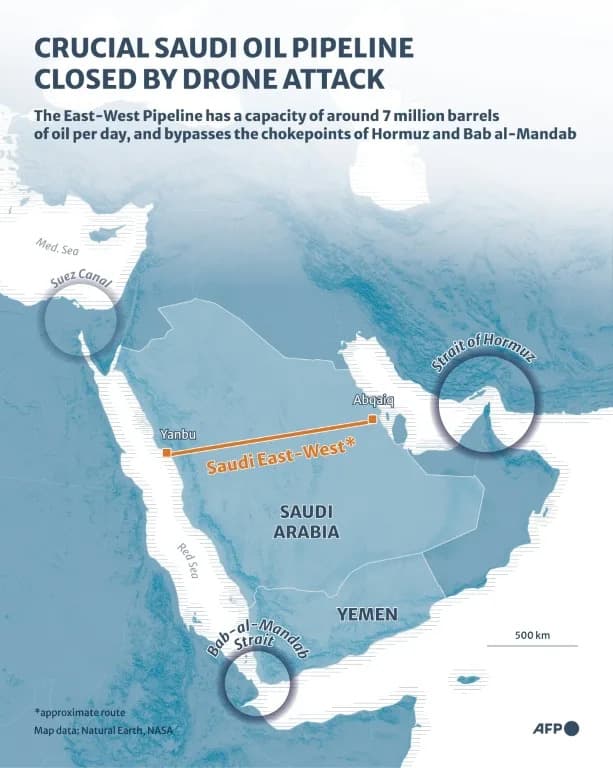
Often called the "Gate of Tears" in Arabic, the Bab al-Mandeb lies at the southern end of the Red Sea, connecting it to the Gulf of Aden and the wider Indian Ocean. The strait stretches roughly 100 kilometres (62 miles) and narrows to about 30 kilometres (18 miles) at its tightest point, separating Yemen on the Arabian Peninsula from Djibouti and Eritrea on the Horn of Africa.
Strategic Trade Route
The Red Sea is a principal maritime link between Europe and Asia, and Bab al-Mandeb is one of the world's busiest shipping corridors. Oil tankers and cargo ships use it to reach the Suez Canal and the Mediterranean, cutting thousands of kilometres off voyages between Asia, Europe and North America.
According to the Suez Canal Authority, about 26,000 vessels transited the Suez Canal in 2023; that number fell to roughly 12,700 by 2025 after Houthi attacks in the Red Sea disrupted traffic.
Key Oil Passage
The US Energy Information Administration (EIA) reported that about 12% of global oil shipments transited Bab al-Mandeb in 2023. Houthi strikes linked to the Gaza war had already reduced volumes, and Iran's closure of the Strait of Hormuz further increased the strait's strategic importance.
Analysts say Saudi exports through the Red Sea port of Yanbu roughly tripled to a spring peak near four million barrels per day before easing slightly — equivalent to about 4% of pre-war global demand. John Evans, an analyst at PVM, estimated Yanbu's shipments reached about 75% of Saudi Arabia's peacetime export levels.
Andreas Krieg, a security expert at King's College London, warned: "A simultaneous crisis at Hormuz and Bab al-Mandeb would produce a much larger shock than either blockade alone."
If Bab al-Mandeb were closed, many vessels bound for Asia would need to reroute north through Suez, cross the Mediterranean, pass Gibraltar and sail around Africa — a journey Evans estimated could take roughly 50 days instead of about 20 on the usual route.
Threats To Shipping And Response
The current regional escalation intensified after reported strikes on Iran on 28 February, followed by Iranian retaliation that spread strikes across the region. Until recently, the Houthis had largely remained on the sidelines despite earlier Iranian threats to close Bab al-Mandeb. Tensions with Saudi Arabia rose in July when the two sides exchanged fire — the first such exchange since a 2022 truce.
During the Gaza war the Houthis previously attacked vessels in the Red Sea and Gulf of Aden, saying they targeted ships linked to Israel. Those strikes relied on relatively rudimentary weapons, including drones, made effective by the proximity of major shipping lanes to shore. Responses have included US and British air strikes on Yemen and the European Union's deployment of Operation Aspides to protect commercial shipping.
Traffic through Bab al-Mandeb has not returned to 2023 levels. From January 2025 some major shipping companies began "testing the waters" and sending vessels through again, Lloyd's List Intelligence analyst Bridget Diakun said, but new Houthi threats risk reversing that trend and diverting more traffic around Africa.
Implications: Continued disruption at Bab al-Mandeb — especially if combined with problems at the Strait of Hormuz — would raise shipping costs, lengthen delivery times, and strain global oil supplies, with knock-on effects for energy markets and trade flows worldwide.
Help us improve.