UC San Diego researchers report in Nature that teleoperated humanoid robots successfully performed laparoscopic gallbladder removals in anesthetized pigs following benchtop fine-motor testing. Two surgeries were completed—one with minor controlled bleeding—with surgeons noting improved precision and less fatigue but also latency, instrument collisions, and repositioning needs. The project progressed from concept to live-animal operation in nine months, and the compact, transportable robots could enable remote or resource-limited telesurgery after further development.
For the First Time, Teleoperated Humanoid Robots Perform Laparoscopic Gallbladder Surgery in Pigs
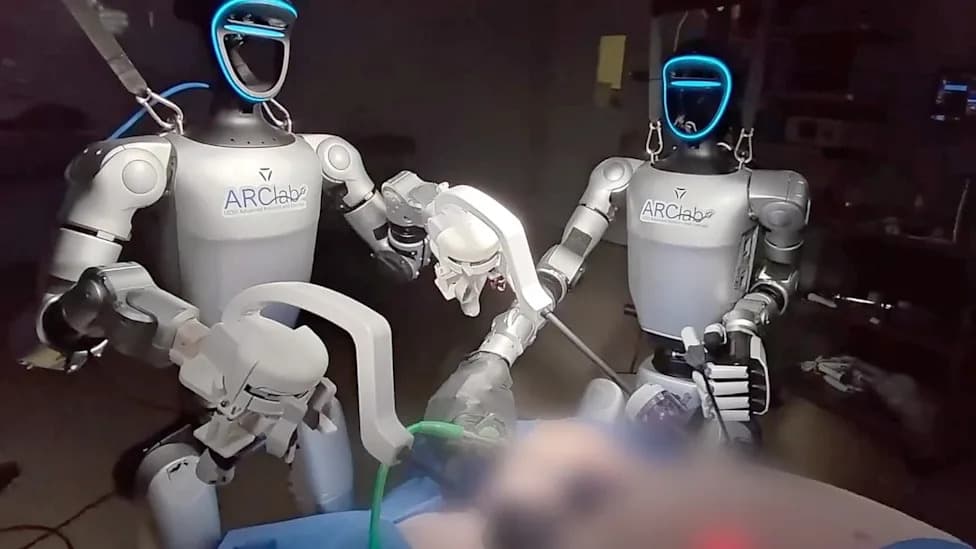
Could this be the future of surgery? (UCSD Jacobs School of Engineering)
For the first time, humanoid robots teleoperated by human surgeons have successfully performed laparoscopic gallbladder removals in live pigs, according to a feasibility study published in Nature. The study, led by engineers and surgeons at the University of California, San Diego (UCSD), demonstrates that full-body humanoid robots can assist in minimally invasive surgery and may expand where and how surgeons deliver care.
Study Design and Methods
The UCSD team began with benchtop evaluations of the robots' fine-motor skills. Surgeons teleoperated the humanoid platforms to handle inanimate objects and standard surgical instruments across a series of controlled tasks. After achieving reliable performance on these tasks, the project progressed to preclinical trials: two laparoscopic cholecystectomies (gallbladder removals) were performed on anesthetized pigs. In each procedure a surgeon controlled the humanoid from a remote console while a bedside clinician assisted; in one case a second teleoperated humanoid briefly joined as an extra assistant.
Results
Both operations were completed successfully. One case involved minor bleeding that the team quickly controlled. Surgeons reported that the humanoid platform provided precise instrument control and reduced physical fatigue, similar to established robotic systems.
“The experience of performing surgery using the humanoid robot had the same feeling as the early days of modern-day robotic surgery with some of the similar limitations, including instrument collision, signal delay, and a need for constant repositioning,” UCSD surgeon Shanglei Liu said.
Ryan Broderick, the operating surgeon for the trials, added: “The humanoid robot felt very similar to operating with commercially available robotics. There was some notable latency and recalibrating that was required during the cases, but this is expected from proof-of-concept models.”
Advantages and Current Limitations
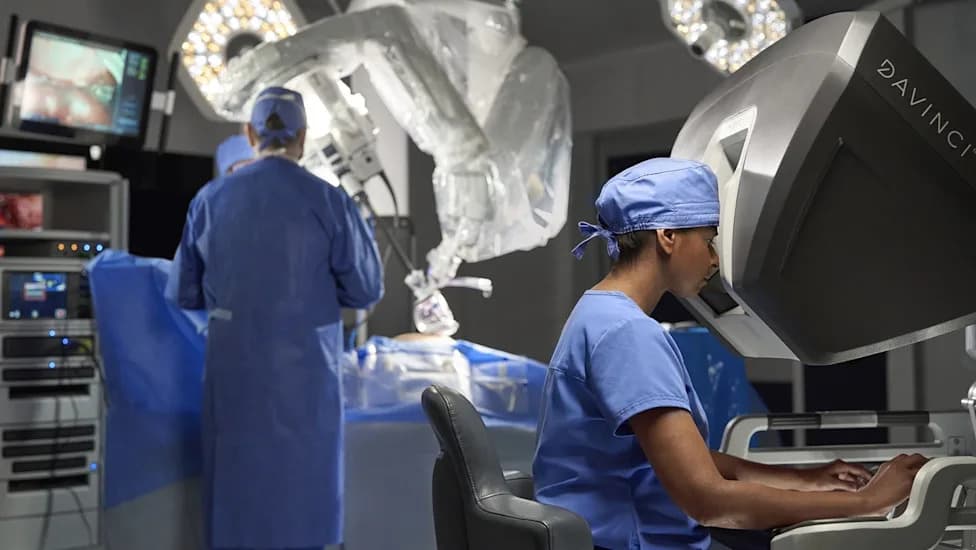
Compared with multi-arm platforms like the da Vinci System, the humanoid robots tested are more compact and easier to transport, which could make them suitable for remote, resource-limited, hazardous, or even space environments. The UCSD team also highlighted the rapid development timeline: this project moved from concept to live-animal surgery in about nine months.
However, the platform still faces notable challenges: latency and signal delay, occasional instrument collisions, and frequent need for repositioning and recalibration during procedures. These limitations are expected at the proof-of-concept stage and will require engineering and workflow refinements before clinical use in humans.
Implications
The study demonstrates feasibility and identifies a promising new direction for telesurgery and mobile surgical platforms. Teleoperated humanoid robots could extend surgical expertise to underserved or hard-to-reach locations, support smaller clinical teams, and reduce surgeon fatigue. Further preclinical testing, human trials, regulatory review, and improvements in latency and instrument coordination will be needed before widespread clinical adoption.
Study Source: UCSD Jacobs School of Engineering and clinical collaborators; published in Nature.
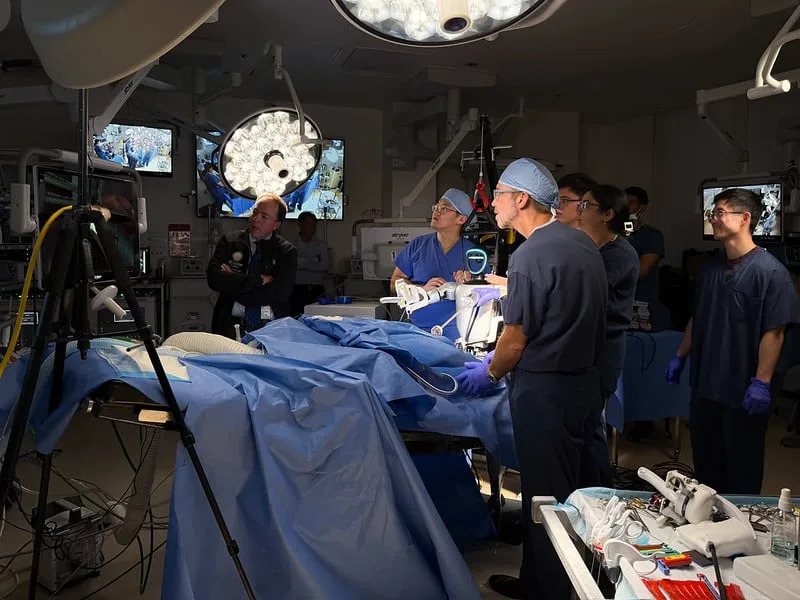
In one surgery, a human-robot team made up of a humanoid robot and a human surgeon acting as an assistant successfully performed a gallbladder removal. (UCSD Jacobs School of Engineering/Flickr/CC BY 4.0)
YouTube Thumbnail
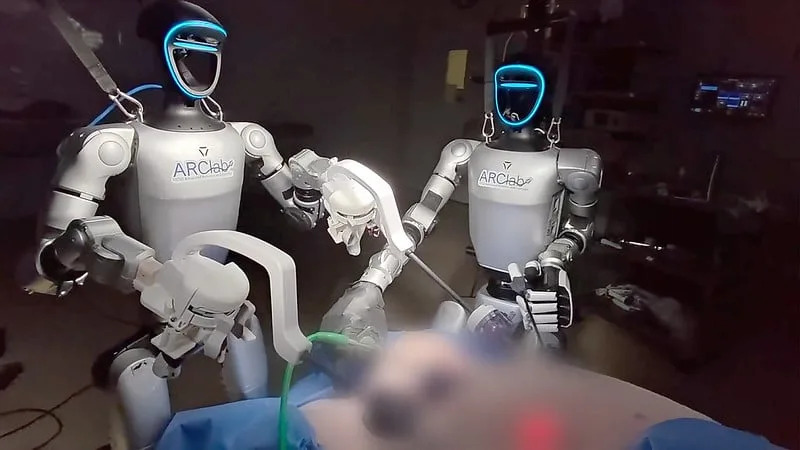
Two teleoperated robots work as a team to perform a laparoscopic gallbladder removal during a preclinical trial. (UCSD Jacobs School of Engineering)
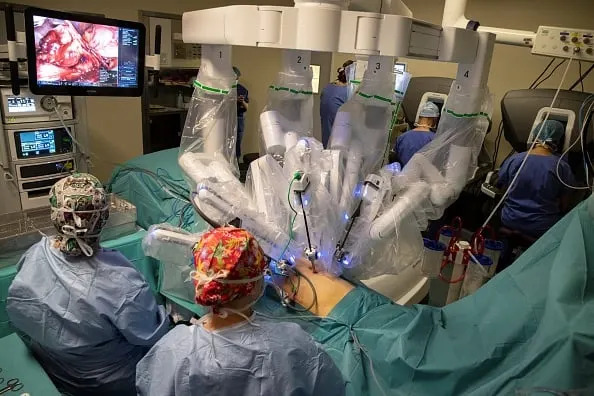
Doctors at another hospital perform surgery using a da Vinci Xi robotic surgical system. (Thomas Samson/AFP/Getty Images)
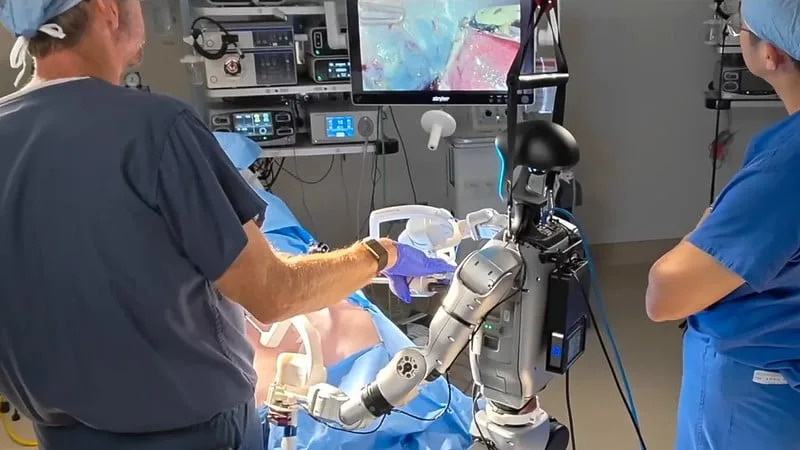
A physician and teleoperated humanoid robot working together. (UCSD Jacobs School of Engineering)
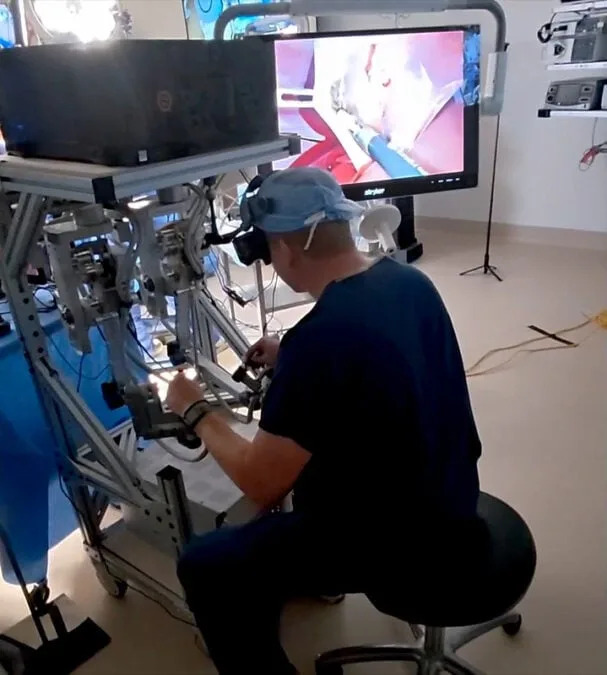
Broderick at the console, controlling a humanoid robot during the gallbladder removal procedure. (UCSD Jacobs School of Engineering)

Subscribe to ScienceAlert's free fact-checked newsletter
Help us improve.