Woven from ultra‑thin fibre‑optic cable and dry grass, small bird nests found near Ukraine's front line highlight an unexpected environmental consequence of the war. The cables—stretched along a roughly 1,200‑km front and used to guide drones—are being repurposed by birds, say researchers at Kyiv's War Museum. The museum has kept one nest and sent another to the Netherlands for DNA and material analysis to identify builders and assess risks such as entanglement versus structural benefits. Scientists warn this is an emerging example of how modern warfare can alter local ecosystems.
Bird Nests Woven From Fibre‑Optic Cable Reveal War's Hidden Toll on Ukraine's Wildlife
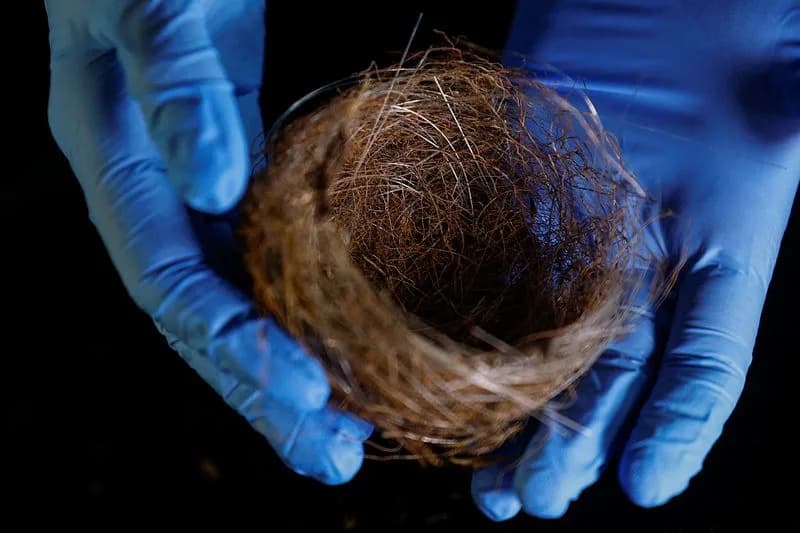
Yana Hrynko, senior researcher of The National Museum of the History of Ukraine in the Second World War, shows a bird's nest made with fragments of optic fibre which was found by a Ukrainian serviceman on the front line and then passed to the museum, amid Russia's attack on Ukraine, in Kyiv, Ukraine June 23, 2026. Both Ukrainian and Russian troops use drones controlled via optic fibre to bypass electronic warfare jamming, leaving miles of ultra-thin optical lines left tangled in trees and scattered across the land in Ukraine's frontline regions. REUTERS/Valentyn Ogirenko
Woven from ultra‑thin fibre‑optic cable and dry grass, a small bird nest found close to Ukraine's front line offers a stark, unexpected illustration of how the conflict is reshaping the natural environment, researchers say.
Along the roughly 1,200‑km (746‑mile) front, thin fibre‑optic lines used to guide aerial attack drones and reduce vulnerability to electronic jamming lie draped in trees, scattered across fields and even thrown over rooftops in frontline towns. Some runs can extend for as much as 20 km and are frequently abandoned or left hanging after operations.
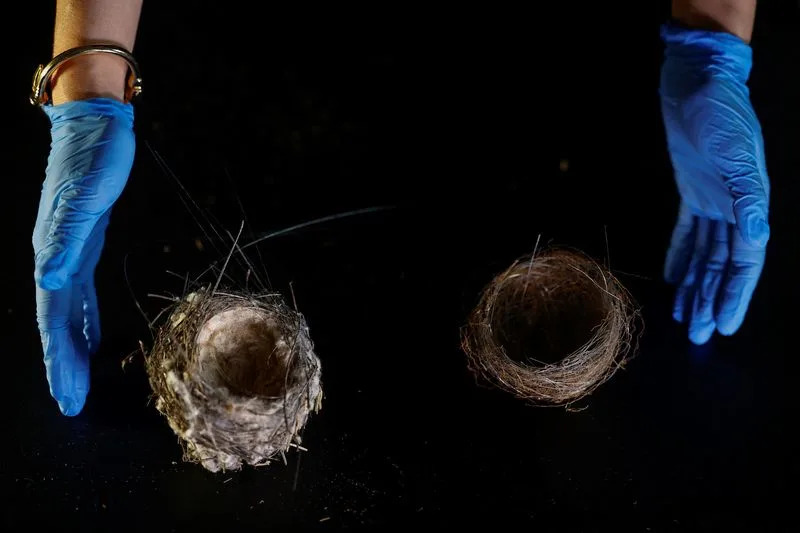
Yana Hrynko, senior researcher of The National Museum of the History of Ukraine in the Second World War, shows bird's nests made with fragments of optic fibre which were found by a Ukrainian serviceman on the front line and then passed to the museum, amid Russia's attack on Ukraine, in Kyiv, Ukraine June 23, 2026. Both Ukrainian and Russian troops use drones controlled via optic fibre to bypass electronic warfare jamming, leaving miles of ultra-thin optical lines left tangled in trees and scattered across the land in Ukraine's frontline regions. REUTERS/Valentyn Ogirenko
Birds have begun incorporating these discarded strands into their nests, according to Yana Hrynko, a senior researcher at Kyiv's War Museum, who examined two fragile specimens sent from the front. "Objects such as bird nests with fragments of optic fibre demonstrate the change in the nature of war," she said.
"The first nest mainly contains dry grass and fibre‑optic cable. And it's pretty tightly twisted," Hrynko added as she inspected the woven material.
Ukrainian servicemen in frontline areas including Donetsk, Kharkiv and Zaporizhzhia have posted images and videos online of similar nests. The museum has decided to keep one specimen in Kyiv as part of its collection documenting the war; the other will be sent to the Netherlands for scientific analysis and later returned.
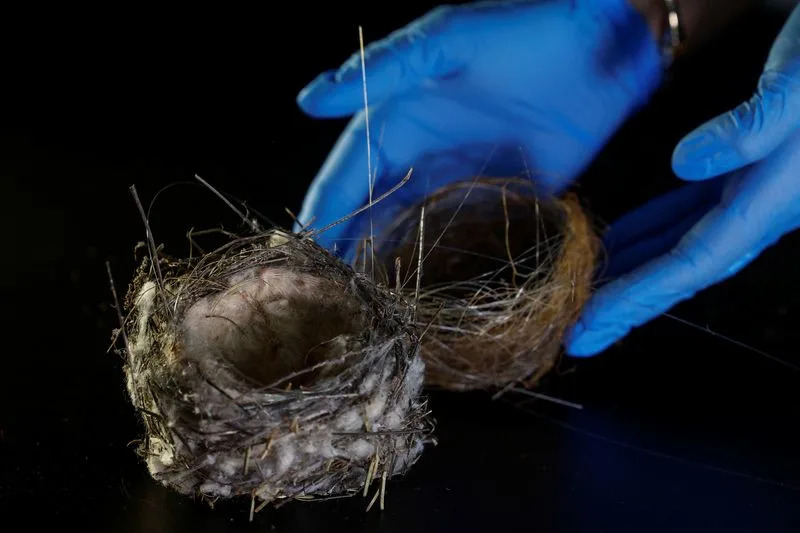
Yana Hrynko, senior researcher of The National Museum of the History of Ukraine in the Second World War, shows bird's nests made with fragments of optic fibre which were found by a Ukrainian serviceman on the front line and then passed to the museum, amid Russia's attack on Ukraine, in Kyiv, Ukraine June 23, 2026. Both Ukrainian and Russian troops use drones controlled via optic fibre to bypass electronic warfare jamming, leaving miles of ultra-thin optical lines left tangled in trees and scattered across the land in Ukraine's frontline regions. REUTERS/Valentyn Ogirenko
Auke‑Florian Hiemstra, a biologist in Leiden who specialises in artificial nest materials, said Ukraine's rich bird biodiversity means several species could have built the nests. Researchers plan to test for DNA traces left in the nests to identify the species involved.
Hiemstra cautioned that fibre‑optic strands may have mixed effects on birds: they can strengthen nest structure, but also pose entanglement risks. "By documenting this nest, we're also documenting the impact of war on nature in Ukraine," she said.
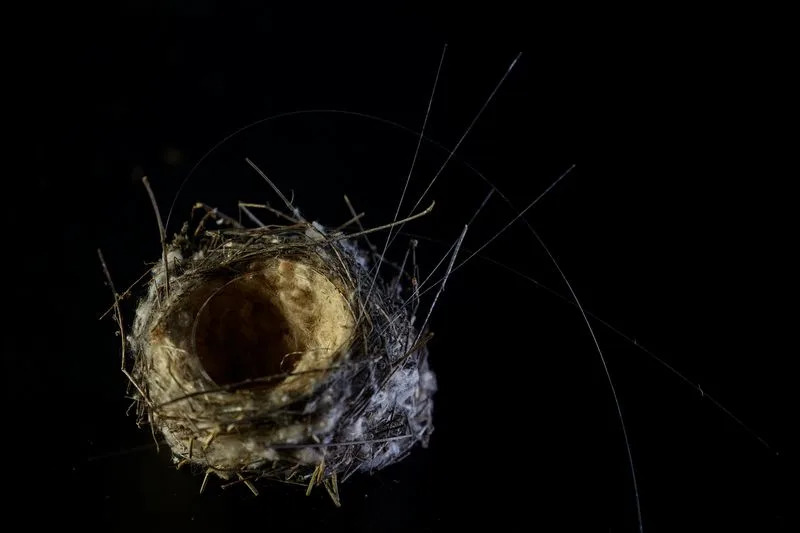
A bird's nest made with fragments of optic fibre which was found by a Ukrainian serviceman on the front line and then passed to The National Museum of the History of Ukraine in the Second World War, lies on a table in a museum, amid Russia's attack on Ukraine, in Kyiv, Ukraine June 23, 2026. Both Ukrainian and Russian troops use drones controlled via optic fibre to bypass electronic warfare jamming, leaving miles of ultra-thin optical lines left tangled in trees and scattered across the land in Ukraine's frontline regions. REUTERS/Valentyn Ogirenko
Russia's full‑scale invasion of Ukraine in February 2022 accelerated the battlefield use of drones as Kyiv sought to counter conventional Russian advantages in armour and artillery. As drones have come to dominate aerial operations, so have the support networks—like long fibre‑optic lines—that sustain them. These civilian and military byproducts are now becoming part of the local ecosystem, with consequences researchers are only beginning to study.
What Scientists Will Do Next
Researchers will examine the specimen being sent to the Netherlands for DNA, material and safety analysis to determine which species built the nests, whether fibres pose mortality risks, and how widespread the phenomenon is across frontline zones.
Help us improve.