Tobias Ellwood’s Ten Steps to Prevent World War Three argues that rising threats — from Russia and China to militant Islam and an unpredictable United States — plus glaring cyber and defence vulnerabilities, make a major conflict more plausible today. Ellwood calls for stronger statecraft, improved cyber defences and timely military investment, but his case is weakened by repetitive history, partisan digressions and uneven prose. The book’s core warnings are important even if the execution is flawed.
Can This Ex‑Tory MP Prevent World War Three? Tobias Ellwood’s Warning on Leadership, Cyber Risk and Defence

Tobias Ellwood is a former soldier and was chairman of the Defence Select Committee - Heathcliff O'Malley
Who remembers General Sir John Hackett’s Cold War fictions? His speculative novels imagined a NATO–Warsaw Pact showdown that never came to pass. Reading Tobias Ellwood’s Ten Steps to Prevent World War Three brings that same stark hypothetical into the present — but with new actors, new technologies and a different geopolitical landscape.
Ellwood’s Core Argument
Ellwood, a former soldier and ex‑Conservative MP, argues that the risk of a large‑scale conflict has increased because of aggressive revisionist powers (notably Russia and China), militant Islamist groups and the unpredictable behaviour of the United States under leaders such as Donald Trump. He stresses two central vulnerabilities: weak political leadership and growing technological exposure — especially to cyberattacks that could cripple trade, infrastructure and decision‑making.
Key Threats and Policy Prescriptions
Ellwood highlights several interlinked threats. He warns that:
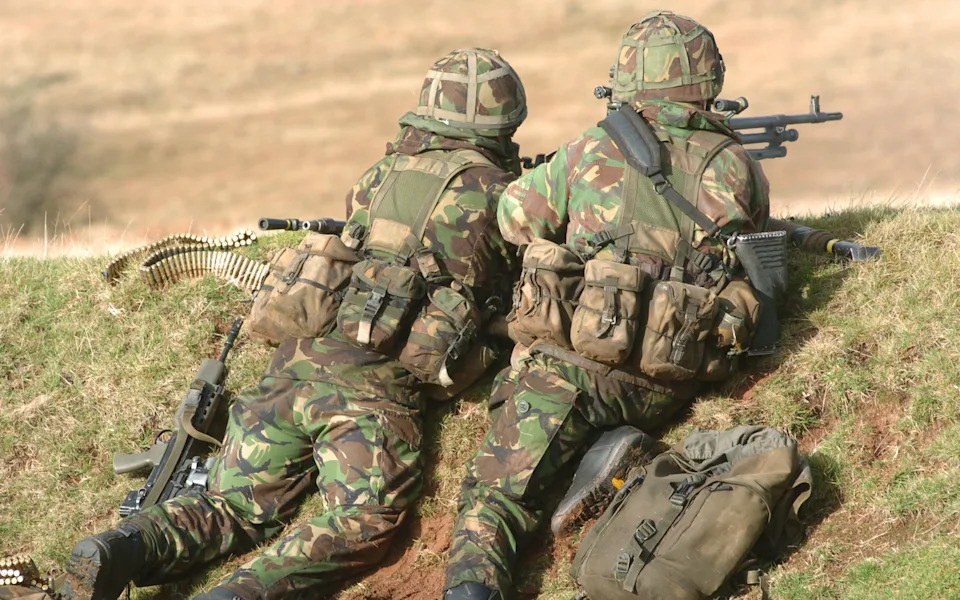
Ellwood’s new book comes at a time when the UK’s defence budget and strategy are under severe scrutiny - Stocktrek Images
- Russia remains an aggressive, capable military actor.
- China’s rise challenges the existing international order.
- Militant Islamist groups continue to destabilise regions and inspire violence.
- The United States, when led by an erratic executive, can become a source of diplomatic instability rather than a reliable anchor.
To reduce the risk of escalation, Ellwood urges renewed emphasis on statecraft, clearer alliances, improved cyber defences, and timely investment in conventional military readiness. He also calls for changes in political culture that prioritise competence in ministerial appointments and steadier national leadership.
Critique: Substance vs. Padding
Much of the book contains valuable warnings, but the delivery is uneven. Historical asides and repeated background material sometimes feel like padding; long digressions into domestic British politics — party democracy, leadership selection and Brexit grievances — dilute the central thesis. Some arguments read as partly self‑interested, given the author’s parliamentary background and frustration at limited ministerial advancement.
Style and Structure
The prose often adopts a clipped, committee‑written tone. Clichés and staccato sentences interrupt flow, and several chapters could be substantially shortened without losing their message. That said, the book’s core recommendations — prioritise statecraft, shore up cyber defences, and correct military underinvestment — are important and timely.

Ten steps to prevent World War Three
Where the Argument Holds
Ellwood correctly identifies that the West’s fragmented diplomatic voice is an advantage to ill‑intentioned actors. Cyber operations have already become routine tools of coercion and espionage; the West’s security services must be prepared. He is also right to press the point that delays in defence investment (the UK plan is late, by his account) leave countries vulnerable to conventional attack.
Conclusion
Ten Steps to Prevent World War Three is unevenly executed but raises urgent, readable warnings. Readers should look past the partisan asides to the book’s practical core: better statecraft, stronger alliances, serious cyber resilience and credible military deterrence. Those elements together are the most realistic insurance against large‑scale conflict.
Publication: Ten Steps to Prevent World War Three is published by Blink.
Help us improve.