Researchers analysed genetic and food-preference data from over 160,000 UK adults and found a variant of the OR2T6 olfactory gene associated with liking onions. That genetic marker was replicated in a younger cohort and, via Mendelian randomization, linked to lower odds of type 2 diabetes and high blood pressure. The authors caution the result is not proof of causation and needs replication in larger, more diverse samples, but say taste-and-smell genetics may be a promising tool for nutrition research.
Love Onions? A Gene Linked To Onion Preference May Be Tied To Lower Risk Of Type 2 Diabetes And High Blood Pressure

(Los Muertos Crew/Pexels)
Diet influences long-term health, but teasing out which foods truly affect disease risk is difficult because many lifestyle and environmental factors interfere. A new international genetic study points to an intriguing connection between a preference for onions and reduced odds of two common conditions: type 2 diabetes and high blood pressure.

Certain genes are linked to taste and smell receptors. (Engin Akyurt/Unsplash)
How The Study Worked
The researchers analysed genetic and self-reported food-preference data from more than 160,000 UK adults aged 37–73, testing associations across 325 taste- and smell-related genes and roughly 140 foods. Hundreds of gene–food links emerged, but one stood out: a specific variant of the OR2T6 olfactory receptor gene was consistently associated with liking the taste and smell of onions.
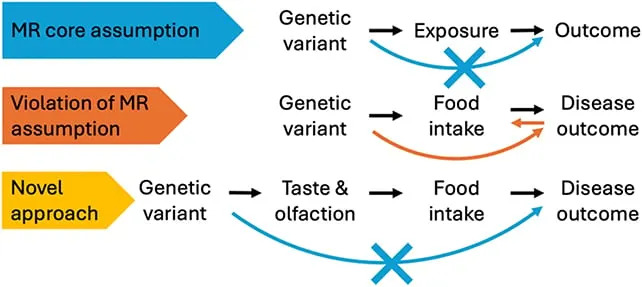
The researchers wanted to improve on previous Mendelian randomization techniques by focusing on taste and smell. (Hwang et al.,BMC Med., 2026)
The OR2T6–onion preference link was then replicated in a smaller dataset of younger adults (starting at age 25), suggesting the genetic marker is a stable proxy for onion preference across age groups. Because genes are fixed from birth, they can serve as unbiased instruments to study diet–disease relationships that might otherwise be distorted by behavior changes after illness.

YouTube Thumbnail
Mendelian Randomization And Health Outcomes
Using Mendelian randomization—an approach that treats inherited gene variants as stand-ins for long-term exposures—the team looked for associations between the OR2T6 variant and health outcomes in independent genetic datasets. They report that this variant was linked to lower odds of both type 2 diabetes and high blood pressure.

Subscribe to ScienceAlert's free fact-checked newsletter
"Taste and smell genes are promising tools for studying links between diet and disease and can help strengthen evidence about cause and effect in nutrition research," says Daniel Hwang, genetic epidemiologist at the University of Queensland.
What This Means—and What It Doesn’t
The finding is interesting but not proof that eating onions prevents diabetes or hypertension. The authors stress the result requires replication in larger and more diverse populations before any causal or clinical claims are made. Mendelian randomization can strengthen causal inference, but only when the genetic markers used are valid proxies and when potential confounders and pleiotropy are carefully addressed.
One biologically plausible pathway is that onions contain bioactive compounds—such as flavonoids and organosulfur molecules—that may influence metabolic and cardiovascular health; this hypothesis deserves further laboratory and clinical study.
Limitations
The main limitations are the reliance on self-reported food preferences, the study populations’ limited diversity (primarily UK-based), and the fact that only one food produced a strong, replicable genetic signal in this analysis. The authors view that focused result as an advantage—less likely to be a spurious finding—but wider replication is essential.
Publication: The study is published in BMC Medicine.
Help us improve.