The article explains how Cambodia's 24-hour hotline, the Mekong Fish App and a rapid-response team turned isolated rescues into a coordinated effort that returned 92 large, endangered fish to the Mekong between mid-November and early February. Improved reporting and broader geographic coverage likely account for much of the increase, though most fish were smaller than past giants, suggesting a younger population. Experts say the results offer cautious hope: community engagement and rapid action can yield conservation gains, but major long-term threats remain.
How a 24-Hour Hotline, an App and Local Fishers Helped Save 92 of the Mekong’s Giant Fish
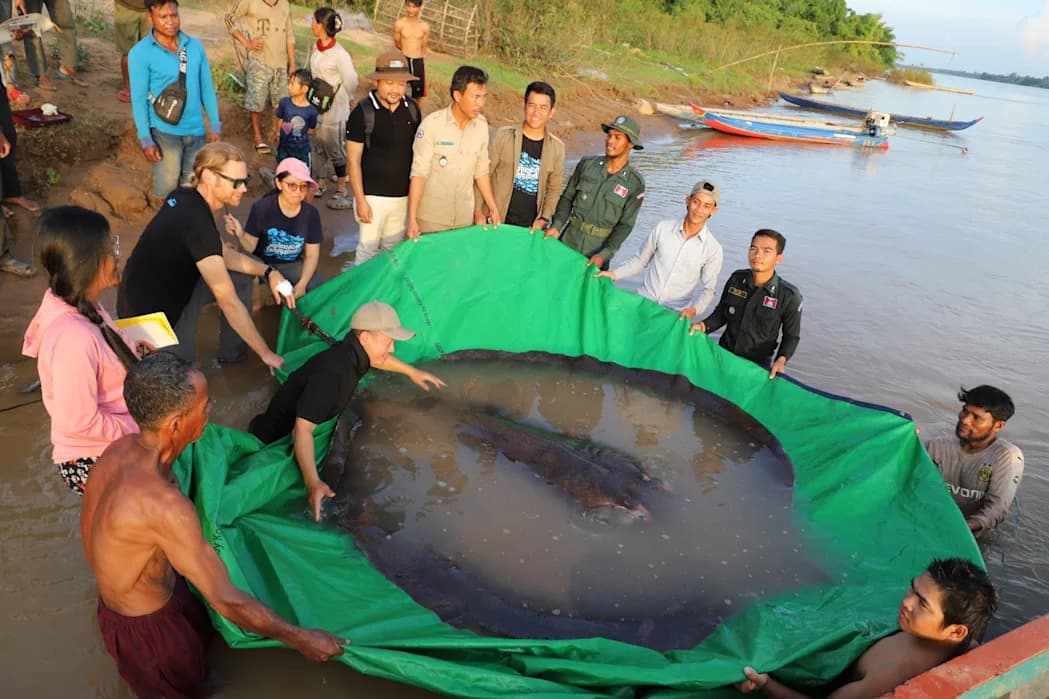
The Mekong River flows through southeast Asia and is home to some of the world's biggest freshwater fish. Here, a rescue team works to release a 661-pound giant stingray.Courtesy of Chhut Chheana, University of Nevada, Reno / Wonders of the Mekong
In early January, at the height of Cambodia's fishing season, Chea Seila was driving north along the Mekong when her phone began to buzz. Hours away, a fisherman had just hauled in a 209-pound Mekong giant catfish. Seila, part of a national rapid-response team set up to rescue threatened megafish, turned her car around and within hours was on site to measure, tag and release the fish alive. Soon afterward, another call came in about a 172-pound giant barb near Phnom Penh; that animal was rescued and returned as well.
From Scattered Rescues To A Coordinated System
For decades these giant freshwater species were driven toward collapse by overfishing, upstream dams, expanded hydropower, sand mining and disruptions to the Mekong's seasonal flood pulse. Yet conservationists in Cambodia persisted, working with fishing communities and government agencies to build trust and practical tools for protection.
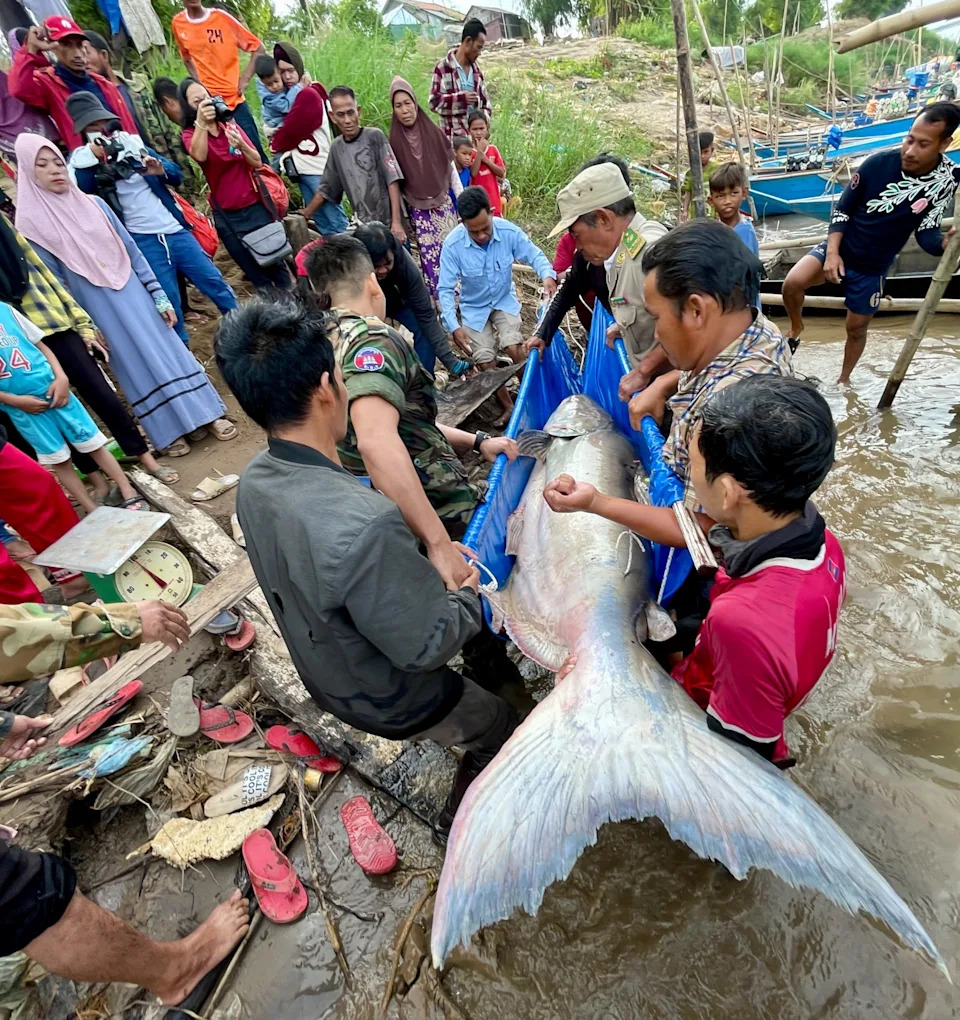
A Mekong giant catfish (Pangasianodon gigas) just before release into the Mekong River in Cambodia. Fishers, Cambodian government officials, and scientists worked together to handle and safely release the fish alive as part of a long-term conservation program. The program reduces bycatch mortality while providing important information about the abundance, movements, and ecology of Mekong giant catfish and other endangered fish species.Courtesy of Zeb Hogan, University of Nevada, Reno / Wonders of the Mekong
In late 2025 partners launched three linked interventions that transformed isolated efforts into a national response: a 24-hour hotline, the Mekong Fish App and a dedicated rapid-response team inside Cambodia's Fisheries Administration. Between mid-November and early February, the program returned 92 large fish that had been caught unintentionally—24 Mekong giant catfish, 23 giant barb, 32 seven-striped barb and 13 striped catfish—alive to the river.
How The Tools Work
The Mekong Fish App lets fishers log catches in near real time, uploading measurements, photos and automatic GPS coordinates. Data are shared directly with fisheries officials and trigger Telegram alerts when threatened species are flagged. A national hotline provides an immediate phone-based channel to summon rescue teams. In a six-month pilot, communities logged 965 fish across most of the 18 target species, giving researchers the geographic and seasonal detail previously missing from market- based observations.
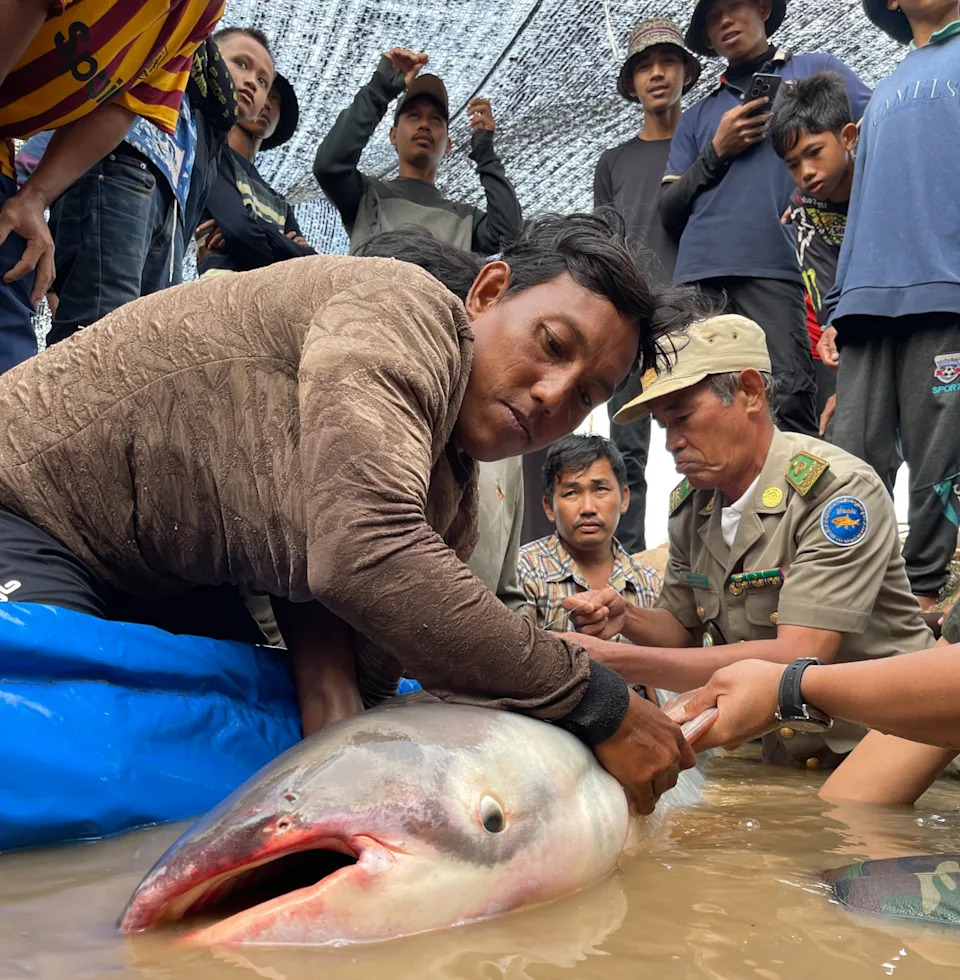
Scientists and fisheries officials work with local fishers to safely release an adult Mekong giant catfish (Pangasianodon gigas) back into the Mekong River in Kampong Cham, Cambodia. The fish was caught incidentally, reported through a growing community-based conservation network, tagged, and released alive to support long-term efforts to protect Cambodia’s critically endangered freshwater fish.Courtesy of Zeb Hogan, University of Nevada, Reno / Wonders of the Mekong
'Local fishing communities have become our conservation partners because of the trust that has been built up over time,' said Heng Kong, director of Cambodia's Inland Fisheries Research and Development Institute.
What The Numbers Mean—and What They Don't
Experts say the surge in reported rescues likely reflects both better reporting and real gains. Improved communication and incentives mean more fish are reported rather than sold, but the broader geographic coverage and longer monitoring window also reveal migrations between the Tonle Sap floodplain and the Mekong main stem.
Still, reasons for caution remain. Many of the rescued fish were smaller than historical giants: only one individual this season exceeded 200 pounds. That suggests a population skewed toward younger fish—a hopeful sign of recruitment but not yet evidence of a full recovery.
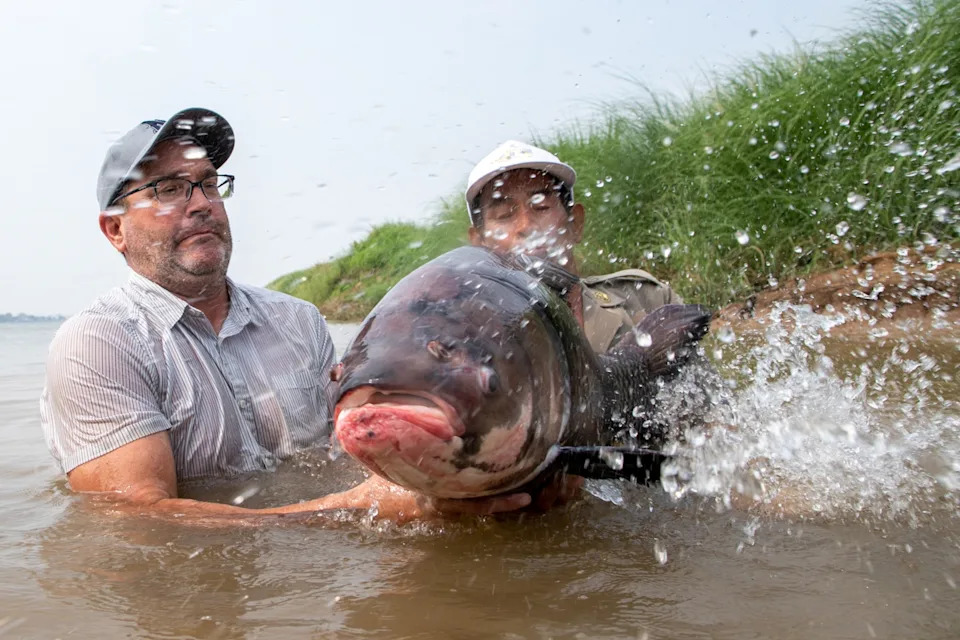
National Geographic Explorer and freshwater fish biologist Zeb Hogan (left) helps release a Mekong megafish back into the river.Courtesy of Zeb Hogan, University of Nevada, Reno / Wonders of the Mekong
Human Stories And Long-Term Challenges
The article includes recollections from veteran fishers who remember when giant catfish were common and sometimes enormous, and who watched the resource decline as upstream dams and other developments altered the river. Conservationists emphasize that community engagement, timely reporting and rapid response can produce measurable benefits even in a system under intense pressure, but they also stress that major threats—new dams, hydropower expansion, sand mining and changes to the flood pulse—persist.
On a recent rescue, divers recovered dozens of live fish from submerged pens beneath a bagnet fishery on the Tonle Sap. Researchers selected roughly three dozen endangered individuals, including two Mekong giant catfish, and transported them to a small island beyond the nets for release. Standing waist-deep in the current, villagers and scientists watched each fish swim away—an emblematic scene of community-based conservation in action.
'Every fish we save is a reminder that extinction isn't inevitable,' said Zeb Hogan, a fish biologist who has studied Mekong megafish for three decades. 'These extraordinary creatures make our world a richer, more wondrous place.'
While the recent results offer cautious optimism, researchers call for continued monitoring, stronger protections, and policies that address the river-scale drivers of decline. The combination of local stewardship, rapid response and real-time data provides a practical model that could inform conservation efforts for freshwater megafauna elsewhere.
Help us improve.