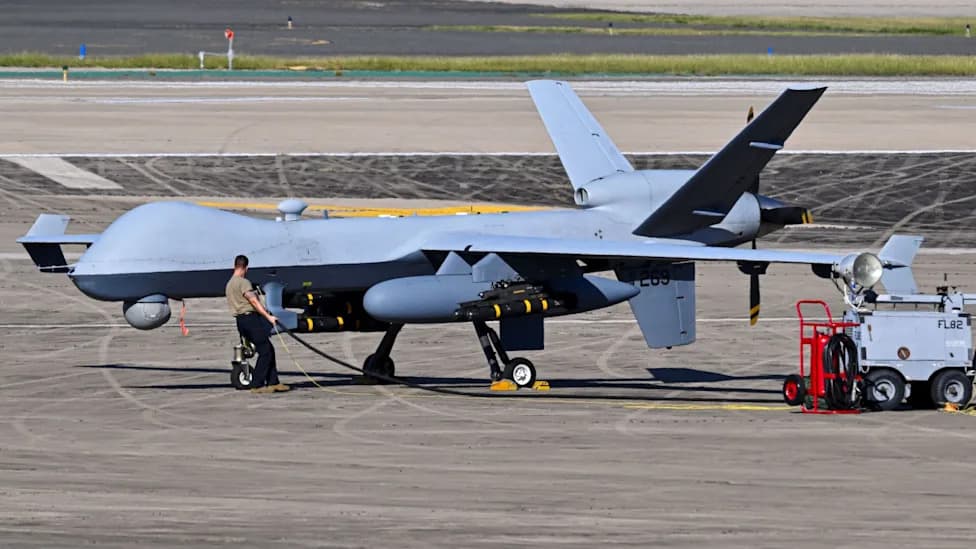
The MQ-9 Reaper's first flight with Saab’s LoyalEye radar pod on May 19 demonstrates the viability of an AEW-capable MALE drone. While crewed AEW&C platforms remain essential for theater command-and-control, AEW MQ-9s can provide persistent, low-cost look-down coverage against drones, low-end cruise missiles and small targets, support naval and expeditionary operations, and augment homeland and allied defenses. They are best used as part of a layered sensor architecture alongside space and crewed assets.
MQ-9 Reaper Gains Airborne Early Warning Radar — A Potential Game Changer
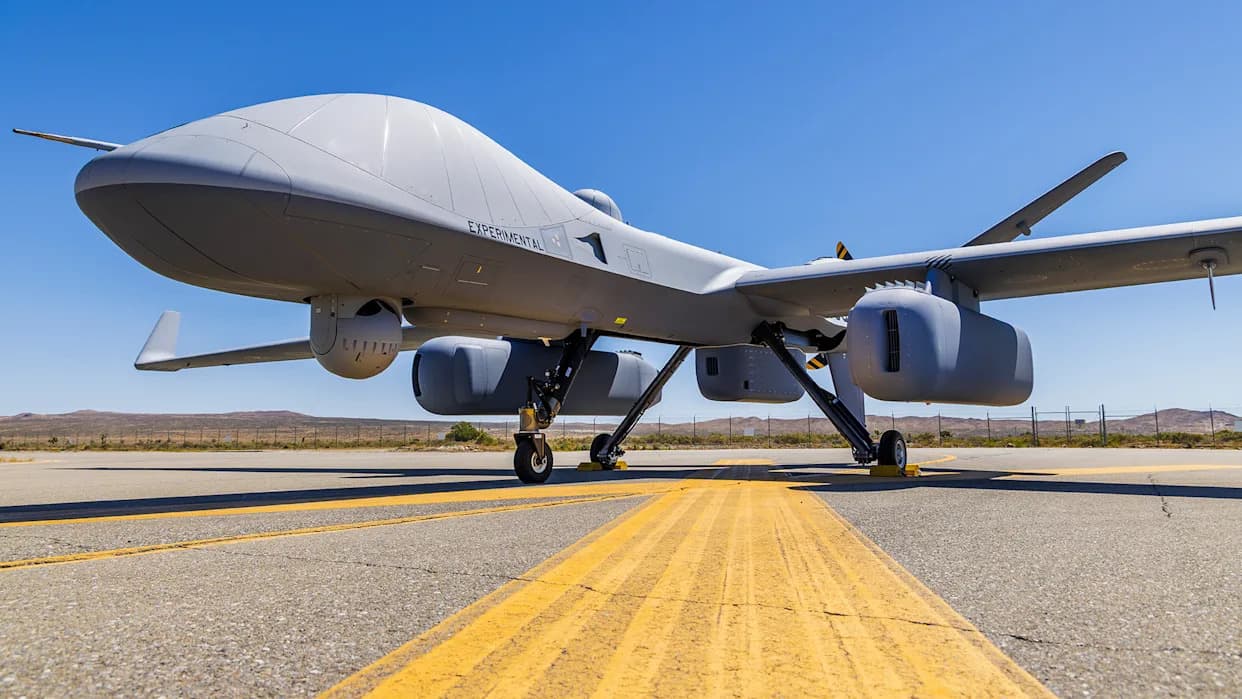
General Atomics is giving the MQ-9 reaper airborne early radar capability, which could have a big impact on the market.
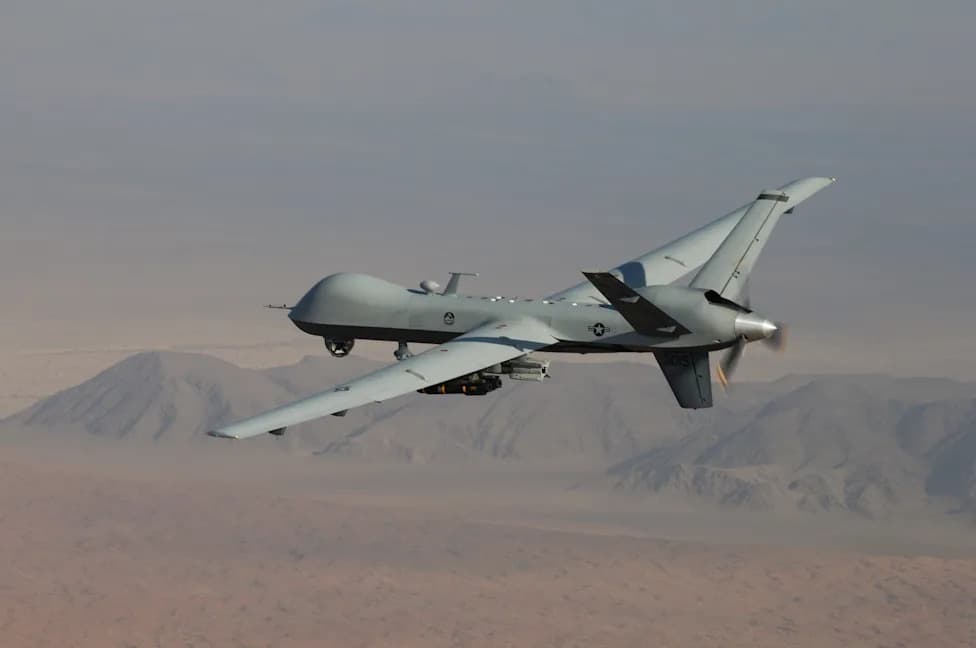
The MQ-9 Reaper and the wider Predator-B family occupy a complicated place in modern air operations. On one hand, these medium-altitude, long-endurance (MALE) drones are acquiring new capabilities and mission sets rapidly. On the other, their exposure to air defenses has produced notable losses in recent conflicts even as the U.S. Air Force’s replacement timeline lags and inventories shrink.
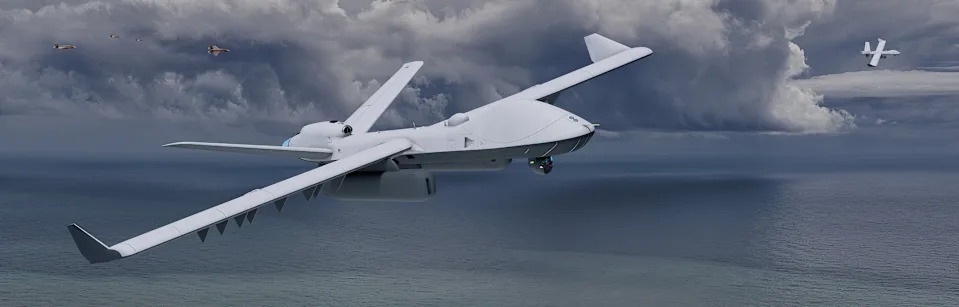
MQ-9 outfitted with a STOL kit and AEW pods for shipboard fleet defense. (General Atomics)
What Happened
On May 19, a General Atomics MQ-9 flew fitted with Saab’s podded LoyalEye radar in the first full flight test of an AEW-configured Reaper. Saab supplied the LoyalEye pod and General Atomics integrated the system; a fuller demonstration is planned for next year. The test proves the concept: a relatively low-cost, long-endurance unmanned aircraft can host look-down radar and feed tracks to remote operators and air defense nodes.
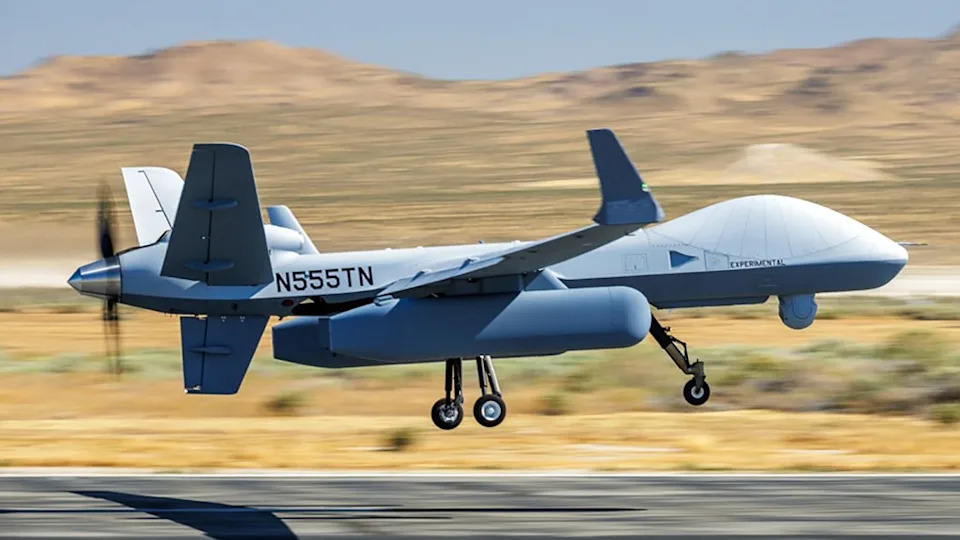
MQ-9 AEW configured aircraft taking to the air for the first time. (General Atomics) General Atomics
'AEW for MQ-9B will offer critical aloft sensing to defend against tactical air munitions, guided missiles, drones, fighter and bomber aircraft, and other threats. Operational availability for a medium-altitude, long-endurance UAS is the highest of any military aircraft, and as an unmanned platform, its aircrews are not put into harm's way.' — David R. Alexander, President, GA-ASI
Why It Matters
An MQ-9 equipped with a podded air moving-target indicator (AMTI) radar delivers persistent look-down surveillance that can detect low, slow, and small-signature threats such as one-way attack munitions (kamikaze drones) and low-end cruise missiles. These threats often fly at low altitude and slow speeds, blending into ground clutter and evading many ground radars and older airborne sensors. A forward-deployed AEW MQ-9 can separate such targets from clutter at long range and maintain presence over critical areas for many hours.
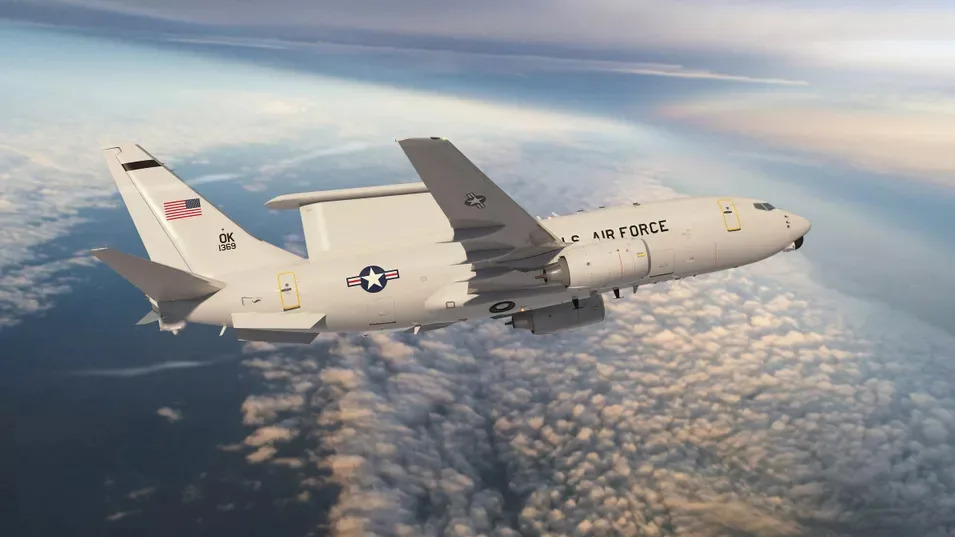
E-7 is seen as a partial, interim replacement for the aging E-3 fleet. (USAF)
How It Fits Into The Airborne Sensor Mix
Crewed AEW&C platforms — the USAF’s aging E-3 Sentry fleet, the incoming E-7 program, and the Navy’s E-2D Hawkeye — provide indispensable command-and-control, battle management and wide-area surveillance. They are, however, expensive, scarce, infrastructure-heavy and increasingly vulnerable in contested environments. An AEW-capable MQ-9 is not a replacement for an E-7 or E-2 in high-end C2 roles, but it can fill coverage gaps, extend the sensor footprint, and operate forward where risking crewed assets would be unacceptable.
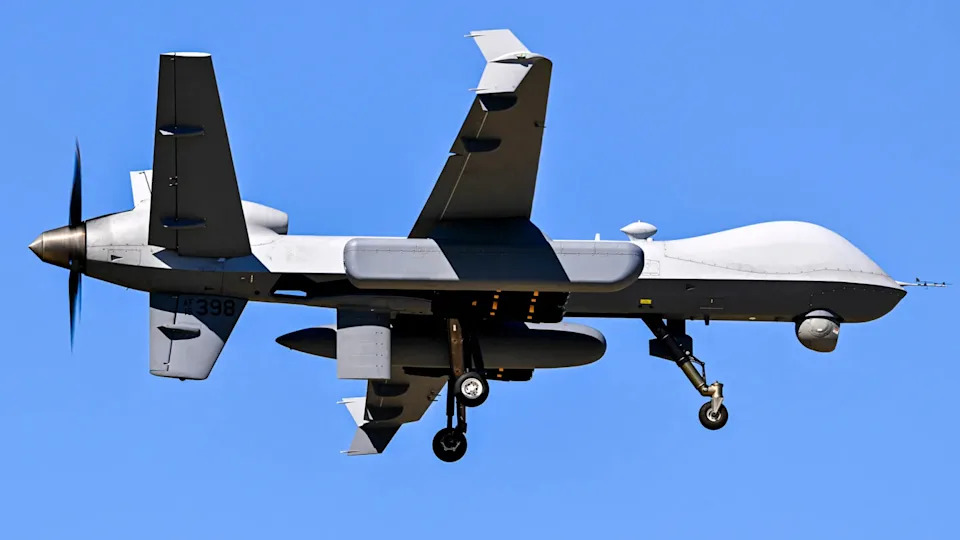
An MQ-9 seen operating out of Puerto Rico on a counter-narcotics maritime interdiction mission equipped for multi-int collection and kinetic strikes. (Miguel J. Rodriguez Carrillo / AFP via Getty Images)
Operational Benefits
- Persistent Coverage: Detachments of AEW MQ-9s can maintain 24/7 orbits over key areas with a small logistical footprint.
- Distributed Operations: Supports doctrines like Agile Combat Employment (ACE) and Expeditionary Advanced Base Operations (EABO) by providing local look-down radar where forward units operate.
- Hunter-Killer Teaming: When paired with armed MQ-9 variants carrying precision effects (for example, laser-guided rockets), an AEW MQ-9 can cue interceptors or directly enable a strike.
- Naval And Expeditionary Use: MQ-9 variants adapted to large-deck amphibious ships and carriers could provide organic fixed-wing AEW for LHA/LHDs and supplement carrier air defenses when E-2s are unavailable.
Strategic And Practical Considerations
A layered sensing architecture is the most resilient route forward: space-based AMTI, crewed AEW&C for high-end C2, and flexible unmanned AEW nodes for persistent, forward coverage. Relying solely on a future orbital layer remains risky because that capability will take years to mature and would create new single points of failure if not backed up.
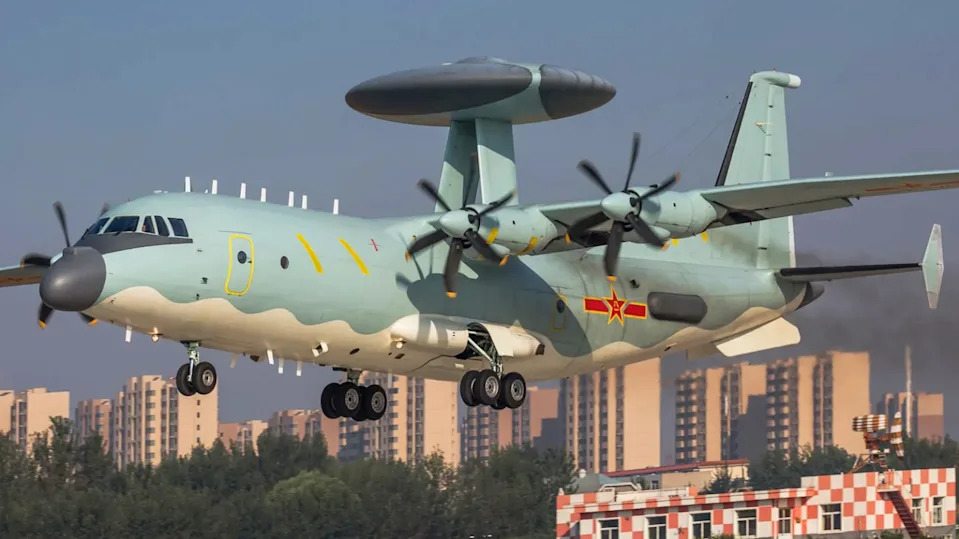
China has invested very heavily in modern AEW platforms. (Chinese Military via Chinesemilitaryreview.com)
AEW MQ-9s also offer value for homeland defense, surge coverage during major events, and training roles (including adversary 'red air' AEW emulation) where crewed AEW assets are unavailable. For allies and smaller air arms that lack dedicated AEW fleets, podded MQ-9s democratize persistent airborne early warning at lower cost and logistical burden; Japan has already expressed interest.
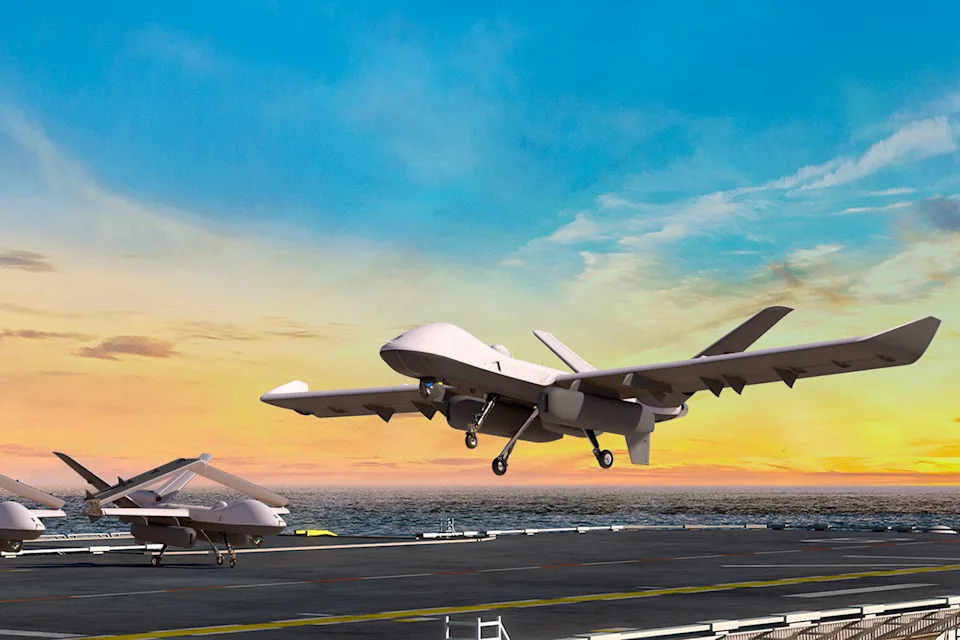
Rendering of an AEW MQ-9 equipped with a STOL wing kit landing on an amphibious assault ship. (General Atomics)
Limitations And Caveats
AEW MQ-9s cannot replace crewed platforms for complex command-and-control or theater-wide battle management. They remain vulnerable to modern air defenses and are best used as a distributed sensor layer or forward picket in concert with broader air and sensor architectures. Survivability improvements, emissions control, and integration into secure datalinks are critical to their effectiveness.
Conclusion
Turning the MQ-9 into an AEW node is a pragmatic, relatively low-cost step to expand persistent look-down coverage, improve early warning against low-signature threats, and relieve pressure on scarce crewed AEW assets. Combined with space and crewed sensors, AEW MQ-9s could materially strengthen air defenses, naval task groups, expeditionary forces and allied partners.
Help us improve.