On Sept. 15 a Japanese RQ-4B Block 30i Global Hawk crashed into the Sea of Japan, reducing the three-aircraft fleet by one-third. Ground controllers lost contact at 12:55 p.m. and radar contact ended three minutes later; debris was located about 50 minutes afterward and photos confirmed the aircraft. Officials have not released a cause. Japan plans to expand unmanned surveillance with MQ-9B SeaGuardians starting in 2027, backed by a roughly US$1.88 billion budget request for the first 17 drones.
Japanese RQ-4B Global Hawk Crashes Into Sea of Japan, Cutting Fleet By One-Third
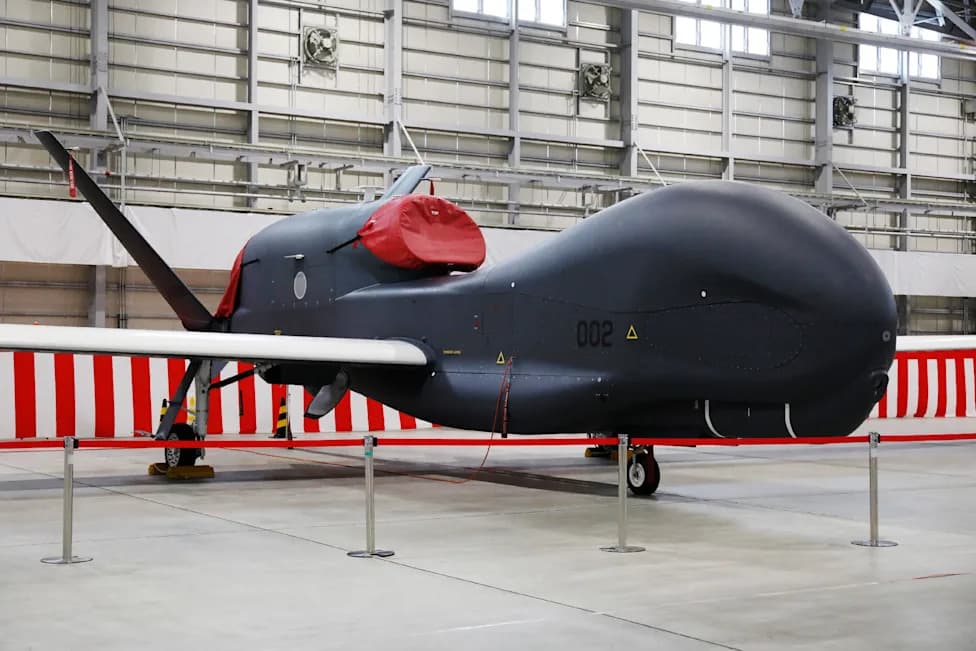
This picture taken on Jan. 23, 2023, shows a Global Hawk unmanned surveillance aircraft of the Japan Air Self-Defence Force (JASDF) in Misawa, Aomori prefecture. (Jiji Press / AFP via Getty Images)
On Sept. 15 a Japanese RQ-4B Block 30i Global Hawk crashed into the Sea of Japan, immediately reducing Tokyo’s three-aircraft fleet by one-third. The high-altitude unmanned surveillance plane — valued at roughly $163 million — disappeared from control and radar while operating over international waters.
Timeline and recovery: The Japan Air Self-Defense Force (JASDF) said the aircraft took off from Misawa Air Base at 10:20 a.m. on an undisclosed mission. Ground controllers lost contact with the drone at 12:55 p.m., and it vanished from radar about three minutes later. A Japan Coast Guard helicopter located floating debris roughly 50 minutes after contact was lost; additional assets later photographed wreckage that allowed officials to positively identify the aircraft. Authorities have not yet released a cause for the accident.
“This particular flight was not a training exercise,” JASDF Chief of Staff Gen. Takehiro Morita said.
About the platform: The RQ-4B Block 30i Global Hawk is a long-endurance, high-altitude ISR (intelligence, surveillance and reconnaissance) aircraft that can remain aloft for about 32 hours at altitudes approaching 60,000 feet. Japan’s integrated payload includes an electro-optic/infrared sensor, synthetic aperture radar (SAR) and a ground moving target indicator (GMTI), giving it the longest reach of any Japanese drone.
Strategic context: Japan uses Global Hawks to monitor North Korean missile activity and to track Chinese military movements. The original purchase of three Global Hawks, delivered in 2022, sparked debate in Japan because of the platforms’ high cost and U.S. restrictions on the aircraft’s technology and on how collected data are processed.
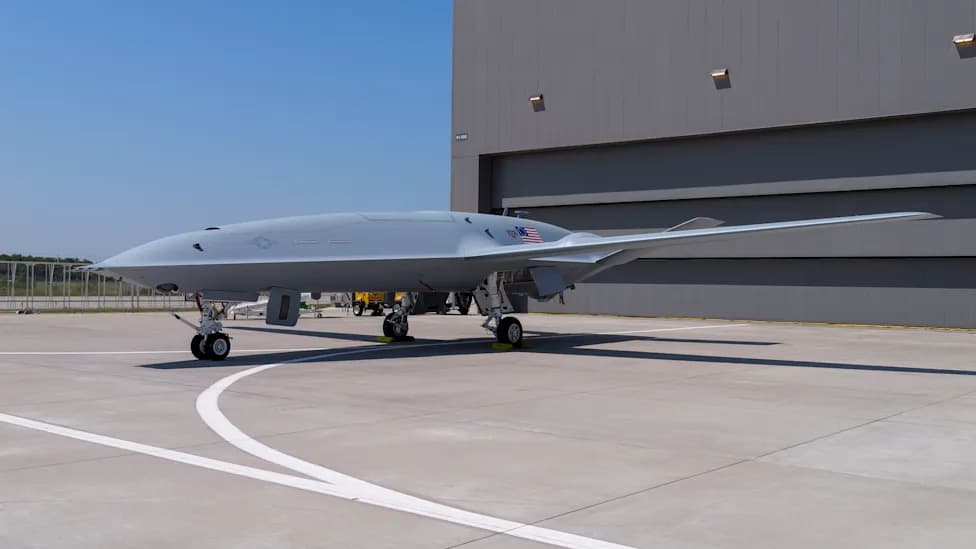
Future unmanned assets: Tokyo is expanding its unmanned capabilities. The Japan Maritime Self-Defense Force plans to begin fielding MQ-9B SeaGuardians in 2027, ordering 23 in total. Japan’s draft 2027 defense budget requests about US$1.88 billion for the first 17 SeaGuardians, which will support maritime domain awareness and take over some missions currently performed by P-1 and older P-3C Orion patrol aircraft. While MQ-9Bs have shorter endurance and range than the Global Hawk, they will bolster Japan’s maritime surveillance capacity.
Regional and U.S. context: The U.S. Air Force maintains three RQ-4B Global Hawks at Yokota Air Base in Japan, relocated from Guam in May to reduce typhoon exposure. The U.S. had planned to retire its Global Hawk fleet but will continue operating them through 2033; thereafter only a handful of RQ-4Bs are expected to remain in the region (three in South Korea and two in Japan).
Outlook: With just two Global Hawks remaining, Japan faces a temporary reduction in high-altitude ISR capacity until replacements or alternate platforms come online. Japanese and U.S. authorities are likely to investigate the loss; no findings have been announced.
Help us improve.